


How to Balance Hormones Naturally for Better Health
If you've ever felt bone-tired despite a full night's sleep, dealt with mood swings that come out of nowhere, or watched the number on the scale creep up for no good reason, you know how powerful your hormones are.
They are the body's internal text messaging system—a complex network of chemical signals that tells every part of you what to do and when.
Think of your hormones as the conductors of a symphony. When every musician is in sync, playing their part at just the right moment, the result is harmony. You feel amazing—full of energy, sharp, and resilient. But if one conductor goes rogue, the whole performance can unravel pretty quickly.
Your Guide to Understanding Hormonal Health
Hormones are made by your endocrine glands and travel through your blood to your tissues and organs, directing everything from your metabolism and mood to your sleep and reproductive cycles.
What Are Hormones and Why Do They Matter?
A few of the key players in this intricate system include:
- Cortisol: Known as the "stress hormone," it's in charge of your body's stress response, but it also manages blood sugar and inflammation.
- Estrogen & Progesterone: These are the primary female sex hormones, running the show for your menstrual cycle, mood, and even bone density.
- Insulin: Made in the pancreas, insulin’s main gig is managing blood sugar, helping your cells turn glucose into energy.
- Thyroid Hormones: These are the masters of your metabolism, controlling how your body uses energy and influencing everything from your heart rate to your internal thermostat.
When this team is communicating well, you feel your best. But chronic stress, a diet low in nutrients, not enough quality sleep, and even environmental toxins can throw a wrench in the works, leading to hormonal imbalances.
Recognizing the Signs of Hormonal Imbalance
A hormonal imbalance isn't one specific condition; it's a huge spectrum of symptoms that shows up differently for everyone. And because your hormones are all interconnected, a problem with one can set off a chain reaction.
I see this all the time: chronic stress keeps cortisol levels sky-high. This can tank progesterone production, mess with your insulin sensitivity, and interfere with thyroid function. The result is a cascade of symptoms that leaves you feeling completely drained and out of sync.
Common signs that your hormonal symphony might be a little off-key include:
- Constant fatigue that sleep doesn't seem to fix
- Stubborn weight gain or trouble losing weight
- Mood swings, anxiety, or feelings of depression
- Irregular periods or brutal PMS
- Trouble falling or staying asleep
- Skin problems like persistent acne or unusual dryness
- Brain fog and difficulty focusing
These symptoms are your body waving a red flag, trying to get your attention. For instance, those stubborn breakouts along your jawline are often a classic sign of hormonal shifts. For a deeper dive into how you can tackle this specific issue, check out these natural approaches to hormonal acne.
Learning how to balance hormones naturally is all about getting to the root cause of these disruptions. It’s a process of tuning back into your body and giving it the foundational support it needs to recalibrate and find its rhythm again.
The Role of Nutrition in Hormone Balance
Think of your plate as the control panel for your hormones. Every single thing you eat sends a signal to your body—it can either be a signal for balance and calm, or one that throws your whole system into chaos. Let’s move past the vague advice and get specific about building meals that actively support your endocrine system, helping you feel more energized, stable, and in control.
Your hormones aren’t made out of thin air. They’re built from the nutrients you consume. Healthy fats, for instance, are the literal building blocks for steroid hormones like estrogen and testosterone. Skimp on those, and the entire production line grinds to a halt.
It's the same story with high-quality protein. It does way more than just build muscle; it’s crucial for stabilizing your blood sugar and providing the amino acids your brain needs to create neurotransmitters. When you make protein a priority at every meal, you sidestep those brutal energy crashes that send your stress hormones haywire.
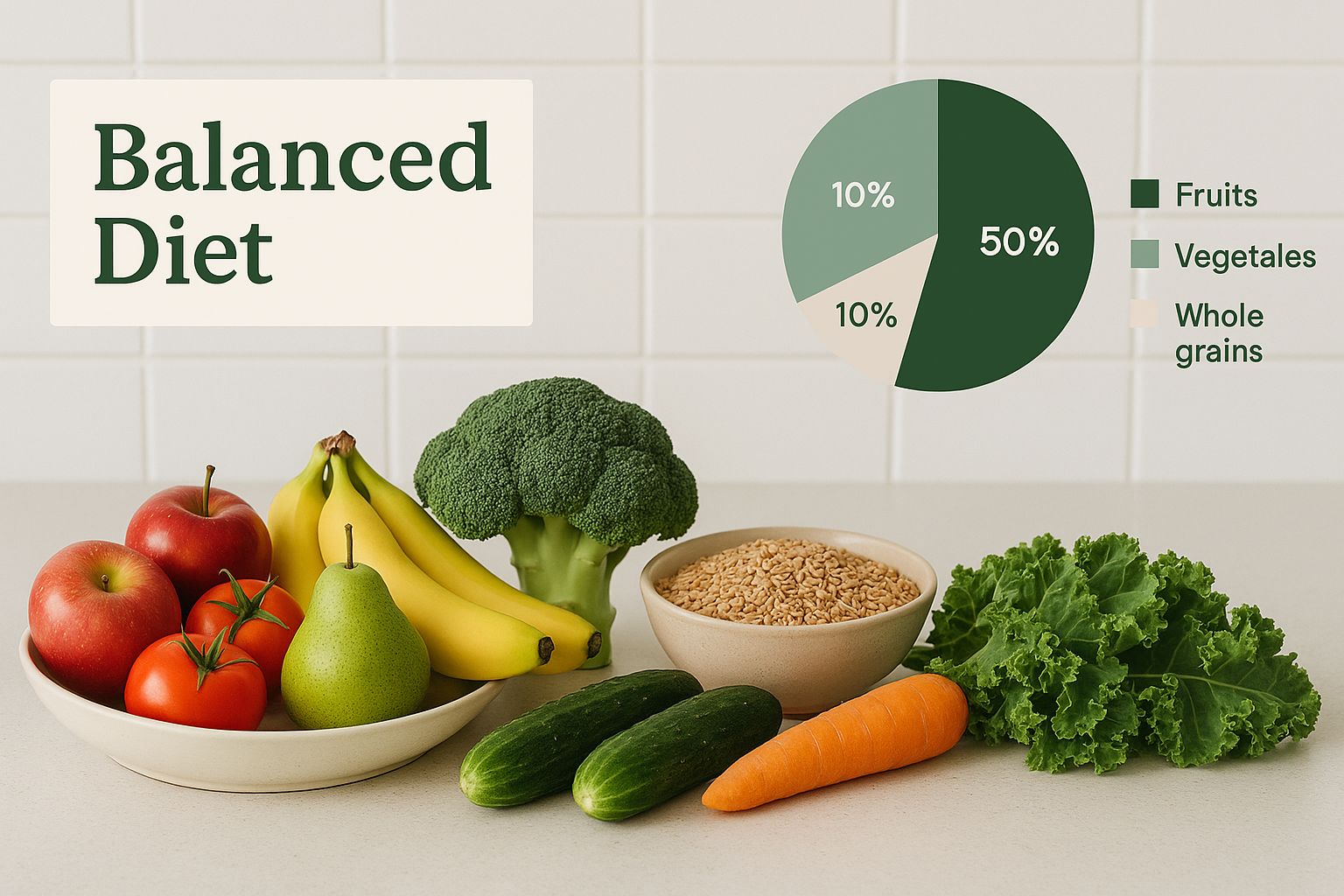
As you can see, a thoughtful combination of real, whole foods gives your body the exact tools it needs to function at its best.
Master Your Macronutrients for Hormonal Harmony
To really get a handle on how to balance hormones naturally, we have to zoom in on the big three: protein, fats, and carbohydrates. Each one has a specific, non-negotiable job.
- Protein Power: I tell my clients to include a source of clean protein with every single meal. That could be grass-fed meat, wild-caught fish, organic eggs, or even legumes. This simple habit helps slow down sugar absorption, preventing those dramatic insulin spikes that mess with your hormones.
- Focus on Healthy Fats: You absolutely need fats like avocados, olive oil, nuts, and seeds. They're not just for hormone production; they’re also essential for absorbing key fat-soluble vitamins (A, D, E, and K) that regulate your endocrine system.
- Choose Smart Carbs: Ditch the refined stuff and opt for complex, fiber-rich carbs like sweet potatoes, quinoa, and mountains of leafy greens. Fiber is a game-changer for gut health and helps your body efficiently escort excess hormones, especially estrogen, out of your system.
Putting this all together consistently is what really moves the needle. For some practical inspiration, you can find great healthy meal plans and tasty recipes for weight management to help you get started.
To make this even easier, here’s a quick-reference table to help you easily incorporate hormone-balancing foods into your meals.
Key Foods for Supporting Hormonal Health
| Food Group | Examples | Hormonal Benefit |
|---|---|---|
| Cruciferous Veggies | Broccoli, Cauliflower, Kale | Helps with estrogen detoxification. |
| Healthy Fats | Avocado, Olive Oil, Nuts, Seeds | Provides building blocks for hormones. |
| Quality Protein | Wild Salmon, Grass-Fed Beef | Stabilizes blood sugar and insulin. |
| Fiber-Rich Carbs | Sweet Potatoes, Berries, Quinoa | Supports gut health and elimination. |
| Fermented Foods | Sauerkraut, Kimchi, Kefir | Promotes a healthy gut microbiome. |
Stocking your kitchen with these staples is one of the most powerful steps you can take toward better hormonal health.
The Gut-Hormone Connection
I like to call the gut the "central command center" for your hormones. If your gut microbiome is out of whack, it can trigger inflammation and prevent you from absorbing nutrients properly—both of which directly disrupt your endocrine system.
There’s even a specific set of gut bacteria, known as the estrobolome, whose entire job is to metabolize estrogen. When your gut health is poor, that process gets messed up, often leading to estrogen dominance—a common imbalance behind PMS, painful periods, and mood swings. Feeding your gut with fiber and fermented foods is one of the most direct ways to support your hormones.
A simple rule I follow is to "eat the rainbow." Every color in fruits and vegetables represents different antioxidants and phytonutrients that reduce inflammation and support gut bacteria. A colorful plate is a hormone-happy plate.
Taming Cortisol with Your Fork
Blood sugar stability is everything when it comes to managing cortisol, your main stress hormone. When your blood sugar plummets after a sugary snack or from skipping a meal, your body pumps out cortisol to bring it back up.
This constant up-and-down demand taxes your adrenal glands and can lead to chronic stress, fatigue, and that stubborn belly fat that just won't budge. The fix? Build meals that prevent these swings in the first place by always combining protein, fat, and fiber.
For instance, instead of grabbing a banana by itself, pair it with a handful of almonds or a big scoop of nut butter. The fat and protein buffer the sugar release, keeping your energy—and cortisol—steady and stable. By making these conscious food choices, you're not just eating; you're giving your body the precise raw materials it needs to build, regulate, and detoxify hormones. This is the foundation for lasting balance.
Lifestyle Habits That Create Lasting Change
Your daily habits are the most powerful levers you have for real, lasting hormonal balance. While what you eat lays the groundwork, it’s your lifestyle choices—how you sleep, move your body, and handle stress—that truly lock in those positive changes.
Let’s dig into the three pillars that matter most.

Think of these pillars as an interconnected system. Getting better sleep makes it easier to manage stress, which in turn leaves you with more energy to actually get up and move.
Taming Chronic Stress
Your main stress hormone, cortisol, is designed for short, intense bursts—like sprinting away from danger. But in our modern world, the "dangers" never seem to stop. Work deadlines, bumper-to-bumper traffic, and an endless stream of phone notifications keep our cortisol levels chronically high.
When cortisol stays elevated, it throws your entire hormonal system out of whack. It can suppress progesterone, mess with your thyroid function, and disrupt insulin sensitivity, leaving you feeling tired, struggling with weight gain, and dealing with mood swings. If you want to know how to balance hormones naturally, you first have to learn how to manage your stress response.
The goal isn't to live a stress-free life (that's impossible), but to build resilience so your body can bounce back to a calm state much more quickly.
I often use the analogy of a lion chasing you. Your body's stress response is designed to get you out of immediate danger. But if the "lion" is your email inbox, that response never shuts off, and your health pays the price.
Simple, consistent practices can make a world of difference. Even a quick 10-minute walk outside during your lunch break can significantly lower cortisol. Other powerful tools include deep breathing exercises, journaling, or just spending a little time on a hobby you genuinely love.
The Non-Negotiable Role of Quality Sleep
Sleep is when your body gets down to its most important hormonal repair work. During those critical hours, your system is busy regulating cortisol, producing growth hormone, and balancing the hunger hormones ghrelin and leptin.
When you consistently get less than seven hours of quality sleep, that entire process gets derailed. In fact, studies have shown that even a single night of bad sleep can impair insulin sensitivity the very next day, making blood sugar management that much harder.
Creating a solid wind-down routine—often called "sleep hygiene"—is one of the most impactful things you can do for your hormonal health. This isn’t about being perfect; it’s about sending consistent signals to your brain that it's time to power down.
For a deeper dive into practical strategies, our guide on how to get better sleep to perform at your best has a fantastic checklist you can start using tonight.
Redefining Exercise for Hormonal Health
Movement is absolutely essential, but the type of movement you choose matters immensely. For years, the fitness world has glorified the "no pain, no gain" mentality. But for an already-stressed body, grueling, high-intensity workouts can often act as another major stressor, pushing cortisol even higher.
Instead, the focus should be on consistent, enjoyable movement that builds you up without adding unnecessary stress. This approach works with your hormones, not against them.
Smart Movement Strategies
Here are a few types of exercise that are particularly great for hormone balance:
- Strength Training: Building muscle is one of the best things you can do to improve insulin sensitivity. Just two to three sessions a week can have a profound impact on how your body handles blood sugar.
- Yoga and Pilates: These practices are brilliant for lowering cortisol. They blend gentle movement with mindful breathing, which directly activates your body's "rest and digest" relaxation response.
- Walking: Never underestimate the power of a simple walk, especially if you can get out in nature. It’s a low-impact way to reduce stress, support your metabolism, and boost your mood without taxing your adrenal glands.
The secret is consistency over intensity. A 30-minute walk every day is far better for your hormones than one brutal workout a week that leaves you feeling wiped out for days. Listen to your body. On days you feel energized, maybe you lift some weights. On days you feel run down, a gentle walk or some stretching is the perfect move. This intuitive approach is key to creating a sustainable movement practice that will support you on your journey to hormonal harmony.
Smart Supplementation for Hormonal Support
While building a solid foundation with nutrition and lifestyle changes is non-negotiable, sometimes your body just needs a little extra help. This is where targeted supplements come in. They can provide focused support, acting as powerful allies on your journey to hormonal harmony.
Think of it as filling in the gaps that diet alone might not cover, especially when life gets stressful. Supplements aren't a magic bullet, but they can be incredible reinforcements for the hard work you’re already doing. They help your body adapt to stress, support specific hormonal pathways, and replenish nutrients that get burned through when you're running on empty.

Embrace the Power of Adaptogens
Adaptogens are a fantastic class of herbs that help your body build resilience to stress—both physical and mental. They work by supporting your stress response system, particularly your adrenal glands and cortisol production.
One of the most studied adaptogens out there is Ashwagandha. If you feel like you're constantly stuck in "fight or flight" mode, this herb can help gently nudge your cortisol levels back into a healthy rhythm. It doesn't just crush cortisol; it helps your body adapt to the stressor, making it an incredible tool for anyone feeling perpetually overwhelmed or burned out.
- Ashwagandha: Famous for its calming effects, it helps regulate the stress response and can seriously improve sleep quality.
- Maca Root: This Peruvian powerhouse is celebrated for boosting energy, stamina, and libido. It doesn't actually contain hormones but provides the raw materials your endocrine system needs to thrive.
If you’re going through a high-stress season, consider adding a quality adaptogen to your daily routine. A great one to check out is the Organic Ashwagandha Capsules, which offer a pure and potent form of this amazing herb.
Replenish Key Micronutrients
Your hormonal system is a factory, and it needs a steady supply of specific vitamins and minerals to run smoothly. Chronic stress can deplete these nutrients at a shocking rate, leaving you running on fumes and making it even harder for your body to find its balance.
I always tell my clients that magnesium is the "relaxation mineral" for a reason. It’s involved in over 300 critical reactions in the body, from regulating cortisol and supporting insulin sensitivity to producing calming neurotransmitters. So many of us are deficient, and supplementing can be a total game-changer for sleep and stress.
Here are a few of the non-negotiables for hormone health:
- Magnesium: Essential for calming the nervous system and improving how your body uses insulin. A deficiency can show up as anxiety, poor sleep, and blood sugar chaos.
- B Vitamins: This family of vitamins is the spark plug for energy production and detoxification. They get used up fast when you're stressed, so keeping your levels topped off is key.
- Vitamin D: We call it the "sunshine vitamin," but it really acts more like a hormone in the body. It plays a huge role in regulating insulin, supporting thyroid function, and keeping your mood stable.
Ensuring you have enough of these micronutrients is a fundamental step if you're trying to balance hormones naturally.
Choosing the Right Supplements for You
I get it—the supplement aisle can feel overwhelming. The key is to focus on quality and what your body actually needs. Always look for brands that are transparent about their sourcing and use third-party testing to guarantee you're getting what's on the label.
For example, if you're looking for comprehensive support for your immune system and bone health, a solid dose of Vitamin D paired with Vitamin K for better absorption is a great choice. The liquid format makes it super easy to adjust your dose.
But remember, supplements are meant to supplement a healthy lifestyle, not replace it. Before you start anything new, it's always a good idea to chat with a healthcare professional. They can help you figure out your specific needs and create a personalized plan that will get you the best results.
Reducing Your Exposure to Everyday Endocrine Disruptors
What you eat and how you live are huge pieces of the hormone puzzle, but your environment plays a massive role, too. Our modern world is swimming in synthetic chemicals, and many of them are what we call endocrine-disrupting chemicals (EDCs).
These sneaky compounds can actually mimic, block, or interfere with your body's own hormones. The effect is often subtle, but over time, it adds up to some serious disruption.
They're hiding in plain sight—in plastics, lotions, cleaning sprays, and more. Look, it’s impossible to avoid them completely, so don't aim for perfection. The real goal is to make small, conscious swaps to lighten your body's toxic load. This is a crucial, often-overlooked part of balancing your hormones naturally.
Know Your Enemy: The Common Culprits
The first step is just getting familiar with a few key names you'll see on ingredient labels. You don't need a chemistry degree—just a little awareness of what to steer clear of.
Here are a few of the most common EDCs to watch for:
- BPA (Bisphenol A): This one is notorious. It's often found in hard plastics (like some water bottles) and the linings of canned goods. The big problem? It's a well-known estrogen mimic.
- Phthalates: These are used to make plastics more flexible and, interestingly, to help fragrances last longer. You’ll find them in everything from vinyl flooring and food packaging to scented lotions, perfumes, and air fresheners.
- Parabens: Used as preservatives in cosmetics and personal care products like shampoo and moisturizer, parabens can also disrupt estrogen activity in the body.
A simple rule of thumb I use is this: If a product has a strong, synthetic fragrance, it likely contains phthalates. Opting for "fragrance-free" or products scented with essential oils is an easy and effective swap.
Simple Swaps for a Hormone-Friendlier Home
Reducing your exposure is all about making gradual, manageable changes. Every little step you take collectively reduces the burden on your endocrine system, giving your body a better chance to find its natural rhythm.
You can start by auditing your kitchen and bathroom. These two rooms are often the biggest sources of daily exposure, so making a few key switches here can have a surprisingly big impact.
Easy Kitchen Swaps:
- Ditch the plastic food containers and switch to glass or stainless steel.
- Never, ever microwave food in plastic. Heat can cause chemicals to leach right into your meal.
- Choose fresh or frozen foods over canned goods when you can to limit that BPA exposure.
Smarter Personal Care Choices:
- Start reading the labels on your shampoo, lotion, and makeup. Look for products proudly labeled "paraben-free" and "phthalate-free."
- Switch to a natural deodorant and toothpaste.
- Consider using simple, pure oils like coconut or jojoba as a moisturizer. It's often all you need.
If you want to go deeper on how these substances can affect you and what else you can do about it, check out our guide on environmental toxins and how to reduce your exposure. Remember, these small, consistent actions create a healthier, more supportive environment for your hormones to thrive.
Your Questions About Natural Hormone Balance, Answered
When you start digging into natural ways to balance your hormones, a lot of questions pop up. It’s only natural to wonder how long it will all take, if it really works for specific conditions, and when it’s time to bring in a professional.
Let's clear up some of the most common questions we hear. Think of this as the final piece of the puzzle, tying together everything you’ve learned about nutrition, lifestyle, and supplements to give you the confidence to move forward.
How Long Does It Take to Balance Hormones Naturally?
This is the big one, and the honest-to-goodness answer is: it really depends. There's no magic timeline because everyone’s body is different. Your results will hinge on the root cause of the imbalance and, most importantly, how consistent you are with making changes.
That said, many people feel positive shifts surprisingly fast. You might notice more stable energy levels or a brighter mood within just a few weeks of consistent effort. These early wins are usually a direct result of getting your blood sugar under control and toning down daily stress.
But for bigger, more foundational changes—like regulating your menstrual cycle or making a real dent in metabolic issues—you need to think in months, not days. It can take anywhere from three to six months for your body to truly find its new, healthier rhythm.
Patience is your best friend here. This isn't a race to a finish line; it's a gradual process of nourishing your body. The small, consistent things you do every single day are what add up to real, lasting change.
Focus on progress, not perfection. Celebrate the small victories, whether it’s getting a solid week of good sleep or skipping that afternoon sugar fix. Those are the moments that build momentum.
Can Natural Methods Really Help with PCOS or Menopause?
Absolutely. While natural strategies aren't a "cure," they can be incredibly powerful tools for managing the symptoms of complex hormonal conditions like Polycystic Ovary Syndrome (PCOS) and menopause. The goal is to support your entire endocrine system, which helps buffer the intense hormonal swings that come with these life stages.
-
For PCOS: The game plan here is all about balancing blood sugar and improving insulin sensitivity. A diet packed with protein, healthy fats, and fiber is non-negotiable. Strength training is another huge piece of the puzzle, as it helps your muscles use glucose more efficiently.
-
For Menopause: As you navigate perimenopause and menopause, managing stress is critical. High cortisol can throw gasoline on the fire, worsening things like hot flashes and night sweats. Incorporating phytoestrogenic foods (like flaxseeds) and supportive herbs can also help ease the transition.
In both situations, you’re actively creating a more resilient internal environment. You’re equipping your body to better handle the hormonal shifts it’s going through.
When Should I Talk to a Doctor About My Hormones?
The natural strategies in this guide are safe and effective for most people, but they aren't a replacement for professional medical advice. Knowing when to loop in a doctor is key.
You should always consult a healthcare professional if your symptoms are:
- Severe: If they’re getting in the way of your daily life.
- Persistent: If you've been consistent with lifestyle changes for a few months and are seeing zero improvement.
- Concerning: Things like extreme fatigue, sudden and unexplained weight changes, severe mood swings, or major shifts in your period.
A doctor can run targeted lab tests to see exactly what’s going on under the hood. This is crucial for ruling out underlying medical issues and building a plan that’s truly comprehensive. The best approach often combines the power of natural methods with the precision of medical guidance.
At Peak Performance, we believe in supporting your health journey with the highest quality, organic ingredients. Our supplements are designed to complement your efforts to achieve natural balance and feel your absolute best.
Explore our range of supportive products, like our Organic Ashwagandha Capsules, to help your body adapt to stress and find its rhythm.
Also in Blog


A Guide to Third Party Tested Supplement Brands


Dietary Supplement B12: The Scientific Link to Fighting Anemia and Boosting Energy

