


Mastering Pre Workout Nutrition Timing for Peak Power
Have you ever slammed a meal right before a workout and felt sluggish and sick? Or waited too long and felt like you had nothing in the tank? The timing of what you eat before you train makes a world of difference.
Getting your pre workout nutrition timing right isn't just about dodging a stomach cramp—it’s about giving your body the exact fuel it needs, right when it needs it, to absolutely crush your workout.
Why Your Pre Workout Meal Timing Matters
Think of your body like a race car. You can have the best engine in the world, but if you don't put the right fuel in the tank at the right time, you're not going to win. Eating too close to your session can cause all sorts of digestive chaos. Eat too far out, and your energy levels might bottom out before you even get through your warm-up.
The whole point of a pre-workout meal is to top off your muscle glycogen stores. Glycogen is just the fancy term for the carbs stored in your muscles and liver, and it’s your body's go-to, high-octane fuel for intense exercise. When those stores are full, you can push harder, go longer, and feel stronger.
Fueling Performance and Preventing Fatigue
What you eat—and when—directly translates to how you perform. By giving your body some easily digestible carbs and a bit of protein, you create a steady supply of energy that your muscles can tap into on demand.
This is how you sidestep hitting "the wall." You know that feeling—when your energy just vanishes and your performance tanks. A well-timed meal helps you:
- Feel More Energized: It provides readily available glucose to power every single muscle contraction.
- Train Harder, Longer: You’ll keep glycogen depletion at bay, which means more endurance for that extra set or final sprint.
- Stay Mentally Sharp: Stable blood sugar means no brain fog, helping you stay focused and connected to your workout.
Protecting Your Hard-Earned Muscle
Beyond pure energy, smart pre workout nutrition timing is critical for protecting the muscle you've worked so hard to build. Intense training can actually put your body in a catabolic state, where it starts breaking down muscle tissue for fuel. Nobody wants that.
By eating some protein before you train, you're giving your body a supply of amino acids. This helps reduce that muscle breakdown and essentially gets the recovery process started before you've even finished the workout. It sets you up for better repair and growth later.
So, that pre-workout snack is way more than just a quick bite. It's the first step in determining how good your training session is going to be. By just tweaking when you eat, you can seriously upgrade your performance. If you need something quick and effective, a superfood blend like our Peak Performance Organic Reds can give you a fast, nutrient-dense boost.
Your Guide to Pre-Workout Timing Windows
When it comes to pre-workout nutrition, timing is everything. There isn't one perfect answer, but there are definitely proven windows that can make or break your session. The real key is matching your fuel to your schedule, so you’ve got steady energy without feeling sluggish or weighed down.
Let's dig into how to fuel up, whether you have hours to spare or just a few minutes before you hit the weights.
The 2 to 3 Hour Window: The Ideal Meal
If you've got plenty of time, this is your golden opportunity for a complete, balanced meal. Eating 2-3 hours before you train gives your body enough time to fully digest the food, making all those nutrients available right when you need them.
You'll want to build this meal around complex carbohydrates and a moderate portion of lean protein. Complex carbs, like you'd find in brown rice or a sweet potato, are your ticket to a slow, sustained energy release. This is what keeps your glycogen stores full and helps you avoid that dreaded mid-workout crash.
A few solid, real-world examples:
- Grilled chicken breast with quinoa and a side of roasted veggies.
- A bowl of oatmeal made with milk, then topped with berries and a small handful of nuts.
- Some scrambled eggs with a slice of whole-wheat toast and avocado.
This balanced approach leaves you feeling satisfied and energized, not bloated and ready for a nap.
The 60 to 90 Minute Window: The Smart Snack
When you're a bit tighter on time, a full meal is out of the question. Your focus should shift to a smaller, easily digestible snack. The goal here is a quick energy boost that won't bog down your digestive system.
In this 60-90 minute window, carbs are still the priority, but you’ll want to lean into simpler, faster-acting options. A little bit of protein is great, but keep the fats and fiber low to sidestep any potential digestive issues.
Think of this snack as a final top-off for your energy tanks. It’s not meant to be a full meal, but a strategic shot of fuel to power you through the toughest sets.
Good choices here would be something like Greek yogurt with a bit of honey or a whole-grain bagel with a thin spread of jam. These give you the fuel you need without sitting like a rock in your stomach.
The 30 Minute Window: The Quick Fuel-Up
Let's be real, life happens. Sometimes you're rushing to the gym with only about 30 minutes to spare. When this is your reality, the game plan is simple: fast-acting carbohydrates that your body can convert to glucose almost instantly.
This is not the time for protein, fat, or fiber. Your body just won't have time to process them, and you’re setting yourself up for cramps or nausea. Stick to something small and carb-heavy.
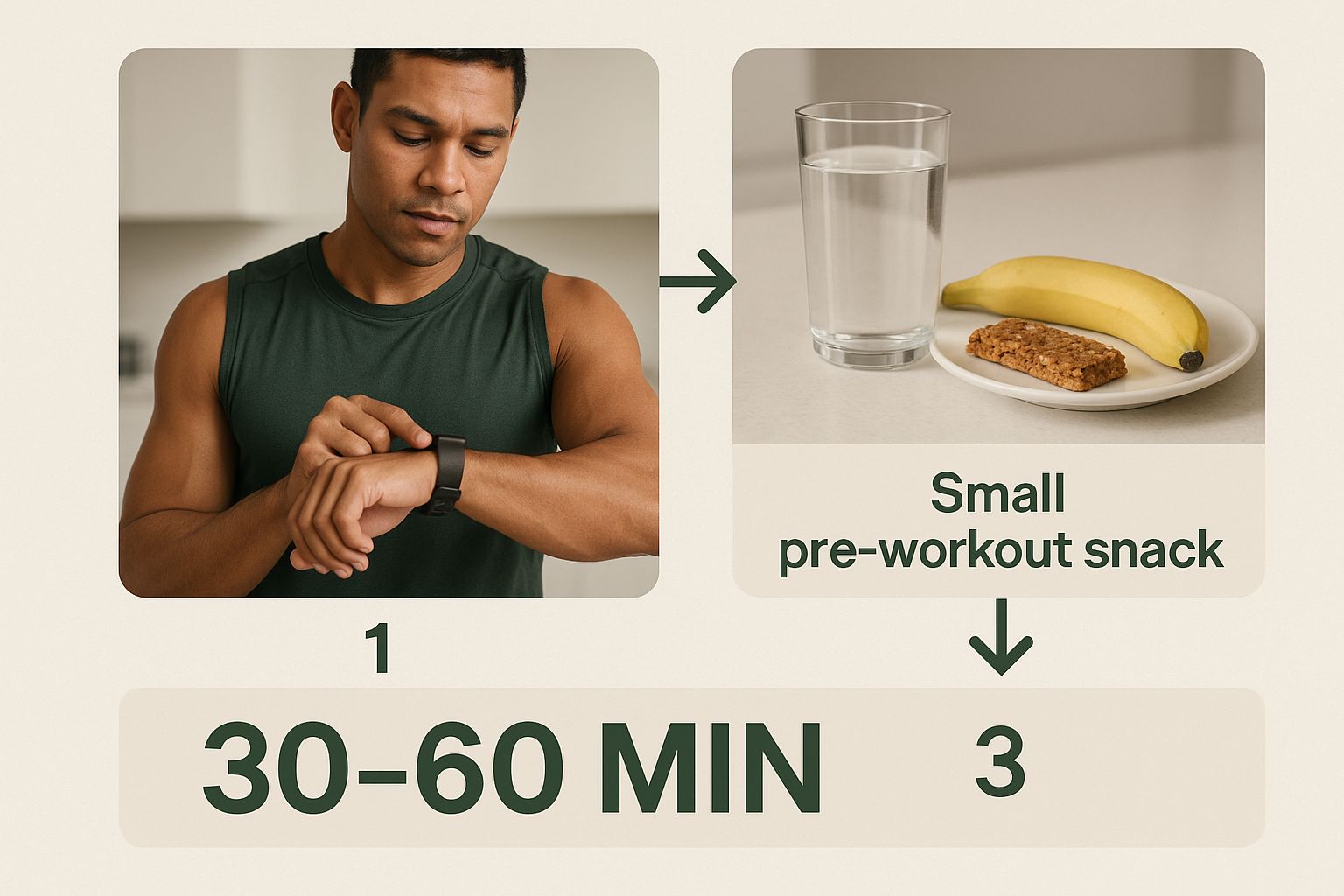
As you can see, a last-minute snack is all about getting the most accessible energy possible right before you start moving.
Simple ideas for this tight window:
- A medium banana
- A handful of dates
- A small pouch of applesauce
These options deliver a quick hit of energy, giving you that instant fuel you need to start your workout strong.
Pre-Workout Fueling At-a-Glance
To make things even simpler, here's a quick reference table. Just find your time window and see what works best.
| Time Before Workout | Primary Goal | Ideal Macronutrients | Example Meal/Snack |
|---|---|---|---|
| 2-3 Hours | Sustained Energy | Complex Carbs, Moderate Protein, Low Fat | Grilled Chicken, Quinoa, and Veggies |
| 60-90 Minutes | Quick Energy Top-Off | Simple/Complex Carbs, Small Amount of Protein | Greek Yogurt with Honey or a Whole-Grain Bagel |
| Under 30 Minutes | Instant Fuel | Simple, Fast-Acting Carbs | A Banana or a Handful of Dates |
Dialing in your pre-workout nutrition is a game-changer for performance.
While fueling your workouts is crucial, don't forget about supporting your body's overall wellness. For anyone interested in natural detoxification methods, you might find our guide on the surprising uses of wormwood for cleansing helpful. At the end of the day, timing your nutrition properly allows you to perform at your absolute best, no matter what your schedule throws at you.
Choosing the Right Fuel for Your Workout
Nailing your timing is a great start, but knowing what to eat is what really brings it all together. The food you choose is literally the fuel for your engine, and each macronutrient—carbs, protein, and fat—plays a very specific role in prepping your body for the work ahead. It's all about making smart, strategic choices to get the best possible performance.
Think of carbohydrates as high-octane gasoline for your muscles. They’re your body's number one, most efficient energy source, stored as glycogen in your muscles and liver. Show up with the tank half-empty, and you'll be sputtering before you even finish your warm-up.
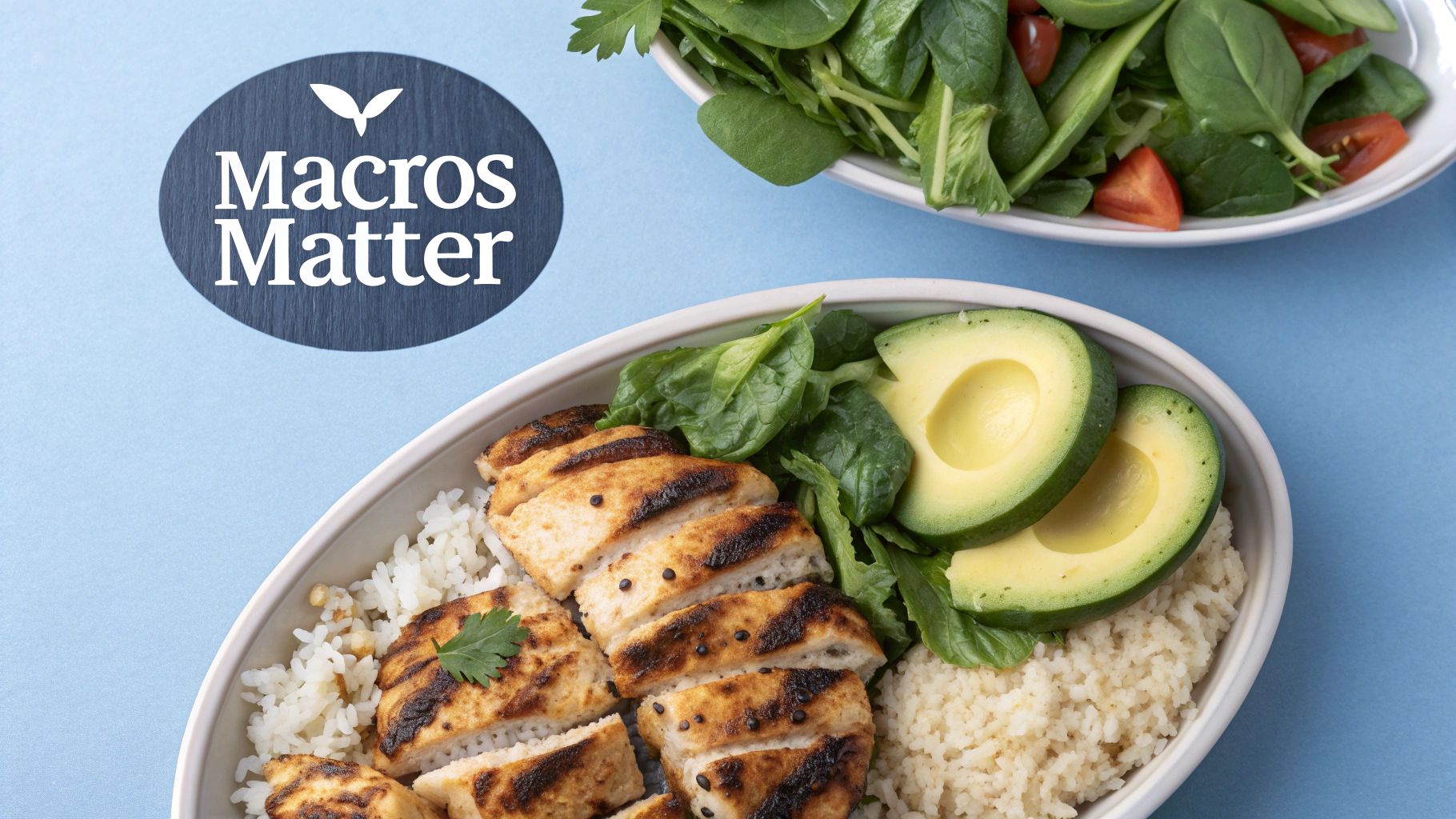
Dialing in Your Carbohydrate Strategy
Not all carbs are the same, and the type you reach for should depend on how close you are to starting your workout.
- Complex Carbs: Think oatmeal, brown rice, and whole-wheat toast. These break down slowly, giving you a steady, sustained release of energy. They're perfect for meals you eat 2-3 hours before a long session, ensuring you've got fuel for the long haul.
- Simple Carbs: Things like a banana, a few dates, or a bit of honey get digested fast. This makes them the ideal choice for that 30-60 minute window when you need a quick energy spike without weighing yourself down.
The Protective Power of Protein
While carbs are all about energy, protein plays more of a protective and preparatory role.
Getting a moderate amount of protein before you train gives your muscles a steady supply of amino acids. This actually helps reduce muscle protein breakdown (catabolism) during your workout. In a way, you're kick-starting the recovery and repair process before you've even finished the last rep.
A landmark study drove this point home, showing that athletes who had a protein and carb supplement right before and after exercise saw much bigger increases in lean body mass and strength than those who took it at other times. You can dive into the findings on how timing impacts muscle growth.
Adding protein to your pre-workout meal is like taking out an insurance policy on your hard-earned muscle. It helps make sure the stress of training leads to growth, not breakdown.
Why You Should Limit Fats Before a Workout
Fats are absolutely essential for a healthy diet, but they're the one macro you want to keep to a minimum right before you exercise.
Fat slows down digestion quite a bit. A high-fat meal can sit like a rock in your stomach, forcing your body to divert blood flow to your digestive system instead of your working muscles.
This is a recipe for feeling sluggish, bloated, or even getting stomach cramps—the last thing anyone wants mid-squat. Save healthy fats like avocado, nuts, and olive oil for your post-workout meals or other times of the day. By picking the right fuel for the job, you set yourself up for a powerful, energized, and effective workout.
How to Beat Mid-Workout Hunger and Fatigue
There’s nothing worse than hitting your stride in a great workout, only to be sideswiped by a sudden energy crash or those distracting hunger pangs. We’ve all been there. That feeling of hitting a wall is incredibly frustrating, but thankfully, mastering your pre workout nutrition timing is the best defense.
A strategically timed meal isn't just about cramming in calories. It’s about keeping your blood sugar stable and your mind laser-focused. When your energy levels are steady, you can pour everything you have into your performance instead of fighting off cravings and fatigue.

Stabilizing Your Energy Levels
The real key is eating the right mix of macronutrients within an optimal window before you train. This gives your body a sustained release of energy, preventing those sharp blood sugar spikes and crashes that kill your momentum.
A small meal with easily digestible carbs and a little bit of protein is the ideal formula. The carbs deliver that immediate fuel, while the protein slows down absorption just enough to create a steady energy stream.
This isn't just theory, either. A recent study found that 78.9% of resistance-trained athletes regularly ate before their workouts for this very reason. The research confirmed that having low-fiber carbs and protein-rich foods 30 to 60 minutes before training was incredibly effective at keeping hunger at bay, no matter how intense the session was. You can dive into the full study findings on pre-workout appetite control to see the science behind it.
Practical Tips to Stay Fueled and Focused
Putting this into practice is actually pretty simple. The goal is to feel powerful and sharp from your very first rep to your last.
- Avoid High Fiber and Fat: These slow down digestion way too much, which can leave you feeling bloated and uncomfortable. Save the fibrous veggies and healthy fats for another meal.
- Keep It Simple: Think a banana with a spoonful of peanut butter, a small bowl of oatmeal, or some Greek yogurt with berries. All of these are great choices that are easy on your stomach.
- Listen to Your Body: Everyone's different. You'll need to experiment a bit to find the exact snack and timing that makes you feel your absolute best in the gym.
By nailing your pre-workout snack, you're not just eating—you're strategically managing your body's energy. This one simple habit gives you the fuel to smash through plateaus and the focus to maintain perfect form.
This same principle of giving your body the right fuel at the right time is just as crucial for recovery. If you want to learn more about supporting your body's repair process, check out our guide on how to reduce muscle soreness and recover faster. A solid pre-workout meal sets the stage for a killer workout, and that's always the first step toward better results.
Connecting Pre Workout Timing to Your Overall Goals
Nailing your pre-workout nutrition is a huge lever you can pull for better performance, but its real power comes alive when it’s part of a full 24-hour strategy.
Think of that pre-workout snack as the opening act, not the whole show. It absolutely sets the stage for a killer workout, but the long-term results—the real muscle growth and endurance gains—are built by what you do consistently, day in and day out.
We have to look beyond that single meal. The bigger picture, which includes total daily nutrition and smart post-workout recovery, is what truly fuels progress and gets you ready for the next session. Your body is always in a cycle of breakdown and repair, and one perfectly timed snack just can't carry that entire load.
The Myth of the Anabolic Window
For years, we were all obsessed with the "anabolic window." You know the one—that frantic 30 to 60-minute period right after a workout where you had to slam a protein shake or risk losing all your gains.
While there’s a sliver of truth there, modern research has shown us a much bigger, more flexible picture.
A major 2018 meta-analysis dug into this and found something interesting. Yes, people who had protein within an hour of their workout saw a small benefit in muscle growth. But the researchers concluded this was mostly because those groups simply ate more total protein throughout the day. It wasn't the magic timing that made the difference; it was hitting their daily protein goal. You can dive into the full findings on protein timing and muscle growth to see the science yourself.
The biggest takeaway here is that while post-workout nutrition is definitely helpful, your total daily protein intake is the single most important factor for building and repairing muscle over the long haul.
Focusing on Total Daily Intake
So what does this actually mean for you? It means that your pre-workout meal is a critical piece of the puzzle, but it has to be supported by a solid nutritional foundation all day long.
If you're serious about your goals, hitting your daily protein target is non-negotiable.
Here’s where your focus should be for a complete, 360-degree approach:
- Total Daily Protein: Your goal should be 1.6-2.2 grams of protein per kilogram of body weight. This ensures a steady supply of amino acids to fuel muscle repair and growth around the clock.
- Consistent Nutrient Intake: Don't just obsess over the hours surrounding your workout. Spreading your protein and carb intake evenly throughout the day gives your body the resources it needs, whenever it needs them.
- Smart Supplementation: The right supplements can fill in any gaps in your diet and give you an edge. To see what might work for you, check out our guide on the top 7 best supplements for athletes.
When you see your pre-workout meal as just one part of the bigger system—along with post-workout recovery and consistent daily nutrition—you create a powerful and sustainable engine for reaching your goals.
Burning Questions About Pre-Workout Fueling
Let's dive into some of the most common questions I get about fueling up before a workout. Nailing your pre workout nutrition timing isn't about following a rigid formula; it's about learning to work with your own schedule and how your body feels. Here are some straight-up answers to help you figure out what works best for you.
What If I'm a 5 AM Warrior?
Training first thing in the morning is a classic conundrum. You don't have hours to kill waiting for a big meal to digest, but you definitely need some gas in the tank. The key is to think fast and simple.
About 20-30 minutes before you head out, grab some fast-acting, easily digestible carbs. We're not talking about a full breakfast here. Think a small banana, a few dates, or even a small glass of juice. This gives your body a quick shot of energy to top off your liver glycogen, providing an immediate fuel source to crush your session without weighing you down or causing gut issues.
Can I Just Take a Pre-Workout Instead of Eating?
I hear this one all the time. While a good pre-workout supplement can be a game-changer for energy and focus, it is absolutely not a substitute for real food. Most of them are packed with stimulants like caffeine and amino acids for that mental kick, but they're missing the actual fuel—carbohydrates—that your muscles need to perform.
Think of it like this: your pre-workout is the spark plug, but food is the gasoline. You need both to get the engine running at full capacity. Use the supplement to get your head in the game, but rely on a smart snack for the sustained energy to keep you there.
You can't out-supplement a bad diet. A pre-workout drink is there to enhance your performance, but a well-timed meal provides the actual caloric energy you need to sustain it.
Do I Really Need to Eat Before a Quick or Low-Intensity Workout?
Great question. For lighter stuff like yoga, a brisk walk, or a good stretching session, a dedicated pre-workout meal is usually overkill. Your body already has enough stored glycogen to handle less demanding activities without needing a last-minute top-off.
In these situations, just focus on being well-hydrated. If you’re feeling a little hungry, something super light like a few crackers or a small piece of fruit an hour or so beforehand is more than enough. The golden rule is always to listen to your body. Don't force-feed yourself if you're heading into a light session and feel perfectly fine. Let the intensity and duration of your workout be your guide.
At Peak Performance, we know that premium nutrition is the bedrock of every great workout. To get the most out of your perfectly timed meals, check out our range of USDA organic superfoods and supplements, all designed to help you hit your goals.
Discover the full Peak Performance collection and elevate your routine.
Also in Blog


A Guide to Third Party Tested Supplement Brands


Dietary Supplement B12: The Scientific Link to Fighting Anemia and Boosting Energy

