


Top 10 "Homework Hacks" for Kids Who Just Can't Sit Still
We’ve all seen it. The chair tipping back, the pencil tapping out a frantic rhythm, the sudden, desperate need for a third snack just ten minutes into homework. If you’ve ever felt that familiar wave of frustration watching your child struggle to focus, you are far from alone. The "homework wiggles" are a real, shared parental experience, and it’s a clear signal that their brain needs a reset.
Why The Homework Wiggles Are So Real

It’s easy to misinterpret all that fidgeting and distraction as defiance or just a lack of effort. But more often than not, this restless energy is a biological signal. It's your child's body saying, "I need to move!" or "My brain is overloaded and just can't concentrate right now." Instead of fighting against this natural impulse, the best thing you can do is work with it.
This need for better focus isn’t just happening at our kitchen tables; it's a massive global issue. The market for Focus Management Apps, currently valued at $2.1 billion, is expected to skyrocket to $7.8 billion by 2033. That number tells a story about our society's struggle with digital distractions and mental clutter—a struggle that often leads to a whole lot of stress.
Getting to the root of distraction is the first step. Understanding concepts like Social Emotional Learning (SEL) can give you a solid framework for helping your child build those crucial self-regulation skills. When you start seeing the wiggles as a call for help, you can shift from a place of frustration to one of strategic support.
The Energy Burn + Brain Boost Combo
The secret to turning homework chaos into calm concentration is a simple but incredibly effective two-part strategy I call the "Energy Burn + Brain Boost." This one-two punch directly tackles the biggest hurdles: excess physical energy and an unfocused mind.
Here’s the hack in its simplest form: 5 minutes of jumping jacks + 1 dose of Kids Focus Drops right before starting math.
This isn't just a random trick; it's an immediate, actionable solution. The physical activity burns off that pent-up energy and, just as importantly, increases blood flow to the brain, priming it for learning. The nutritional support then helps create a state of calm alertness, making it much easier to tackle challenging subjects.
This isn't about tiring your child out; it's about waking their brain up. By channeling their physical energy productively, you create the mental space necessary for cognitive tasks to take root.
This proactive approach reframes the start of homework. It’s no longer a dreaded chore but becomes an empowering ritual that gives your child the tools to settle their body and sharpen their mind.
From Homework Struggle To Hack Solution
Sometimes, seeing the problem and the solution side-by-side makes it all click. Before we dive deeper, this little table shows how simple shifts can make a huge difference in those all-too-common homework scenarios.
| Common Homework Struggle | A Quick Homework Hack Fix |
|---|---|
| Can't sit still and constantly fidgeting | Use scheduled 'Movement Breaks' every 20 minutes. |
| Difficulty starting a tough subject like math | Implement the 'Energy Burn + Brain Boost' combo. |
| Gets easily distracted by surroundings | Create a dedicated, clutter-free 'Focus Zone.' |
| Feels overwhelmed by large assignments | Break work down into 'Mini-Missions' with a checklist. |
See? Small, meaningful strategies like these are exactly what you need to start turning the tide on homework battles. By adopting them, you can help your child build the focus skills they need to truly succeed.
Hack 1: The Pre-Homework Energy Burn
If you’ve ever found yourself in a losing battle, pleading with your child to "just sit still and focus," you know how frustrating it can be. But what if the answer isn't to force stillness, but to embrace the wiggles first?
The truth is, their little brains and bodies often need the exact opposite of sitting still before they can settle down. A short, planned burst of physical activity isn't about wearing them out; it's about strategically waking up their brain for learning.

This pre-homework ritual is grounded in simple biology. When kids move, their heart pumps more oxygen-rich blood to the brain. This simple act can significantly sharpen cognitive functions—think better concentration, memory, and problem-solving. You're not just getting the fidgets out; you're priming their mind for peak performance.
Plus, physical activity is a fantastic mood regulator. Even just five minutes of vigorous movement can trigger the release of endorphins, those natural mood elevators. This can be the very thing that shifts their mindset from dreading homework to feeling positive and ready to go.
Why This Actually Works
The science here is pretty compelling. A pre-homework energy burn isn't just a distraction; it's a multi-faceted approach that meets a child's physical need for movement and their mental need for concentration. Think of it like hitting a reset button before they have to dive into schoolwork.
Here’s a quick look at what’s happening under the hood:
- Boosted Blood Flow: More oxygen floods the brain, directly supporting executive functions like planning, paying attention, and staying organized.
- Endorphin Release: These "feel-good" chemicals help reduce homework-related stress and can even create a more positive association with study time.
- Healthy Energy Outlet: It gives them a productive way to release all that pent-up physical energy that so often comes out as fidgeting and distraction.
This combination creates an ideal state for learning, where the body is calm and the mind is alert and ready to focus.
The 5-Minute Energy Burn Menu
The best part? This doesn't have to be complicated. You don't need a gym membership or fancy equipment. All it takes is five minutes and a little creativity. Frame it as a "Homework Power-Up" or a "Brain-Boosting Mission" to get your child excited and on board.
Try one of these quick activities before hitting the books:
- Jumping Jacks Challenge: See who can do the most in one minute. Do three rounds with a quick breather in between.
- Dance Party Freeze: Crank up their favorite high-energy song and dance like nobody's watching. When you pause the music, everyone has to freeze in a silly pose.
- Animal Walks: Get creative! Have them crab-walk across the living room, bear-crawl down the hallway, or frog-hop to the kitchen and back.
- Balloon Volleyball: Blow up a balloon and see how long you can keep it from touching the floor. It's great for indoor fun and builds coordination.
By working this simple routine into your afternoon, you're not just adding another task—you're fundamentally changing the dynamic of homework time.
Instead of starting with a battle over sitting still, you're kicking things off with a moment of connection and fun that truly sets your child up for success.
The Power Couple Strategy
To really take this hack to the next level, try pairing the physical activity with targeted nutritional support. Think of it as the second half of the "Energy Burn + Brain Boost" combo.
After the five-minute movement session, a dose of Kids Focus Drops can help encourage a calm, centered mindset, making that transition from active play to quiet desk work much smoother.
This one-two punch addresses the immediate need for movement while also giving the brain key nutrients for sustained concentration. For more great ideas on keeping everyone alert and engaged, check out our guide on how to boost energy naturally. This approach can transform homework prep from a daily struggle into a powerful, brain-boosting ritual.
Hack 2: The Brain-Boosting Nutritional Kickstart
Once the jumping jacks are done and the wiggles are worked out, it's time for the second part of our "Energy Burn + Brain Boost" strategy: fueling the brain for the work ahead. Think of it this way: physical activity primes the engine, but the right nutrition provides the high-octane fuel needed for real concentration and mental clarity. This is where a little targeted support can make a huge difference, helping shift your child's brain from scattered to focused.
This isn't about overhauling their diet or starting a new meal plan. It’s much simpler. We're talking about a strategic addition to their routine that supports brain function right when they need it most—just before sitting down to tackle long division or that dreaded book report.
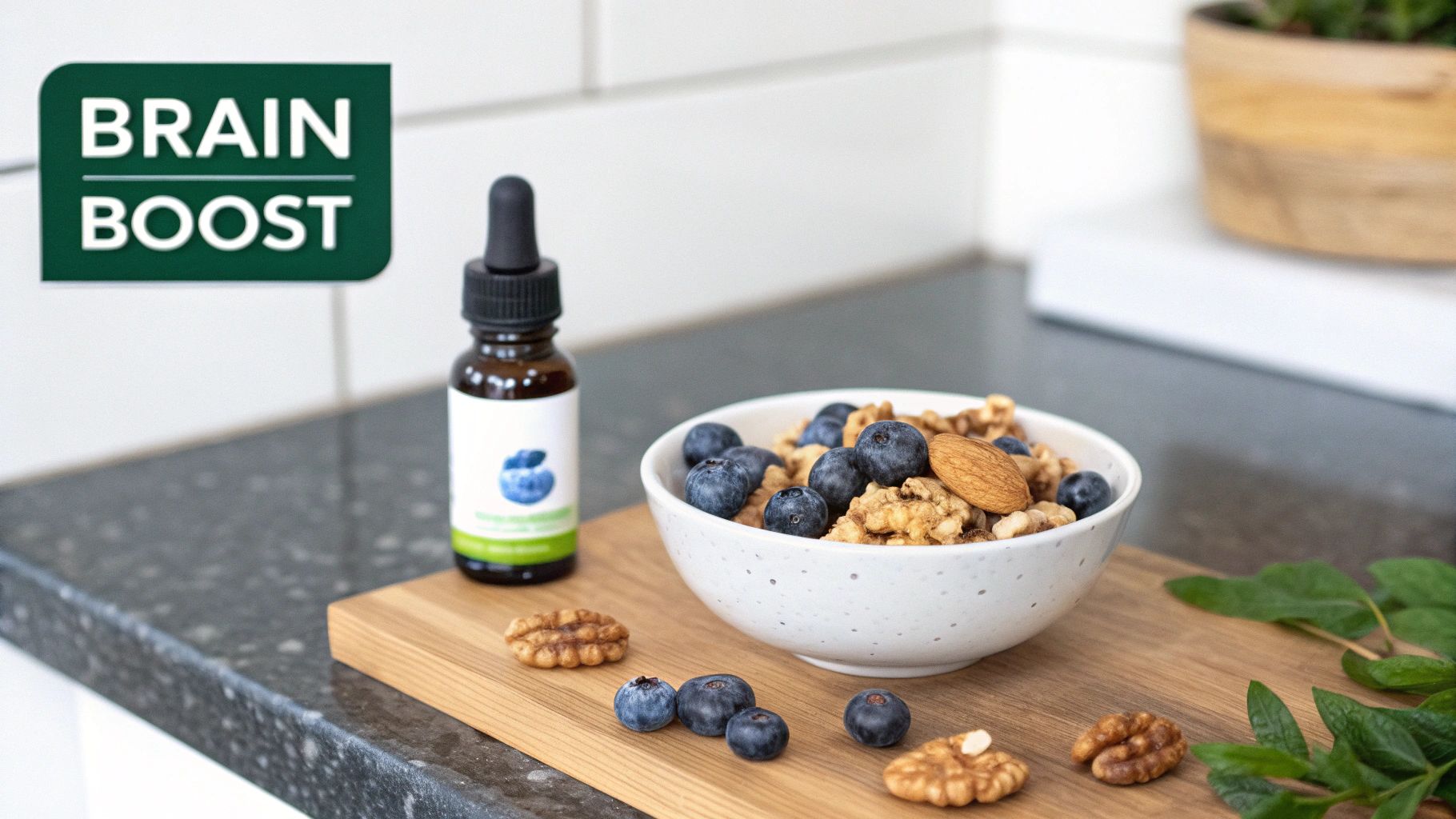
After a fun movement break, a tool like Peak Performance Kids Focus Drops completes the one-two punch. This liquid formula is specifically designed to help promote a calm, focused mindset, which can make that transition from active play to quiet desk work feel a whole lot smoother for everyone involved.
Fueling the Mind for Calm Concentration
So, what makes this work? It’s all about giving the brain specific nutrients that support its natural pathways for attention and mood. Imagine giving a talented musician a perfectly tuned guitar—it just allows them to play their best.
Many parents are understandably cautious about supplements. A well-formulated product isn’t a magic wand that replaces good habits, but it can be a fantastic ally. It’s a tool that works with a balanced lifestyle to nourish the brain, helping bridge any nutritional gaps while providing extra support for demanding mental tasks.
The simplicity here is key. A quick dose before homework is an easy "yes" for both parents and kids, which means one less battle in your afternoon. This small step can have a surprisingly big impact on your child's ability to settle in and actually engage with their schoolwork.
Parent-Friendly Ingredients for Brain Health
Knowing exactly what you’re giving your child is non-negotiable. Instead of a bunch of scientific jargon, let’s break down the key players in a way that makes sense. The ingredients in Kids Focus Drops are chosen specifically for their well-known roles in supporting cognitive health.
Here’s a quick look at what’s inside and why it matters:
- A Calming Foundation: Ingredients are selected to help soothe and balance the nervous system—a huge help for a child who feels restless or easily overwhelmed. This helps create a sense of tranquility without causing drowsiness.
- Cognitive Support: Certain botanicals are included for their ability to support the brain pathways related to memory and attention. This helps your child stay on task and soak up information more effectively.
- Mood Assistance: Key components can also contribute to a more stable, positive mood, which is directly tied to motivation and the willingness to take on homework challenges.
This gentle, supportive blend is designed to work with your child's natural biology, helping to create the ideal internal environment for learning and concentration.
By combining the physical release of an energy burn with the nutritional support of Kids Focus Drops, you’re creating a powerful, holistic routine. You're tackling both the body's need for movement and the brain's need for specific nutrients to focus. This dual approach helps set the stage for more peaceful and productive homework sessions, turning a daily struggle into an opportunity for success. For more on foundational nutrition, check out our guide on the best vitamins for kids.
Expanding Your Focus Toolkit: 5 More Proven Strategies
The "Energy Burn + Brain Boost" combo is a fantastic foundation, but let's be real—some days are just tougher than others. What works on Monday might fall flat by Wednesday. That's why building a versatile toolkit is so important. It gives you more options to pull from when the homework frustration kicks in.
Think of these next five strategies as specialized tools, each designed to tackle a very specific hurdle. These aren't complicated theories; they're simple, practical techniques you can try out as soon as tonight to help your child find their focus.
Hack 3: The Pomodoro Power-Up
Ever feel like your child's attention span has a built-in timer? It's not just you. Most kids (and adults!) can only maintain intense focus for a short burst of time. After about 20 minutes, the wiggles return and productivity grinds to a halt. The Pomodoro Technique is a brilliant method that works with this natural rhythm instead of fighting it.
The whole idea is to break work down into short, timed sprints with little breaks in between. This transforms what feels like an endless chore into a series of manageable, bite-sized challenges. It’s a game-changer because it gives the brain a clear finish line to race toward.
The Scenario: Your child is staring down a math worksheet with 20 problems, and it feels like climbing Mount Everest. They'll do one or two problems, then their gaze drifts out the window.
The Hack in Action: Grab a timer and set it for 25 minutes. Try saying, "Let's see how many of these you can knock out before the timer buzzes. When it goes off, you get a 5-minute break to do whatever you want!" This instantly gamifies the task and dangles a little reward, making the work feel way less intimidating. After the break, you just start another "Pomodoro" sprint.
Hack 4: Create a Dedicated Focus Zone
The environment where your child works has a huge impact on their ability to concentrate. A cluttered kitchen table—piled high with mail, snack wrappers, and a sibling's art project—is a minefield of distractions. A dedicated "Focus Zone" sends a powerful signal to the brain: "This is the spot where we get work done."
You don't need a separate office for this. It can be a specific corner of the living room, a small desk in their bedroom, or even just one side of the kitchen table that gets consistently cleared off before homework starts. The real magic is in consistency and clearing away any sensory input that isn't related to the task at hand.
Here’s how to set one up:
- Declutter Ruthlessly: The only things on the desk should be the absolute essentials for the current assignment—pencils, paper, textbook. Everything else gets put away.
- Quiet on the Set: If you can, pick a quieter part of the house. If that's not an option, noise-canceling headphones can be a lifesaver for kids who are easily distracted by sound.
- Let There Be Light: Make sure the space is well-lit. Squinting to see the page causes eye strain, which quickly leads to fatigue and a complete loss of focus.
This designated space builds a strong mental link between the location itself and the act of concentrating.
Hack 5: The Mini-Mission Method
Massive assignments can feel totally overwhelming for a kid. When they see "Book Report" or "Science Fair Project" on their to-do list, their brain often just short-circuits. The Mini-Mission Method is all about dismantling that intimidating monster of a project into tiny, non-threatening pieces.
This strategy works because it taps into the brain's natural reward system. Every time your child checks a small task off the list, they get a tiny hit of dopamine—the "feel-good" chemical that fuels motivation. It creates a positive feedback loop that builds momentum and makes them feel capable.
The Scenario: A big diorama project is due in two weeks, and your child is so paralyzed by the sheer size of it that they won't even start.
The Hack in Action: Sit down together and break it into a series of "mini-missions" on a checklist.
- ☐ Choose the scene from the book.
- ☐ Draw a quick sketch of the plan.
- ☐ Find a shoebox and gather craft supplies.
- ☐ Create the background inside the box.
- ☐ Make the little characters.
Suddenly, the project isn't one giant task anymore. It's just a handful of small, easy steps.
Hack 6: Introduce Sensory Fidget Friends
For kids who have the wiggles, being told to "sit still" can actually make it harder for them to focus. Their brain is actively craving sensory input. Giving their hands a quiet, non-distracting job can free up precious mental energy to concentrate on their schoolwork.
The secret is choosing the right tool—a "Fidget Friend," not a toy. A good fidget is silent, doesn't require you to look at it, and can be used while listening or reading. It simply channels that restless energy into a simple, repetitive motion.
A few excellent Fidget Friends to try:
- Modeling clay or therapy putty: Perfect for squeezing and shaping under the desk.
- A smooth worry stone: Can be rubbed discreetly in one hand.
- A ruler with a textured grip: Provides tactile feedback without being a distraction.
- Stretchy resistance bands for chair legs: Lets them bounce their feet quietly to get the jitters out.
Hack 7: The "Beat the Clock" Challenge
Sometimes, all you need is a little friendly competition to spark motivation. The "Beat the Clock" Challenge is a fantastic way to turn dull, repetitive tasks into a fun game. This works especially well for things like practicing spelling words or memorizing multiplication tables.
The goal isn't to encourage sloppy, rushed work, but to promote sustained focus for a short burst of time. It introduces a lighthearted element of pressure that can help your child power through the tasks they find most boring.
The Scenario: Your child has to write their 10 spelling words five times each, and the complaining is at an all-time high.
The Hack in Action: You lean in and say, "I bet you can't write all of these perfectly in under 10 minutes. I'll time you... Ready, set, go!" You can even track their "personal best" on a little chart, adding another layer of fun to the challenge week after week.
Hacks 8 To 10: Fueling Focus Beyond The Desk
The immediate hacks we've covered are great for getting through a tough assignment tonight, but building lasting focus is truly an inside job. It all comes down to creating a foundation of wellness that supports your child’s brain long before they even open a textbook.
For these final three hacks, we’re shifting our attention from the homework table to the kitchen, the water bottle, and the bedroom. These three areas have a massive, and often underestimated, impact on concentration.
True, sustained focus isn't just about willpower; it’s deeply connected to the fuel our bodies run on. By getting intentional about snacking, hydration, and sleep, you’re not just promoting good health. You’re actively building a more resilient, attentive, and focused brain for your child, day in and day out.

Hack 8: Brain-Friendly Snacking
The after-school snack is a sacred ritual in most households. But what we choose can either set a child up for academic success or send their blood sugar—and their focus—on a wild rollercoaster.
Sugary treats like cookies, juice boxes, or processed snack cakes might offer a quick jolt of energy, but the inevitable crash that follows is a recipe for distraction and irritability. When their blood sugar plummets, their ability to concentrate goes right along with it.
Instead, think of snacks as mini-meals engineered to provide steady, slow-release energy for the brain. The goal is to combine complex carbs, healthy fats, and protein. This powerful trio stabilizes blood sugar and provides the essential nutrients needed for peak cognitive function.
The Scenario: It’s 4 PM, and your child is begging for that colorful, sugary granola bar before starting their homework. You know that in 30 minutes, they’ll be slumped over the table, unable to focus.
The Hack in Action: Offer a "brain-boosting" alternative that still feels like a treat. Try apple slices with a scoop of almond butter, a small bowl of Greek yogurt with a handful of blueberries, or even some walnuts and a cheese stick. These snacks provide the sustained energy their brain actually needs to stay engaged.
Hack 9: The Power Of Hydration
This is one of the simplest and most overlooked factors in cognitive performance: water. Even mild dehydration can torpedo a child's ability to focus.
When the body is low on water, it can lead to fatigue, headaches, and a noticeable drop in mental alertness and short-term memory. Their brain literally can't operate at its best without enough H₂O.
The problem? Many kids don't register thirst until they're already slightly dehydrated. If you wait for them to ask for a drink, their focus has probably already started to dip. The key is to make hydration a proactive, and even fun, part of their daily routine.
- Get a Special "Homework" Bottle: Let them pick out a cool reusable water bottle that becomes their designated study buddy.
- Infuse with Flavor: Make water more exciting by adding slices of orange, cucumber, or a handful of berries to a pitcher.
- Track Their Progress: Use a water bottle with time markers on the side, or let them add a sticker to a chart for every glass they finish.
Just keeping a full water bottle on their desk during study time not only reminds them to drink but also provides a healthy, brief micro-break when they take a sip.
Hack 10: Prioritizing A Good Night's Sleep
Sleep isn't just rest; it's the brain's essential maintenance period. This is when the brain consolidates memories, clears out metabolic waste, and recharges the circuits needed for learning and concentration the next day. A sleep-deprived child is fighting an uphill battle against their own biology when it comes to focus.
A consistent lack of quality sleep directly impacts the prefrontal cortex—the part of the brain responsible for executive functions like attention, planning, and impulse control. This is exactly why a tired child is often an impulsive and easily distracted child.
Making their sleep schedule a priority is one of the most powerful things you can do to improve their daytime focus.
- Stick to a Consistent Bedtime: This simple habit helps regulate their internal clock, making it easier to fall asleep and wake up.
- Create a Wind-Down Routine: An hour before bed, switch off all screens. Opt for calming activities like reading a book, listening to quiet music, or taking a warm bath.
- Optimize the Environment: Keep their bedroom cool, dark, and quiet to minimize disruptions.
These lifestyle habits might seem separate from homework, but they are the absolute bedrock of a focused mind. For a deeper dive, you can explore even more helpful tips in our guide on natural ways to increase focus. By nourishing their body, keeping them hydrated, and ensuring they get enough rest, you are giving them the foundational tools they need to concentrate and thrive.
Common Questions About Improving Your Child's Focus
It’s completely normal to have questions as you start trying these new ideas. You’re not just tweaking a homework routine; you're helping your child build a whole new skill set for learning and concentration. Let's tackle some of the most common questions parents ask so you can feel confident moving forward.
Think of this as your quick-start guide for troubleshooting and fine-tuning your approach.
How Soon Can I Expect To See A Difference?
This is the big one, isn't it? The answer really depends on the child and the strategy. You'll likely see an immediate impact from the physical activity hacks. An "Energy Burn" break, for example, can make a noticeable difference in calming your child down for homework that very same day.
When it comes to nutritional support like Kids Focus Drops, think of it as long-term brain nourishment. While some parents report a positive shift in their child’s ability to focus within the first week, consistency is what really counts.
The most powerful, lasting changes happen when you combine these strategies. Movement, nutrition, and a better environment all work together over several weeks to build a rock-solid foundation for concentration.
Are Fidget Tools Actually Helpful Or Just Another Distraction?
This is a fantastic question. The short answer is: it depends entirely on the tool. A good fidget tool can be a game-changer, while a bad one is just a toy that gets in the way.
Anything with lights, sounds, or complicated parts is almost always a distraction. But a simple, silent sensory tool—like therapy putty, a smooth stress ball, or even a textured ruler—can be incredibly helpful. For many kids, giving their hands a quiet job to do actually frees up their minds to focus on the real task.
Here’s a simple rule of thumb:
- If the tool can be used without taking their eyes and mind off their work, it's a "Focus Friend."
- If it constantly pulls their attention away, it belongs in the playroom.
How Can I Introduce These Changes Without A Fight?
The secret here is all in how you frame it. Most kids will push back against a new rule, so don't present these as more chores. Instead, make it a fun experiment or a challenge you can do together.
Instead of saying, "You have to do jumping jacks now," try something like, "Hey, let's do a 5-minute power-up challenge to get our brains ready for math!" Get them involved in the choices, too. Let them pick the movement break or choose their own "focus snack."
When you introduce something new like Kids Focus Drops, give it a cool name like "brain fuel" or "smart drops." Making the process feel empowering and collaborative will get you much further than laying down the law. For more great ideas, check out this article on 5 Ways to Help Your Child Stay Focused in a Distracted World.
Ultimately, you're trying to turn the homework battle into a partnership. When you approach this with a bit of fun and teamwork, you help your child build the skills and confidence they need to succeed.
At Peak Performance, we’re passionate about supporting your family’s wellness from the inside out. Our Kids Focus Drops are crafted to be a simple, supportive part of your daily routine, helping to create a calm and focused mindset for learning.
Also in Blog


Collagen and Bone Broth: A 'Liquid Botox' Skin Solution


Mullein for Vaping Lung Detox: Clear Residue Now

