


Top 10 Warming Herbs to Boost Circulation in Winter
When winter's chill really sets in, piling on another sweater for your icy hands and feet can feel like a losing battle. But what if the secret to true warmth wasn't about adding another layer, but about stoking the fire within? Ancient wellness practices, particularly Traditional Chinese Medicine (TCM), have long understood this, turning to "warming" herbs like ginger root to boost the body's internal furnace and get circulation moving.
How Warming Herbs Improve Winter Circulation
Ever notice how, no matter how bundled up you are, your fingers and toes just refuse to warm up? According to TCM, that persistent chill often points to an internal imbalance, not just the temperature outside. TCM sees the body as a dynamic system where forces like warmth, coolness, and dampness need to stay in harmony for us to feel our best.
In winter, the external environment is dominated by cold, which can seep into the body and cause sluggishness, poor circulation, and that deep-seated chill. TCM describes this as a weakness in "Yang" energy—the active, fiery force that drives our metabolism and keeps us warm and energized. When Yang is low, our blood and vital life force, known as Qi (pronounced "chee"), can't flow freely. It stagnates, failing to reach the hands and feet.
Igniting Your Internal Furnace
This is where warming herbs come into play. They do something blankets and heaters can't: they generate heat from the inside out, invigorating the flow of both Qi and blood. It's helpful to think of your circulatory system as a network of rivers. In the cold, these rivers can become sluggish, almost frozen over.
Warming herbs act like a powerful current that breaks up the ice, restoring a strong, steady flow to even the tiniest capillaries. They essentially turn up the thermostat on your internal furnace, pushing warmth and vitality to every last corner of your body.
In TCM, herbs classified as "warming" have specific properties that directly counteract the effects of cold. They are often pungent and spicy, flavors that are believed to break up stagnation and stimulate movement. Ginger root is a classic example, prized for its unique ability to warm the body's core and drive circulation outward to the extremities. It’s a true cornerstone of winter wellness.
Finding Balance for Winter Vitality
Using these herbs is about more than just a temporary warm-up. The real goal is to restore your body’s natural equilibrium and strengthen its defenses against the cold. By bolstering your internal Yang energy, you can effectively push back against common winter issues like:
- Constantly cold hands and feet
- A persistent sense of fatigue or lethargy
- Slow or uncomfortable digestion
- A tendency to catch every bug going around
By leaning into these time-tested principles, you can use nature's own wisdom to build resilience from within. Pairing warming herbs with a supportive lifestyle creates a potent strategy for staying vibrant and energized all winter long. For those looking for even more comprehensive circulatory support, you may also want to learn more about our USDA organic nitric oxide booster. This holistic approach helps you work with your body to unlock a kind of deep, lasting warmth that no amount of clothing can provide.
Ginger Root: The Ultimate Warming Herb for Blood Flow
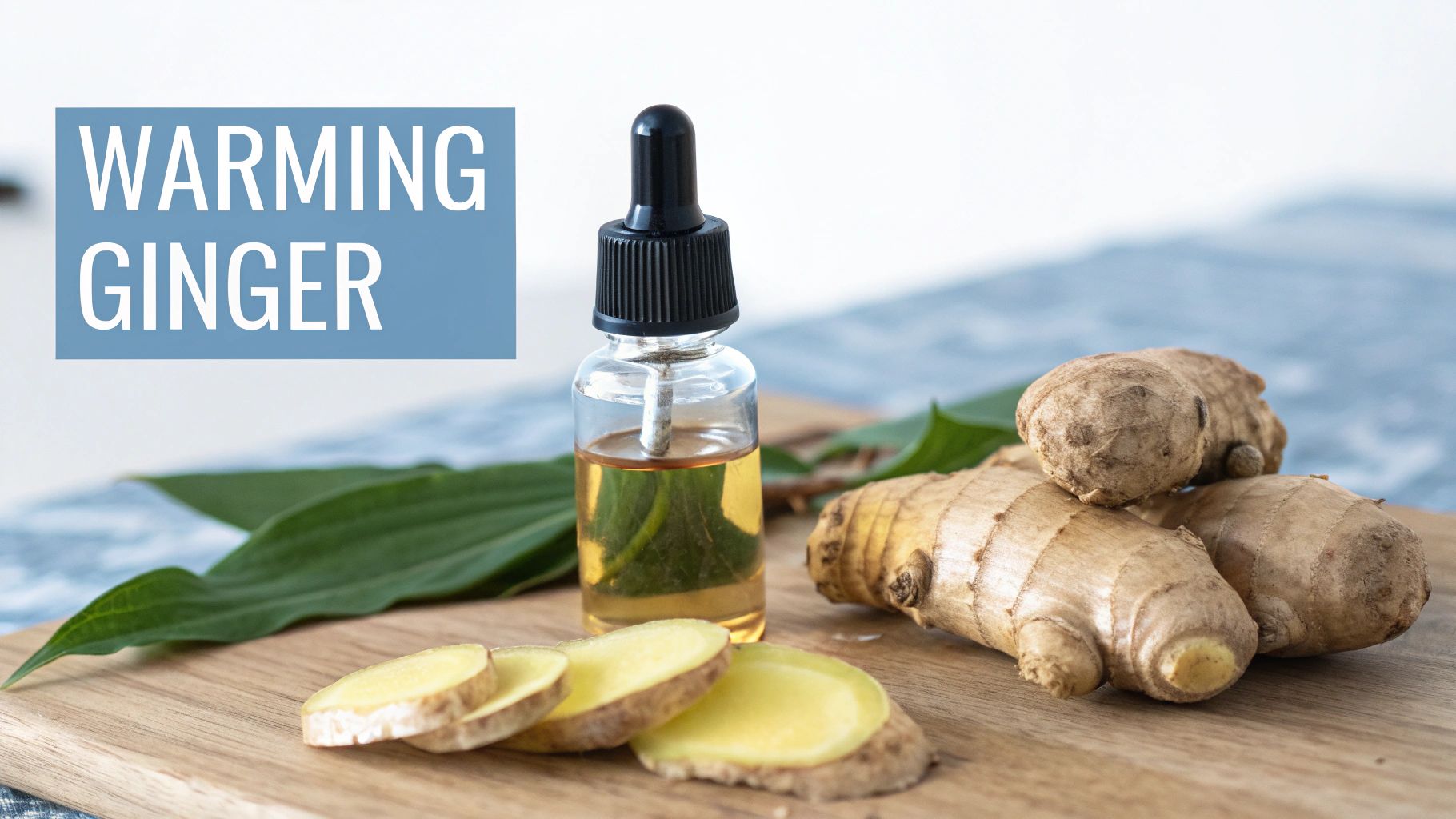
In the vast world of Traditional Chinese Medicine (TCM), ginger root is a true standout among warming herbs. For centuries, it has been celebrated for its incredible ability to get your circulation moving and efficiently push cold out of the body. Its uniquely pungent and warm properties go straight to work on the digestive and metabolic systems—what TCM considers the very core of your body's energy production.
This is precisely why ginger is often the first thing recommended for that deep, persistent chill that seems to settle in your bones. Think of it as stoking your body’s internal furnace. Ginger provides a powerful, initial spark that sends waves of warmth and energy rippling outward, all the way to your fingertips and toes.
This isn't just ancient wisdom, either. Modern science is catching up, and researchers have identified compounds like gingerol as the powerhouse behind ginger's circulatory benefits. Gingerol, which gives the root its spicy kick, has been shown to be a major player in supporting healthy blood flow and cardiovascular function.
How Ginger Creates That Feeling of Warmth
Ginger’s magic is in its multifaceted approach. From a TCM perspective, it doesn't just add heat; it actively moves energy and breaks up the kind of stagnation that makes you feel cold in the first place.
Here’s a closer look at how it works:
- It Dispels "Wind-Cold": In TCM, cold is seen as an external factor that can "invade" the body, causing stiffness and sluggish circulation. Ginger’s sharp, pungent nature helps to expel this cold and get things flowing properly again.
- It Warms the "Middle Jiao": This is the TCM term for your core digestive organs, the spleen and stomach. By warming this central hub, ginger helps your body more efficiently turn food into Qi (energy) and blood, giving you the fuel you need to stay warm.
- It Promotes a Gentle Sweat: A light sweat is one of the body's ways of releasing pathogens and opening up surface channels. This allows your energy and blood to circulate more freely to the skin and limbs.
This ability to warm your core and push that energy outward makes ginger an indispensable tool for anyone who struggles with cold hands and feet. It's no wonder the global ginger root market has swelled to USD 4.88 billion and is projected to climb even higher, all thanks to health-conscious people seeking out its powerful benefits. You can explore more about this trend in this detailed ginger market report.
A Convenient and Potent Solution
Let's be honest, peeling and grating fresh ginger every day can be a bit of a hassle. That’s where a high-quality, concentrated extract becomes a game-changer, offering a simple and potent way to bring this warming herb into your daily routine.
By incorporating a potent ginger extract, you can get a consistent and effective dose of its active compounds without the daily prep work.
For a pure and incredibly convenient way to tap into ginger's warming power, Peak Performance Organic Ginger Root Drops offer a USDA-certified organic solution. Just a few drops in water, tea, or a smoothie is all it takes to support robust blood flow and stay vital through the colder months.
To dive deeper into the science behind it all, you can read our complete guide to ginger root supplement benefits.
Cinnamon Bark: A Sweet Spice to Warm Your Core
While ginger root is fantastic for a quick circulatory boost to warm you up on the surface, another spice works on a much deeper, more foundational level. I'm talking about cinnamon bark, known in Traditional Chinese Medicine (TCM) as Rou Gui. This sweet, aromatic spice is treasured for its profound ability to warm the body from the inside out.
Ginger acts fast, pushing warmth out to your fingers and toes. Cinnamon’s effects, on the other hand, are more sustained and penetrating. TCM practitioners use it to strengthen what they call "Kidney Yang," which you can think of as your body's internal pilot light—the primary source of all your metabolic heat and physiological fire. When your Kidney Yang is strong, you feel energetic and resilient. When it's weak, a deep-seated cold can settle in that's hard to shake.
A Deeper Kind of Warmth
Cinnamon's unique sweet and pungent flavor profile is believed to help it travel deep within the body, targeting the lower back and abdomen where this core energy is said to reside. This makes it an essential herb for fortifying your internal furnace, ensuring you have a steady, reliable supply of warmth to draw from all day long.
If you think of ginger root as the kindling that gets a fire roaring quickly, cinnamon bark is the dense log that keeps it burning steadily for hours. The two really do work in perfect harmony.
Ginger provides the immediate circulatory push to warm your cold hands and feet, while cinnamon reinforces the core furnace that generates that heat in the first place. This synergy creates a powerful, two-pronged approach to staying warm all winter.
Simple Ways to Incorporate Cinnamon
Getting this deeply warming spice into your daily routine is both easy and delicious. Its comforting flavor is a natural fit for many foods and drinks you probably already enjoy.
Here are a few simple ideas:
- Morning Boost: Sprinkle a generous dash of cinnamon into your morning oatmeal, yogurt, or coffee.
- Warming Beverages: Add a whole cinnamon stick to your tea or even just hot water for a gentle, all-day infusion.
- Synergistic Power: Combine it with ginger for the ultimate warming elixir. Try adding a few Peak Performance Organic Ginger Root Drops to a mug of hot cinnamon tea.
By adding cinnamon to your winter wellness toolkit, you’re doing more than just temporarily chasing away the cold. You're actively supporting your body's foundational energy, building a more resilient internal environment that can truly stand up to winter's chill.
Nine More Essential Herbs for Natural Warmth
Beyond the foundational power of ginger and cinnamon, a whole world of warming herbs is waiting to help you thrive through the colder months. Each one has a unique energetic personality, as understood in Traditional Chinese Medicine (TCM), allowing you to build a diverse and highly effective wellness toolkit.
Let's explore nine more powerhouses that can help keep you warm, vibrant, and resilient. Knowing these allows you to create nuanced combinations tailored to your specific needs, whether you're looking for a quick burst of heat or deep, sustained warmth. You can finally move beyond a one-size-fits-all approach and truly customize your winter health routine.
This growing trust in natural remedies isn't just a feeling; it's a massive market trend. For instance, the global demand for ginger root alone is expected to hit USD 6.88 billion by 2030, a huge jump from USD 4.01 billion, growing at a blistering 9.41% each year. This boom is fueled by its medicinal punch and soaring popularity in the wellness world. You can read the full research on the ginger market here to see just how much people are turning to these powerful, natural herbs.
Turmeric: The Golden Mover of Blood
Turmeric, with its unmistakable golden hue, is prized in TCM for more than just its warming nature. It’s exceptional at "invigorating the blood," which means it helps break up stagnation and get circulation moving smoothly again—especially to areas that feel stiff and achy in the cold.
Think of your circulation as a river. Cold weather can create little dams of stagnant water, causing things to feel stuck. Turmeric acts like a steady current that gently but firmly breaks down these blockages, restoring flow and bringing warmth along with it. This makes it a fantastic ally for anyone whose joint discomfort flares up in winter.
An easy and delicious way to get your daily dose is with a "golden milk" latte. Just gently heat a cup of milk (or a non-dairy alternative) and whisk in a teaspoon of turmeric powder, a pinch of black pepper (which is crucial for absorption), and a few Peak Performance Organic Ginger Root Drops for an extra circulatory boost.
Cardamom: The Aromatic Warmer
Cardamom is a wonderfully aromatic spice that TCM classifies as both warming and pungent. Its special talent is warming up the digestive system (the "Middle Jiao") while also resolving dampness—that heavy, sluggish feeling that often comes with cold, dreary weather.
Its fragrant quality helps to "open the orifices," a TCM concept that means it clears away mental fogginess and lethargy. This makes it perfect for those gray winter days when you feel both chilled and mentally stuck in a rut.
Cardamom is like a warm, fragrant breeze that clears the damp chill from your core, leaving you feeling lighter, clearer, and more energized.
Try adding a few whole cardamom pods to your tea as it steeps, or sprinkle ground cardamom into your coffee or morning oatmeal. Its sweet, slightly spicy flavor pairs beautifully with other warming herbs like ginger and cinnamon.
Cayenne: The Fiery Circulator
When you need an immediate and powerful blast of heat, nothing quite compares to cayenne pepper. In TCM, its extremely hot and pungent nature makes it one of the most effective herbs for jump-starting circulation and driving out deep-seated cold.
Cayenne works so fast because of a compound called capsaicin, which directly stimulates blood flow right to the surface of your skin. It's the reason you feel that pleasant flush of warmth after eating something spicy. It’s an excellent tool for revving up your internal engine on the most frigid days.
Because it's so potent, a little goes a very long way. Start with just a tiny pinch in a mug of hot water with lemon and a few drops of our Organic Ginger Root Drops. You can also add a dash to soups and stews for a stealthy warming kick.
Clove: The Deep-Penetrating Spice
Clove is another intensely warming spice that, much like cinnamon, is known for its ability to warm the body's core. In TCM, it specifically targets the "Kidney Yang," which is seen as the body's foundational metabolic fire.
Its warming action is deep and penetrating, making it ideal for combating that profound sense of internal cold. If you ever feel chilled to the bone in a way that extra layers just can't seem to touch, clove is a fantastic herb to bring into your routine.
- Simple Infusion: Stud an orange with whole cloves and let it simmer in a pot of water on your stove. This not only warms your home with a beautiful aroma but also creates a fragrant steam you can inhale.
- Culinary Use: Ground cloves are a perfect addition (in small amounts) to oatmeal, baked apples, or savory meat rubs.
Black Pepper: The Digestive Fire-Starter
So often overlooked, black pepper is a seriously potent warming herb. Its main job in TCM is to warm the stomach and intestines, helping to stoke the "digestive fire" so your body can pull more energy and nutrients from your food.
A strong digestive fire is non-negotiable for generating internal warmth. When your digestion is sluggish, your whole system can feel cold and slow. Black pepper helps kickstart the entire process.
The easiest way to use it? Simply be more generous with your pepper grinder at mealtimes. Freshly ground black pepper offers the most potent benefits and flavor. Plus, it famously helps your body absorb other herbs and nutrients, especially turmeric.
Nutmeg: The Gentle Soother
Nutmeg is a warming, aromatic spice with a gentler, more calming effect than cayenne or clove. TCM uses it to warm the digestive system, but it's also known for its ability to soothe the spirit.
This makes nutmeg an excellent choice for the evening, when you want to feel cozy and settled before bed. It can help ease digestive discomfort while promoting a deep sense of relaxation.
A pinch of freshly grated nutmeg in a warm cup of milk or a caffeine-free herbal tea can be a wonderfully comforting end to a cold day.
Ginseng: The Qi and Yang Tonic
Moving into the world of classic herbal tonics, Ginseng (specifically Panax ginseng) is a legend in TCM. It's known for powerfully strengthening Qi (vital energy) and Yang energy. It’s also an adaptogen, which means it helps your body build resilience to all kinds of stress, including the physical stress of cold weather.
Think of Ginseng less as a quick fix and more as a long-term builder of internal strength and warmth. Using it regularly can help fortify your core energy, making you far less susceptible to the draining effects of cold over time.
Ginseng is usually taken as a tea or in supplement form. It's a powerful herb, so it's always wise to start with a small amount to see how your body responds.
Astragalus: The Protective Shield
Astragalus is another foundational herb in the TCM toolkit. While its warming properties are gentle, its real superpower lies in its ability to bolster the "Wei Qi," or Protective Qi.
You can think of Wei Qi as your body's invisible energetic shield. It circulates just beneath the skin to guard you against external factors like cold and wind. A strong Wei Qi helps keep the cold from getting a foothold in your body in the first place.
Brewing dried slices of astragalus root into a mild-tasting tea is the traditional way to use it. You can also toss the root slices into soups and broths, letting them simmer for at least 30-60 minutes to extract their benefits before straining them out.
A Quick Guide to Warming Herbs
To help you keep track, here's a quick summary of these incredible herbs and how they function from a Traditional Chinese Medicine perspective to support warmth and circulation.
| Herb | TCM Energetics | Primary Circulation Benefit |
|---|---|---|
| Ginger | Acrid, Hot | Warms the core, releases exterior cold |
| Cinnamon | Pungent, Sweet, Hot | Warms the interior, strengthens Kidney Yang |
| Turmeric | Acrid, Bitter, Warm | Invigorates blood, moves Qi, relieves pain |
| Cardamom | Acrid, Aromatic, Warm | Warms the Middle Jiao, resolves dampness |
| Cayenne | Hot, Pungent | Strongly stimulates circulation, disperses cold |
| Clove | Acrid, Warm | Warms the interior, directs Qi downward |
| Black Pepper | Hot, Acrid | Warms the stomach, disperses cold |
| Nutmeg | Acrid, Warm | Warms the spleen/stomach, calms the spirit |
| Ginseng | Sweet, Slightly Bitter, Warm | Tonifies Qi and Yang, strengthens the core |
| Astragalus | Sweet, Slightly Warm | Strengthens Protective Qi (Wei Qi) |
This table serves as a starting point. As you get more familiar with these herbs, you'll start to intuitively understand which one to reach for based on how you're feeling on any given day.
How to Create Your Daily Winter Warming Ritual
Knowing about these amazing herbs is one thing, but actually putting them to use is where the real magic happens. The secret to an effective winter routine isn't about relying on just one herb. It's about combining them to create a synergistic effect that keeps your internal furnace humming all day long. A simple daily ritual can become the very foundation of your winter wellness, giving your circulation a consistent, powerful boost.
It all comes down to creating small, enjoyable habits that you can actually stick with. When you make a high-quality, potent supplement the cornerstone of your ritual, you get a reliable dose of warming power without the fuss of chopping or grating fresh herbs every day. That convenience makes it so much easier to stay on track, even on the most hectic mornings.
Your Morning Elixir and Afternoon Boost
Start your day with what I like to call a "Winter Warming Elixir." It’s incredibly simple but powerfully effective. Just add a few Peak Performance Organic Ginger Root Drops to a mug of hot water, then toss in a sprinkle of cinnamon and a slice of fresh orange. This combination tastes fantastic and immediately gets your circulation moving, sending warmth from your core all the way out to your fingers and toes.
Later on, when that afternoon chill or energy dip hits, try a turmeric latte. Gently heat a cup of your favorite milk and whisk in a teaspoon of turmeric powder, a dash of black pepper (which helps your body absorb the turmeric), and another drop or two of ginger extract for that extra circulatory kick. It’s a comforting and invigorating way to power through the rest of your day.
By making a potent ginger extract like Peak Performance Organic Ginger Root Drops your go-to foundation, you ensure a convenient and powerful start to any warming combination you create, empowering you to take control of your winter health.
Building Your Ritual Beyond Drinks
Your warming ritual doesn't have to stop with beverages. You can weave these incredible herbs into your meals and even your environment to create a complete sensory experience of warmth and comfort.
- Mealtime Magic: Add a pinch of cayenne to your soups or stews for an instant pop of heat. Sprinkle some nutmeg and clove into your morning oatmeal or yogurt. Use black pepper generously on your meals to support your digestive fire.
- Aromatic Ambiance: The space you're in plays a huge role in how warm you feel. To create a cozier atmosphere, consider incorporating elements like using essential oil candles for natural ambiance as part of your ritual.
- Soothing Foot Soaks: Before bed, treat yourself to a warm foot soak. Just add a few drops of ginger extract or a bit of strong ginger tea to a basin of hot water. This simple practice helps draw circulation downward and can lead to a much more restful night's sleep.
This concept map really brings it all together, showing how ginger root sits at the heart of a warming herb strategy, working in tandem with other powerful spices.
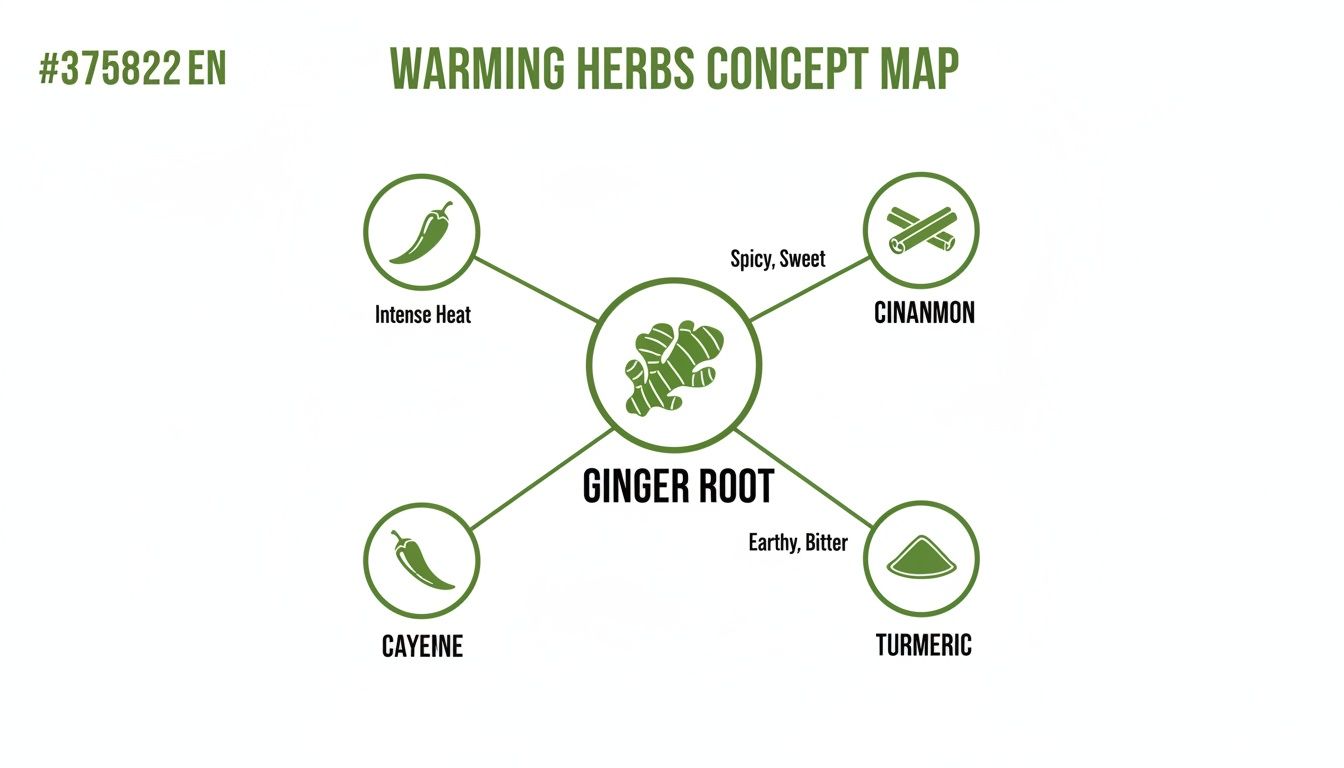
The map highlights that while each herb is powerful on its own, their combined strength is what creates a truly holistic approach to staying warm in winter. This appreciation for natural, functional foods is spreading worldwide. The global ginger market is on track to hit USD 7,928.5 million as more people seek out traditional herbal remedies for modern wellness. By creating your own daily ritual, you're tapping into this ancient wisdom in a simple, practical way.
Lifestyle Tips to Enhance Your Inner Warmth
Herbs like ginger root are fantastic on their own, but you can get so much more out of them by pairing them with a lifestyle that builds internal warmth. Think of it this way: in Traditional Chinese Medicine (TCM), staying warm in winter is about more than just throwing on an extra sweater. It’s about making smart choices that protect your body's core energy, known as Yang Qi.
When you weave a few simple, holistic habits into your day, you amplify the warming effects of ginger. It's about creating a complete strategy to feel energized, resilient, and cozy all winter long.
Protect Your Digestive Fire
A core concept in TCM is protecting the "digestive fire" in your stomach and spleen. Picture this as a little furnace inside you that turns food into the energy (Qi) and blood your body needs to function and stay warm. Tossing cold, raw foods into this furnace is like trying to light damp wood—it just smothers the flame.
Your body has to work overtime to warm up icy drinks or a raw salad before it can even begin to digest them. That's energy you could be using to keep your fingers and toes warm.
During winter, make a simple switch to cooked, seasonal foods. Your digestive system will thank you. Think of comforting meals like:
- Hearty Soups and Stews: They’re basically pre-digested, already warm, and incredibly easy for your body to process.
- Roasted Root Vegetables: Roasting brings out the natural sweetness in veggies like sweet potatoes, carrots, and parsnips, making them deeply nourishing.
- Warm Porridge or Oatmeal: Kickstart your day by stoking your inner furnace first thing in the morning.
Simple Practices for Daily Warmth
What you eat is huge, but a few small physical habits can also make a massive difference in keeping your energy and blood flowing smoothly.
In TCM, certain parts of the body are seen as "gateways" where cold can sneak in and throw your system out of whack. Keeping these spots protected is a surprisingly simple and effective way to hold onto your inner warmth.
Always keep your neck, lower back, and feet covered, especially when you're heading outside. A scarf protects the "wind gate" at the back of your neck. Keeping your lower back covered helps shield your core Kidney Yang energy. And don't forget your feet! A quick foot rub at night before bed can stimulate key energy channels and boost circulation to your extremities.
Gentle movements like Tai Chi or Qigong are also perfect for getting your blood moving without overtiring your body. If you're curious about other ways to support your body's natural flow, check out our guide on supplements for lymphatic drainage.
Common Questions About Warming Herbs
When you first start exploring warming herbs like ginger root, it's natural to have a few questions. Getting a handle on the practical side of things is key to using them with confidence. Let's tackle some of the most common queries so you can build a winter wellness routine that’s both safe and effective.
A question I hear all the time is whether it’s okay to mix and match different warming herbs. For the most part, the answer is a big yes. In fact, systems like Traditional Chinese Medicine are built on creating synergistic formulas where herbs work better together. Think of combining ginger with cinnamon and turmeric—you get a wonderfully balanced, potent blend that hits from multiple angles.
How Quickly Will I Feel a Difference?
People also want to know how long it takes to feel the effects. It really depends on the herb. With something powerful like cayenne or a strong dose of ginger root, you can often feel that rush of warmth and better circulation almost instantly.
On the other hand, tonic herbs like ginseng or astragalus are more of a long game. Their benefits are cumulative, meaning they build up your body’s core energy and resilience over several weeks of consistent use. It's about strengthening your foundation, not just a quick fix.
While these herbs are incredibly safe for most people, the golden rule is always to listen to your body. If you have a specific health condition or are pregnant, it's smart to chat with a healthcare practitioner before adding a new herbal routine. For more information on using natural products safely, you can also check out these general health and safety guidelines. This is all about using these powerful plants responsibly.
Ready to experience that warming, circulation-boosting power for yourself? The simplest way to dive in is with a pure, potent, and easy-to-use extract. Peak Performance makes it incredibly straightforward with our USDA-certified Organic Ginger Root Drops.
Also in Blog


L-Serine Foods: Why You Still Need a Supplement


Tongkat Ali: Boost Testosterone & Reverse Bad Habits

