


How to Mix Protein Shakes for a Perfectly Smooth Drink
Let's be honest, nobody enjoys a gritty, clumpy protein shake. The goal is to make your daily protein something you actually look forward to, not a chore you have to choke down.
Getting that perfectly smooth, delicious shake often comes down to just a few simple fundamentals. Once you nail these, you'll get a consistent, palatable drink every single time—whether you're rushing out the door or blending a proper post-workout meal.
The Foundation of a Perfect Protein Shake
It's about more than just taste. A well-mixed shake ensures the nutrients are evenly distributed, making them easier for your body to absorb. Here are the three pillars to focus on before you even grab your shaker:
- Your Mixing Method: A classic shaker bottle is your best friend for convenience. But if you're adding extras like fruit, spinach, or nut butter, you'll need a blender to get the job done right.
- Your Liquid of Choice: Water is the straightforward, zero-calorie option. Milk or a plant-based alternative like almond or oat milk will give you a much creamier texture and a richer flavor.
- The Right Ratio: This is where you have control. The amount of liquid you use directly impacts the thickness and flavor intensity of your shake. More liquid means a thinner, milder shake; less liquid makes it thicker and bolder.
This visual guide breaks it all down perfectly.
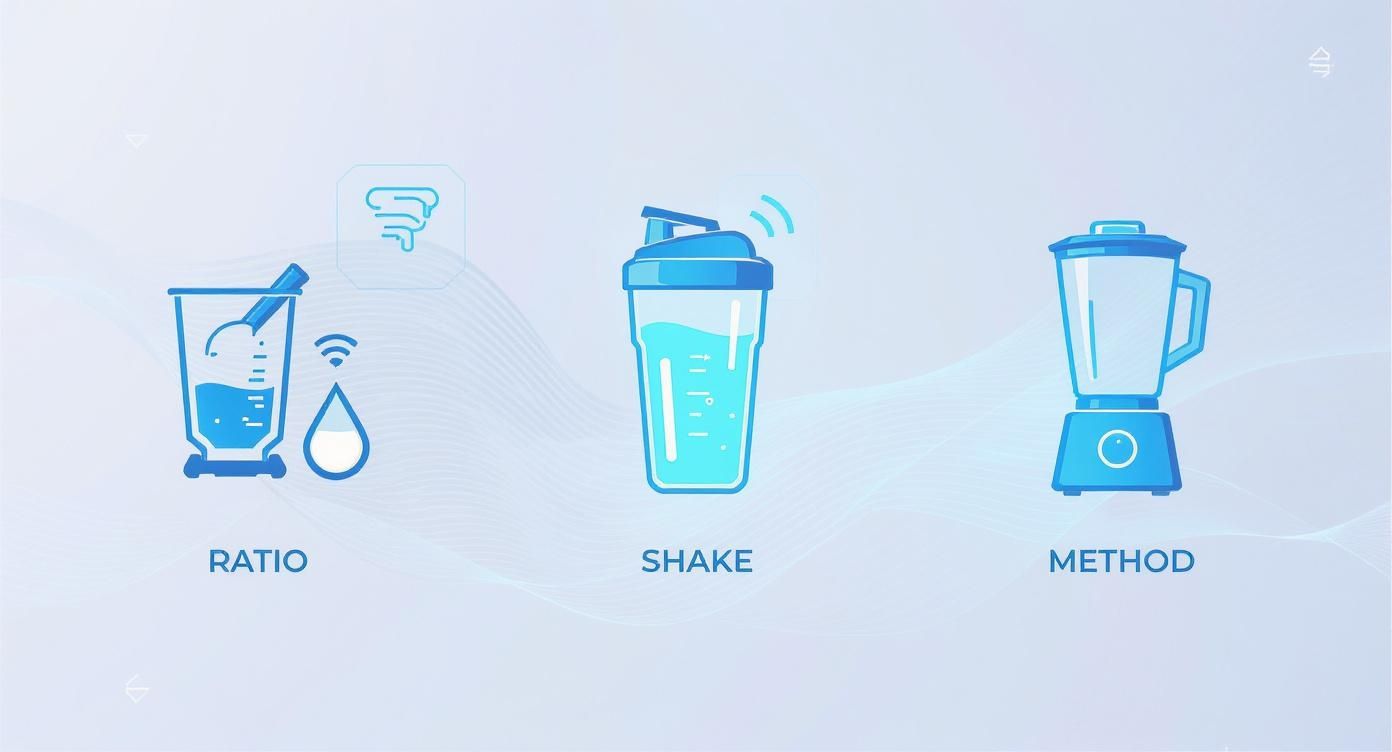
The general rule of thumb is to start with one scoop of protein powder and 8-12 ounces of liquid. From there, you can adjust to your personal preference.
Research on consumer habits shows that the most common method is blending 25-30 grams of protein powder with liquid. Interestingly, 72% of users prefer milk for its superior taste and texture. You can dive deeper into these consumer insights over at archivemarketresearch.com.
No matter what you use, a vigorous shake for 20-30 seconds is non-negotiable for dissolving the powder and kicking lumps to the curb.
Here’s a quick breakdown of the most common ways to mix your shake and when to use each one.
Quick Guide to Mixing Methods
| Method | Best For | Texture Outcome | Pro Tip |
|---|---|---|---|
| Shaker Bottle | Quick shakes on-the-go with just powder and liquid. | Good, but can have minor clumps if not shaken well. | Add liquid first, then the powder. This stops it from sticking to the bottom. |
| Electric Blender | Creating smoothies with add-ins like fruit, ice, or greens. | Perfectly smooth and creamy every time. | Start on a low speed to combine, then ramp up to high to emulsify everything. |
| Handheld Frother | Small, single-serving shakes when a blender is too much. | Surprisingly smooth for its size, but not for thick mixes. | Mix in a tall glass to avoid splashing. Works best with thinner liquids. |
| Spoon & Glass | When you have no other tools available. | Often clumpy and inconsistent. A last resort. | Add powder slowly while stirring constantly to minimize lumps as much as possible. |
Ultimately, the best method is the one that fits your lifestyle and helps you stay consistent. Whether you're a shaker bottle purist or a blender enthusiast, the key is finding what works for you.
Choosing Your Tools and Liquid Base
Before you even scoop out your protein, you’ve got two fundamental choices to make: what you’ll mix it in, and what you’ll mix it with. These two decisions are the foundation of your shake, directly controlling its final texture, flavor, and even its nutritional punch.
Your mixing tool is the first piece of the puzzle. For most people, a simple shaker bottle is the go-to. It's portable, a breeze to clean, and gets the job done when you’re just mixing powder and liquid. The little whisk or mixing ball inside works wonders for breaking up clumps on the fly.
But if you’re aiming for something more substantial—think a thick, smoothie-style shake loaded with frozen fruit, a handful of spinach, or some nut butter—then a high-powered blender is your best friend. A blender absolutely pulverizes those extra ingredients, whipping everything into a perfectly smooth and creamy consistency that a shaker just can’t touch.
What’s Your Liquid Base?
The liquid you choose is just as critical as the tool. This is where you can really start to customize the taste, creaminess, and calorie count of your shake.
Let's break down the most popular options:
- Water: It doesn't get simpler than this. Water is your zero-calorie, no-fuss option, perfect if you're focused purely on protein intake and want the flavor of your powder to shine through.
- Dairy Milk: This is how you get that rich, creamy texture. Milk adds a nice boost of calcium and extra protein. The natural sugars also round out the flavor, making your shake taste more like a classic milkshake.
- Plant-Based Milks: Great for a creamy, lower-calorie alternative. Unsweetened almond, oat, or soy milk each brings a unique flavor profile to the party, so you can experiment to find your favorite.
The protein supplements market is huge, valued at USD 28.15 billion in 2024, and brands are finally realizing how much the mixing experience matters. In fact, data shows that effective mixing practices boost the odds of a customer repurchasing by 18%. It just goes to show that nobody likes a clumpy shake. You can find more insights into the protein supplement market on garagegymreviews.com.
Ultimately, the right tool and liquid come down to your own goals and what you enjoy. If you're looking to branch out and add even more nutritional firepower, something like bone broth powder can offer some unique benefits. We cover all the details in our complete guide to bone broth powder superfoods.
Mastering the Perfect Liquid to Powder Ratio
There’s nothing worse than mixing up a protein shake only to find it’s a lumpy, sludgy mess or a watery, flavorless disappointment. Getting that liquid-to-powder ratio just right is the single most important step in making a shake you’ll actually want to drink.
A common mistake is assuming all protein powders are the same. They're not. How much liquid a powder absorbs depends entirely on its source, and a ratio that works for one type might be a total disaster for another. This is where a little know-how makes a huge difference.
Adjusting for Different Protein Types
The type of protein you're using is your biggest clue for how much liquid you’ll need. Each one has a totally different structure that affects how it behaves when mixed.
Here’s a quick guide to get you started:
- Protein Isolate: This is the old standby for a reason—it mixes pretty easily. A good rule of thumb is 8-10 ounces of liquid per scoop. Peak Performance Grass-Fed Beef Protein Powder is an excellent choice for a smooth, clean mix.
- Casein Protein: Famous for its slow-digesting properties, casein is much thicker and acts like a sponge. You’ll want to bump up the liquid to 10-12 ounces to keep it from turning into pudding.
- Plant-Based Proteins: Powders made from pea, hemp, or brown rice tend to be denser and a bit gritty. They soak up a lot of liquid, so start with 10-12 ounces per scoop here as well. Our Chocolate Plant Based Protein Powder is a great-tasting, easy-mixing option.
My go-to trick is to always start with less liquid than I think I need. You can always add more to thin out a shake, but you can't take it back out once it's too watery. This puts you in total control of the final texture.
For example, when I use a high-quality paleo protein, I start with just 8 ounces of cold water or almond milk. I give it a good shake, see how it looks, and then add another ounce or two until it hits that perfect spot for me.
Techniques for a Clump-Free Shake Every Time
There's nothing worse than a protein shake riddled with chalky clumps. It's a universal letdown. But here’s the secret: getting a perfectly smooth drink isn't about brute force. It’s about being smarter with your prep. A few tiny tweaks to your routine can make all the difference.
The biggest game-changer? Add your liquid to the shaker before the powder. It's that simple. When you dump the powder in first, it inevitably gets packed into the bottom corners of the bottle. No amount of shaking will ever break up that dense, caked-on layer. Starting with the liquid gives the powder room to breathe and dissolve properly.
The Right Order of Operations
This “order matters” rule is just as crucial when you’re using a blender. To get that silky-smooth consistency and keep your blender blades from getting stuck, you have to layer your ingredients strategically.
Here's the fail-safe method I always use:
- Liquids first: Start by pouring in your water, milk, or non-dairy milk.
- Powders next: Now’s the time for your protein, like our Grass-Fed Beef Protein Powder , collagen, or other powdered supplements.
- Softer ingredients: Gently add things like spinach, nut butters, or Greek yogurt.
- Hardest ingredients last: Top it all off with the heavy hitters—frozen fruit and ice cubes. This top layer acts as a weight, pushing everything down into the blades for a perfect blend.
Simple Tricks for a Better Mix
Beyond just the order of ingredients, a couple of pro tips can take your shake from good to great. First off, always use cold liquids. Room-temperature or warm fluids can make some protein powders get gummy on the surface, which is a one-way ticket to clump city.
Here's a little trick I've picked up: let your shake sit for a minute or two after mixing. This brief rest gives the powder a chance to fully hydrate and dissolve, often smoothing out any tiny lumps that are left.
Finally, never underestimate the value of a good shaker ball or whisk. Those little metal things aren't just for show. They fly around inside the shaker, physically breaking up clumps and aerating your drink for a much smoother, lighter texture. If you’re mixing shakes on the go, it’s a non-negotiable tool.
Now, even with the best techniques, things can sometimes go wrong. Here’s a quick guide to fixing the most common protein shake problems I see.
Troubleshooting Common Protein Shake Problems
| Problem | Common Cause | Solution |
|---|---|---|
| Gritty or Sandy Texture | The powder hasn't fully dissolved. Some plant-based or lower-quality proteins are also prone to this. | Let the shake rest for 2-3 minutes after mixing. For persistent grit, try blending instead of shaking. |
| Too Thick or Sludgy | Too much powder, not enough liquid, or using thick ingredients like Greek yogurt or banana. | Add more liquid, a little at a time, until you reach the desired consistency. Next time, slightly reduce the amount of powder or thickener. |
| Too Thin or Watery | Too much liquid for the amount of powder and other ingredients. | Add a natural thickener like half a frozen banana, a tablespoon of chia seeds, or a few ice cubes and re-blend. |
| Foamy or Frothy | Over-shaking or over-blending, which whips too much air into the mixture. Whey isolate is especially known for this. | Mix just until combined. Let the shake sit for a minute to allow the foam to settle before drinking. |
With these tips and a little practice, you'll be well on your way to making clump-free, delicious protein shakes every single time.
Elevating Your Shake Beyond the Basics
Once you've nailed the technique for a perfectly smooth mix, the real fun begins. Let's be honest, a protein shake shouldn't just be functional fuel; it can be a genuinely delicious and nutrient-packed part of your day. This is where you get to play chef and turn a basic drink into something you actually look forward to.
The whole game is about adding ingredients that boost flavor and nutritional value without wrecking that smooth texture you worked so hard to get. It’s all about being strategic with your additions to create a balanced, satisfying mini-meal that keeps you full and tastes great.
Smart Add-Ins for Flavor and Nutrients
Think way beyond just powder and water. A few simple additions can make a huge impact on both taste and health benefits.
If you're looking for a place to start, try these simple but effective upgrades:
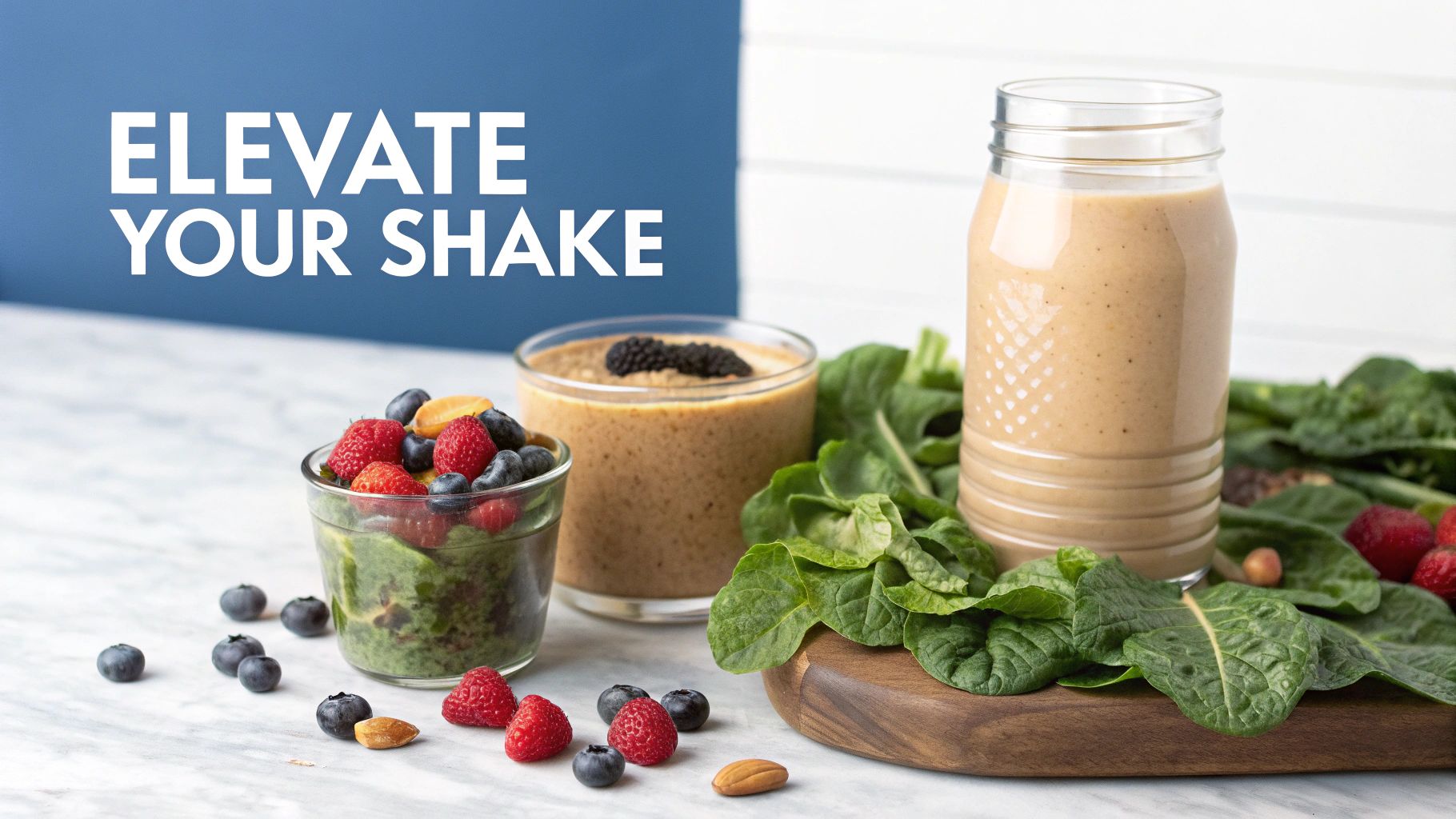
- Healthy Fats for Creaminess: A tablespoon of almond butter or a quarter of an avocado doesn't just add incredible creaminess; it also delivers healthy fats that will keep you feeling full for hours.
- Spices for Flavor: Forget sugar. A dash of cinnamon or a pinch of nutmeg can add a ton of warmth and depth to your shake without adding a single calorie.
- Hidden Greens for Nutrients: Throw in a large handful of fresh spinach. I promise you won't taste it once it's blended with a flavorful protein like our Chocolate Paleo Protein, but you'll get a significant boost of vitamins and minerals.
The desire for convenient, great-tasting shakes is a major market driver. The Ready-To-Drink (RTD) protein shake market is expected to hit USD 3.4 billion by 2034, largely because consumers want a perfect shake with zero effort. Mastering your at-home mix helps you achieve that same high-quality result. You can explore more about this trend and its market implications on market.us.
Using frozen fruit, like half a banana or a cup of mixed berries, is another pro move. It acts as both a natural sweetener and a thickener, giving your shake a refreshing, smoothie-like consistency without watering it down.
When you're ready to get more creative, there are tons of recipes for awesome low sugar high protein smoothies that can inspire your next blend. And if you want to geek out on what makes a complete protein profile, check out our guide on the 9 essential amino acids.
Common Questions About Mixing Protein Shakes
Even with the best techniques, a few weird things can happen when you're trying to nail down your protein shake routine. From that annoying layer of foam to wondering if you can meal-prep your shakes, getting solid answers makes all the difference. Let's tackle some of the most common questions we get.
Why Is My Protein Shake Always Foamy?
Ever notice that layer of froth sitting on top of your freshly made shake? That's usually from shaking or blending a little too aggressively, especially with a super-fine powder like whey isolate. All that vigorous motion whips air right into the liquid, creating foam.
The fix is simple: just shake it a bit more gently. You can also let the finished shake sit on the counter for a minute or two, and the foam will settle down on its own. If you’re a blender person, try using a lower speed or adding a splash of healthy fat, like MCT oil, which helps cut down on the froth.
Here's a pro tip: Instead of one last hard shake, give the bottle a gentle swirl. It’s enough to mix in any last bits of powder without creating a foamy mess on top.
Can I Mix My Protein Shake Ahead of Time?
Technically, yes, but for the best possible taste and texture, it’s always better to drink it within a few hours of mixing. When a shake sits around—even in the fridge—the ingredients naturally start to settle and separate.
If you have to mix it in advance, just make sure you give it another vigorous shake right before you drink it to get everything blended together again. Just be aware that some proteins, like casein, get incredibly thick over time and can turn your drink into a pudding-like sludge. For the best quality and to be safe (especially if you're using milk), fresh is always best.
Does Hot Liquid Ruin Protein Powder?
Dumping a scoop of protein powder straight into boiling water or coffee is a surefire way to get a lumpy, undrinkable mess. The intense heat causes the protein to denature—basically, it changes its structure and clumps up instantly. While this doesn't actually destroy the nutritional value, it makes for a pretty gross experience.
To get it right, let your hot coffee or oatmeal cool for a few minutes first. An even better method is to make a "slurry." Mix your protein powder with a small amount of room-temperature water or milk in a separate cup until it forms a smooth paste. Then, you can slowly stir that paste into your warm drink for a perfectly dissolved, clump-free result.
Making sure you've got the right protein for your goals is just as important as how you mix it. To dive deeper, check out our guide on the best protein powder for muscle recovery.
Ready to create the perfect shake every time? Peak Performance offers a range of high-quality, organic protein powders designed to mix smoothly and taste delicious. Elevate your nutrition today at https://buypeakperformance.com.
Also in Blog


IBS Explained: A Guide to Symptoms, Causes, and Relief


Super Berberine: Activate AMPK & Burn Fat in 3 Steps

