


Lymphatic Support: Top 10 Signs of a Sluggish System
You wake up, look in the mirror, and your face looks a little fuller than it did last night. Your rings feel tight, your fingers seem puffy, and the brain fog is already there before coffee. That cluster of symptoms can feel random, but often it points to one simple question, is your body moving fluid the way it should?
The lymphatic system is the body's quiet drainage and immune network. It helps return fluid to the bloodstream, supports immune surveillance, and handles lipid transport, yet it often goes unnoticed until swelling appears. If you've been chasing “detox” promises or trendy fixes, it helps to start with what the system does, and what practical lymphatic support really looks like in daily life.
Learn more about the basics of lymphatic drainage support
Why Your Morning Puffiness Might Be a Lymphatic Wake-Up Call
You may not notice much during the day, then you wake up with a puffy face, slightly swollen fingers, and a heavy, foggy feeling that never fully clears. That kind of morning can send people searching for drainage tips, inflammation advice, and quick ways to de-puff. The trouble is that those searches often mix real physiology with marketing hype.
The lymphatic system is not a passive pipe that empties by itself. It is an active transport system that returns interstitial fluid to the bloodstream and also supports immune surveillance and lipid absorption, with lymph carrying white blood cells, proteins, salts, and lipids Cleveland Clinic. That matters because when fluid movement slows, the body can look and feel “stuck” even if nothing dramatic is going on.
Why these symptoms cluster together
Morning puffiness, swollen fingers, heavy legs, and a dull, tired feeling often show up together because they share a fluid-management pattern. The body spends the night in one position, then wakes up needing movement, breathing, and regular muscle contraction to get things circulating again. A symptom-led approach is more useful than chasing one-body-part-at-a-time fixes.
Practical rule: if your symptoms improve after walking, stretching, or breathing deeply, you are probably seeing a fluid-movement issue, not a mysterious toxin buildup.
This is also where it helps to separate lymphatic physiology from detox marketing. Real lymphatic support starts with everyday habits that help fluid move, and it can also include supplements for lymphatic drainage when they fit into a sensible routine. Keep the focus on what your body is doing, then compare that with what a product is promising.
Top 10 Signs Your Lymphatic System Needs Support
A lot of people notice the pattern before they can explain it. You wake up puffy, your fingers feel tight, your legs feel heavy, and by the end of the day you feel more sluggish than you should, even though nothing dramatic seems wrong.
That cluster of symptoms often points to fluid movement, not a mysterious toxin buildup. The lymphatic system depends on motion, breathing, and muscle contraction, so signs tend to show up most clearly after sleep, travel, long sitting, or any routine that keeps the body still for too long. If several of these changes improve after a walk, deep breathing, or blood flow boosting stretches at MedAmerica Rehab, that pattern is worth noticing.
1. Morning facial puffiness
If your face looks rounder before you have even fully started your day, fluid shift may be part of the story. Overnight stillness can let fluid settle in soft tissue, and gentle movement often helps it redistribute.
A simple check is whether the puffiness fades after you get up, move around, and hydrate. If it does, the issue may be more about fluid handling than anything cosmetic.
2. Swollen fingers and tight rings
Hands are easy to monitor because jewelry gives you immediate feedback. When fluid lingers in soft tissue, fingers can feel thick, stiff, or slightly swollen, especially after sitting, travel, or a salty meal.
If rings feel fine later in the day but tight in the morning, pay attention to that pattern. It can be one of the first clues that fluid is not moving as freely as it should.
3. Heavy or puffy ankles
Ankles sit low on the body, so pooling shows up there quickly. Socks may leave deeper marks, shoes may feel snug, or your ankles may feel full by evening.
A short walk, a few ankle pumps, or standing up more often can change how the area feels. That shift suggests the body wants more movement to help fluid travel upward.
4. Stubborn cellulite
Cellulite is not a lymphatic diagnosis, and it should not be treated like one. Still, extra fluid in the tissue can make surface texture look more obvious, especially when the skin already has natural dimpling.
The useful question is whether the look changes with hydration, movement, and time of day. If it does, fluid balance may be part of the picture even if it is not the whole story.
5. Brain fog
Brain fog feels vague, which is part of why it is so frustrating. People often notice it alongside other signs of sluggish fluid movement, especially when they have been sedentary, underhydrated, or breathing shallowly.
If your thinking clears after a brisk walk or a few slow breaths, that is a useful clue. The goal is not to blame everything on the lymphatic system, but to notice whether circulation habits change how alert you feel.
6. Chronic fatigue
Low energy can come from many causes, so it helps to avoid overreading this sign. Even so, some people describe a dragging, weighed-down feeling when they have spent too long sitting or have not moved enough during the day.
If fatigue improves after getting up and moving, fluid flow may be part of the reason. The body often responds better to small bursts of motion than to staying still and hoping the feeling passes.
7. Heavy legs
Heavy legs can make even simple movement feel costly. This sensation often shows up after long standing, long sitting, or travel, when the lower body has had fewer chances to help fluid move back upward.
Try comparing how your legs feel before and after a short, easy walk. If the heaviness eases, that is a practical sign that the problem is linked to circulation and fluid movement.
8. Frequent bloating
Bloating is usually discussed as a digestive issue, but fluid balance can change how swollen or tight you feel too. If your abdomen feels more expanded on days with less movement and poorer hydration, that overlap matters.
Watch whether the sensation changes after walking, breathing more deeply, or standing up and moving around. If it does, the discomfort may be tied to broader fluid handling rather than digestion alone.
9. Slow recovery after workouts
If you feel puffy, sore, or sluggish long after an easy session, your recovery may need more support. Mild swelling after training can happen when tissues need help clearing fluid that accumulated during exertion.
A short walk, leg elevation, and gentle mobility usually feel better than doing nothing. Some people also use an internal support option such as lymphatic drainage supplements as part of a broader routine, but that should sit beside movement and recovery habits, not replace them.
10. Mild swelling after travel or long sitting
This is one of the clearest everyday clues. Long flights, long car rides, and desk marathons can all reduce the muscle pumping that keeps fluid moving.
If your ankles, fingers, or face consistently feel fuller after prolonged sitting, your routine may need more movement breaks. That pattern is common enough to take seriously, especially when it repeats after the same kind of day.
The best self-check is pattern recognition, not panic. If several of these signs show up together, especially in the morning or after immobility, lymphatic support should focus on movement, breathing, and fluid management, while staying clear about the difference between real physiology and detox marketing claims.
How The Lymphatic System Actually Works
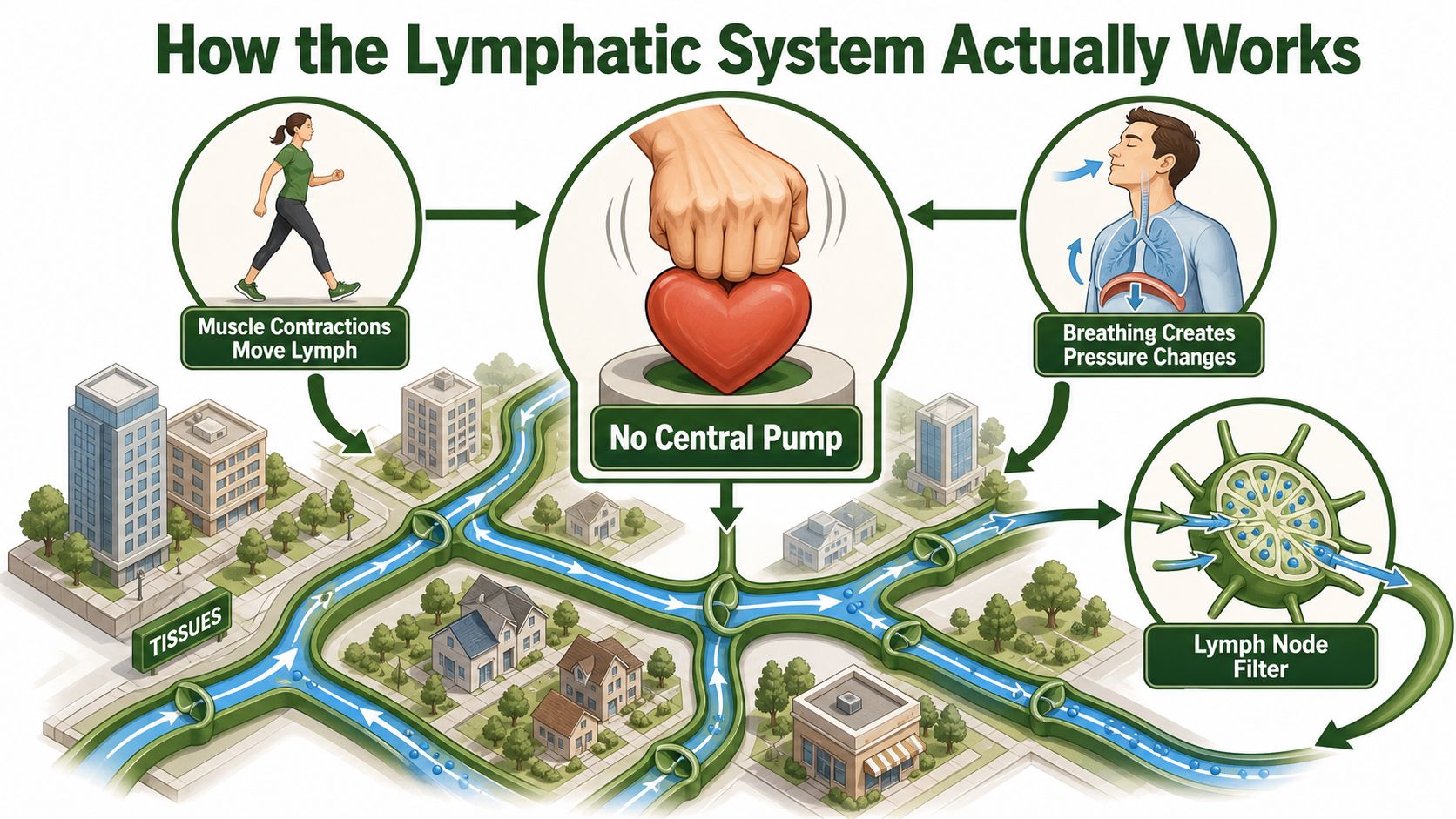
Think of the lymphatic system like a city drainage network. Streets and side streets need traffic to keep water moving, but there isn't a central engine like a heart pushing it along. Instead, the system relies on muscle contraction, breathing, and body movement to keep lymph flowing.
That's why simple habits matter so much. Cleveland Clinic describes the lymphatic system as an active transport system, and notes that skeletal muscle contraction and pressure gradients help propel lymph through vessels, especially because there's no central pump like the heart Cleveland Clinic. In plain English, your body moves lymph by moving your body.
What the system is doing all day
Lymph vessels collect fluid from tissues, lymph nodes act as checkpoints, and the fluid eventually returns to the bloodstream. That flow helps maintain fluid balance and supports immune function, which is why swelling and “stagnation” often show up when movement drops off. A system built for motion tends to struggle when life turns into hours of sitting.
Useful analogy: if the heart is the main water pump, the lymphatic system is the neighborhood drainage crew that depends on the streets staying active.
This is also why clinicians and educators keep returning to simple habits like walking, diaphragmatic breathing, and gentle mobility. Those routines aren't trendy, they work because they match how the system is built.
Evidence-Based Lifestyle Strategies to Restore Lymph Flow
A puffy face after waking, heavy legs by afternoon, or fingers that feel tight when you bend them can all point to sluggish lymph movement. The fix is usually not dramatic. It starts with habits that match how the system works, especially movement, breathing, and hydration.
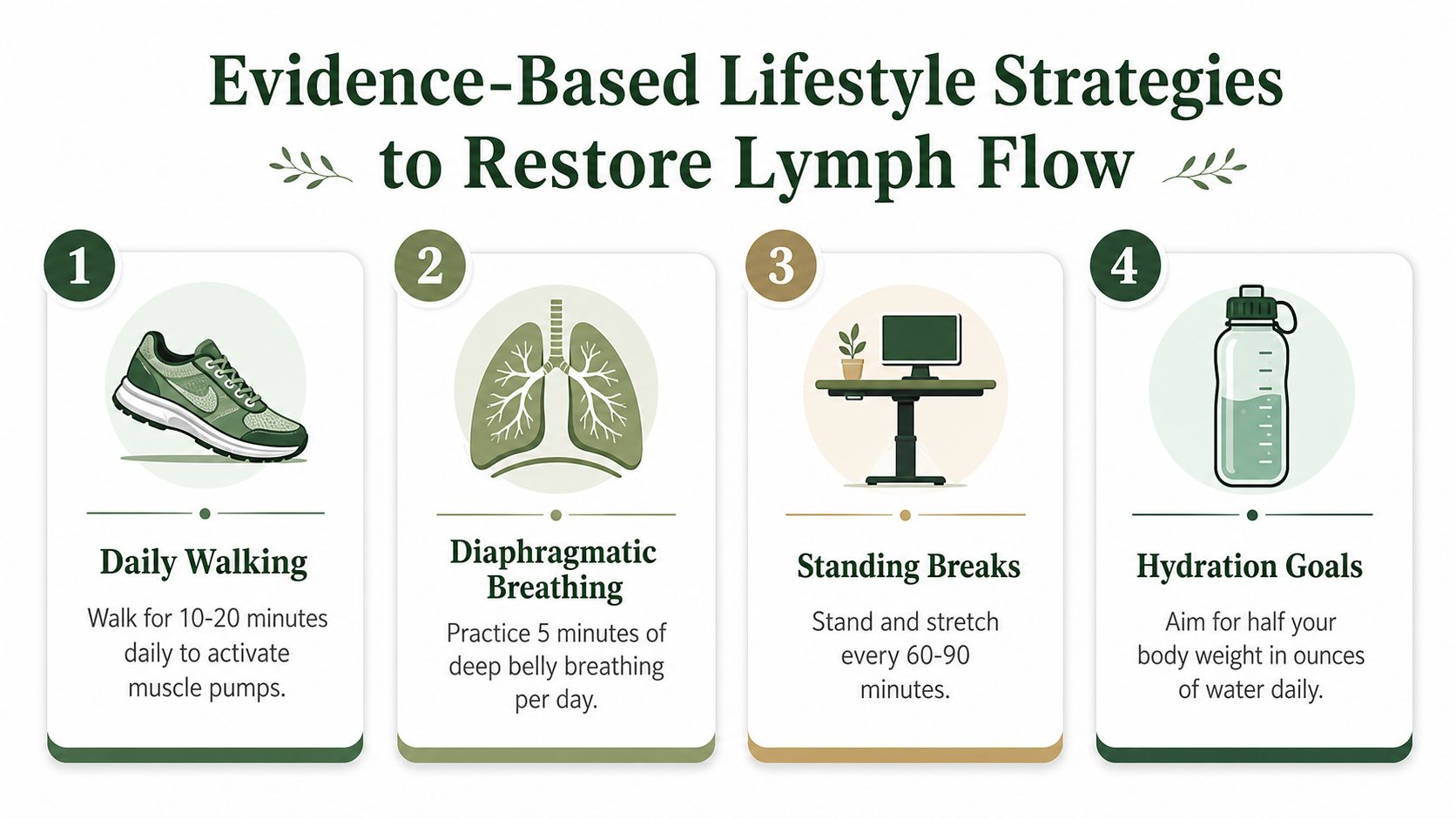
Daily movement is the lowest-cost place to begin, and it is often the first habit people overlook. A short walk, even just around the block, gives nearby muscles a chance to squeeze lymph vessels and help fluid move upward. If your day includes long sitting stretches, treat standing and stretching breaks as part of the work, not as a bonus at the end.
Diaphragmatic breathing helps for the same reason. Slow belly breaths change pressure in the chest and abdomen, which supports flow through the largest lymph pathways. That is why breathing drills appear so often in clinical education, and why a few minutes after waking or before bed can be a practical starting point.
What to prioritize first
- Walk daily: Use walking as your main pump. A short brisk loop or a few laps around your home can be enough to get things moving.
- Breathe deliberately: Slow, diaphragmatic breaths help create the pressure changes lymph flow needs.
- Stand often: Long sitting can slow drainage, so break it up with movement and posture changes.
- Hydrate consistently: Fluids matter because the system moves fluid, not just calories.
- Reset and reset: If a limb feels puffy, simple elevation and gentle motion can help it feel less heavy.
- Use ankle pumps and shoulder rolls: Small movements count, especially when you cannot get up for a full walk.
For readers who want a practical local resource on conservative care, find lymphatic care in North Idaho from Lake City Physical Therapy, especially if swelling keeps returning or movement feels limited.
The clearest distinction is between movement-based pumping and flashy routines that promise more than they can deliver. Skin brushing, forceful massage, and extreme detoxes can sound appealing, but major medical sources keep returning to the basics because the basics fit lymph physiology. If you want a closer look at the inflammation side of the picture, see how to reduce inflammation in the body.
Daily Lymphatic Support Drops as Your Easiest Internal Tool
Once you understand the pattern, the “lightbulb moment” is usually this, the body often needs a simple internal habit that fits alongside movement and hydration. That's where Peak Performance USDA Organic Lymphatic Support Drops can fit into a morning routine as an easy add-on, especially for people who want one small, repeatable step instead of a complicated stack. You can view the product detail page here, Lymphatic Support Drops.
The idea is not to replace walking, breathing, or standing breaks. It's to pair an ingestible support routine with the behaviors that already help fluid move, so the habit feels complete instead of piecemeal. For readers who recognize themselves in the puffiness, heaviness, or slow-recovery signs above, that combo can be easier to stick with than trying to remember five separate wellness rules.
How to fold it into the day
Take the drops in the morning, then immediately follow with something that gets your body moving. A glass of water, a short walk, a few ankle pumps, or a minute of deep breathing turns the routine from passive into active. That pairing matters because the lymphatic system responds best to motion, not wishful thinking.
If you want the simplest version, keep it boring and consistent. One internal support habit, one movement habit, one hydration habit. That's often more useful than buying a drawer full of tools you won't use.
Common Myths and When to Seek Medical Care
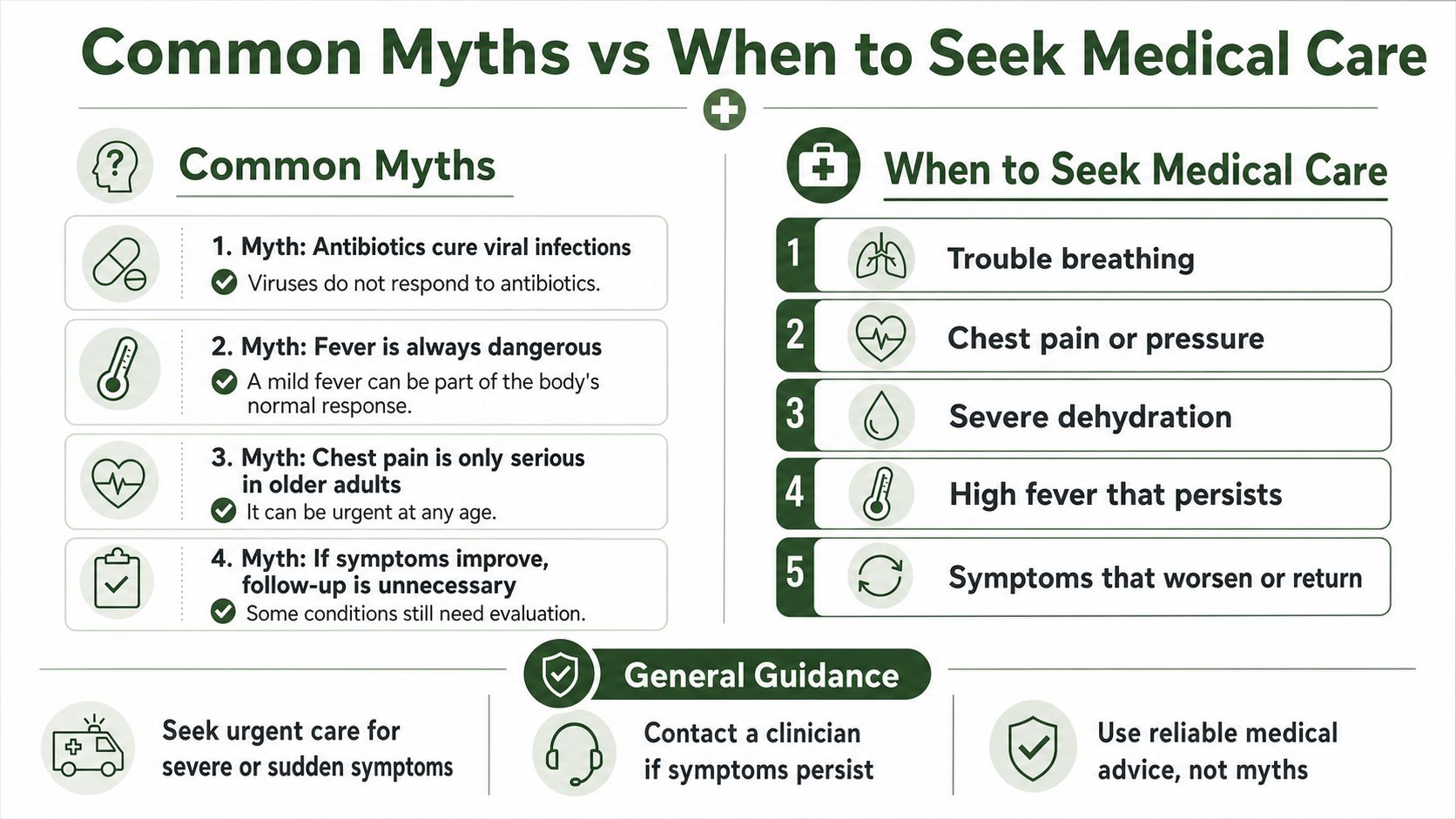
A lot of lymphatic marketing leans on claims that don't hold up in healthy people. Lymphatic massage does not meaningfully boost immunity, flush toxins, or cause fat loss, and any temporary slimming usually comes from reduced swelling rather than fat change UCLA Health. That distinction matters because readers deserve honesty, not hype dressed up as wellness.
The bigger issue is knowing when self-care stops being enough. Everyday puffiness that comes and goes is one thing, but persistent swelling, especially if it's one-sided, unexplained, or paired with pain or skin changes, deserves medical attention. Clinical sources also treat recurrent skin infections and difficulty moving a limb as reasons to get checked rather than guessed at.
What that boundary looks like in real life
-
Myth: “If I drain my lymph, I'll lose fat.”
Reality: temporary slimming comes from less swelling, not fat loss. -
Myth: “Aggressive detoxes are necessary.”
Reality: the body already relies on the liver, kidneys, and normal physiology, and harsh routines can backfire. - When to seek care: if swelling doesn't resolve, keeps returning in one limb, or comes with skin changes, pain, or infection, talk to a clinician.
For people who want a more clinical perspective on swelling care, recovery techniques from Thermo Recovery Wear can be a useful supplement to the broader conversation, especially when recovery and circulation are both on the table.
Practical Daily Routines for Athletes Professionals and Parents
Athletes usually do best with a pre- and post-workout rhythm that includes a few deep breaths, light movement, and hydration before and after training. A desk worker can get a lot out of standing every hour, walking during one call, and taking morning support drops before the workday starts. Parents need the shortest routine of all, so a quick breathing reset, a family walk or movement game, and a calm evening wind-down can fit without stealing the day.
Simple takeaway: the routine that gets repeated beats the routine that sounds impressive.
If you want a recovery-minded companion resource, recovery techniques from Thermo Recovery Wear pairs well with this approach because it keeps the focus on circulation, consistency, and realistic habits.
The most useful plan is usually small and repeatable. Start with one movement habit and one internal support habit this week, then build from there.
Peak Performance offers USDA Organic Lymphatic Support Drops as a simple internal option to pair with movement, hydration, and daily drainage habits. If you want a practical place to start, visit Peak Performance and choose one routine you can repeat tomorrow morning.
Also in Blog


Tongkat Ali: 10 Warning Signs Your Vitality Is Slipping


Top 10 Signs Your Body Needs Beet Root Capsules

