


Top 10 Reasons Manganese is the "Master of Metabolism"
Manganese is the essential spark plug for your body's metabolic engine. It works as a critical cofactor, which means it 'switches on' the enzymes your body needs to break down carbohydrates, amino acids, and cholesterol. Simply put, it helps turn the food you eat into energy you can actually use.
Without enough manganese, these vital metabolic pathways just can't run efficiently.
The Unsung Hero Powering Your Metabolism
Think of your metabolism as a high-performance engine. Macronutrients like carbs and proteins are the fuel, but it's the tiny, often-forgotten components that truly ignite the power. Manganese is that indispensable spark plug, working quietly behind the scenes to make sure everything runs without a hitch.
It’s easy for manganese to get overshadowed by more well-known minerals like calcium or magnesium, but it’s a master conductor of your body’s enzymatic orchestra. These specialized proteins drive almost every single biochemical reaction in your body, from building strong bones to fighting off cellular damage.
Think of it this way: enzymes are the workers on your body's assembly line, and manganese is the supervisor who hands them the specific tools they need for the job. Without that direction, the whole metabolic process would grind to a halt.
From Industrial Strength to Biological Vigor
What's fascinating is that the strength manganese imparts isn't just biological. It's a cornerstone of heavy industry, especially for creating tough, durable steel. In fact, a massive 90% of all mined manganese goes into steel production, where it adds strength and resilience to everything from skyscrapers to car frames.
It takes about 6 kilograms of manganese ore to produce just one tonne of steel—a testament to its fortifying power. You can discover more insights about its industrial applications and see how this mineral builds strength both inside and out.
This dual identity really drives home a key point: manganese is essential for building things that are made to last, whether that's a bridge or your own body. This powerful trace mineral is a non-negotiable part of achieving peak health and metabolic efficiency.
Ensuring Your Engine Runs Smoothly
For your internal engine to run at its best, you need a steady supply of this crucial mineral. While it's found in many whole foods, getting the optimal amount can sometimes be a challenge depending on your diet and lifestyle. Supporting your system with a high-quality supplement can be a smart way to fill any nutritional gaps.
A pure, whole-food-based option provides this nutrient in a form your body can easily recognize and absorb. For anyone looking to fine-tune their metabolic health, a supplement like the Manganese Supplement can help keep your metabolic engine firing on all cylinders, supporting everything from energy production to antioxidant defense.
How Manganese Masters Your Metabolic Health
To really get why manganese is sometimes called the "Master of Metabolism," you have to understand its job as a cofactor. Think of it like this: an enzyme is a high-performance engine, ready to go. But that engine won't start without the right key. Manganese is that key for countless enzymes that direct the whole symphony of your body's metabolic processes.
Before we dive in, it helps to start by understanding what metabolic health entails. It's so much more than just your weight—it’s about how well your body turns food into fuel, manages blood sugar, and keeps inflammation in check. This is exactly where manganese steps up, orchestrating ten fundamental processes that are the bedrock of a well-oiled system.
1. Regulating Blood Sugar Levels
One of the most important jobs manganese has is in carbohydrate metabolism. It fires up enzymes that are critical for gluconeogenesis—the process where your body actually makes its own glucose (blood sugar) from things other than carbs, like amino acids. This is absolutely essential for keeping your energy levels stable, especially between meals or when you're working out.
If you don't have enough manganese, this whole process can get sluggish, which can lead to those dreaded energy spikes and crashes. By making sure these enzymes are working at full capacity, manganese helps keep your energy steady and smooth all day long.
2. Optimizing How Your Body Uses Amino Acids
Amino acids are famous as the building blocks of protein, but your body can also use them for energy. Manganese is a key player here, activating the enzymes that break down amino acids. This allows your body to decide whether to use them for repairing muscle and tissue or to convert them into fuel when you need it.
This is a huge deal for athletes or anyone who is physically active. Getting your amino acid metabolism right means your muscles have what they need to recover, and your body has a reliable backup fuel tank.
Think of manganese as a savvy resource manager. It ensures the valuable proteins you eat don't go to waste, directing amino acids exactly where they’re needed most—whether that’s for rebuilding a torn muscle or fueling a tough workout.
3. Aiding in Fat and Cholesterol Metabolism
The way your body handles fats and cholesterol is another critical metabolic process, and it’s guided by—you guessed it—manganese-dependent enzymes. This mineral helps synthesize cholesterol, which isn't the enemy it's often made out to be; you need it to produce vital hormones like estrogen and testosterone, not to mention vitamin D.
It also plays a big part in breaking down the fats you eat so they can be used for energy. This intricate dance supports not just your hormonal balance but your overall cardiovascular health by helping manage your lipid profiles.
4. Powering Your Antioxidant Defenses
Every second of every day, your cells are fighting off damage from free radicals. These are unstable molecules that cause something called oxidative stress. One of your body's best defenders against this assault is an enzyme called manganese superoxide dismutase (MnSOD), which is found right inside your mitochondria—the tiny power plants in your cells.
As its name implies, MnSOD is completely useless without manganese. It acts as the primary antioxidant within the mitochondria, neutralizing free radicals right at the source of energy production. This is like having a security guard inside the power plant, protecting the machinery and keeping your metabolism running smoothly.
5. Building a Strong Bone Matrix
We hear a lot about calcium and vitamin D for bone health, but manganese is an unsung hero in this story. It's needed to activate enzymes that form the bone matrix—the flexible protein framework (mostly collagen) that minerals like calcium then latch onto.
You can take all the calcium you want, but without a strong, healthy matrix, bones can become brittle. Manganese ensures the very foundation of your skeleton is solid, supporting bone density from the ground up.
6. Protecting Your Brain and Nervous System
Your brain is an incredibly busy metabolic hub, and manganese plays two key roles in keeping it safe. First, through its work with the MnSOD enzyme, it helps shield your delicate brain cells from oxidative damage, a known factor in cognitive decline.
Second, manganese is involved in creating neurotransmitters like dopamine and glutamate. These are the chemical messengers responsible for your mood, focus, memory, and ability to learn. By supporting their production, manganese directly contributes to a sharp and healthy brain.
7. Fueling Cellular Energy Production
As we touched on, manganese is the guardian of your mitochondria. By protecting these cellular powerhouses through its role in MnSOD, it directly supports the production of ATP (adenosine triphosphate). ATP is the literal energy currency that every single cell in your body uses to function.
When your mitochondria are healthy and protected, they can crank out ATP efficiently. For you, that translates into more physical energy, better mental clarity, and just feeling more alive. Having enough manganese is absolutely fundamental to feeling energized day in and day out.
8. Supporting Thyroid Function and Hormone Synthesis
Your thyroid is the master regulator of your entire metabolism, and it relies on several key nutrients to do its job properly—manganese included. Manganese is involved in producing thyroxine, a primary thyroid hormone that sets the pace for your metabolic rate, heart rate, and even your body temperature.
A sluggish thyroid can lead to a slow metabolism, weight gain, and constant fatigue. By helping with hormone synthesis, manganese ensures your thyroid can keep your entire metabolic system humming along in balance.
9. Promoting Wound Healing via Collagen Production
When you get a cut or an injury, your body jumps into repair mode, using collagen to rebuild the damaged tissue. Manganese activates an enzyme called prolidase, which is essential for making proline—an amino acid that's a crucial component of collagen itself.
This makes manganese a key player in effective wound healing, skin health, and the integrity of all your connective tissues, from ligaments to tendons. It's the silent partner helping your body mend and regenerate itself.
10. Assisting in Nutrient Absorption
Finally, manganese is a team player. It helps your body get the most out of other essential nutrients by playing a role in their absorption and use. This includes:
- Choline: Important for liver and brain health.
- Thiamine (Vitamin B1): Crucial for turning carbs into energy.
- Vitamin C: A powerhouse antioxidant and immune supporter.
- Vitamin E: Protects your cells from oxidative damage.
By supporting this complex web of interactions, manganese ensures your body can effectively use the full spectrum of nutrients from your diet. For anyone looking to make sure this foundational mineral is covered, a high-quality, bioavailable option like the Raw Whole Food Manganese Supplement can offer reliable support for all ten of these vital metabolic functions.
Recognizing The Signs Of A Manganese Shortfall
Now that we know how critical manganese is for our metabolism, the next logical question is: how can you tell if you're running low? A full-blown, clinically diagnosed manganese deficiency is pretty rare, especially if you're generally healthy. What’s far more common, though, are suboptimal levels—a subtle insufficiency that can quietly throw your body's metabolic rhythm out of whack.
Learning to spot the signs isn't about panicking. It's about becoming a better listener to your body's own feedback. Since manganese is a key player in so many systems—from regulating blood sugar to building strong bones—a shortfall can pop up in some surprising ways that are easy to brush off.
Decoding Your Body's Subtle Clues
The signals of low manganese can be all over the map, and they often overlap with other nutritional gaps, which makes them tricky to pin down. But if you see a few of them together, they can start to tell a more complete story about what your body might be missing.
Some of the most common red flags that your manganese intake isn't quite cutting it include:
- Poor Glucose Control: Are you constantly dealing with energy spikes and crashes? It could be a sign that your carbohydrate metabolism isn't firing on all cylinders, a process that relies heavily on manganese.
- Weakened Bones or Joint Pain: Manganese is a crucial building block for the collagen matrix in your bones and cartilage. Over time, low levels can contribute to weaker bones and nagging joint issues.
- Skin Issues: If you notice that cuts are slow to heal or you're dealing with rashes, it can sometimes be tied to a lack of manganese. The mineral is vital for the collagen production your skin needs to repair itself.
- Changes in Mood or PMS Symptoms: Believe it or not, manganese helps create the neurotransmitters that keep your mood stable. Some research even links lower levels to more intense premenstrual symptoms.
To see how these seemingly separate functions connect, this visual breaks down how manganese underpins bone health, energy production, and your antioxidant defenses.
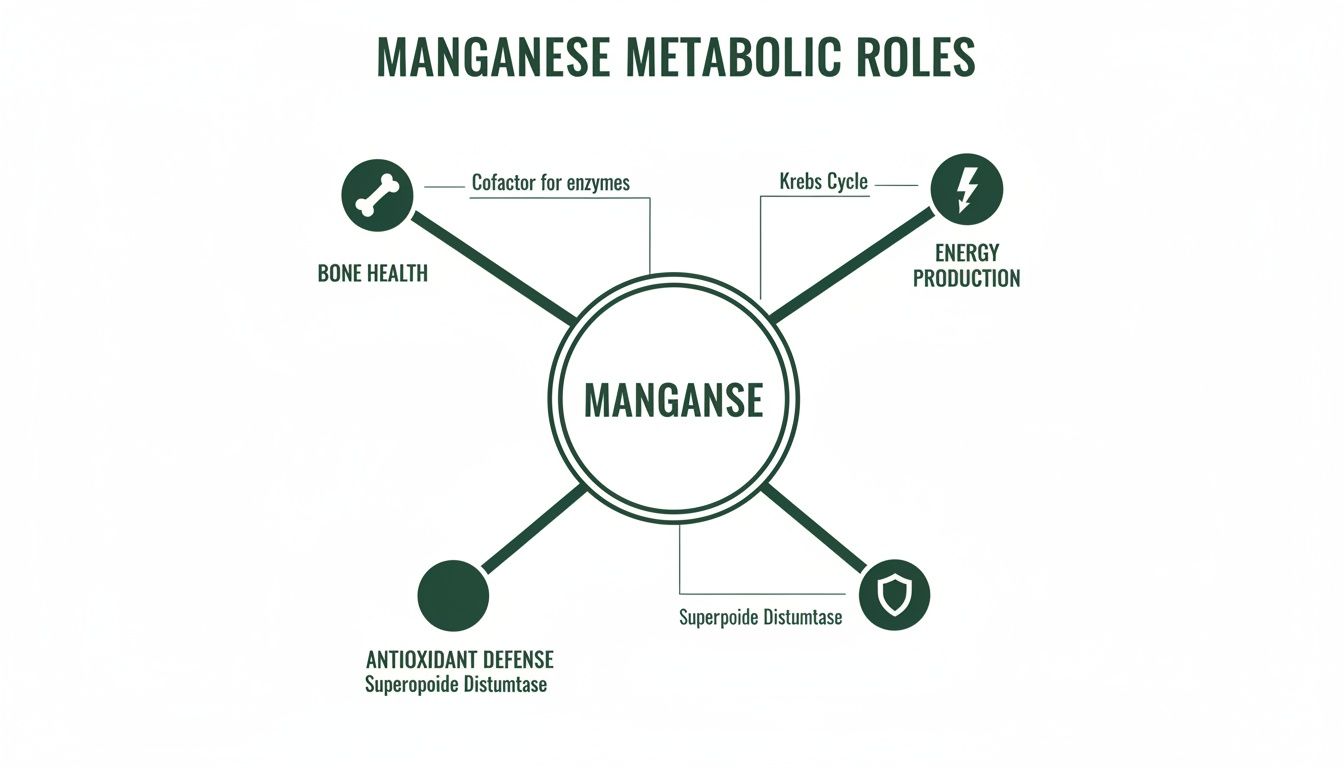
The diagram really drives home how a single mineral can have such a ripple effect across the body. It makes it easier to understand why a deficiency could cause a cluster of seemingly unrelated symptoms. Learning to spot these potential signals is the first step, and you can explore more about the common signs of nutrient deficiency to get a fuller picture.
Who Is at a Higher Risk?
Some people just have a tougher time keeping their manganese levels where they need to be. This is often true for those with digestive disorders that interfere with nutrient absorption or anyone on a very restrictive diet that cuts out manganese-rich foods like whole grains, nuts, and leafy greens.
Ultimately, paying attention to these subtle clues empowers you to be more proactive with your health. It helps you ensure your body has all the manganese it needs to truly master its metabolic game.
Balancing Your Intake Through Diet And Supplementation
Getting the right amount of manganese is crucial for unlocking its metabolic benefits, but it's not about mega-dosing. It's about giving your body a steady, reliable supply for the thousands of enzymatic reactions humming along every second. The best way to do that? Start with your plate. A food-first strategy built on whole, unprocessed foods is always the strongest foundation.
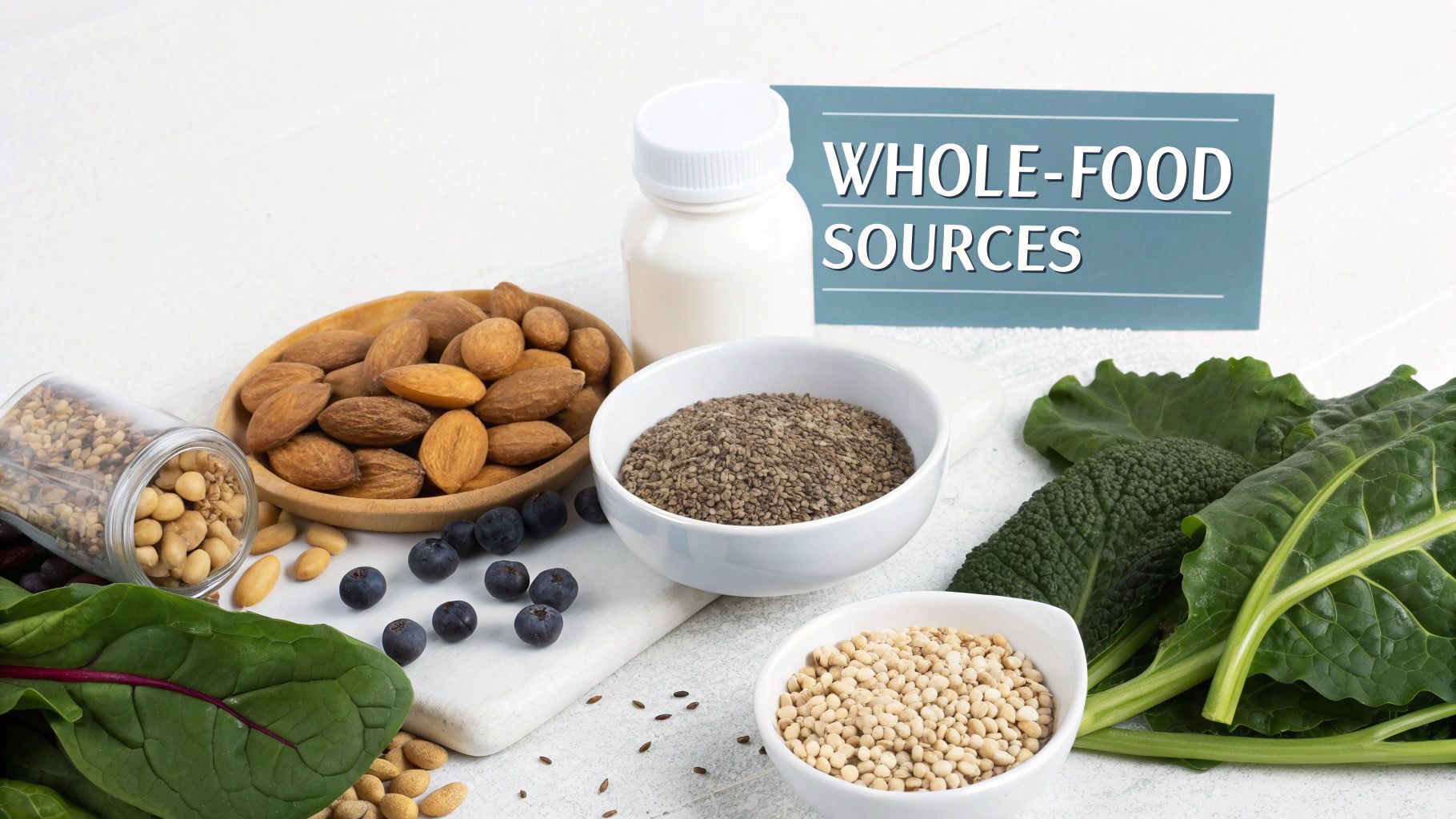
When you make plant-based foods the star of your diet, you're not just getting manganese; you're getting a whole team of minerals that work in harmony. The same principles that guide you to find sources of iron rich plant-based foods apply here, creating a well-rounded mineral intake that supports your entire system.
Prioritizing Manganese Rich Foods
Thankfully, nature has packed this essential mineral into plenty of delicious and accessible foods. By weaving these into your meals, you can easily boost your manganese levels and support your metabolic health from the ground up.
Some of the best dietary sources of manganese are probably already in your kitchen:
- Whole Grains: Think brown rice, oats, and quinoa. A single serving can deliver a significant chunk of your daily needs.
- Nuts and Seeds: Pecans, walnuts, almonds, and pumpkin seeds are true mineral powerhouses. A small handful is perfect for snacking or sprinkling over a salad.
- Leafy Greens: Don't forget your greens! Spinach, kale, and Swiss chard are loaded with vitamins and a solid dose of manganese.
- Legumes: Lentils, chickpeas, and black beans are another fantastic source, adding both minerals and fiber to your plate.
Simply making a conscious effort to mix these foods into your weekly routine is the most effective way to keep your manganese levels right where they need to be. Your body knows exactly what to do with minerals from whole foods.
When Supplementation Becomes a Smart Strategy
A food-first approach is the gold standard, but let's be realistic—it doesn't always cover everyone's needs. Some people have higher metabolic demands or dietary restrictions that can leave a nutritional gap. In these cases, a high-quality supplement isn't just a fallback; it's a smart tool to ensure you don’t fall short.
Do any of these sound like you?
- Athletes and Highly Active People: If you’re pushing your body, your metabolic engine is burning hotter. This increases your demand for cofactors like manganese to keep up with energy production and tissue repair.
- Those with Dietary Gaps: Following a restrictive diet or just struggling to eat a wide variety of whole foods consistently can lead to lower-than-optimal manganese intake.
- Individuals with Absorption Issues: Certain digestive conditions can make it harder for your body to pull minerals from food, making a supplement a much more reliable option.
For these groups, supplementation is a proactive strategy to maintain peak metabolic function. It's about making sure your body has every tool it needs to perform at its best, day in and day out.
Choosing a Superior Whole Food Supplement
If you decide to supplement, the quality of that supplement is everything. So many products on the shelf use synthetic, isolated minerals that the body struggles to recognize and absorb effectively. A whole-food supplement is a different story entirely.
By sourcing nutrients from real, concentrated foods, a whole-food supplement delivers manganese in a form your body understands—just as it would from a plate of quinoa and greens. This approach boosts bioavailability and ensures you’re getting a clean product without synthetic fillers or binders.
It’s the perfect fit for a wellness routine focused on clean eating and real results. For those looking to bridge a nutritional gap with a pure, bioavailable option, you can learn more about how a Raw Whole Food Manganese Supplement can support your health goals.
How Manganese Works With Other Nutrients
In the intricate world of biochemistry, no nutrient works alone. Think of your body as a high-performance orchestra—manganese isn’t a solo artist but a crucial conductor, ensuring every section works in harmony with the others. Its true impact is most visible in how it partners with other essential vitamins and minerals.
This interplay is a delicate dance of teamwork and competition. Getting the balance right is the secret to unlocking your body's full metabolic potential, ensuring every nutrient can do its job without getting in the way of another.
Powerful Nutritional Partnerships
Manganese forms some powerful alliances, amplifying its own benefits and those of its partners, especially when it comes to building strong bones and producing energy.
Here are a few of its most important collaborations:
- The Bone-Building Crew: Manganese teams up with calcium, zinc, and copper to create a resilient bone mineral matrix. While we all know calcium provides the hardness, it's manganese that helps form the underlying collagen framework that all those minerals latch onto.
- The Energy Amplifiers: When you pair manganese with B vitamins—especially B1 (thiamine)—you get a metabolic powerhouse. Together, they are absolutely vital for turning the carbs you eat into usable ATP energy, which is what keeps your cells fueled and your body running.
- The Antioxidant Defense Team: Manganese is the star player in the SOD enzyme, but it doesn't fight off free radicals alone. It works hand-in-hand with other classic antioxidants like vitamins C and E to create a comprehensive shield against cellular damage.
Navigating Nutritional Competition
Just as some nutrients are teammates, others can be rivals. This is particularly true for minerals that share the same transport pathways in your digestive system. Taking a massive dose of one mineral can essentially elbow others out of the way, making it harder for your body to absorb them.
The goal is always balance. Flooding your system with one mineral can accidentally create a deficiency in another. A harmonious intake gives every essential nutrient a fair chance to be absorbed and put to work.
The main competitors for manganese are iron and calcium. If you're consuming very high amounts of either, especially from supplements, it can interfere with manganese uptake. This really drives home the importance of getting your minerals from a varied, whole-food diet or a thoughtfully formulated supplement. For a deeper dive into this, check out our guide on how to increase nutrient absorption.
For athletes and fitness enthusiasts who rely on supplements, manganese's role in enzyme function and fighting oxidative stress is critical. And for those focused on optimizing recovery, it's worth noting how manganese aids collagen synthesis—a process absolutely central to repairing joints and tissues after a tough workout. This holistic view ensures you're building a nutritional strategy where every single component, especially a vital trace mineral like manganese, can contribute fully to your health and performance.
Got Questions About Manganese? We've Got Answers.
Let's clear up a few common questions. Think of this as a quick chat to help you put everything you've just learned about manganese into practice for your own health goals.
How Much Manganese Do I Actually Need?
The official guidelines give us a solid starting point. For most adults, the recommended daily Adequate Intake (AI) is:
- Men: 2.3 milligrams (mg)
- Women: 1.8 milligrams (mg)
Remember, these are just benchmarks. If you're an athlete or have certain health conditions, your personal needs might be a bit different. For the majority of people, though, a good diet filled with whole foods will get you there without much trouble.
Is It Possible to Overdo It on Manganese from My Diet?
It's practically impossible to get too much manganese from food alone. Your body has a surprisingly smart system for regulating how much it absorbs, so it knows when to pump the brakes.
Any real issues with manganese toxicity almost always come from outside the kitchen—think industrial exposure from inhaling manganese dust or, in rare cases, from contaminated water. So, you can enjoy that second helping of spinach without a worry.
Who Should Consider a Manganese Supplement?
While I always recommend a food-first approach, sometimes a supplement can provide that extra support. A few groups might find it particularly helpful for keeping their metabolic engines running smoothly.
Athletes, for instance, have higher metabolic demands. Older adults often look to manganese for bone and joint support, and anyone with digestive issues or a restrictive diet might struggle to get enough from food alone.
What Makes This Supplement Different?
Our Peak Performance Manganese Supplement is all about purity and how well your body can actually use it. We source our manganese from raw, whole foods. Why? Because your body recognizes it that way—just like it would from a handful of nuts or a side of pineapple.
We’ve left out all the synthetic fillers and junk you don’t need. It’s a clean, simple, and effective way to make sure your body has what it needs to function at its best.
At Peak Performance, our goal is simple: provide clean, effective nutrition that helps you feel amazing. To give your metabolic health the premium support it deserves, check out our Raw Whole Food Manganese Supplement today.
Also in Blog


Turkey Tail Mushroom: Boost Your Immune System in 2026


Boost Focus: Best Eye Support Supplements for 2026

