


Top 10 Best Vitamin A Capsules
When it comes to picking the best vitamin A supplement, one brand consistently comes out on top for its clean ingredients, trusted quality, and sheer effectiveness: Peak Performance Vitamin A Capsules.
We’ve sifted through dozens of options to bring you the top 10, and this guide will walk you through each one. We'll start with a deep dive into why Peak Performance earned its number one spot, then look at some other fantastic choices to help you find the perfect fit for your health needs.
The Top 10 Vitamin A Supplements
Trying to find the right vitamin A supplement can feel like a chore. It's a critical nutrient that supports everything from your eyesight to your immune defenses, but the sheer number of bottles on the shelf is enough to make anyone’s head spin. This guide is here to cut through that confusion and give you a clear, straightforward review of the best vitamin A capsules out there.
We didn't just pick names out of a hat. Our list is the result of analyzing products based on what really matters: purity, potency, where the ingredients come from, and what real customers are saying. Our goal is simple—to give you the confidence to choose wisely.
Here is our definitive list of the top 10 vitamin A capsules for optimal health:
1. Peak Performance Vitamin A Capsules
When it comes to picking a vitamin A supplement, the small details are what separate the good from the truly great. After looking at dozens of options, Peak Performance Vitamin A Capsules easily claimed our top spot. It’s not just one thing; it’s the combination of rock-solid quality, transparent sourcing, and a smart, effective formula that sets a new standard.
The first thing that caught our eye was its CCOF Certified Organic seal. That’s not just marketing fluff. It’s a guarantee that everything inside that bottle was grown and processed without synthetic pesticides, herbicides, or GMOs. For anyone who puts a premium on purity, this certification offers real peace of mind.
Peak Performance uses retinyl palmitate, a "preformed" version of vitamin A. Think of it as the express lane for your body—it's highly bioavailable and ready to be used immediately. Your body doesn't need to do any extra work converting it, which is what happens with plant-based beta-carotene. By delivering vitamin A in a ready-to-go format, the supplement ensures you get consistent, reliable support for your vision, immune system, and overall cell health. It’s simply a more direct and effective approach.
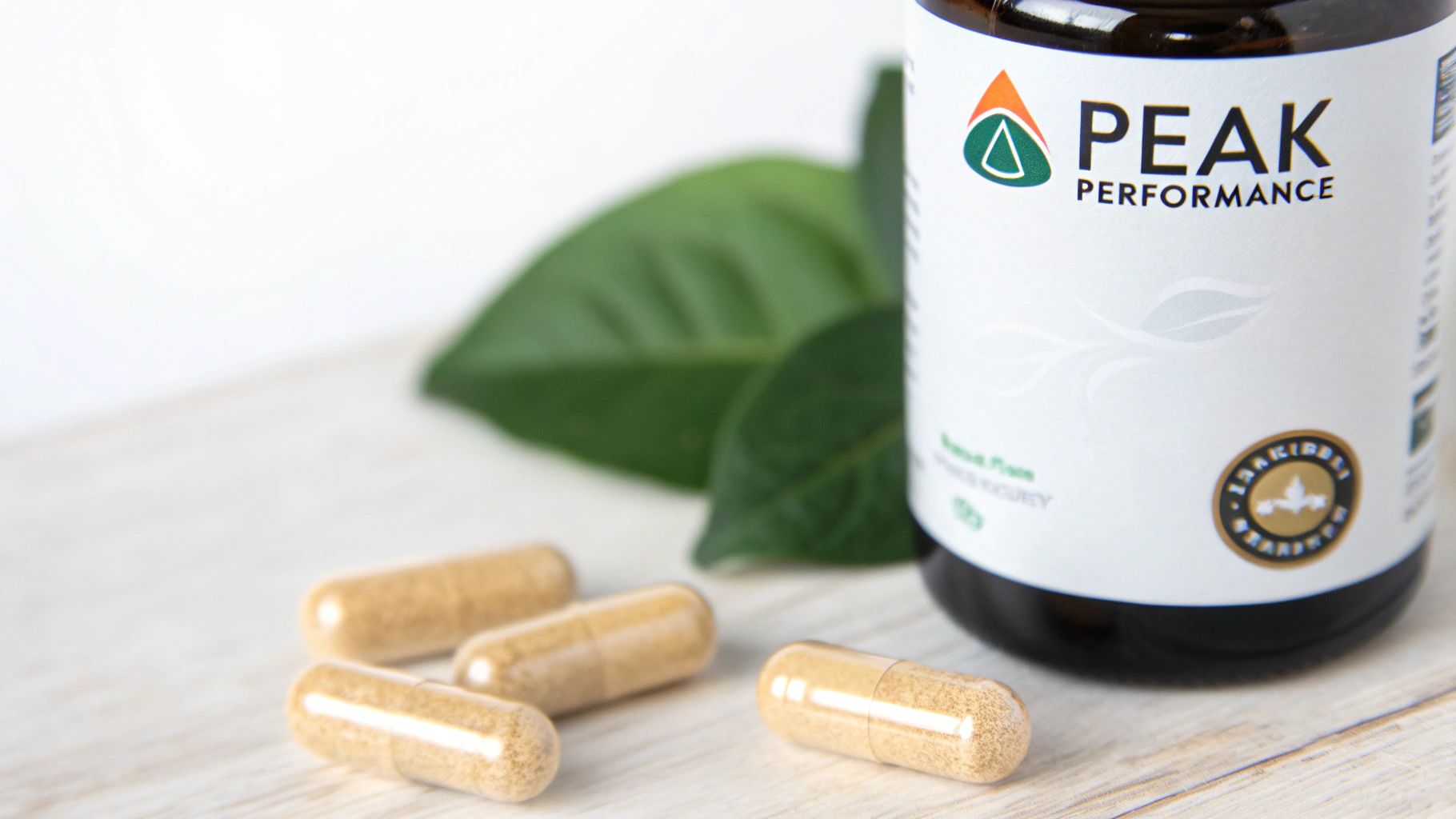
What truly sealed the deal for us is Peak Performance’s commitment to making a real-world impact. They have a fantastic partnership with Vitamin Angels, a non-profit that fights global malnutrition. For every bottle you buy, Peak Performance donates life-changing vitamins to a child or mother in an at-risk community. Your purchase directly supports your own health and helps someone in need.
This blend of premium quality, third-party validation, and impactful social responsibility makes Peak Performance Vitamin A Capsules the clear winner.
2. Premium Fish Liver Oil Vitamin A
Coming in at a close second is a supplement that gets its vitamin A from a time-tested, potent source: wild-caught fish liver oil. This is the classic way to get preformed retinol, and it’s a fantastic pick for anyone who prefers nutrients from whole-food origins. The manufacturer takes care to purify the oil, stripping out heavy metals and other contaminants. Since vitamin A is fat-soluble, its natural oil base gives absorption a built-in boost.
3. Plant-Based Beta-Carotene Complex
For those who'd rather go the plant-based route, our third pick is a real winner. This supplement delivers its vitamin A in the form of beta-carotene, sourced from organic carrots and other vibrant veggies. The beauty of provitamin A carotenoids like beta-carotene is the built-in safety mechanism. Your body only converts what it needs into active vitamin A, which dramatically lowers any risk of toxicity.
4. High-Dose Retinyl Palmitate
Our number four spot goes to a high-potency formula built for those with a clinically identified need for more vitamin A. It uses retinyl palmitate—the same bioavailable form as our top pick—to deliver a powerful dose in a single softgel. This is a serious supplement, best used for short-term, targeted goals, and should always be done under a doctor's supervision.
5. Hypoallergenic Vitamin A Drops
Fifth on our list is a fantastic liquid formula that offers purity and flexibility. These vitamin A drops are a lifesaver for people with allergies, as they're typically made without common triggers like gluten, soy, or dairy. The liquid format is also a game-changer for dosing—you can measure out exactly what you need, drop by drop.
6. Vitamin A with Synergistic Nutrients
This smart formula pairs vitamin A with its allies, vitamins D and K2. They all work together to support bone density, immune response, and heart health, offering a more comprehensive approach to supplementation.
7. Budget-Friendly Daily Vitamin A
A straightforward, reliable choice that provides a standard daily dose without hurting your wallet. Perfect for consistent, long-term use for those who want a no-frills, effective option.
8. Water-Miscible Vitamin A
This is a specialized product for people with digestive issues or conditions that make it hard to absorb fat. It’s been engineered to be water-soluble, giving your body a much easier path to absorption.
9. Certified Non-GMO Project Verified
For anyone who puts non-GMO sourcing at the top of their list, this supplement offers the peace of mind that comes with that third-party seal of approval.
10. Gummy Vitamin A for Adults
Let's be honest, sometimes a gummy just makes life easier. This tasty option feels more like a treat than a supplement, making it a great alternative if you’re not a fan of capsules or liquids.
The Powerful Health Benefits Of Vitamin A
It’s one thing to know you need vitamin A, but it's another to understand why it's so fundamental to your health. This isn't just another nutrient on the list; it's a vital key that unlocks some of your body's most critical functions. From keeping your vision sharp to reinforcing your immune defenses, vitamin A is a non-negotiable part of proactive, long-term wellness.
Let's break down the science-backed benefits to see why getting enough of it is so important.

A Cornerstone of Healthy Vision
When you think of vitamin A, you probably think of carrots and good eyesight. You're right on the money. This nutrient is an essential building block of rhodopsin, a special protein in your retinas that’s highly sensitive to light.
Think of rhodopsin as the component that lets your eyes adapt to the dark, like when you walk into a dimly lit room. If you don't have enough vitamin A, your body can't make enough rhodopsin, which leads directly to night blindness—one of the first tell-tale signs of a deficiency. It also helps keep the cornea, the clear outer surface of your eye, healthy and protected against conditions like age-related macular degeneration (AMD).
Fortifying Your Immune System
Beyond just vision, vitamin A is one of your immune system’s staunchest allies. It’s responsible for maintaining the strength of your mucosal barriers—the protective linings in your respiratory, digestive, and urinary tracts. These barriers are your body's first line of defense, physically stopping germs and pathogens from getting into your bloodstream.
On top of that, vitamin A is crucial for producing and programming your white blood cells, especially lymphocytes. These are the "soldiers" of your immune system that actively hunt down and destroy invaders. A shortfall can cripple this response, making you far more vulnerable to infections. In fact, studies show that in areas where deficiency is common, vitamin A supplementation can dramatically reduce the severity and death rates from illnesses like measles.
Supporting Cellular Growth and Skin Radiance
Vitamin A’s influence reaches right down to your cells. It's a key player in a process called cellular differentiation, which is how your body tells a generic cell to become a specialized one, like a skin cell or a lung cell. This is absolutely essential for proper growth, development, and tissue repair all over your body.
You can see this process most clearly in your skin. Vitamin A helps regulate skin cell turnover, pushing out old, damaged cells and bringing fresh, new ones to the surface. The result? A smoother, more radiant complexion. It's also involved in producing the collagen that keeps skin firm and resilient.
Vitamin A doesn’t just work in isolation. It functions as part of a team with other fat-soluble vitamins. As you can explore in our guide on fat-soluble vitamins A, D, E, and K, these nutrients often work together to support everything from bone health to immune function.
From protecting your night vision to keeping your immune system primed for action, the benefits of vitamin A are both profound and far-reaching. Making sure you get enough, whether through diet or a high-quality supplement, is a simple yet powerful step toward safeguarding your overall health. It’s an investment that pays dividends in nearly every system of your body.
How To Choose The Right Vitamin A Supplement
Navigating the supplement aisle can feel overwhelming, but picking the right vitamin A doesn't have to be. It's about knowing what to look for beyond flashy labels and top-10 lists. Let's walk through how you can confidently evaluate any vitamin A product to find one that's effective, safe, and right for your specific health goals.
First up, you need to know which form of vitamin A you're getting. Supplements typically feature either preformed vitamin A, like retinyl palmitate, or provitamin A carotenoids, like beta-carotene.
Preformed vitamin A, which you'll find in products like our Peak Performance Vitamin A Capsules, is the "active" form. Your body can put it to work immediately, which makes it a very efficient choice.
Beta-carotene, on the other hand, is the precursor. Your body has to convert it into active vitamin A. This conversion process has a built-in safety feature—your body generally only converts what it needs, which lowers the risk of getting too much. If your diet is packed with colorful veggies, you might be getting plenty of carotenoids already. If not, a preformed source could be more beneficial.
Decoding Supplement Labels
The next step is to become a savvy label reader. Look closely at the dosage, which is usually listed in either International Units (IU) or Retinol Activity Equivalents (RAEs). RAEs are the gold standard because they give you a much more accurate picture of how much active vitamin A your body can actually get from different forms.
Don't stop there. Scan the "other ingredients" list for potential allergens or unnecessary fillers you'd rather avoid, like soy, gluten, or artificial binders. A high-quality supplement should have a clean, straightforward ingredient list. Understanding how a micronutrient like vitamin A fits into your larger dietary picture is key, and getting a good grasp on understanding macronutrients and micronutrients can provide that context.
Remember, the goal is to supplement a healthy diet, not replace it. A good vitamin A capsule fills specific nutritional gaps without adding a bunch of junk your body doesn't need.
Sourcing and Safety Considerations
Where the ingredients come from matters. A lot. Look for brands that are transparent about their sourcing. Certifications like USDA Organic or Non-GMO Project Verified are great indicators of purity and quality. Also, always check if the product was made in a GMP (Good Manufacturing Practices) certified facility—this is a non-negotiable standard for safety and quality control.
Most importantly, you have to respect the safety limits. While not getting enough vitamin A is a serious global problem, taking too much preformed vitamin A can lead to a dangerous condition called hypervitaminosis A. Sticking to the Recommended Daily Allowance (RDA) is the best way to stay safe.
Vitamin A deficiency (VAD) remains a major public health challenge, especially for young children in developing nations. A large-scale analysis in 2013 estimated that roughly 29% of children between 6 months and 5 years old were vitamin A deficient. The devastating impact is clear: over 95% of deaths from this deficiency occur in sub-Saharan Africa and South and Southeast Asia, largely because it cripples the immune system. You can read the full analysis on the NIH website to learn more.
Finally, to make sure you're getting every bit of benefit from your supplement, remember that vitamin A is fat-soluble. Taking it with a meal containing some healthy fats—like avocado, nuts, or olive oil—is a simple trick to dramatically boost its uptake. For a deeper dive, check out our guide on https://buypeakperformance.com/blogs/blogs/how-to-increase-nutrient-absorption.
To make things even easier, here’s a quick checklist to use when you're shopping for a vitamin A supplement.
Your Vitamin A Supplement Checklist
| Consideration | What to Look For | Why It Matters |
|---|---|---|
| Form of Vitamin A | Retinyl palmitate (preformed) or Beta-carotene (provitamin A) | Preformed is immediately usable; beta-carotene has a lower toxicity risk. Choose based on your diet and needs. |
| Dosage Unit | RAEs (Retinol Activity Equivalents) instead of IU | RAEs provide a more accurate measure of the vitamin's biological activity in your body. |
| "Other Ingredients" | A short, clean list. Avoids common allergens, artificial fillers, and binders. | You want to supplement your nutrition, not add unnecessary or potentially harmful additives. |
| Sourcing & Quality | USDA Organic, Non-GMO Project Verified, GMP Certified Facility | These certifications ensure purity, quality, and safe manufacturing practices. |
| Fat Source | For softgels, look for a healthy oil like olive or sunflower oil. | Since vitamin A is fat-soluble, including a fat source directly in the supplement aids absorption. |
Using this checklist will help you cut through the noise and select a high-quality product that truly supports your health.
Making Vitamin A Part of Your Daily Routine
So, how do you make vitamin A a regular part of your wellness plan? It’s actually pretty simple. The two biggest keys are consistency and smart timing.
Because vitamin A is a fat-soluble vitamin, your body needs some fat to absorb it properly. This means the best time to take your supplement is with a meal containing healthy fats—think avocado, a handful of nuts, or a salad with olive oil dressing. This small habit makes a huge difference in how much of the nutrient your body can actually use.
Want to dive deeper into the science of timing? Our complete guide on the best time to take vitamins breaks it all down, helping you turn supplementation from a routine into a real strategy.
Start With Food First
While a top-notch supplement is a fantastic way to bridge any nutritional gaps, I always recommend a "food-first" mindset. Your plate is the most powerful tool you have for getting the full spectrum of nutrients, including vitamin A. The best part? Different foods provide different forms of it, so eating a variety ensures you’re covering all your bases.
Try to weave a mix of these foods into your weekly meals:
- Provitamin A Carotenoids: Look for vibrant, colorful produce. Sweet potatoes, carrots, spinach, kale, and mangoes are all loaded with carotenoids, which your body can convert into vitamin A on demand.
- Preformed Vitamin A (Retinol): This is the active form, found ready-to-go in animal-based foods. Some of the richest sources are beef liver, eggs, and full-fat dairy like milk and cheese.
When you treat your diet as the foundation and use a premium supplement like our Peak Performance Vitamin A Capsules as your support system, you create a powerful, well-rounded plan for meeting your body's needs.
Final Thoughts on Your Health Journey
When it comes down to it, picking the right vitamin A supplement means taking a close look at the form, dose, and purity to make sure it’s a good fit for you.
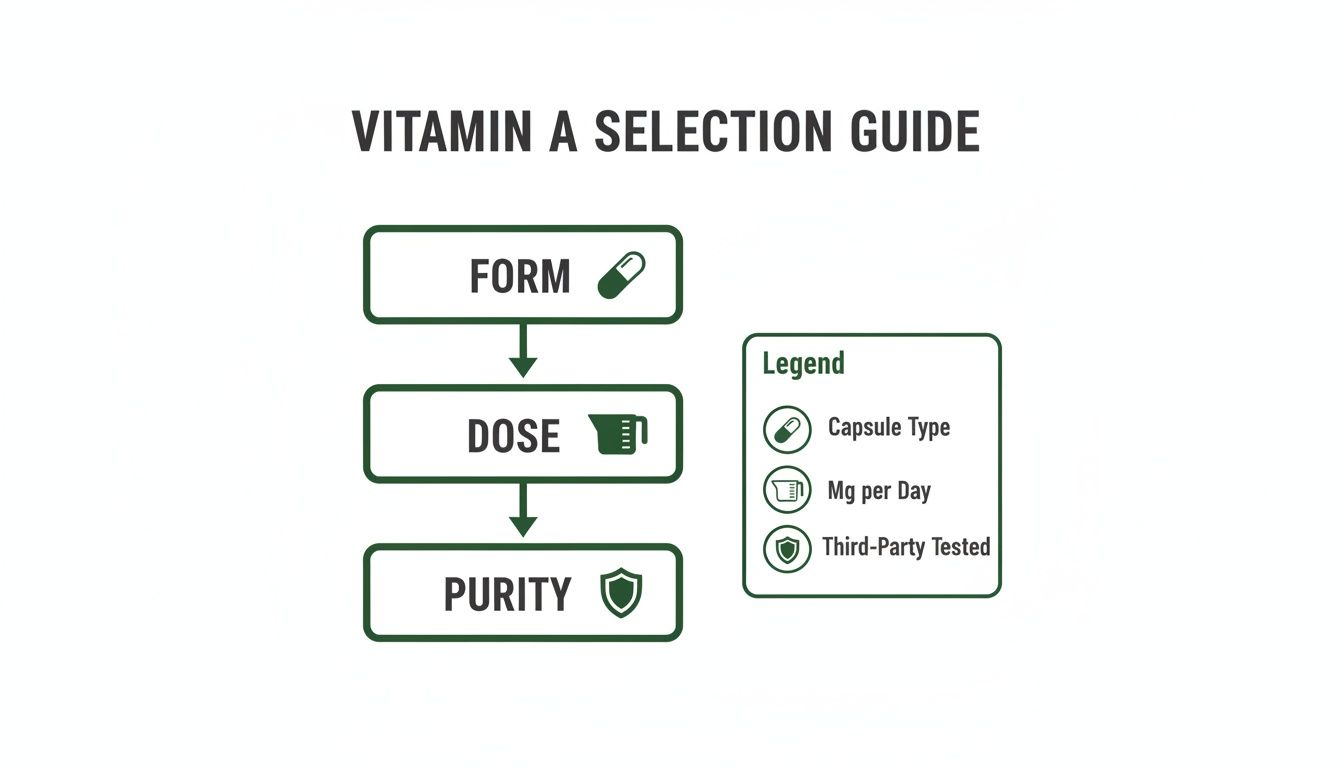
This guide is a great reminder that a quality product is about more than just a single ingredient; it's about a thoughtful formulation and a commitment to safety. By focusing on purity and an effective, science-backed dose, you’re positioning yourself to get real results.
Your health is a long-term journey built on a series of smart, informed choices. Combining a nutrient-dense diet with a trustworthy, high-purity supplement gives your body the essential tools it needs to perform at its peak.
Ultimately, choosing a superior supplement isn’t just a purchase—it’s an investment in your long-term well-being. Prioritizing quality and a holistic approach to nutrition is a decisive step toward feeling your absolute best, day in and day out.
Also in Blog


Dandelion: Safely Shed Water Weight Now


Lymphatic Support: The Desk-Bound Pump Hack


Iodine: The Internal Thermostat Fix for Cold Hands
Always cold hands & feet? Your internal thermostat may need iodine. Discover how these essential minerals boost thyroid and metabolism to warm you from within.