


What is grass fed collagen: Benefits for skin, joints, and gut health
So, what exactly is grass-fed collagen?
At its simplest, it's a pure protein supplement sourced from cattle that have lived their lives grazing on natural pastures. This isn't just a small detail—it's a critical distinction that sets a much higher bar for quality, purity, and ethical sourcing compared to your standard, run-of-the-mill collagen.
Let's quickly break down the key attributes of grass-fed collagen.
Grass Fed Collagen At a Glance
| Attribute | Description |
|---|---|
| Source | Exclusively from the hides of cattle raised on a natural grass diet. |
| Purity | Free from the routine antibiotics, hormones, and grain-based fillers often found in conventional farming. |
| Animal Welfare | Sourced from animals that graze freely, reflecting higher ethical and humane standards. |
| Form | Typically hydrolyzed into smaller, bioavailable peptides for maximum absorption by the body. |
| Nutrient Profile | Often considered to have a more robust nutrient profile due to the animals' natural diet. |
This table gives you the high-level view, but let's dig into what this really means for you.
The Foundation: Why Collagen Matters
At its core, collagen is the most plentiful protein in our bodies. It’s the primary building block for just about everything that holds you together—skin, bones, tendons, ligaments, and all your connective tissues. Think of it as the literal "glue" providing strength, structure, and integrity to your entire frame.
But here’s the catch: your body's natural collagen factory doesn't run at full capacity forever.
Collagen loss with age is a natural process where the body's ability to produce collagen declines, typically starting around age 25, leading to a yearly decrease of about 1%. This slow, steady decline is behind many of the classic signs of aging we all recognize: fine lines, achy joints, and skin that’s lost its bounce. This is why supplementing with a clean, high-quality collagen source has become a go-to strategy for anyone looking to counteract that natural decline.
The Pasture-Raised Promise
This is where the "grass-fed" part becomes so important. This collagen is derived from the hides of cattle that were raised the way nature intended: on a diet of grass and forage. It’s a world away from conventional factory farming, where animals are often kept in crowded conditions (CAFOs) and fed diets heavy in grain and soy.
When you see the "grass-fed" label, it signifies a real commitment to a higher standard:
- A Natural Diet: These cattle graze freely on open pastures, which means no grains, soy, or artificial fillers.
- Ethical Standards: This approach almost always goes hand-in-hand with better animal welfare.
- Purity First: Sourcing from grass-fed animals helps you avoid exposure to the routine antibiotics and hormones common in CAFOs.
It’s clear this commitment to quality is hitting home. The global grass-fed collagen market is on track to jump from USD 760.0 million to USD 1,220.0 million by 2035, a surge driven by health-conscious people who demand clean-label products. You can dive deeper into these global industry trends to see where things are headed.
From Hide to Hydrolyzed Peptides
So how do we get from a cowhide to the fine, dissolvable powder you stir into your morning coffee? The magic is in a process called hydrolysis.
Using natural enzymes, this process breaks down the large, complex collagen proteins into much smaller, more usable units called peptides.
These smaller peptides are the key. They’re far more bioavailable, meaning your body can absorb and put them to work much more easily. This ensures you’re getting the maximum impact from every single scoop. Top-tier supplements, like those in the Peak Performance Collagen Products collection, are built around this hydrolyzed form for precisely that reason.
The Difference Between Grass Fed and Conventional Collagen
Let's get one thing straight: not all collagen is created equal. The difference between a high-quality, grass-fed collagen and a conventional one comes down to the animal's diet and environment. When you're standing in the supplement aisle, you're really choosing between two completely different agricultural philosophies—and the purity of the final product hangs in the balance.
Most conventional collagen comes from cattle raised in Concentrated Animal Feeding Operations, or CAFOs. In these factory-farm settings, animals are typically confined and fed a diet of grain, corn, and soy. Why? Because it fattens them up quickly. This industrial model often relies on routine antibiotics to stave off sickness in crowded conditions and may even involve growth hormones to accelerate development.
Think of choosing your collagen like you choose your food. Opting for a grass-fed source is the same as picking organic, pasture-raised steak over factory-farmed meat. It’s a commitment to quality.
The Purity Factor
This graphic breaks down the essentials of grass-fed collagen, showing exactly where it comes from and why that matters.
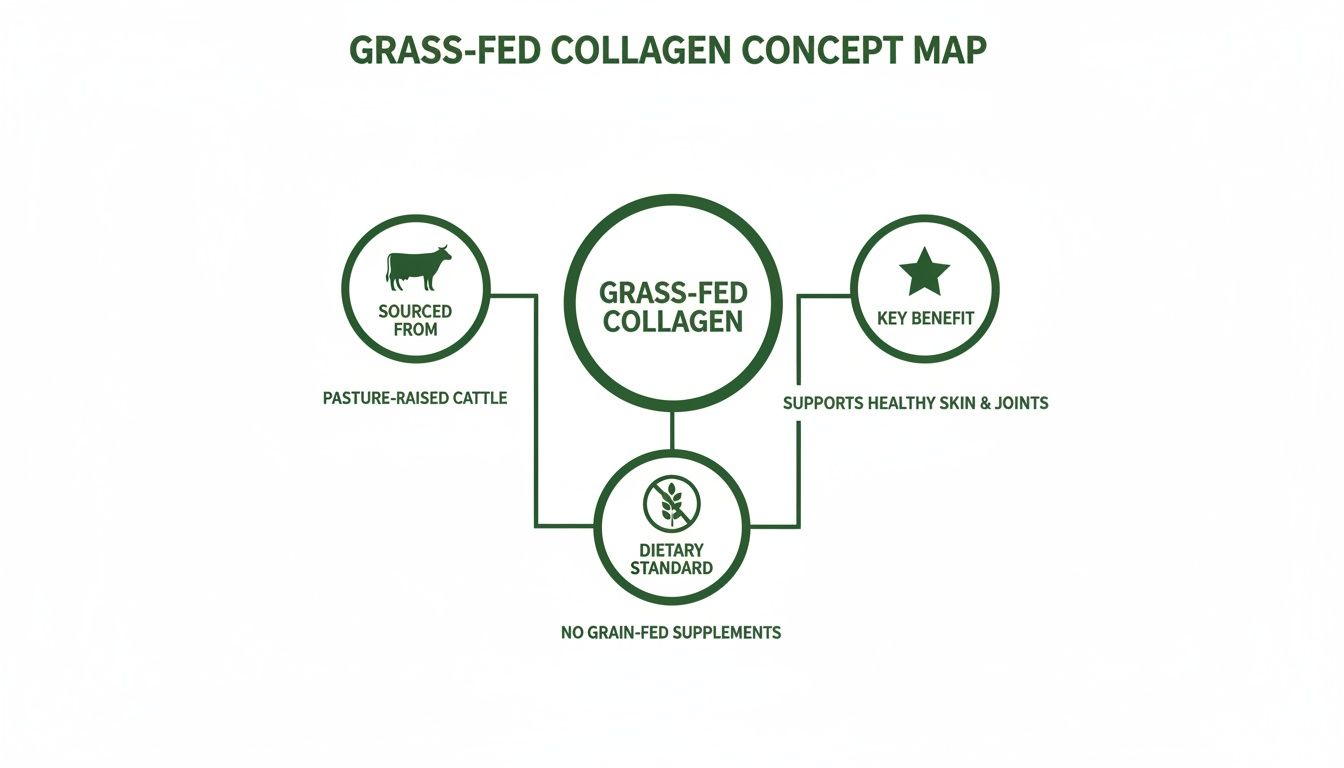
The takeaway is simple: "grass-fed" means the animals were raised on pasture, living and eating the way nature intended. This single factor has a massive downstream effect on the purity of the collagen you put in your body.
Grass-fed collagen, in stark contrast, is sourced from cattle that roam on open pastures, grazing on grass. This completely sidesteps the need for grain-based feeds, and with it, the pesticides and herbicides often used to grow those crops.
The difference is night and day:
- Conventional Collagen: Sourced from grain-fed cattle, which means potential exposure to antibiotics, hormones, and agricultural chemicals from their feed.
- Grass-Fed Collagen: Sourced from pasture-raised cattle, which means a natural diet and minimal exposure to unwanted synthetic inputs.
This isn't just marketing jargon. Purity is a direct reflection of the product's quality. By choosing grass-fed, you are consciously avoiding the contaminants tied to conventional farming and getting a much cleaner supplement.
Why Sourcing Is Non-Negotiable
How an animal is raised directly impacts the final product. A natural, low-stress life on pasture leads to healthier animals, and healthier animals provide a superior raw material for collagen. If you're serious about what you put in your body, you have to look at the source. It’s about making sure your supplement actually supports your wellness goals, instead of undermining them.
Choosing a grass-fed source isn't just about getting collagen; it's about getting peace of mind. You're investing in a product that reflects higher standards for animal welfare and environmental care, which ultimately results in a cleaner, more effective supplement for your body.
For anyone optimizing their health, choosing supplements that meet these high standards is a no-brainer. If you want to dive deeper, exploring the benefits of bone broth collagen offers even more insight into how quality sourcing is the foundation for a powerful wellness tool.
The Science Behind Collagen's Health Benefits
The powerful effects of grass-fed collagen aren't just marketing hype; they're grounded in some pretty straightforward biology. Think of collagen as the literal scaffolding holding your entire body together—it provides the structure, strength, and integrity for everything from your skin to your joints. When you supplement with high-quality, hydrolyzed peptides, you’re essentially giving your body the exact raw materials it needs to repair and fortify this internal framework.
Unfortunately, our natural collagen factories slow down as we get older. Collagen loss is a natural process where the body's ability to produce collagen declines, typically starting around age 25, leading to a yearly decrease of about 1%. This slow-and-steady decline is a major driver behind many of the common signs of aging, which is why a pure, potent supplement can be a cornerstone for staying active and feeling good.

Promoting Healthy Skin Elasticity
Let’s start with the most visible benefit: skin health. Collagen is the structural foundation for your skin, the very thing that keeps it firm, smooth, and hydrated. Consistent supplementation with collagen peptides has been shown time and again to improve skin elasticity, soften the appearance of fine lines, and boost overall moisture.
By topping up your body's declining collagen stores, a daily habit can support a more youthful appearance from the inside out. This isn't a surface-level, temporary fix; it's about providing your body with the fundamental building blocks to maintain its natural resilience.
If skin radiance is high on your list, this helpful guide to supplementing collagen for radiant skin is a great resource. It really gets into the nitty-gritty of how this protein helps you get that healthy glow.
Supporting Joint Comfort and Mobility
Just like it props up your skin, collagen is absolutely crucial for your joints. It helps maintain the integrity of your cartilage—that rubbery, shock-absorbing tissue that cushions your joints and keeps them moving smoothly. Over time, that cartilage can wear down, leading to all-too-familiar discomfort and stiffness.
Supplementing with grass-fed collagen can help fortify this essential tissue. Research suggests it may support joint comfort, improve flexibility, and contribute to better overall mobility. That makes it an invaluable tool for athletes, weekend warriors, and anyone who just wants to keep moving freely as they age.
Strengthening Gut and Muscle Integrity
The benefits don't stop there. Collagen also plays a key role in gut health and muscle recovery. It’s packed with amino acids like glycine, which are vital for building and maintaining the connective tissue throughout your digestive tract. A strong gut lining is non-negotiable for proper nutrient absorption and overall wellness.
On top of that, collagen supports muscle tissue repair and growth. After a tough workout, your body is screaming for protein to recover, and collagen provides the specific amino acids needed to rebuild and strengthen those muscle fibers. To get the full picture, it helps to understand the different types and their roles, which is why learning about multi-collagen peptides is so useful.
How to Choose a High Quality Collagen Supplement
The wellness world is flooded with collagen supplements, making it tough to tell the good stuff from the junk. If you want to make sure you're getting a pure, effective product that actually delivers, you need to know what to look for. Think of this as your simple, no-nonsense checklist for picking a winner.

Cutting through the marketing hype is easier than you think. It really comes down to just a few key quality markers that separate the premium supplements from the pretenders.
Your Grass Fed Collagen Quality Checklist
Use this simple checklist to vet any collagen supplement before you buy. It’s a straightforward way to guarantee you’re investing in your health, not just another tub of empty promises.
| Quality Factor | What to Look For | Why It Matters |
|---|---|---|
| Source | 100% grass-fed & grass-finished | This ensures the cattle were pasture-raised their entire lives, leading to a cleaner product and better animal welfare. |
| Purity | Third-party tested for contaminants | Independent labs verify it’s free from heavy metals, pesticides, and other toxins. This is your proof of safety. |
| Absorption | Hydrolyzed collagen or collagen peptides | The protein is broken down into smaller, bioavailable units your body can easily absorb and use for skin, joints, and gut. |
| Ingredients | Clean, minimal label (no fillers, artificial sweeteners, or preservatives) | You want pure collagen, not a chemical cocktail. Additives can work against your health goals. |
By prioritizing these four points, you're not just buying collagen; you're investing in a product that is clean, effective, and ethically sourced.
The gold standard for any supplement is transparency. Third-party testing isn't just a bonus; it's an essential indicator that a company is committed to delivering a clean, safe, and effective product that you can trust.
It all starts with the source. Look for labels that explicitly say "100% grass-fed and grass-finished." That little phrase is your guarantee that the cattle were raised on pasture for their entire lives, not just part of it. This distinction matters for animal welfare and for the purity of the final product.
Next up, demand proof. Any brand worth its salt will invest in third-party testing to screen for contaminants like heavy metals, pesticides, and other junk. This independent verification is non-negotiable—it’s your peace of mind in every scoop.
For collagen to actually do its job, your body has to absorb it. That's why you should always check that the product is "hydrolyzed." This just means the large collagen molecules have been broken down into smaller, easy-to-absorb peptides. Your body can then put them to work where you need them most.
Finally, do a quick scan of the ingredients list. A top-tier supplement will have a short, clean label. If you see a long list of artificial fillers, sweeteners, or preservatives, put it back on the shelf. The focus should be on pure collagen and nothing else.
This simple checklist cuts right through the noise. The meticulously sourced Peak Performance Collagen Products are formulated to meet these rigorous standards, delivering the purity and potency you need to support your wellness journey.
Easily Integrate Collagen Into Your Daily Routine
The best supplement in the world is useless if you don't actually take it. The good news? Making grass-fed collagen a non-negotiable part of your day is ridiculously simple. You don't need to overhaul your schedule or choke down another pill; it's all about adding a potent, tasteless boost to the things you already do.
This all comes down to its form. High-quality hydrolyzed collagen peptides are virtually flavorless and engineered to dissolve completely in both hot and cold liquids. That versatility means you can slip it into your existing habits without even thinking about it.
Practical Ways to Use Collagen
Think of it as a stealthy nutritional upgrade to your favorite foods and drinks. Here are a few dead-simple ways people get their daily dose:
- Morning Coffee or Tea: This is the most popular method for a reason. Just stir a scoop into your morning brew. It disappears instantly, leaving no clumps, texture, or taste behind.
- Smoothies and Shakes: Tossing it into your post-workout protein shake or morning green smoothie is a no-brainer for an extra protein and recovery kick.
- Oatmeal or Yogurt: Easily mix it into your breakfast bowl of oatmeal, yogurt, or chia pudding. You won't even know it's there.
- Soups and Sauces: Add it to soups, stews, or even pasta sauces for a discreet protein boost that can also add a touch of richness to the texture.
The goal is to find what feels effortless for you and stick with it. When a habit is this easy to form, you’re far more likely to see those long-term benefits you’re after.
Finding Your Ideal Dosage
For most people, a daily serving of 10 to 20 grams of collagen peptides—usually one or two scoops—is the sweet spot. That said, always check the specific instructions on the product label you're using, as concentrations can vary between brands.
Consistency trumps quantity, every single time. A steady, daily intake is far more powerful than megadosing sporadically. It gives your body a constant supply of the amino acid building blocks it needs to support your skin, joints, and gut health.
Remember, collagen loss is a natural part of aging. Our body’s production starts to decline around age 25, dropping by about 1% every year after that. A consistent daily serving helps you push back against this natural decline.
For a deeper dive into timing your intake for maximum effect, check out our guide on the best time to take collagen.
Frequently Asked Questions About Grass Fed Collagen
Let's wrap up by tackling some of the most common questions that pop up around grass-fed collagen. Getting clear answers to these can make all the difference as you start adding this powerful tool to your health and wellness toolkit.
How Long Until I See Results?
This is probably the number one question, and the answer is all about patience and consistency. Everyone's body is different, but a lot of people start to notice the first changes—like better skin hydration and a smoother look—within 4 to 8 weeks of daily use.
For the deeper, more structural stuff like joint comfort and bone density, you’ll want to give it more time. Think closer to 3 to 6 months. The most important thing is making it a daily habit. That steady supply is what gives your body the raw materials it needs to get to work.
Is Grass-Fed Better Than Marine Collagen?
It’s not really about one being "better" than the other. It's more about what your specific goals are. They are both fantastic sources of collagen, but they shine in slightly different areas.
- Grass-Fed Bovine Collagen: This is your all-rounder. It's rich in Types I & III collagen, making it a powerhouse for supporting everything from your skin and hair to your joints, bones, and even your gut lining.
- Marine Collagen: Sourced from fish, this is primarily Type I collagen. It’s famous for its high bioavailability and is often the top pick for people laser-focused on skin health and anti-aging benefits.
So, if you're looking for comprehensive, full-body support, grass-fed is a great place to start. If your primary goal is skin rejuvenation, marine might be the way to go.
Can I Take It If I Am Allergic to Dairy?
Yes, absolutely. This is a super common question, but it’s a misconception. True, high-quality grass-fed collagen comes from the hide of the cow, not its milk. That means it is naturally free of dairy proteins like casein and lactose.
The key here is to choose a pure product from a brand that takes sourcing seriously and prevents any cross-contamination with common allergens in their facility. Always check the label if you have severe allergies.
Ready to invest in a higher standard of wellness? The Peak Performance collection offers meticulously sourced, third-party tested collagen designed for maximum purity and effectiveness. Explore our premium Peak Performance Collagen Products to find the perfect fit for your routine.
Also in Blog


Maximize Health with Collagen and Greens: Top 10 Reasons


Boost Thyroid & Metabolism: Top 10 Selenium Uses 2026

