


Sea Moss
Approximately 33% of the world's soils are degraded, and Irish moss has reported dry-weight amounts of 3,184 milligrams of potassium, 1,120 milligrams of calcium, and 732 milligrams of magnesium per 100 grams. Sea moss can help fill nutritional gaps, but it doesn't contain every mineral your body needs, and its iodine content must be checked batch by batch.
The popular claim that sea moss contains 92 of the 102 minerals the body needs sounds impressive. It isn't an established nutrition fact. The smarter case for sea moss is narrower and stronger: it can contribute several minerals, fiber, and sulfated polysaccharides, while offering a practical way to support a varied diet when modern food systems don't always provide ideal nutrient density.
The Modern Mineral Deficit and Why Sea Moss Matters
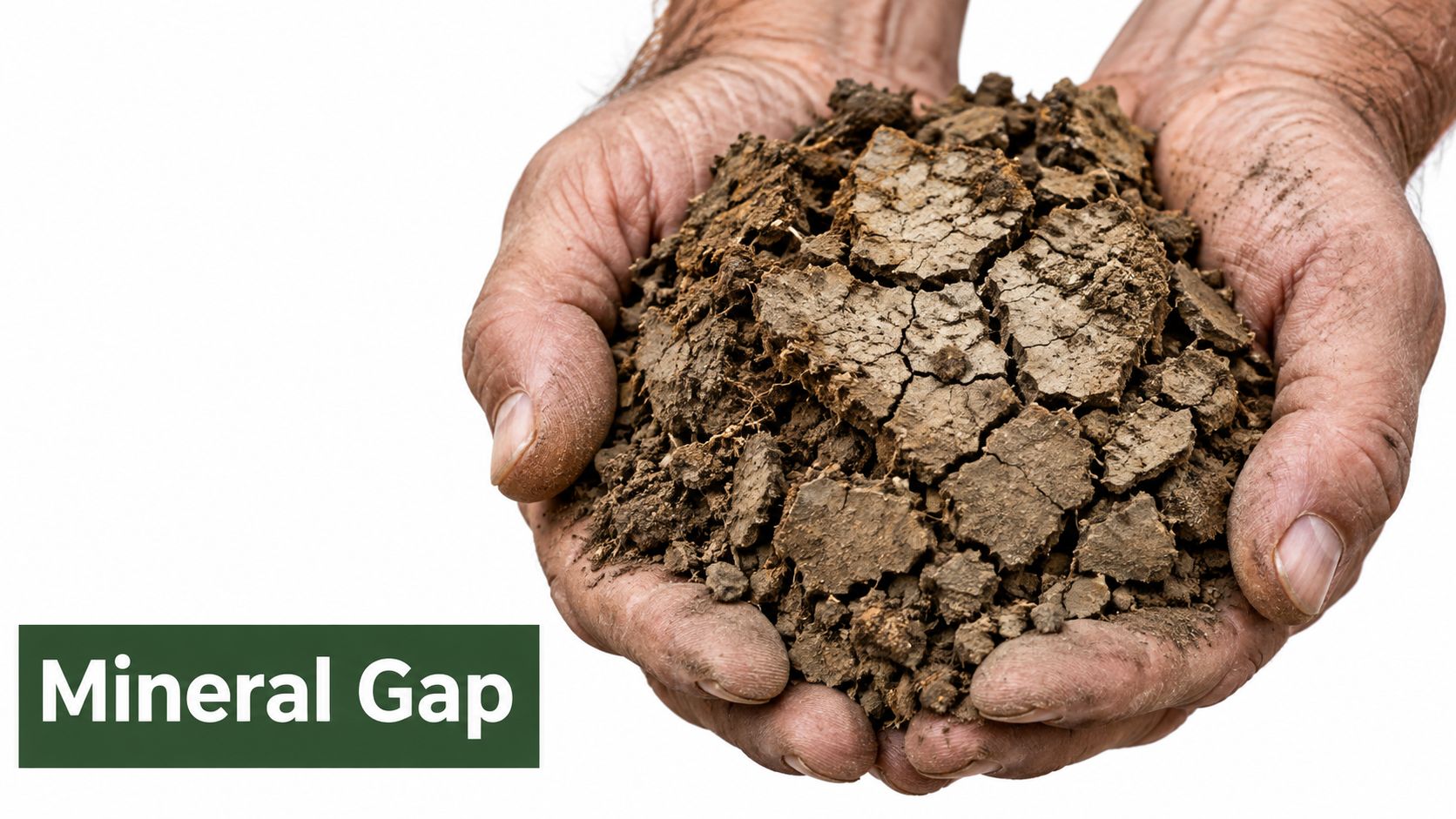
You can eat regular meals, include vegetables, and still wonder why your energy feels inconsistent. Fatigue has many possible causes, but a diet that repeatedly misses key minerals can leave you relying on guesswork. Soil health matters because nutrient availability in soil affects the nutrient quality of crops. The Food and Agriculture Organization explains that about 33% of the world's soils are degraded, with nutrient depletion among the major forms of degradation.
That doesn't prove every modern crop is deficient, and sea moss can't replace a balanced diet. It does support a practical conclusion: nutrient variety deserves deliberate attention. Sea moss can serve as a nutritional insurance policy, not because it solves every deficiency, but because it adds a marine source of minerals and fiber to a routine that may otherwise be repetitive.
Why a marine food belongs in the conversation
Sea moss is commonly associated with Irish moss, Chondrus crispus, and other red seaweeds used in commercial trade. It contains carrageenan and other sulfated polysaccharides that form a gel and contribute structural dietary fiber. Its value is best understood as one useful ingredient in a broader food strategy, not as a medicinal treatment.
The larger seaweed industry also shows why farming and sourcing matter. The FAO reported approximately 36.3 million tonnes of global seaweed production in 2021, compared with 11.8 million tonnes in 2001. About 97% of 2021 output came from farming, which means commercial seaweed supply is primarily an aquaculture industry rather than a simple wild-collection market.
For readers interested in how marine ingredients are used beyond nutrition, it's useful to browse ocean-derived skincare ingredients. The same sourcing questions apply: species, growing environment, processing, and testing all affect what ends up in the finished product. A practical overview of trace minerals is also available in this guide to trace minerals.
Top 10 Essential Minerals Your Body Is Craving
Sea moss doesn't provide all essential minerals in fixed, meaningful amounts. It can, however, contribute several important minerals, especially when the product is identified by species and supported by batch testing. A 2024 review reported the following dry-weight composition for Irish moss, but these figures shouldn't be treated as a guaranteed profile for every capsule, gel, or powder. The review also emphasizes that composition varies by species, location, farming conditions, and processing.
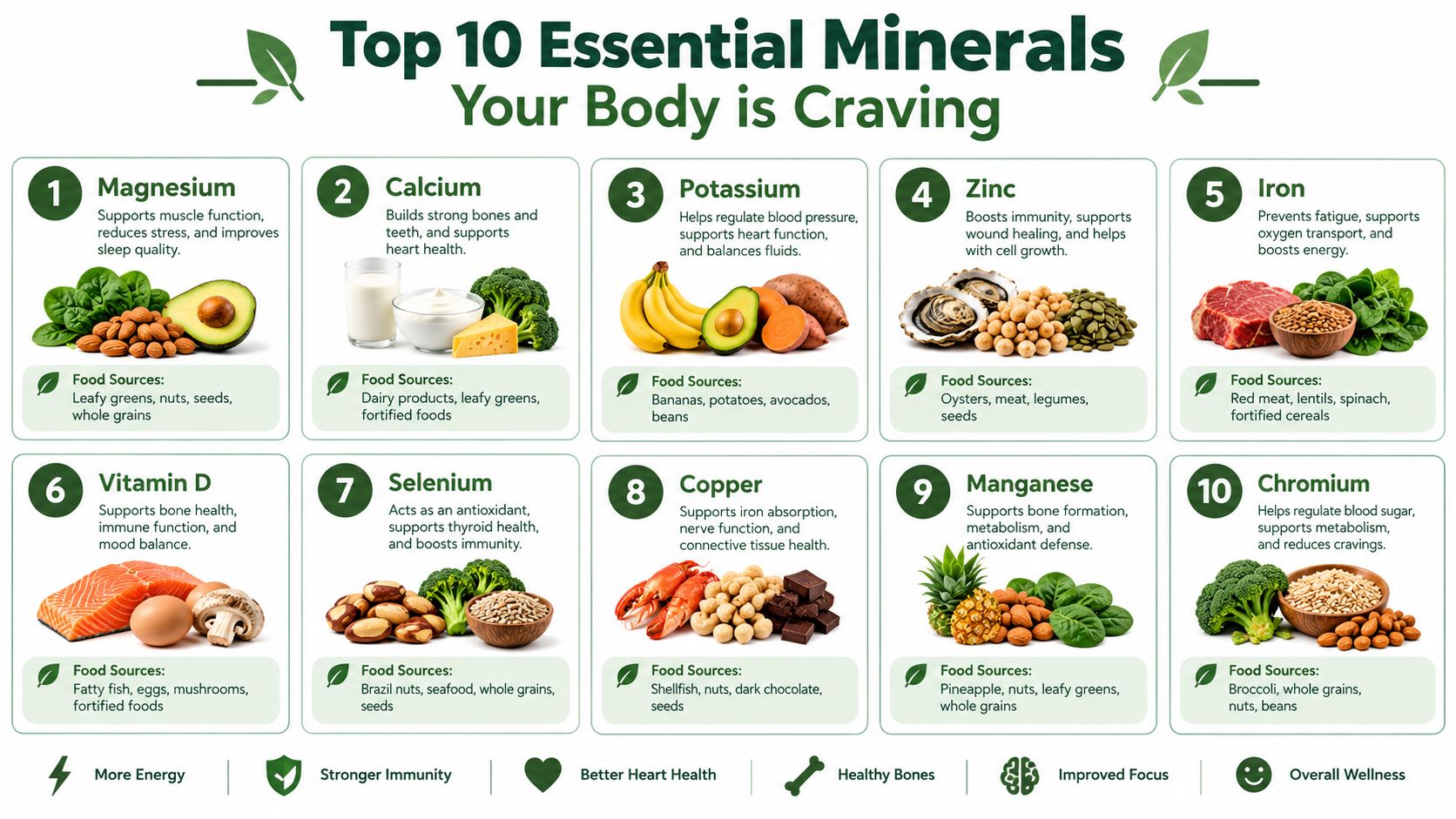
- Potassium supports fluid and electrolyte balance. Reported Irish moss composition was approximately 3,184 milligrams per 100 grams of dry weight. That figure describes dried material, not the contents of an ordinary serving.
- Calcium contributes to bones and normal muscle function. Irish moss was reported at approximately 1,120 milligrams per 100 grams of dry weight.
- Magnesium participates in many cellular processes, including normal muscle and nerve function. The same review reported approximately 732 milligrams per 100 grams of dry weight.
- Iron helps the body produce hemoglobin and support oxygen transport. Irish moss was reported at approximately 17 milligrams per 100 grams of dry weight, though actual products may differ significantly.
- Zinc supports immune function and normal tissue maintenance. Reported Irish moss content was approximately 7.14 milligrams per 100 grams of dry weight.
- Iodine is central to thyroid hormone production, but it's also the mineral that demands the most caution. The review reported approximately 24.5 milligrams per 100 grams of dry weight, while regional seaweed studies have found iodine differences of up to 25-fold. The NIH lists 150 micrograms as the adult recommended daily allowance and 1,100 micrograms as the adult tolerable upper intake level.
- Phosphorus works with calcium in bone structure and participates in energy metabolism. Its presence in seaweed products varies, so don't assume a fixed contribution from a serving.
- Selenium is an essential mineral associated with antioxidant systems, but its presence isn't guaranteed in every sea moss product. A label should identify what the product contains instead of implying a complete mineral spectrum.
- Copper supports connective tissue formation and normal iron metabolism. Like other trace minerals, its amount depends on the seaweed and its growing environment.
- Manganese contributes to normal metabolism and connective tissue formation. Sea moss may provide trace amounts, but a product shouldn't be marketed as a reliable source without a declared analysis.
The useful takeaway is simple: sea moss can add mineral diversity, but the label and certificate of analysis matter more than a superfood slogan. Soil degradation strengthens the case for dietary variety, not for abandoning vegetables, legumes, nuts, seafood, or other whole foods.
How to Prepare and Use Sea Moss Daily
Raw sea moss and prepared gel require more work than many buyers expect. Start by rinsing dried sea moss to remove visible sand or salt, then soak it in clean water until it softens. Blend the softened seaweed with fresh water until smooth, adjusting the texture to suit smoothies, soups, or sauces.
Choose the form that fits your routine
Gel works well when you already prepare smoothies or warm foods. Stir a small amount into a smoothie, blend it with fruit, or add it to a soup after cooking. Its mild marine taste can be easier to manage when combined with stronger flavors such as berries, citrus, ginger, or cocoa.
Powder is more adaptable for dry recipes. Mix it into a smoothie, oatmeal, yogurt, or a savory sauce. Use the product's serving instructions rather than copying a tablespoon recommendation from another brand, because powder density and iodine concentration can differ.
Capsules eliminate soaking, blending, storage, and texture concerns. They're often the most practical option for someone who wants a consistent routine at work, while traveling, or before training.
Practical rule: Treat the serving size as a product-specific measurement, not a universal sea moss dose.
Avoid assuming that soaking or washing makes a contaminated product safe. Those steps may remove surface material, but they aren't validated methods for removing iodine or heavy metals. If you're pregnant, breastfeeding, have thyroid disease, take thyroid medication, or combine several iodine-containing supplements, get clinical guidance before using concentrated seaweed products.
Capsules Versus Raw Forms for Nutritional Insurance
Raw sea moss offers flexibility, but it also introduces variables. The species may be unclear, the gel may be prepared with different amounts of water, and storage can affect freshness. A spoonful of gel isn't nutritionally standardized, so two homemade preparations can deliver different amounts of seaweed and iodine.
Capsules solve the convenience problem. They're pre-measured, portable, and easier to include in a daily checklist. That doesn't make every capsule reliable. It makes verified manufacturing and batch documentation especially important, because the consumer can't inspect the raw material directly.
| Format | Main advantage | Main limitation |
|---|---|---|
| Raw dried sea moss | Flexible for homemade preparation | Requires soaking, preparation, and careful storage |
| Gel | Easy to blend into foods | Volume doesn't establish a consistent iodine dose |
| Powder | Convenient for recipes | Density and mineral content vary by product |
| Capsules | Portable and pre-measured | Requires transparent labeling and testing |
For a broader perspective on evaluating supplement labels, OneTwenty's supplement insights can help you think beyond attractive packaging and focus on formulation details. For a product-specific option, review the Organic Irish Sea Moss Capsules page and check the serving information, ingredient list, and available testing details before buying.
Debunking Myths and Understanding Sourcing Safety
The “92 minerals” claim is hype. It distracts buyers from the two questions that matter most. What nutrients are identified in the product, and what proof shows the batch is clean enough to use daily? FAO plant-nutrition guidance does not validate a universal list of 102 minerals required by the human body. The NIH Office of Dietary Supplements describes a far shorter list of minerals with established roles in human nutrition, including iodine, iron, calcium, magnesium, zinc, selenium, copper, manganese, molybdenum, chromium, and phosphorus (NIH Office of Dietary Supplements).
That matters because modern shoppers are often trying to fill real nutritional gaps, not collect impressive-sounding label claims. Sea moss can still be useful, especially as a controlled daily backup when food quality and mineral intake vary. But capsules only work as nutritional insurance if the manufacturer shows you what is in them and what has been kept out.
Seaweed absorbs compounds from the water around it. Depending on species, harvest area, season, and water chemistry, it may accumulate arsenic, lead, cadmium, or mercury. Terms like “wildcrafted,” “ocean-grown,” and “natural” are not safety evidence. They are marketing language unless a current lab report backs them up.
Read the certificate, not just the badge
A useful third-party certificate of analysis should show:
- The batch number: It should match the product in your cart.
- The test methods: You should be able to see how iodine and heavy metals were measured.
- Detection limits: “Not detected” means little without the laboratory's cutoff.
- Actual results: Look for separate values for arsenic, lead, cadmium, mercury, and total iodine.
- Applicable thresholds: The report should state the benchmark used to judge safety.
A quality claim only matters when the batch record proves it.
Long food use does not guarantee that a concentrated supplement fits every person or every dose. Keep traditional food use separate from modern supplement safety. Keep wellness support separate from disease claims.
Choosing High-Quality Organic Sea Moss Products
Use a simple checklist before adding sea moss to your cabinet. Species identification comes first. A label that says only “sea moss” gives you less information than one that identifies the seaweed and its source.
Next, look for clear iodine disclosure per serving. Since iodine can vary substantially across growing environments and processing conditions, a generic mineral statement isn't enough. Compare the product with your total iodine intake from iodized salt, multivitamins, and other supplements.
Your purchasing checklist
- Batch testing: Request a recent certificate showing iodine and heavy-metal results for the exact batch.
- Transparent sourcing: Look for the harvest region and the named species.
- Organic documentation: Treat organic certification as useful sourcing information, not as a substitute for contaminant results.
- Serving clarity: Confirm whether the listed amount refers to dry seaweed, powder, gel volume, or capsule contents.
- Ingredient discipline: Prefer a short ingredient list when your goal is sea moss nutrition.
- Manufacturing details: Check for a responsible manufacturer, clear contact information, and traceable labeling.

A plain label with accessible testing is more valuable than dramatic claims about detoxification, thyroid repair, or total mineral coverage. If you're unfamiliar with laboratory documentation, this explanation of what third-party testing means provides useful context. Make your decision from evidence you can inspect.
Integrating Sea Moss into Your Wellness Routine
Sea moss works best as a small, repeatable part of a varied routine. Build meals around vegetables, fruit, legumes, whole grains, protein sources, and healthy fats. Add regular movement and adequate recovery rather than expecting one supplement to create energy or performance on its own.
A meal plan can make this easier by reducing last-minute food decisions. For practical planning ideas, explore this meal planner for weight loss, then decide whether gel, powder, or capsules fit your schedule. The right form is the one you can use consistently while tracking your total iodine exposure.
Sea moss is not a magic bullet. It's a potentially useful source of selected minerals and fiber, provided you choose a traceable product, review the batch results, and respect the needs of your thyroid and overall health.
Peak Performance offers Organic Irish Sea Moss Capsules as a convenient capsule format for people who want sea moss in a daily supplement routine. Review the ingredient, serving, and testing information, then visit Peak Performance to choose a product that fits your nutrition goals.


