


Find the Best Protein After Workout
When it comes to the best protein after a workout, you're looking for something that gets to work fast. Think fast-absorbing and loaded with the essential amino acids needed to kickstart muscle repair. High-quality options, like a clean whey protein or a complete plant-based blend, give your body the exact building blocks it needs right after you train. This helps you recover faster and see better, more tangible results from all that hard work.
Why Post-Workout Protein Is Your Secret Weapon

Picture your muscles after a tough workout. They're like a construction site where the crew just finished demolition. The strenuous exercise creates tiny micro-tears in the muscle fibers—and that's a good thing! It's not damage to worry about; it's the signal telling your body it's time to rebuild everything bigger and stronger.
But a construction site is useless without materials. In this case, protein is the lumber, concrete, and steel for the job. More specifically, the amino acids within that protein are the raw materials your body desperately needs for this critical repair process.
To give you a quick snapshot, here’s a look at why getting protein in right after you train is so important.
Quick Guide to Post-Workout Protein Benefits
| Benefit | How It Works |
|---|---|
| Faster Muscle Repair | Provides the essential amino acids needed to patch up exercise-induced micro-tears in muscle fibers. |
| Reduced Soreness | Helps lessen the severity and duration of delayed onset muscle soreness (DOMS). |
| Enhanced Muscle Growth | Directly stimulates Muscle Protein Synthesis (MPS), the biological process of building new muscle tissue. |
| Improved Performance | A quicker recovery means you’re ready to go for your next workout sooner and with more intensity. |
| Optimized Nutrient Uptake | Capitalizes on the "anabolic window" when muscles are primed to absorb and utilize nutrients efficiently. |
Getting these benefits all boils down to one key biological process.
Kickstarting Muscle Protein Synthesis
That whole rebuilding process has a name: Muscle Protein Synthesis (MPS). It’s the fundamental process your body uses to create new muscle proteins and repair the ones you just put through the wringer. Downing a quick source of protein after you exercise is the most direct way to flip the "on" switch for MPS.
When you drink a protein shake, your body gets to work breaking it down into individual amino acids. These aminos then travel through your bloodstream straight to your muscles, ready to patch up those micro-tears and reinforce the muscle fibers. The result? They become stronger and more resilient for your next session.
"The goal is to aim for 10–25 grams of high-quality protein in your post-recovery snack or meal. Ingesting more than that at one time won’t do you much good, as research suggests that muscle protein synthesis is maximized at around 25–30 grams of protein."
Having this immediate supply of amino acids ensures the rebuilding starts right away, which leads directly to more efficient recovery and better growth.
The Anabolic Window Opportunity
You’ve probably heard people talk about the "anabolic window." It’s the period right after a workout when your body is especially receptive to nutrients. While we now know this window is probably wider than the 30 minutes we used to think, the principle still holds true. Getting your protein in within an hour or two post-workout is a smart move to capitalize on your body's heightened sensitivity.
During this time, your muscles are primed to soak up and use amino acids way more efficiently. This strategic timing pays off in several huge ways:
- Faster Recovery: It cuts down on the time you feel sore and wiped out.
- Reduced Muscle Soreness: Supplying amino acids quickly can take the edge off delayed onset muscle soreness (DOMS).
- Enhanced Results: It makes sure your hard work in the gym actually translates to real strength and muscle gains.
Ultimately, getting protein in right after exercise just makes sense. Studies have confirmed that consuming 20 to 25 grams of whey protein post-exercise is a sweet spot for firing up muscle protein synthesis and making the most of this prime recovery window. If you want to dive deeper into the science, you can read the full research about post-workout protein timing and see for yourself.
Choosing Your Ideal Protein Source
Once you know why you need protein after a workout, the next question is which one. Diving into the world of protein powders can feel overwhelming, but it really comes down to two main players: animal-based proteins like whey, and plant-based proteins.
Both are fantastic for recovery, but they have some key differences in how they're made and how your body puts them to work.
Think of it like choosing fuel for a high-performance car. Premium unleaded and a top-tier biofuel will both get you down the track, but one might offer a faster start off the line while the other is engineered for a different kind of engine. The best protein after a workout for you works the same way—it all depends on your body and your goals.
The Gold Standard: Whey Protein
Whey protein has been the reigning champ in the fitness world for years, and for good reason. It’s derived from milk during the cheesemaking process and is absolutely loaded with branched-chain amino acids (BCAAs).
The most important of these is leucine, which is like a light switch that flips on Muscle Protein Synthesis—the actual process of rebuilding and repairing muscle tissue.
What really sets whey apart is its rapid absorption rate. It gets those critical amino acids delivered to your muscles, fast. This makes it an almost perfect choice for that immediate post-workout window when your body is primed for repair.
If you’re looking for pure, clean fuel, our Peak Performance Organic Grass-Fed Whey Protein is an incredible option. It’s packed with a complete amino acid profile to kickstart recovery without any junk fillers or artificial additives.
Unlocking the Power of Plant-Based Protein
Don’t listen to the old myths—plant-based proteins have become a seriously powerful and effective choice for anyone looking to build muscle and recover strong. They’re the go-to for anyone with dairy sensitivities, lactose intolerance, or those living a vegan or vegetarian lifestyle.
Today's plant proteins are a world away from the gritty, single-ingredient powders of the past. High-quality blends now combine multiple sources—like pea, rice, and hemp—to create a complete amino acid profile that stands shoulder-to-shoulder with whey. You get every single building block your muscles need.
We formulated our Peak Performance Organic Plant-Based Protein to be smooth, delicious, and biochemically complete. It’s proof that you don’t need dairy to get game-changing results.
Whey Protein vs Plant-Based Protein at a Glance
Still on the fence? Sometimes seeing a direct comparison makes the choice easier. Here’s a quick breakdown of how these two protein powerhouses stack up against each other.
| Feature | Whey Protein | Plant-Based Protein |
|---|---|---|
| Primary Source | Milk (Dairy) | Peas, rice, hemp, soy, etc. |
| Absorption Speed | Very Fast | Moderate to Fast |
| Amino Acid Profile | Complete | Often blended to be complete |
| Allergens | Contains lactose/dairy | Generally hypoallergenic |
| Digestibility | Can cause issues for some | Typically easier on the gut |
| Best For | Rapid post-workout recovery | Vegans, dairy-sensitive individuals |
Ultimately, both are excellent tools for recovery. The "better" one is simply the one that aligns with your body, your diet, and your lifestyle.
How to Pick Your Perfect Match
Making the right call really boils down to listening to your body.
Are you sensitive to dairy or feel bloated after a shake? A plant-based option is your clear winner. Is your sole focus on the absolute fastest absorption to maximize that anabolic window? Whey isolate is tough to beat.
Choosing your protein isn’t just about nutrition; it’s about aligning your fuel with your physiology and lifestyle. Whether it’s the fast-acting power of whey or the clean, sustainable energy of plants, the goal is the same: give your body high-quality building blocks to repair, rebuild, and come back stronger.
The concentration of protein matters, too. Supplements are designed for efficiency, which is why they’re so popular for post-workout nutrition.
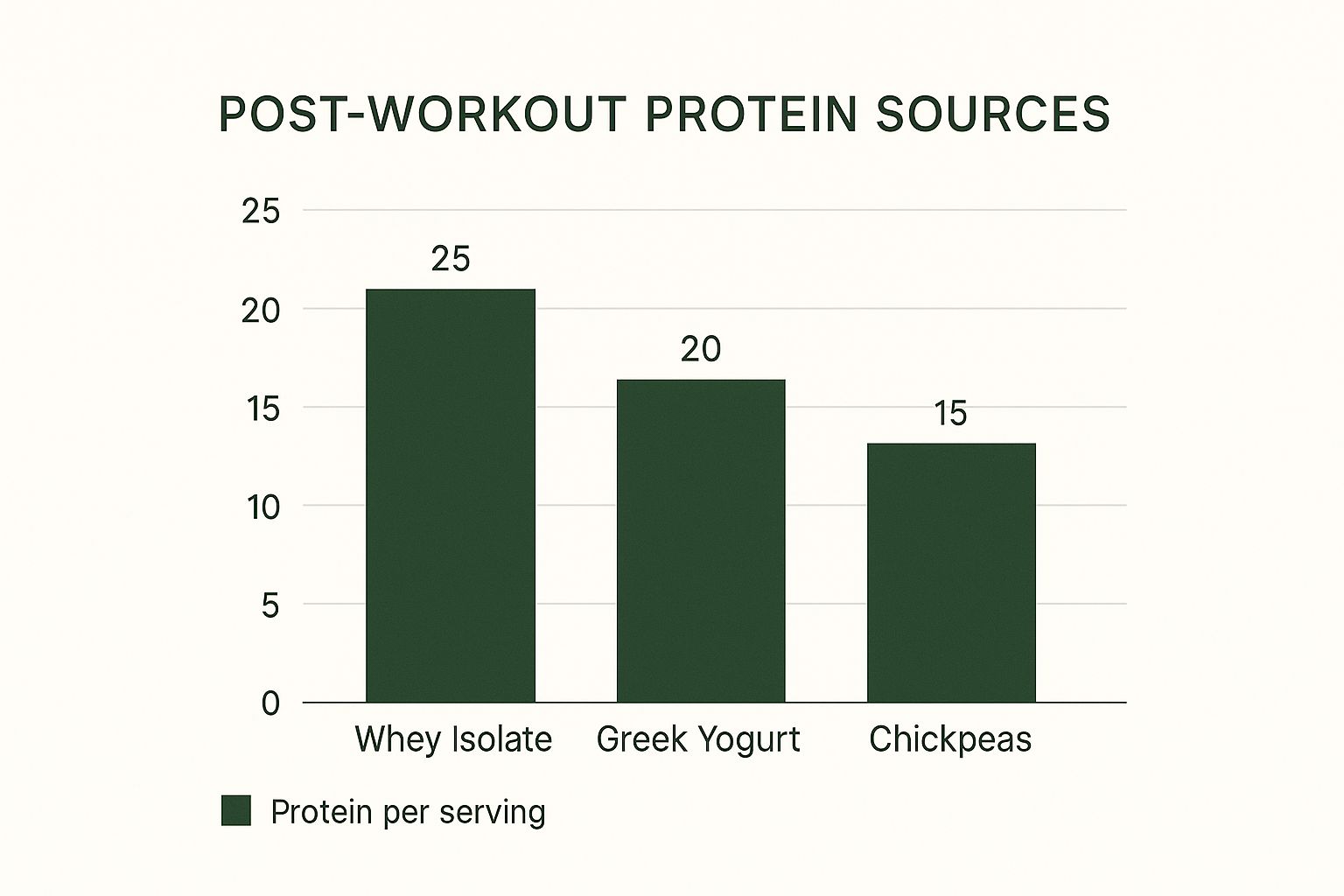
As you can see, a scoop of whey isolate delivers a much more concentrated dose of protein than most whole foods, making it incredibly efficient for recovery. At the end of the day, the best choice is the one you can stick with consistently to meet your goals.
The Science of Timing and How Much to Take
When it comes to protein after a workout, two questions always bubble to the surface: "When should I take it?" and "How much do I actually need?"
The conversation has been clouded with myths and bad advice for years, but the real science is much simpler than you've been led to believe. Let's clear the air so you can stop guessing and start refueling the right way.
For a long time, the fitness world was obsessed with the idea of a rigid 30-minute "anabolic window." This created a frantic rush to chug a protein shake the second the last dumbbell hit the floor. While that urgency was a bit over the top, the core idea was on the right track—timing does matter.
Think of it like gassing up your car after a long drive. You don't have to slam on the brakes the instant the fuel light flicks on, but you definitely want to hit a station before the tank is bone dry. It’s the same with your muscles; they're most receptive to nutrients right after you’ve put them to work.
Maximizing the Post-Workout Window
So, while you don’t need to sprint from the squat rack to the locker room, a solid rule of thumb is to get your post-workout protein in within one to two hours after you finish.
During this window, your muscle cells have a heightened sensitivity to insulin. This makes them incredibly efficient at soaking up glucose and amino acids—the exact building blocks needed for repair and growth.
Nailing this window brings a few key benefits:
- Faster Glycogen Replenishment: Your body restocks its primary energy stores more quickly, getting you ready for whatever’s next.
- Enhanced Muscle Repair: You're giving your body an immediate supply of amino acids to kickstart the muscle-building process.
- Reduced Muscle Soreness: Timely refueling can help take the edge off delayed onset muscle soreness (DOMS).
Waiting too long isn't a total disaster, but it does mean you're slowing down your recovery. By getting quality protein in during this optimal timeframe, you give your body exactly what it needs to rebuild stronger.
The "golden window" for recovery nutrition is a period of heightened muscle sensitivity after strenuous activity. During this time, muscles metabolize nutrients more efficiently, making it the ideal opportunity to refuel for repair and growth.
Finding Your Ideal Protein Dose
Once you've got the timing down, the next piece of the puzzle is the amount. Shoveling down as much protein as you can is not the answer.
Research consistently shows that for most of us, the sweet spot for maximizing Muscle Protein Synthesis (MPS) is between 20 and 40 grams of high-quality protein.
Taking more than that in one go doesn't mean you'll build more muscle; your body simply can't use all of it at once for repair. Sticking to this range ensures you're giving your body enough to trigger a powerful rebuilding response without any waste.
Of course, that’s not a hard-and-fast rule for everyone. A few things can tweak your specific needs.
Tailoring Your Intake to Your Goals
Your ideal protein dose will shift based on your body weight, how hard you trained, and what you’re trying to achieve.
Here are a few real-world examples to help guide you:
- The Weekend Warrior: After a moderate, 45-minute class or a light jog, 20-25 grams is perfect. It's enough to support recovery without going overboard.
- The Dedicated Gym-Goer: If you just crushed an intense, hour-long strength session, aiming for 25-35 grams will give your muscles the extra fuel they're crying out for.
- The Endurance Athlete: Finished a long run or bike ride? 30-40 grams is ideal, especially when you pair it with some carbs to replenish those drained glycogen stores.
Your body is unique, so listening to it is key. Ultimately, finding the best protein after a workout comes down to a simple formula: match a high-quality source with the right timing and the right dose for your routine.
The Overlooked Benefits of Post-Workout Protein
When you think about the best protein after a workout, your mind probably jumps straight to building bigger muscles. And you're not wrong—that's a huge piece of the puzzle. But zeroing in only on muscle repair is like watching a movie and only paying attention to the main character.
The supporting cast is just as crucial, and in the world of recovery, protein has several often-missed benefits that support your entire system. It’s about more than just rebuilding; it’s about reloading, defending, and regulating. A good protein shake does way more than patch up muscle fibers—it sets off a chain reaction that props up your energy, immune health, and even your appetite. It's a true cornerstone of holistic recovery.
Refueling Your Energy Tanks
After a tough session, your muscles aren’t just tired—they’re running on fumes. You’ve burned through a significant amount of your glycogen stores, which is your body’s go-to source for high-octane energy during intense exercise. Think of glycogen as the premium fuel in your muscle's gas tank.
Combining protein with carbs right after your workout is the most efficient way to refuel. This combo triggers an insulin response that helps shuttle glucose back into your muscle cells far more effectively than if you just had carbs alone.
This leads to a few key wins:
- Faster Glycogen Replenishment: You restock those energy reserves more quickly, getting your body prepped for the next training session.
- Reduced Fatigue: Topping off your glycogen helps you sidestep that dreaded post-workout crash and brings your energy levels back up to speed.
- Improved Future Performance: When you walk into your next workout with a full tank, you’re primed to train harder and longer.
Bolstering Your Immune System
Heads up: intense exercise is a stressor. It can temporarily knock down your immune system, leaving you more open to getting sick. This is where high-quality protein, loaded with essential amino acids, comes in to play defense.
Amino acids like glutamine and arginine are mission-critical fuel for your immune cells. A post-workout protein shake delivers a fast supply of these building blocks, helping your immune system stay strong right when it's most vulnerable. By supporting your body’s defenses, you minimize downtime from training and keep your routine consistent.
True recovery isn't just about what you feel in your muscles; it's about supporting the complex internal systems that allow you to come back stronger day after day.
Winning the War on Hunger
Ever finish a workout feeling like you could eat everything in sight, only to find yourself overeating an hour later? Protein is your best ally for managing that post-exercise hunger and staying on track with your goals.
Of all the macros, protein is the most satiating—it helps you feel fuller, longer. A post-workout shake can put a serious dent in your appetite, stopping you from grabbing junk food that could derail your progress. In fact, studies show that a protein-rich meal or snack can significantly cut down on how many calories you eat later.
This is a game-changer for a few reasons:
- It bridges the gap: A shake can hold you over until your next real meal, preventing mindless snacking.
- It supports fat loss: By helping you control your overall calorie intake, protein plays a direct role in getting you leaner.
- It promotes mindful eating: It satisfies your body’s immediate cry for nutrients, which lets you make smarter food choices later on.
Bottom line: the best protein after a workout isn’t just a muscle-building tool. It's a multi-purpose powerhouse that re-energizes, protects, and satisfies, making sure your recovery is as complete and effective as it can be.
Why Peak Performance Organic Protein Is the Clean Choice
When you're looking for the best protein to take after a workout, what goes into your shaker bottle is everything. It’s not just about the grams of protein on the label; it’s about the purity of the source and the integrity of the entire formula. Your body just did some incredible work, and refueling it with clean, effective nutrition is the most important step you can take toward recovery.
This is exactly where Peak Performance stands apart. We are incredibly deliberate about what goes into our products—and more importantly, what we leave out. Our entire philosophy is built on providing pure fuel without compromise, so you can trust every single scoop.
Sourced From Nature, Not a Lab
The real power of a protein powder starts at its source. For us, that means tracking down the highest-quality, most natural ingredients possible. We believe that what you put in your body should be as close to nature as possible, especially after you've pushed it to its limits.
Our Peak Performance Organic Grass-Fed Whey Protein is a perfect example. It comes from pasture-raised cows that graze freely on grass, which means the whey is naturally richer in beneficial nutrients. This isn't just generic whey; it's a direct reflection of a healthier, more natural environment.
And for those who prefer a plant-based approach, our Peak Performance Organic Plant-Based Protein is meticulously crafted from non-GMO sources. We combine different plant proteins to create a complete amino acid profile, ensuring your muscles get every single building block they need to repair and grow.
A Commitment to Clean Ingredients
What truly sets a premium protein apart is what’s not on the ingredient list. The market is flooded with protein powders loaded with junk additives that do absolutely nothing for your health or fitness goals.
We are committed to leaving out all the fluff:
- Artificial Sweeteners: You'll never find sucralose, aspartame, or acesulfame potassium in our formulas. We use natural sweeteners for a clean, subtle taste.
- Fillers and Gums: Ingredients like xanthan gum are often used to thicken shakes but can cause digestive issues for many people. Our proteins mix smoothly without them.
- Soy and Gluten: Our formulas are designed to be friendly to common food sensitivities, making them an easy choice for more people.
The post-workout supplement market is growing at a mind-blowing pace—a clear sign that more people are finally focusing on recovery. Valued at roughly $12 billion in 2023, the industry is projected to nearly double to $22 billion by 2032. As demand explodes, it becomes even more critical to choose brands committed to transparency. To see what's driving this trend, you can discover more insights about the post-workout supplement market.
Fueling More Than Just Your Muscles
While muscle repair is the main event, your post-workout fuel should support your overall wellness, not work against it. A shake packed with artificial ingredients can put extra stress on your digestive system—the last thing you need after a tough workout.
Our formulas are designed to be gentle on the gut and incredibly easy to digest. This ensures your body can absorb and use the amino acids efficiently, without bloating or discomfort. By focusing on clean, organic ingredients, we help support your gut health, which is truly the foundation of your overall well-being.
Choosing your post-workout protein is a decision that impacts more than just your next gym session. It’s a choice that supports your long-term health, ensuring that every scoop contributes positively to your body's recovery and vitality.
Choosing Peak Performance means choosing a product you can trust. It’s the confidence of knowing your recovery is powered by pure, organic ingredients designed to help you feel and perform your absolute best, workout after workout.
Your Post-Workout Protein Questions Answered
Even when you've got a good handle on the why, when, and how much protein to take, a few questions always seem to linger. It’s easy to get bogged down in the details of post-workout nutrition, but the answers are usually simpler than you’d think.
Let's clear the air. We’ll tackle the most common questions we hear, bust a few myths that just won't die, and give you the confidence you need to dial in your recovery routine.
Can I Just Eat Whole Foods Instead of Drinking a Shake?
You absolutely can. Whole food protein sources like grilled chicken, eggs, and Greek yogurt are fantastic for muscle recovery. No one's arguing with that.
But a protein shake has two major things going for it: convenience and speed of absorption. A shake is literally designed to get amino acids to your muscles faster than solid food, which has to go through a much longer digestive process. This makes it the perfect choice when you need to refuel quickly, especially if you can't sit down for a real meal within an hour or two after your session.
Will Protein Shakes Make Me Bulky?
This is probably the most persistent myth in fitness, and the answer is a hard no. Getting "bulky" doesn't happen by accident. It takes a very specific, intense training style combined with a serious, consistent calorie surplus.
For most people, a post-workout shake does the exact opposite. It helps repair muscle fibers to build a leaner, more toned physique. Our protein blends are formulated to support lean body composition and efficient recovery, making them a perfect fit for a fitness plan focused on strength and definition, not just size.
What’s the Best Thing to Mix My Protein Powder With?
This one’s easy—the "best" mixer really just depends on your immediate goal for that specific workout.
-
For Fastest Absorption (Mix with Water): If you want to mainline those amino acids to your muscles as fast as human possible, water is your best friend. There are no fats or carbs to slow down digestion, so your body can get right to work.
-
For a More Complete Recovery Meal (Mix with Milk): After a really tough workout, mixing your powder with dairy or a fortified plant-based milk is a great move. You’ll get extra calories, carbs, and fats to help replenish your glycogen stores while the protein does its job repairing muscle.
Do I Really Need to Drink My Protein Immediately After My Workout?
The old idea of a rigid 30-minute "anabolic window" has pretty much been debunked. You don't need to slam a shake the second you drop your last weight.
While the anabolic window is wider than 30 minutes, timing still matters. The key is consistency. Aiming to refuel within one to two hours post-exercise is a proven strategy to optimize muscle repair and capitalize on your body's heightened ability to use nutrients.
This timeframe ensures your muscles get the building blocks they need right when they're most ready to use them. A convenient Peak Performance shake makes hitting this window a no-brainer, no matter how hectic your post-gym schedule is. It takes the guesswork out of recovery so your hard work in the gym actually pays off.
At Peak Performance, we believe that clean, effective fuel is the cornerstone of great results. Our organic protein powders are meticulously crafted to support your recovery, helping you repair, rebuild, and come back stronger after every session.
Also in Blog


How to Increase Stamina Naturally and Boost Energy


How to Increase Energy Naturally

