


How to Increase Stamina Naturally and Boost Energy
If you’re serious about increasing your stamina for the long haul, you need to think beyond just pushing harder on your next run. Real, lasting endurance comes down to a constant interplay between three key areas: consistent training, smart nutrition, and deep recovery.
It's not about a magic pill or a quick fix. It's about building a solid foundation that supports you day in and day out.
Building Your Foundation for Natural Stamina
Gaining stamina that sticks is about creating a system where everything works together. Your workouts, your meals, and your rest are all part of the same equation. When you get this right, you build a body that’s not just stronger, but way more efficient at creating and using energy.
Think of it like building a house. You wouldn’t start with the roof and hope for the best. You have to pour a solid foundation first. For stamina, that foundation rests on three crucial pillars that will support every single one of your performance goals.
The Three Pillars of Endurance
To really move the needle on your stamina, you have to get these three things dialed in and working together:
- Smart Training: This is the most obvious part. It’s the physical stress that tells your body it needs to adapt and get stronger. A well-planned training schedule strengthens your heart, boosts your lung capacity, and teaches your muscles to use oxygen more efficiently.
- Strategic Nutrition: Food is fuel, plain and simple. What you eat provides the raw energy for your workouts, the protein to repair and build muscle, and all the micronutrients that keep your body’s systems running smoothly.
- Deep Recovery: This is where all the real gains are made. When you rest and sleep, your body gets to work repairing damaged tissue, topping off your energy stores, and locking in the improvements from your training. Skipping recovery is like driving your car without ever getting an oil change—sooner or later, it’s going to break down.
One of the best places to start is with consistent aerobic exercise. Things like brisk walking, cycling, or swimming are fantastic for improving your cardiovascular fitness and lung capacity—the very core of endurance. This kind of training makes your heart a more efficient pump and improves your blood's ability to carry oxygen. The experts at Mayo Clinic have some great insights on how aerobic activity is a game-changer for stamina.
Beyond the Basics: A Holistic View
While training, nutrition, and recovery are the big three, other lifestyle factors play a huge supporting role. Managing your stress, for example, is critical. High levels of the stress hormone cortisol can absolutely torpedo your energy levels and slow down recovery.
By focusing on these fundamentals, you create a powerful positive feedback loop. Better training demands better nutrition, and proper fueling improves your recovery, which in turn lets you train even harder.
This guide will break down each of these pieces, giving you practical, actionable steps to build your endurance from the ground up. Before we get into the nitty-gritty of workout plans and meal timing, just remember that all these elements are connected. Nail one area, and you'll almost certainly see a boost in the others, putting you on the fast track to incredible stamina.
Training Methods That Actually Build Endurance
If you want to seriously increase your stamina, you need a smarter training plan than just logging more miles. While consistency is everything, the type of training you do makes all the difference. I’ve seen it time and time again: the athletes who break through plateaus are the ones who blend different workout styles.
It’s all about challenging your body in multiple ways to create a more resilient, efficient system. This approach hits every aspect of your performance, from your heart’s pumping power to your muscles’ ability to fight off that burning feeling of fatigue. You’re essentially training your body to handle anything you throw at it.
The whole process is a cycle—training, fueling, and recovering all feed into each other.
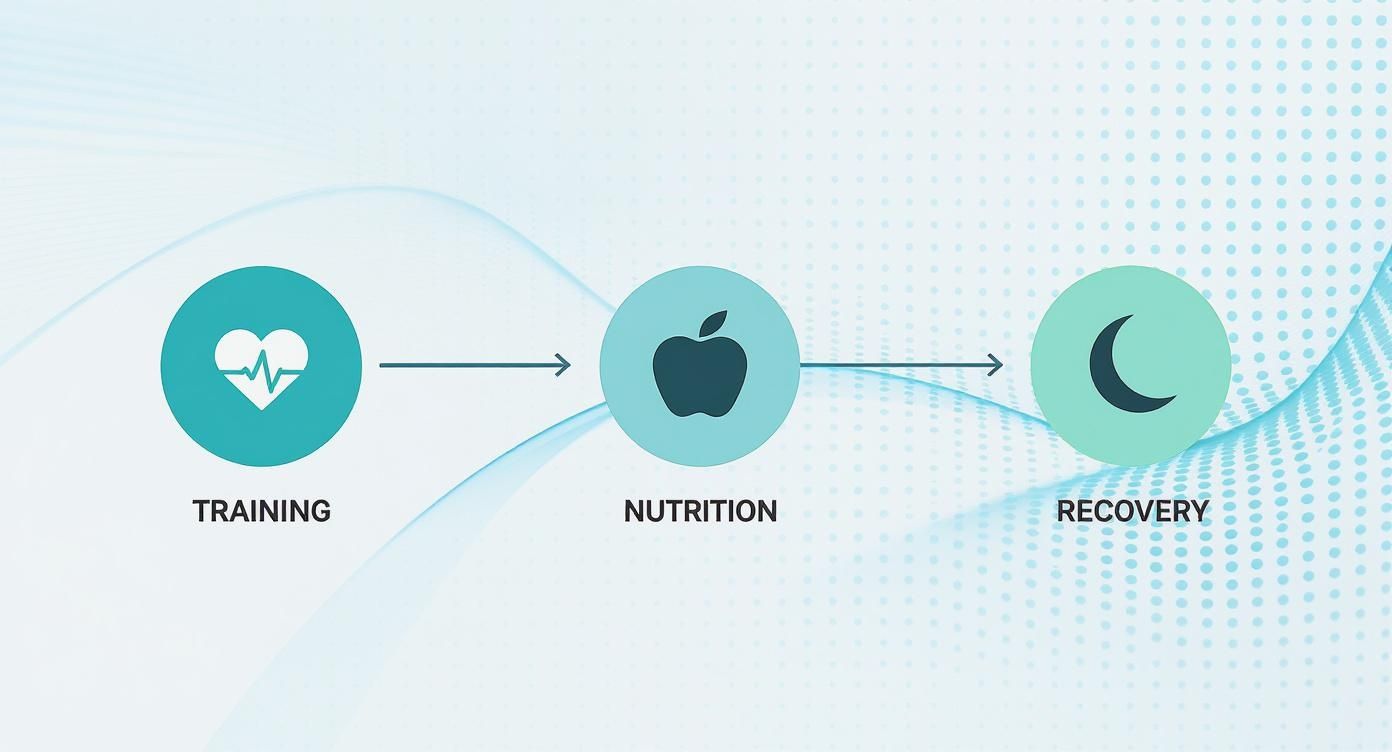
The effort you put into training is supported by what you eat and made permanent by how you recover. That recovery then fuels even better training sessions. It’s a beautiful loop.
Go Hard And Fast With HIIT
One of the most powerful ways to supercharge your stamina is with High-Intensity Interval Training (HIIT). This isn't about slogging it out for hours. Instead, it involves short, all-out bursts of effort followed by brief recovery periods. Think sprinting for 30 seconds, then walking for 60 seconds, and repeating that cycle 8-10 times.
The magic of HIIT is how it pushes your heart and lungs to their absolute max. This kind of training is incredibly effective for boosting your VO2 max—the maximum amount of oxygen your body can actually use during intense exercise. A higher VO2 max means more oxygen gets to your muscles, letting you push harder and longer before you hit the wall.
HIIT is a powerful tool because it forces adaptations that steady-state cardio can't. You're teaching your body to recover quickly and handle intense stress, which directly translates to better endurance in all activities.
For example, a quick HIIT session on a stationary bike might look like this:
- Warm-up: 5 minutes of easy pedaling.
- Intervals: 8 rounds of 20 seconds pedaling as fast as you can, followed by 40 seconds of slow, easy recovery.
- Cool-down: 5 minutes of easy pedaling.
The whole thing takes just 18 minutes but provides a massive stimulus for building serious stamina.
Build Your Base With Long Slow Distance
On the other side of the coin, you have Long Slow Distance (LSD) training. This is the bread-and-butter work that builds a rock-solid aerobic base. These are your long, relaxed runs, bike rides, or swims where you’re moving at a comfortable, conversational pace.
While HIIT builds your top-end power, LSD training builds your foundation. These workouts train your body to become incredibly efficient at using fat for fuel, which saves your limited glycogen (carb) stores for when you really need to dig deep. They also increase the density of mitochondria—your cellular powerhouses—and improve blood flow to your muscles. To really get a handle on building that base, it's worth understanding everything about cardio and how to apply it.
Don't Skip Strength Training
So many people focused on endurance make the classic mistake of avoiding the weight room. This is a huge miss. Strength training is a game-changer for stamina because it massively improves your muscular efficiency.
Simply put, stronger muscles need less energy to do the same amount of work, meaning you fatigue way less quickly. We dive deep into this concept in our article on how to tap into your inner ultra-endurance superpowers.
Focus on big, compound movements that hit multiple muscle groups at once:
- Squats
- Deadlifts
- Lunges
- Push-ups
- Rows
When your muscles are stronger, you delay that localized muscle fatigue that often forces you to slow down or stop. You don't need to train like a bodybuilder—just two solid sessions a week targeting the major muscle groups will make a night-and-day difference in your overall endurance.
Fueling for Performance: The Stamina Diet
Your training program creates the stimulus for your body to adapt, but your diet provides the actual building blocks for that change. You can think of your body as a high-performance engine—even the most powerful one will sputter and stall if you fill it with low-grade fuel.
To truly increase your stamina, you have to get your nutrition strategy dialled in. It’s not just about what you eat, but when you eat, and how well you stay hydrated. This isn't about some restrictive, miserable diet; it's about making smart, strategic choices that build a more resilient and energetic you.

The Macronutrient Blueprint for Endurance
For next-level endurance, your plate needs a balanced mix of carbohydrates, proteins, and healthy fats. Each one plays a critical, non-negotiable role in fueling your activity and repairing your body afterward. One of the most common mistakes I see is athletes ignoring one macronutrient in favor of another, which almost always limits their progress.
Complex Carbohydrates: Your Primary Fuel Source
Carbs are your body's go-to, most accessible energy source. They get stored in your muscles and liver as glycogen, ready to be called upon when you need them. Skimping on quality carbs is like trying to start a long road trip with a quarter tank of gas—you just won't get very far.
You'll want to focus on complex carbohydrates, the ones that break down slowly and give you a steady, reliable stream of energy.
- Whole Grains: Think oats, quinoa, brown rice, and whole-wheat bread.
- Starchy Vegetables: Sweet potatoes, corn, and squash are fantastic options.
- Legumes: Lentils, chickpeas, and black beans pack a powerful punch.
These foods help you avoid the dramatic energy spikes and crashes you get from simple sugars, giving you sustained power to push through longer workouts.
Lean Proteins: The Repair Crew
Intense exercise literally creates tiny micro-tears in your muscle fibers. That’s a good thing—it’s how you get stronger. But for that to happen, protein needs to come in and provide the amino acids necessary to repair that damage. Without enough protein, your recovery will drag, and your stamina gains will hit a wall.
Make it a goal to include a source of lean protein with every single meal to support this constant repair and rebuilding process.
- Animal Sources: Chicken breast, turkey, fish, eggs, and Greek yogurt are all excellent.
- Plant-Based Sources: Tofu, tempeh, edamame, and lentils work great, too.
Healthy Fats: The Long-Haul Fuel
While carbs are king for quick, intense energy, healthy fats are absolutely crucial for lower-intensity, longer-duration activities. They also play a huge role in hormone production and taming inflammation—both of which are key for consistent performance and solid recovery.
- Avocados
- Nuts and Seeds (walnuts, almonds, chia seeds)
- Olive Oil
Your diet is a tool. Use complex carbs to load up your energy stores, lean protein to rebuild what you break down, and healthy fats to support your body's underlying systems.
Mastering Meal Timing
Believe it or not, when you eat is almost as important as what you eat. Nailing your timing ensures that energy is actually available when you need it most and that your body gets the nutrients for recovery right away. A well-timed meal can be the difference between a great workout and an exhausting slog.
A couple of hours before a long run, a meal rich in complex carbs with a bit of protein—like a bowl of oatmeal with berries and a scoop of protein powder—is perfect. This gives your body time to digest and top off its glycogen stores. Immediately after a tough session, you want something fast-digesting like a smoothie with fruit and whey protein to kickstart the recovery process.
We've put together a simple cheat sheet to help you make the right choice based on how much time you have.
Pre-Workout Snack Timing and Composition Guide
| Time Before Workout | Primary Goal | Recommended Snack Examples | Why It Works |
|---|---|---|---|
| 2-3 Hours | Maximize glycogen stores for sustained energy. | A small bowl of oatmeal with fruit and nuts; a whole-wheat turkey wrap. | Allows for full digestion of a balanced meal, providing slow-release energy without stomach upset. |
| 60-90 Minutes | Top off energy with easily digestible carbs. | A banana with a tablespoon of almond butter; a small granola bar. | Provides a quick carb boost without sitting heavily in your stomach. The small amount of fat/protein adds satiety. |
| 30-45 Minutes | Quick, fast-acting energy for immediate use. | A handful of dried fruit (like dates or raisins); a small apple or orange. | Simple sugars are digested rapidly, delivering immediate fuel to your muscles just as you start your workout. |
| < 30 Minutes | Emergency fuel for an unexpected workout. | A few sips of a sports drink or a single energy gel. | Liquid carbs are the fastest to digest and prevent a blood sugar crash without requiring any real digestion. |
Choosing the right snack at the right time is a simple hack that pays off big time in your performance and how you feel during your workout. For an even deeper dive, check out our guide on what to eat before a workout.
Hydration and The Power of Electrolytes
Dehydration is a complete stamina killer. A loss of just 2% in body weight from sweat can tank your performance, jack up your heart rate, and make the whole workout feel ridiculously hard. But great hydration is about more than just chugging water.
When you sweat, you're not just losing water; you're losing critical electrolytes like sodium, potassium, and magnesium. These minerals are the spark plugs for muscle function and fluid balance. When they get too low, you open the door to cramping, dizziness, and serious fatigue.
For any workout lasting over an hour, especially on hot days, you should really consider an electrolyte drink. You can also just add a pinch of salt and a squeeze of lemon to your water. This one simple step helps your body hold onto fluid and keeps your muscles firing correctly, letting you maintain your intensity for much longer. It's a non-negotiable part of any serious stamina-building plan.
Natural Compounds to Support Your Endurance Goals
While smart training, solid nutrition, and deep recovery are the undeniable foundation for building stamina, certain natural compounds can give you a targeted advantage. These botanicals and adaptogens work by helping your body handle stress, ramp up energy production, and ultimately elevate your physical performance.
Many of these ingredients have been cornerstones in traditional medicine for centuries, and modern science is finally catching up, validating their powerful effects. For anyone serious about increasing stamina naturally, exploring these compounds can provide that extra edge, helping you adapt and push past previous limits.
Understanding Adaptogens and Performance Botanicals
Adaptogens are a fascinating class of herbs that help your body become more resilient to all kinds of stressors—whether physical, chemical, or biological. For an athlete, this translates to better management of exercise-induced stress, which means faster recovery and more consistent performance day in and day out.
These powerful plants don't just put a band-aid on fatigue; they work deeper, helping to modulate your body's core stress response systems. Other performance botanicals might work through different pathways, like supporting hormone balance, improving how your body uses oxygen, or boosting energy at the cellular level. The trick is to find high-quality, well-researched compounds that match your specific goals.
Integrating the right natural compounds is like adding a specialized tool to your toolbox. They won't build the house for you, but they can make the entire construction process more efficient and effective.
Key Compounds for Supporting Stamina
Several botanicals have earned a serious reputation for their ability to support vitality and endurance. For instance, certain herbs used for centuries to enhance physical performance are now being backed by some pretty promising science. You can dive deeper into an in-depth review on herbal remedies for physical performance to see the data for yourself.
Two powerhouses that have a long history of use are Tongkat Ali and Fadogia Agrestis. Both have been traditionally used to bolster energy, vitality, and physical drive.
- Tongkat Ali (Eurycoma longifolia): Native to Southeast Asia, this herb has been studied for its ability to support healthy testosterone levels. This is critical for both men and women when it comes to muscle repair, energy, and overall endurance.
- Fadogia Agrestis: Hailing from Africa, this plant has been traditionally used to enhance athletic performance and vitality. It's believed to work by supporting the body's natural hormonal pathways tied to energy and drive.
When you bring these ingredients together, they can have a synergistic effect that perfectly complements a dialed-in training and nutrition plan. If you're looking to add a targeted formula to your routine, a high-quality option like Peak Performance’s Tongkat Ali + Fadogia Agrestis Capsules can be a great way to support your training and recovery.
How to Safely Incorporate Supplements
Before you start adding anything new to your regimen, it's always smart to make sure your foundation is solid. Remember, these compounds are meant to supplement—not replace—a healthy lifestyle. They shine brightest when your training, nutrition, and sleep are already on point.
Always choose products from reputable brands that are transparent about their quality. Look for third-party testing to ensure you’re getting a pure and potent product, not something full of useless fillers or contaminants. To learn more, check out our complete guide on other natural energy-boosting supplements.
Finally, start with the lowest recommended dose. This lets you see how your body responds before you even think about increasing it. Pay close attention to how you feel during your workouts and in your recovery periods. When used the right way, these natural allies can be a powerful piece of your strategy to build lasting, unbreakable stamina.
The Hidden Keys to Stamina: Sleep and Recovery
Your journey to better stamina doesn't stop when your workout ends. In fact, that’s when some of the most important work really begins.
Stamina isn't just forged in the gym or on the trail—it’s built during intentional periods of rest. I've seen it time and time again: neglecting sleep and recovery is one of the fastest ways to completely sabotage your endurance goals, no matter how hard you train.
Why? Because your body performs its most critical repair work while you rest. Skimping on sleep throws your hormones out of whack, slows muscle recovery to a crawl, and dulls the cognitive function you need to stay sharp and motivated.
It's time to start seeing rest not as downtime, but as an active, crucial part of your training.

Prioritizing Quality Sleep for Peak Performance
Think of sleep as your body's nightly maintenance crew. During deep sleep, your body releases human growth hormone (HGH), which is absolutely vital for repairing tissues and building stronger, more resilient muscles. Even a single night of bad sleep can disrupt this delicate process, leaving you feeling sluggish and weak the next day.
Getting more out of your nights doesn't require complex changes. It’s about consistency with the basics.
- Stick to a Schedule: Go to bed and wake up around the same time every single day. Yes, even on weekends. This is the single best way to regulate your body's internal clock, or circadian rhythm.
- Optimize Your Environment: Your bedroom should be a cave—cool, dark, and quiet. Blackout curtains, a white noise machine, or earplugs can be total game-changers. For a real upgrade, things like your bedding can make a huge difference; check out the benefits of bamboo sheets for cooler, softer sleep.
- Create a Wind-Down Routine: An hour before bed, it’s time to power down. That means turning off screens, whose blue light can interfere with melatonin production (the hormone that tells your body it's time to sleep). Try reading a book, doing some light stretching, or listening to calming music instead.
The Power of Active Recovery
Rest days don't have to mean becoming one with your couch. Active recovery—performing low-intensity exercise on your days off—is an incredibly powerful tool for boosting stamina.
This kind of light activity increases blood flow to your tired muscles, which helps flush out metabolic waste and deliver the oxygen and nutrients needed for repair. The result? You’ll feel less sore and bounce back faster, ready to crush your next hard workout.
Active recovery isn't about adding more training volume; it's about accelerating the repair process so you can get more out of your hard sessions. It’s the bridge between one great workout and the next.
Consider weaving these simple activities into your rest days:
- A gentle 20-30 minute walk or easy bike ride
- Foam rolling major muscle groups like your quads, hamstrings, and calves
- A light yoga or mobility session
Supporting Recovery Through Nutrition
What you eat directly impacts how well you recover. We've talked about pre-workout fuel, but your post-workout nutrition is just as critical for repair.
Aim to get a mix of quality protein and carbohydrates within an hour or so of finishing your workout. This helps replenish your depleted glycogen stores and gives your body the amino acids it needs to start rebuilding muscle tissue.
Beyond the basics, researchers are also looking into how specific natural compounds can support muscle endurance, especially as we get older. For instance, studies on compounds from foods like pomegranates have shown significant improvements in muscle endurance and fatigue resistance. This kind of targeted nutrition is a fascinating field that shows just how much our diet can support our stamina goals.
By viewing sleep and recovery as non-negotiable parts of your training, you create a powerful cycle of stress, adaptation, and growth. This holistic approach ensures that every ounce of effort you put into your workouts translates into real, lasting gains in your endurance.
Your Top Stamina Questions, Answered
As you start working on your endurance, you’re bound to have questions. It's totally normal. Sorting through all the advice on training, food, and recovery can feel like a full-time job, but getting clear, simple answers is the key to staying on track.
Think of this as your go-to guide for troubleshooting common hurdles. We’ll cut through the noise and give you the straightforward advice you need to stay consistent, sidestep common mistakes, and build the kind of stamina that truly lasts.
How Long Until I See A Real Increase in My Stamina?
This is the big one, isn't it? The honest answer is: it depends on your starting point and—most importantly—your consistency. You won't transform into a new athlete overnight, but you'll probably feel the needle moving faster than you think.
Most people start to notice a real difference in their cardiovascular system within 2 to 4 weeks of consistent training. This might be as simple as feeling less gassed walking up a flight of stairs or bouncing back quicker between sets at the gym.
But for those significant, game-changing gains—running faster for longer, crushing more reps—you're typically looking at 8 to 12 weeks. That’s the sweet spot where your body’s deeper adaptations, like building more mitochondria and getting better at using oxygen, really start to lock in. Patience is your best friend here. Trust the process.
Can I Build Stamina Without High-Impact Cardio?
Absolutely. You don't have to pound the pavement for miles to build a serious engine. That’s a total myth. The real key to boosting stamina is getting your heart rate up into that aerobic zone consistently, and you can do that in tons of ways that are kind to your joints.
In fact, low-impact activities are fantastic for building a rock-solid endurance base without all the wear and tear.
- Swimming: A killer full-body workout that does wonders for your cardiovascular health.
- Cycling: Whether you're on the road or a stationary bike, it’s a phenomenal stamina builder.
- Rowing: This one hits over 85% of your body's muscles and delivers a potent cardio challenge.
- Elliptical Machine: It gives you the feel of running without the jarring impact.
Even a well-designed strength workout with short rest periods, like a good old-fashioned circuit, can send your heart rate soaring and seriously boost your endurance. The goal is sustained effort, not necessarily high impact.
What Are The Biggest Mistakes to Avoid?
On the road to better stamina, a few classic blunders can stop even the most motivated person in their tracks. Knowing what they are is half the battle.
The single biggest mistake we see is people going too hard, too soon. It’s a classic story that usually ends with overtraining, burnout, or an injury. That just forces you to the sidelines, erasing all your hard-earned progress. It’s always smarter to build up your training volume and intensity slowly and steadily.
The other major pitfall is ignoring the fundamentals. Your training, nutrition, and sleep are like a three-legged stool. If you’re not fueling right, constantly dehydrated, or always skimping on sleep, you're just sabotaging your workouts. The whole system falls apart if one leg is wobbly.
Are Supplements Required to Increase Stamina?
Let's be clear: supplements are not a magic bullet. They can't replace consistent training, smart nutrition, and quality sleep. You can't out-supplement a shaky foundation. That said, they can play a powerful supportive role once you have your fundamentals locked in.
The right supplements can help optimize your body's natural systems, support hormonal balance, and speed up recovery, giving you a valuable edge. Think of them as a way to enhance an already solid plan, not a shortcut to fix a broken one.
For instance, ingredients like Tongkat Ali and Fadogia Agrestis have been used for ages to support vitality and drive. A clean, high-quality formula like our Tongkat Ali + Fadogia Agrestis Capsules can be a great way to complement your efforts by supporting the very systems that fuel your energy and endurance.
At Peak Performance, we're all about backing your health goals with top-tier, effective formulas. If you’re ready to add a targeted supplement to your routine, check out our Tongkat Ali + Fadogia Agrestis Capsules and take another step toward reaching your peak potential.
Also in Blog


How to Increase Energy Naturally


