


How to Overcome Chronic Fatigue Syndrome
Tackling chronic fatigue syndrome, or ME/CFS, isn’t about "pushing through" the exhaustion. That's a battle you simply can't win. Instead, the real journey begins when you learn to work with your body, not against it. It's a fundamental shift towards strategic energy management, carefully listening to your body's signals, and building a lifestyle that supports healing.
The first, and often hardest, step is simply validating your own experience. You have to learn the difference between the profound exhaustion of ME/CFS and just being tired.
What Is Chronic Fatigue, Really?
Before you can even think about managing it, you have to understand what you're up against. Myalgic encephalomyelitis/chronic fatigue syndrome (ME/CFS) is so much more than feeling tired. This is a complex, debilitating, and serious illness that affects your entire body and can completely derail your life.
Acknowledging the reality of what you're going through is a powerful first move. Too many people with ME/CFS are met with disbelief—from doctors, friends, even family—which is incredibly isolating. Let's be clear: what you are experiencing is a very real medical condition.
The Telltale Signs of ME/CFS
The symptoms of ME/CFS are distinct and go far beyond what most people think of as fatigue. Learning to recognize them is your first tool for managing this illness.
- Post-Exertional Malaise (PEM): This is the hallmark of ME/CFS. Think of it as an energy crash on a massive scale. After even a small amount of physical, mental, or emotional effort, all your symptoms flare up intensely. This "crash" can be delayed by hours or even a full day, and it can leave you sidelined for days or weeks.
- Unrefreshing Sleep: One of the most frustrating parts is waking up feeling just as exhausted—if not more so—than when you went to sleep. Your body isn't getting restorative rest, so you're never able to truly recharge your batteries.
- Cognitive Impairment ("Brain Fog"): Simple mental tasks become monumental challenges. You might struggle to focus, forget things you just heard, or find yourself grasping for the right word. It's not just forgetfulness; it's a deep cognitive fog.
Many also deal with persistent muscle and joint pain, headaches, a recurring sore throat, and a sensitivity to being upright (orthostatic intolerance).
If this sounds familiar, know this: You are not alone. The exhaustion and frustration are real. Your experience is valid. Accepting the legitimacy of ME/CFS is the solid ground you can start building on.
ME/CFS vs. Normal Fatigue: Knowing the Difference
Everyone gets tired. But the fatigue that comes with ME/CFS is on a completely different planet. It's a distinction that's crucial for getting the right kind of help and for explaining your situation to others. Ordinary tiredness usually has a clear cause—a long week at work, a hard workout—and a clear solution: a good night's sleep.
The fatigue of ME/CFS is a profound, whole-body exhaustion that rest doesn't fix. It often strikes without a clear trigger and brings its friends—PEM, brain fog, and pain—along with it.
To help clarify this, let's break down the key differences.
Key Symptoms of ME/CFS vs Normal Fatigue
This table should help you and your loved ones understand why ME/CFS is so much more than just "being tired."
| Symptom Area | ME/CFS Characteristic | Normal Fatigue Characteristic |
|---|---|---|
| Core Experience | A profound, full-body exhaustion that feels like a debilitating illness. | A feeling of tiredness or weariness, usually related to recent activity. |
| Impact of Rest | Sleep and rest do not relieve the fatigue; you often wake up feeling unrefreshed. | Rest and a good night's sleep typically restore energy levels. |
| Post-Exertion | Post-Exertional Malaise (PEM): A severe worsening of all symptoms after minimal effort, often delayed and lasting for days or weeks. | Feeling tired after exertion, but recovery is predictable and relatively quick. |
| Cognitive Function | Significant "brain fog," including memory problems, difficulty concentrating, and word-finding issues. | Mild, temporary difficulty concentrating when very tired. |
| Onset & Duration | Often has a sudden, flu-like onset and persists for at least 6 months. | Onset is directly related to a specific cause and is temporary. |
| Other Symptoms | Often accompanied by widespread pain, sore throat, headaches, and dizziness upon standing. | Typically not associated with a wide range of other physical symptoms. |
Understanding these distinctions is vital. It’s the difference between telling someone you're "just tired" and explaining that you're managing a complex, chronic illness.
One of the biggest hurdles we face is the sheer lack of awareness. It's estimated that 17 to 24 million people around the world are living with ME/CFS. In the United States, that number was around 4.3 million people—or 1.3% of the population—as of 2022. Because so many cases go undiagnosed, better recognition and personalized management plans can make a world of difference. To get a better grasp of the numbers, you can explore more research on ME/CFS prevalence and its global impact.
Mastering Pacing to Reclaim Your Energy
If there's one cornerstone strategy for managing chronic fatigue syndrome, it’s pacing. This isn't about managing your time; it's about carefully managing your body’s limited energy budget. Forcing yourself to "push through it" is probably the single most damaging thing you can do. It's a direct ticket to post-exertional malaise (PEM), the debilitating crash that can steal days or even weeks of your life.
The entire goal is to learn how to live within your unique "energy envelope." Think of it as the total amount of physical, mental, and emotional energy you have available each day. By staying within this boundary, you can finally break the exhausting boom-and-bust cycle. This creates the stability your body desperately needs to even begin the healing process.
It requires a complete shift in mindset. You have to start seeing your energy as a precious, finite resource—something to be budgeted meticulously, not spent recklessly.
Understanding Your Energy Envelope
Before you can budget your energy, you need to know how much you have. This means becoming a bit of a detective, carefully observing your own body and daily life. I always advise clients to start by tracking their activities for a week or two. Jot down everything you do and, just as importantly, how you feel afterward.
Don't just focus on the obvious physical stuff. Your energy is drained by much more, including:
- Mental activities: Things like reading, paying bills, working on a computer, or even just having an in-depth conversation can consume a shocking amount of energy.
- Emotional activities: A stressful phone call with a family member or watching a tense movie can be just as draining as a physical task.
- Sensory input: Ever feel wiped out after a trip to the grocery store? Bright lights, loud noises, and crowded spaces can seriously overwhelm your system and deplete your reserves.
This kind of tracking is invaluable. It helps you pinpoint your personal PEM triggers and gives you a realistic baseline of what you can actually handle right now.
Practical Steps to Start Pacing Today
Once you have a better feel for your limits, you can put pacing into practice. The secret is to break everything down into smaller, bite-sized chunks and to schedule deliberate rest in between.
Let’s take something as "simple" as a shower, which can feel like a marathon with ME/CFS. Instead of tackling it all at once, try this:
- First, just gather your towel and clean clothes and put them in the bathroom. Now, go rest for 10 minutes.
- Next, take a lukewarm shower. Using a shower stool can be a lifesaver here. Afterward, rest for a full 20 minutes—lie down if you can.
- Finally, get dressed. Then, rest for another 15 minutes before even thinking about your next task.
I know it sounds tedious, but this approach prevents one activity from wiping out your entire day's energy. You want to finish every task with a little something left in the tank, never pushing to the brink of exhaustion.
Pacing isn't about doing less; it's about doing what matters most in a sustainable way. It's the art of strategically allocating your energy to prevent crashes and create a foundation for gradual improvement.
Using Technology to Guide Your Pacing
Living with fluctuating symptoms means that just "listening to your body" can be unreliable. One day you feel okay, the next you're floored. This is where a heart rate monitor can become your best friend. A key pacing technique is to keep your heart rate below your anaerobic threshold—that’s the point where your body starts creating energy without enough oxygen, which is a major trigger for PEM.
Many people with ME/CFS find that keeping their heart rate consistently below a specific number (something you can determine with your doctor) is the most effective way to avoid overexertion. It gives you real-time, objective data to guide you, removing the emotional guesswork from the equation.
As the CDC emphasizes, managing activities to prevent these crashes is central to living with this condition.
This guidance officially confirms that staying within your energy limits is the primary management strategy, directly contradicting harmful and outdated advice about pushing through with graded exercise.
Applying Pacing to Real Life
Weaving pacing into the fabric of your daily life is an ongoing dance of planning, adjusting, and, most importantly, being kind to yourself.
- Social Life: Opt for short visits instead of long, draining outings. Let your friends know upfront that you might need to leave early. A quiet coffee shop is always a better choice than a loud, crowded restaurant.
- Household Chores: Don't try to be a hero and clean the whole house on Saturday. Spread tasks throughout the week. Maybe just clean one room—or even just one part of a room—each day. Sit down while you fold laundry or chop vegetables.
- Work: If you’re still able to work, talk to your employer about accommodations. Could you work from home? Have more flexible hours? Can you schedule mandatory rest breaks into your day?
This strategic approach also connects deeply with other parts of your health, like nutrition. For women, energy levels are often tied to the menstrual cycle, which adds another layer to manage. You can learn much more about tracking cycles and protein pacing for optimized health in our guide on the topic.
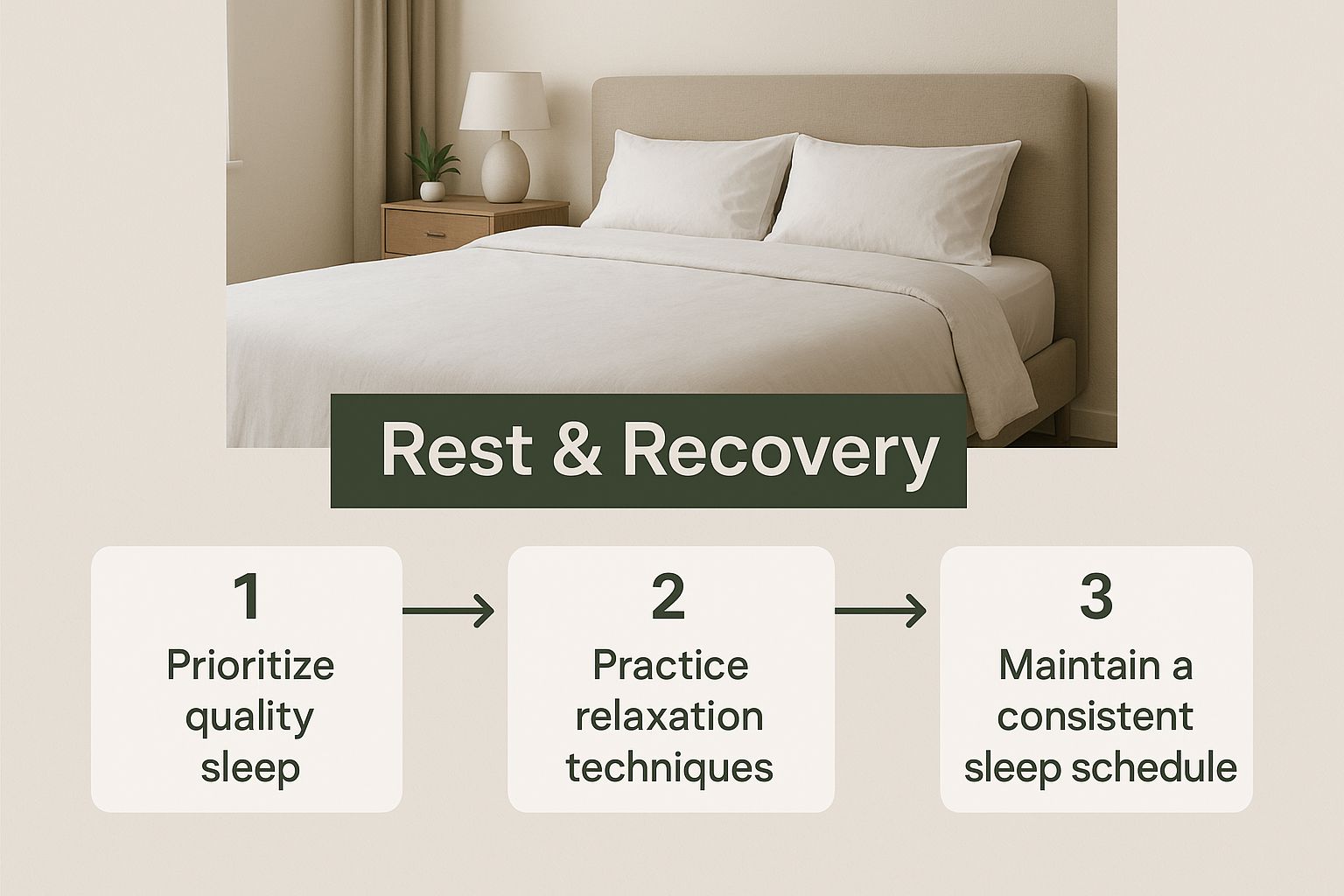
Making rest a priority is the whole point, and creating a space for it is essential.
Think of it this way: creating a calm, serene environment for genuine recovery isn't a luxury; it's a non-negotiable part of your treatment plan. It's about making rest an active, intentional, and healing part of your day.
Finding the Right Doctor and Building Your Team
If you're living with ME/CFS, you know that navigating the medical world can feel like a full-time job. It’s often lonely and deeply frustrating when you're dismissed or misdiagnosed, leaving you feeling adrift just when you need support the most. That's why learning to advocate for yourself and finding a truly knowledgeable doctor isn't just another step—it's the absolute foundation of your recovery.

You have to become the CEO of your own health. It all begins with finding a primary care physician or specialist who not only gets ME/CFS but also genuinely believes you and is ready to work with you as a partner. It can be a tough search, but it’s non-negotiable for anyone serious about figuring out how to overcome chronic fatigue syndrome.
Unfortunately, finding that doctor is harder than it should be. Even with a global prevalence estimated at nearly 1%, many healthcare providers get very little training on ME/CFS and remain skeptical. This creates a huge barrier to care. For perspective, official records in some areas show only 57.7 cases per 100,000 people—a number that’s a fraction of what community surveys suggest is the reality. You can learn more about the research on diagnostic barriers that hold so many people back from getting the right treatment.
Preparing for Your Doctor's Appointment
Walking into an appointment unprepared is a recipe for disappointment. To be heard and taken seriously, you need to present your case with clear, organized documentation.
Your best asset here is a detailed symptom journal. Think of it less like a diary and more like a data log. For at least two weeks before your appointment, track everything:
- Daily Symptoms: Don't just say you're tired. Rate your fatigue, pain, and brain fog on a simple 1-10 scale each day.
- Activity Levels: Jot down what you did—physical, mental, and emotional activities count. A short walk, a difficult phone call, an hour of focused work... it all matters.
- PEM Episodes: This is crucial. Document any post-exertional malaise (PEM) or "crashes." What was the trigger? When did the crash start (remember, it’s often delayed)? What did it feel like, and how long did it take to recover?
- Sleep Quality: Log when you went to bed and woke up, but more importantly, note how you felt when you opened your eyes. Were you refreshed or still exhausted?
When you bring this log to your appointment, you transform vague complaints into objective evidence. It's much harder for a doctor to dismiss "I'm always tired" when they're looking at concrete data that shows a pattern.
Assembling Your Multidisciplinary Team
Even the best doctor can't manage this illness alone. Tackling chronic fatigue syndrome effectively almost always requires a team approach, with different specialists bringing their unique expertise to your care.
A truly effective healthcare team doesn't just treat symptoms; they understand the interconnected nature of ME/CFS and collaborate to support your whole-body recovery. This coordinated approach is a game-changer.
Think about putting together a team with a few of these key players:
- ME/CFS Specialist: The ideal, if you can find one. A doctor who specializes in ME/CFS or similar complex chronic illnesses will be current on the latest management strategies and research.
- Physical Therapist (PEM-Aware): A PT who truly understands post-exertional malaise is worth their weight in gold. They won’t push you with graded exercise therapy. Instead, they’ll help you with gentle movement and pacing strategies to prevent deconditioning without triggering a crash.
- Mental Health Professional: Let's be honest, living with a chronic illness takes a massive emotional toll. A good therapist or counselor can give you invaluable coping strategies for the stress, grief, and anxiety that are a natural part of this journey.
- Nutritionist or Dietitian: An experienced nutritionist can help you pinpoint food sensitivities and create an anti-inflammatory eating plan that supports your gut health and energy production.
Gathering objective data is also a huge part of this. You need to know your baseline health metrics to help guide your team's decisions. To get a better handle on this, check out our guide on the essential tests you need to measure your health and see what needs to change.
Fueling Your Body for Better Energy Levels
When you’re grappling with ME/CFS, what you eat is so much more than just calories. Think of food as information for your body—it can either help calm your system down or add fuel to the inflammatory fire. A thoughtful, well-planned nutritional strategy is one of the most powerful tools you have to support your body's energy production at a cellular level and dial back the symptoms that hold you captive. The goal here is to build an eating plan that fights inflammation from the inside out.

This really comes down to embracing whole, nutrient-dense foods. We're talking vibrant fruits and vegetables, high-quality proteins, and healthy fats. Just as important, though, is steering clear of the things known to cause inflammation and instability, like heavily processed foods, refined sugars, and too much caffeine. This isn't just a diet; it's a foundational piece of the puzzle when learning how to overcome chronic fatigue syndrome.
Building an Anti-Inflammatory Eating Plan
An anti-inflammatory diet isn't about a rigid set of rules. It’s more of a consistent pattern of making better choices, day in and day out. The core idea is to load your plate with foods that are packed with antioxidants and phytonutrients, which are your body’s frontline defense against cellular stress and damage.
Here are some of the cornerstones:
- Colorful Produce: I always tell people to "eat the rainbow." Berries, leafy greens like spinach and kale, and bright veggies like bell peppers are bursting with vitamins and antioxidants.
- Healthy Fats: Foods rich in omega-3 fatty acids are your best friends here. Think salmon, walnuts, and flaxseeds—they have powerful anti-inflammatory effects.
- Lean Proteins: Chicken, fish, beans, and lentils give your body the essential building blocks for repair without adding inflammatory fats into the mix.
Of course, what you don't eat is just as important. Try to significantly reduce sugary drinks, refined carbs like white bread and pastries, and any heavily processed foods high in unhealthy fats.
Stabilize Your Blood Sugar for Consistent Energy
One of the fastest ways to make fatigue worse is by hopping on the blood sugar rollercoaster. When you eat a big meal, especially one loaded with sugar or refined carbs, your blood sugar spikes. What comes next? An inevitable and brutal crash that leaves you feeling completely drained and foggy-brained.
To get off this ride, try eating smaller, more frequent meals throughout the day. The trick is to combine protein, healthy fat, and fiber in every meal or snack. This simple combination slows down digestion and gives you a steady, slow release of energy. So, instead of a huge pasta dinner, you might have a smaller piece of grilled chicken with a big side of roasted vegetables and a little quinoa.
Stable blood sugar is your ally in the fight against fatigue. Small, balanced meals prevent the energy crashes that make symptoms worse, providing a more consistent and reliable source of fuel for your body and brain.
The Gut-Health Connection in CFS
The health of your gut microbiome—those trillions of bacteria living in your digestive tract—has a huge impact on your overall health, especially your immune system and inflammation levels. It's no coincidence that many people with ME/CFS also struggle with digestive issues. An imbalance in your gut bacteria, a state known as dysbiosis, can directly worsen fatigue and brain fog.
So, supporting your gut is a non-negotiable strategy. You can start by bringing in foods that help create a healthy, thriving gut environment.
- Probiotic Foods: These introduce live, beneficial bacteria into your system. Think yogurt with live cultures, kefir, sauerkraut, and kimchi.
- Prebiotic Foods: These are essentially food for your good gut bacteria. Garlic, onions, bananas, and asparagus are all excellent sources.
It’s also important to recognize that access to this kind of quality nutrition isn't equal for everyone. Data from the National Health Interview Survey in 2021–2022 showed that 1.3% of U.S. adults had ME/CFS, but the rates were higher among those with family incomes below the federal poverty level. This highlights how socioeconomic factors can create very real barriers. You can explore more about these ME/CFS prevalence findings to see the bigger picture.
Key Supplements to Support Your Journey
While a whole-foods diet should always be your foundation, a few key supplements can provide targeted support for the unique challenges of ME/CFS. They can be particularly helpful for boosting mitochondrial function and bringing down inflammation.
- Coenzyme Q10 (CoQ10): This powerful antioxidant is crucial for producing energy inside your cells' mitochondria—the "powerhouses" of your body. Research has suggested that people with ME/CFS may have lower levels of CoQ10, so supplementing can help give your cellular energy production a much-needed boost. You can learn more about our CoQ10 Ubiquinol supplement for mitochondrial support.
- Omega-3 Fatty Acids: If you find it hard to eat enough fatty fish, a high-quality omega-3 supplement is a fantastic alternative. These fatty acids are absolutely critical for taming inflammation and supporting brain health. We recommend exploring our Antarctic Krill Oil with Omega-3s for a clean, potent source.
By making these kinds of shifts in your diet and supplement routine, you can create a powerful, positive change in your energy and well-being. You’re essentially giving your body the best possible resources to manage symptoms and support its own recovery.
Improving Sleep And Reducing Stress
One of the most maddening parts of chronic fatigue is the cruel joke your body plays on you every night. You're bone-tired, completely wiped out, yet truly restorative sleep just won't come. To make matters worse, your stress response system is likely stuck in the "on" position, creating a vicious cycle: stress makes symptoms worse, and the symptoms themselves create more stress.
Tackling these two giants—sleep and stress—isn't about following generic advice you'd find in a magazine. It requires a specific strategy tailored to the unique reality of ME/CFS. The real goal is to gently coax your nervous system out of high alert and back into a state of rest and recovery, even when your body feels like it's buzzing with anxious energy.
Creating a Sanctuary For Restorative Sleep
The standard "sleep hygiene" checklist often doesn't cut it for someone with ME/CFS because the issue goes far deeper than just bad habits. Your nervous system is screaming for clear, powerful signals that it’s safe to power down. This means you have to turn your bedroom into a genuine sanctuary dedicated to rest.
- Embrace Total Darkness: Your bedroom needs to be as dark as you can possibly make it. Think blackout curtains, covering or unplugging electronics with tiny lights—the works. Even a sliver of light can mess with your body's production of melatonin, the hormone that runs your sleep-wake clock.
- Keep It Cool: A cool room, somewhere between 60-67°F (15-19°C), is a powerful biological cue for sleep. When you're too warm, it can disrupt the natural dip in body temperature your body needs to slip into deep rest.
- Build a Pre-Sleep Ritual: Consistency is your best friend here. About an hour before you want to be asleep, start a calming, predictable routine. Maybe it's some gentle stretching, reading a real book (no screens!), or listening to calming ambient music. This ritual acts like a training program, teaching your brain to associate these activities with shutting down for the night.
These steps aren't just about good habits; they create an environment that actively supports your body's desperate need for deep, restorative rest. For a deeper dive, our guide offers more on how to get better sleep to perform at your best.
Gentle Stress Management For a Sensitive System
When you're living with ME/CFS, your stress response can become incredibly sensitive. This means that common stress-reduction techniques, like a hard workout, are completely out of the question. What you need are low-energy methods that can soothe your nervous system without tapping into your already-drained energy reserves.
The trick is to find practices you can sprinkle throughout your day for just a few minutes at a time. This isn't about adding another exhausting item to your to-do list; it's about weaving tiny moments of calm into the fabric of your existing routine.
With ME/CFS, stress management isn't a luxury; it's a core component of energy preservation. Gentle techniques like deep breathing calm the "fight or flight" response, helping to conserve energy and prevent symptom flare-ups.
Here are a couple of powerful techniques that demand very little effort but can make a huge difference.
Diaphragmatic Breathing
You might know this as "belly breathing," and the best part is you can do it anywhere, even while lying down. Just place one hand on your chest and the other on your belly. Breathe in slowly through your nose, feeling your stomach expand while your chest stays relatively still. Then, exhale slowly through your mouth. Doing this for just 3-5 minutes can physically lower your heart rate and quiet your nervous system.
Guided Meditation
Forget sitting upright on a cushion for an hour. There are countless free guided meditations online that you can listen to while resting comfortably in bed or on the sofa. A simple 10-minute body scan meditation, which just involves bringing your awareness to different parts of your body without judgment, is fantastic for releasing hidden muscle tension and calming a racing mind.
Of course, stress and sleep are just two pieces of the puzzle. For a more holistic view, you can explore these top tips on hydration, nutrition, exercise, and sleep to see how they all fit together.
Ultimately, stress management for ME/CFS is about finding what works for you. Below are a few ideas to get you started, focusing on practices that are gentle enough for even the most sensitive systems.
Low-Energy Stress Reduction Techniques
| Technique | How to Practice | Key Benefit for ME/CFS |
|---|---|---|
| Mindful Listening | Put on calming music or nature sounds. Close your eyes and focus only on what you hear, without judgment. | Shifts focus away from internal symptoms and pain, providing a mental break. |
| Progressive Muscle Relaxation | Lying down, gently tense a muscle group (e.g., your feet) for 3-5 seconds, then release completely for 30 seconds. Move up the body. | Reduces physical tension that contributes to pain and the stress response. |
| Gentle Visualization | Close your eyes and imagine a peaceful, safe place in vivid detail. Focus on the sights, sounds, and smells. | Activates the parasympathetic (rest and digest) nervous system, countering the fight-or-flight response. |
| Heart-Focused Breathing | Place a hand over your heart. Breathe slowly and deeply, imagining the breath flowing in and out through your heart area. | Can help regulate heart rate variability (HRV), a key indicator of nervous system balance. |
These small, consistent efforts to dial down stress and improve sleep are fundamental steps. They won't fix everything overnight, but they lay the groundwork for stability and, eventually, recovery.
Your Questions About Chronic Fatigue, Answered
If you're dealing with chronic fatigue, you've probably got a million questions and are getting just as many different answers. It's an illness that's widely misunderstood, and all that confusion can make you feel lost. Let’s cut through the noise and tackle some of the most common questions I hear from people just starting this journey.
Is It Really Possible to Recover From ME/CFS?
This is the big one, isn't it? The question that keeps you up at night. While there isn't a single magic bullet or "cure" for ME/CFS, the answer is that many, many people get significantly better and get their lives back.
The journey looks different for everyone. For some, it's a complete remission of symptoms. For others, it's about learning to manage the illness so effectively that they can live a full, happy life within their new energy boundaries.
The trick is to stop searching for a quick fix and start thinking about long-term, sustainable healing. When you consistently focus on core strategies like pacing, calming your nervous system, and lowering inflammation, you give your body the space it needs to start repairing itself. Progress is almost never a straight line—it’s full of ups and downs—but meaningful improvement is absolutely within reach.
How Long Until I Start to Feel Better?
This is probably the hardest part: being patient. There's no standard timeline for recovery. How long it takes depends on so many things—how severe your symptoms are, how long you've been sick, and how consistently you can stick to your management plan.
Some people feel small shifts within a few weeks of getting serious about pacing. Maybe they notice their crashes are less severe or their energy feels a bit more stable from day to day. For others, it can take several months before the improvements become really obvious.
Just remember, progress isn't a straight line. You’re going to have good days and bad days. The real goal isn’t to feel perfect every day, but to see your overall baseline of health slowly and steadily rise over time.
Can I Exercise With Chronic Fatigue?
For anyone with ME/CFS, the word "exercise" is loaded. Let’s be clear: traditional exercise, the kind where you push through fatigue, is incredibly harmful. It’s the fastest way to trigger Post-Exertional Malaise (PEM), which sets you back for days or even weeks. The old-school advice of "graded exercise therapy" has been a disaster for so many people.
So, what can you do? The focus has to shift from "exercise" to gentle movement. The goal is simply to keep your body from becoming deconditioned, not to improve your fitness.
Here's what that might look like in the real world:
- A few minutes of very gentle stretches while still in bed.
- A slow, mindful walk to the mailbox and back.
- A couple of seated yoga poses focused purely on your breath.
A great tool is a heart rate monitor. Using one to stay below your anaerobic threshold can help you move safely without triggering a crash. Always, always listen to your body and stop long before you even begin to feel tired.
Will I Ever Feel Like Myself Again?
ME/CFS changes you. There’s no getting around it. You might be grieving the person you used to be, and that's a completely normal and valid part of this process. While you might not go back to the exact same life you had before, you absolutely can build a "new normal" that is joyful and fulfilling.
Learning to navigate chronic fatigue is just as much a mental and emotional journey as it is a physical one. It’s about accepting your new reality, learning to celebrate the small wins, and completely redefining what a "good day" looks like. With patience and consistency, you can carve out a life that honors your health needs while still being filled with purpose, connection, and happiness.
At Peak Performance, we know that giving your body the right fuel is a non-negotiable part of rebuilding your energy. Check out our lineup of USDA organic superfoods and supplements, all designed to support you on your path to wellness at our official website.
Also in Blog


How to Increase Stamina Naturally and Boost Energy


How to Increase Energy Naturally

