


How to Reduce Muscle Soreness and Recover Faster
That ache you feel a day or two after a really good workout? That’s the sign you put in the work. It’s a signal that your muscles are tearing down and rebuilding stronger than before.
But while some soreness is a good thing, you don’t want it to derail your next training session. The key is to get ahead of what’s known as Delayed Onset Muscle Soreness (DOMS) with a smart plan that involves nutrition, gentle movement, and the right supplements.
What Really Causes Post-Workout Muscle Soreness
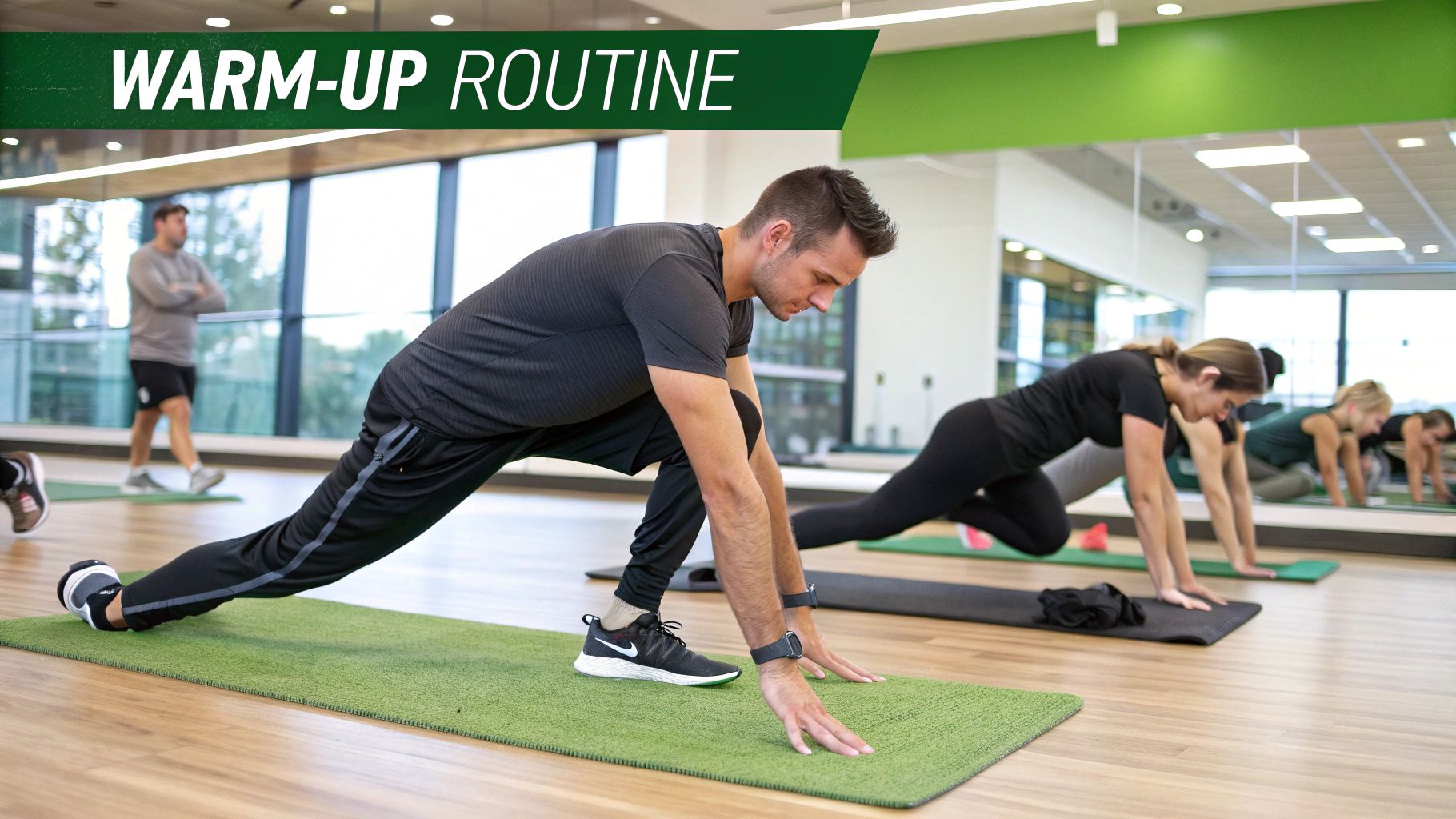
When you challenge your body—especially with a new exercise or by upping the intensity—you create tiny, microscopic tears in your muscle fibers. Don't worry, this is exactly what you want to happen. It’s the trigger for muscle growth.
The downside is that this process also kicks off an inflammatory response as your body gets to work on repairs. That inflammation is what leads to the stiffness and tenderness we all know as DOMS.
This feeling isn't the same as the acute burn you feel during a workout. It’s a delayed reaction, typically showing up and peaking 24 to 72 hours later. Think of it as your body's "under construction" sign.
A Modern Approach to Recovery
Instead of just gritting your teeth and waiting for the pain to go away, you can take proactive steps to speed things up and get back in the gym faster. I've found that the best recovery plans focus on a few key areas that work together:
- Strategic Nutrition: Giving your muscles the raw materials they need to repair and rebuild effectively.
- Active Recovery: Using light, gentle movement to boost blood flow, which helps clear out metabolic waste and deliver nutrients.
- Targeted Supplementation: Bridging any nutritional gaps to give your body’s natural healing processes an extra edge.
This isn’t about just masking the pain; it’s about actively supporting your body's repair cycle from the inside out. It's also worth exploring how the mind-body connection can influence pain perception, as your mindset is a powerful recovery tool.
The goal isn't to avoid muscle soreness entirely—that's a sign of progress! The real goal is to manage it so you can stay consistent, train hard, and minimize unnecessary downtime.
Below is a quick reference table to help you put these ideas into practice.
Your Quick Guide to Muscle Soreness Relief
This table summarizes some of the most effective strategies for managing DOMS, helping you choose the right approach at the right time.
| Strategy | Primary Benefit | Best Time to Use |
|---|---|---|
| Active Recovery | Increases blood flow, flushes out toxins | 24-48 hours post-workout |
| Foam Rolling | Releases muscle tension, improves mobility | Immediately post-workout or on rest days |
| Protein Intake | Provides amino acids for muscle repair | Within 2 hours post-workout |
| Tart Cherry Juice | Reduces inflammation and oxidative stress | Daily, especially on intense training days |
| Epsom Salt Bath | Relaxes muscles, reduces swelling | Evening of a tough workout or before bed |
| Hydration | Supports metabolic function and nutrient transport | Consistently throughout the day, every day |
By incorporating a few of these methods into your routine, you can turn debilitating soreness into a manageable sign of your hard work.
Fueling Your Body for Optimal Muscle Repair
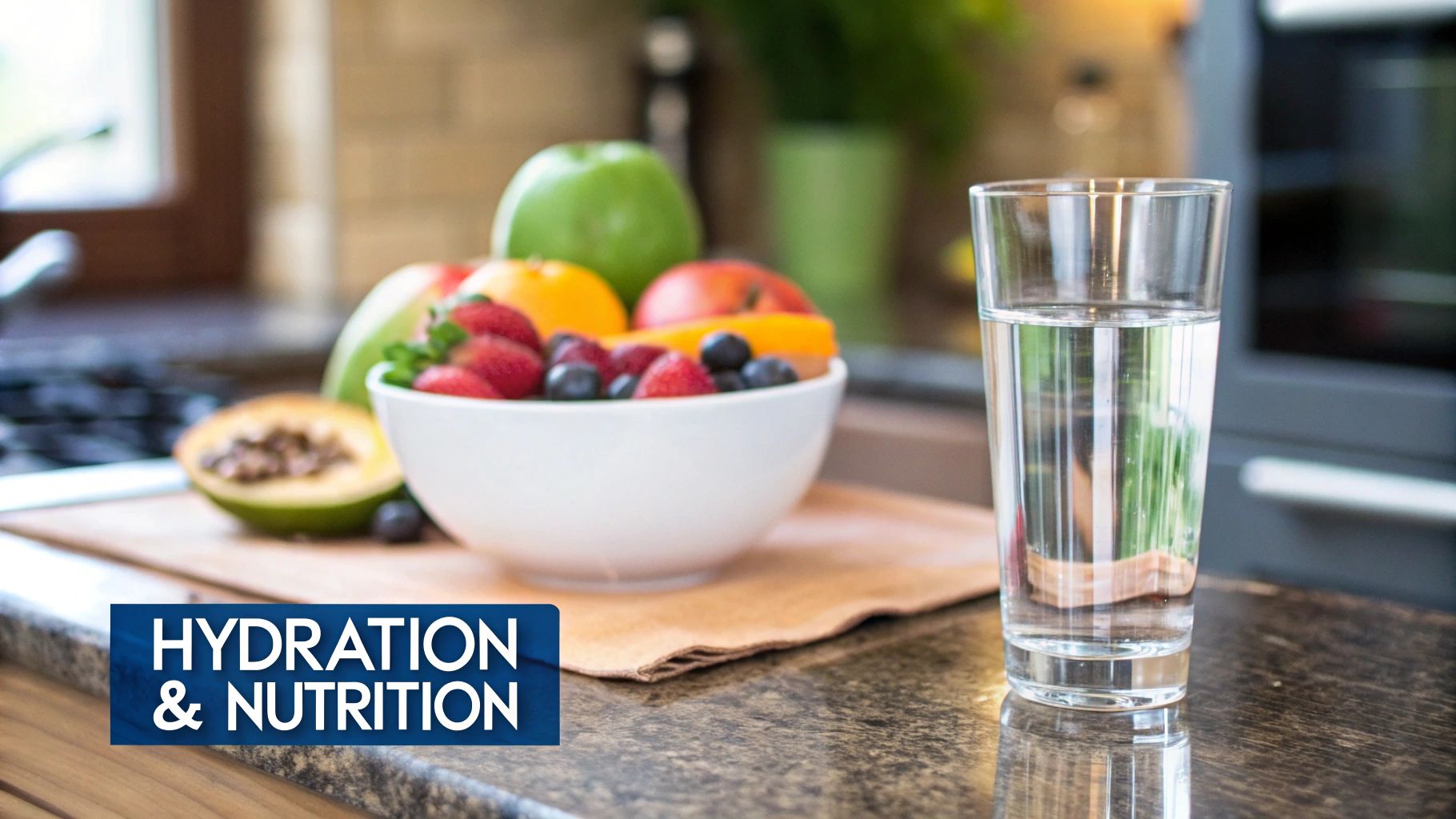
What you eat after a tough workout is just as important as the workout itself. I like to think of muscles as a construction site; after you’ve put in the hard work, they need high-quality raw materials delivered quickly to rebuild and get stronger. This part of the process is absolutely crucial if you’re wondering how to reduce muscle soreness and bounce back faster.
To really get a handle on muscle repair, you need to make sure you're giving your body enough fuel in the first place. A great starting point is understanding your own metabolism and daily energy needs. If you’re not sure where to begin, learning how to calculate your daily calorie needs is a game-changer for ensuring you're meeting your body's demands for recovery.
Beyond Basic Protein and Carbs
We all know protein and carbs are the cornerstones of muscle recovery, but the types of foods you choose can make a world of difference. Bringing in foods with natural anti-inflammatory properties can do wonders for calming the body's response to those micro-tears you create in your muscles during training.
I always recommend adding these powerful foods to your post-workout rotation:
- Tart Cherries: They're loaded with anthocyanins, which are compounds proven to help reduce inflammation and muscle damage.
- Turmeric: The active compound, curcumin, is one of nature’s most potent anti-inflammatories and can really help ease that post-exercise ache.
- Fatty Fish: You can’t go wrong with salmon or mackerel. They’re rich in omega-3 fatty acids that help fight inflammation system-wide.
Making smart food choices is foundational, but if you want to take it a step further, you can explore nutritional testing to truly personalize your diet. We have a great guide on improving diet and reducing inflammation that walks you through it.
The Role of Targeted Supplementation
Look, even with a perfect diet, getting the precise nutrients you need for optimal recovery right after a workout can be tough. This is where targeted supplementation becomes a game-changer. It fills in the gaps to make sure your muscles get exactly what they need, when they need it most.
The demand for these solutions is exploding for a reason—the global muscle recovery powder market is set to hit an estimated US$ 8.3 billion by 2024. This just shows how many people are realizing how vital nutritional support is for fitness.
A well-formulated recovery supplement isn't a replacement for good nutrition; it's an accelerator. It delivers the essential building blocks for muscle repair in a highly bioavailable form, precisely when your body is most receptive.
For a powerful, all-in-one option, our Peak Performance All-in-One Muscle Recovery Powder provides an ideal ratio of protein, amino acids, and other key nutrients. It's designed to kickstart the repair process, helping you slash recovery time and reduce soreness so you’re ready for your next challenge.
Ease Into It With Active Recovery
When every muscle in your body is screaming after a hard workout, the last thing you probably want to do is move. The couch calls, and I get it. But while kicking your feet up is essential, sometimes the secret to feeling better faster is to do the exact opposite: gentle, purposeful movement.
We call this active recovery, and it works wonders. It might sound a little backward, but there’s a good reason for it. Think of all that post-workout soreness as a traffic jam of metabolic byproducts stuck in your muscles. Just sitting there doesn't clear the road.
Gentle movement, on the other hand, gets your blood flowing. This increased circulation acts like a cleanup crew, flushing out waste products and delivering a fresh supply of oxygen and nutrients to help your muscles repair. It's about nudging the healing process along, not forcing it.
This infographic breaks down why a mix of both active strategies and pure rest is so crucial for a complete recovery cycle.
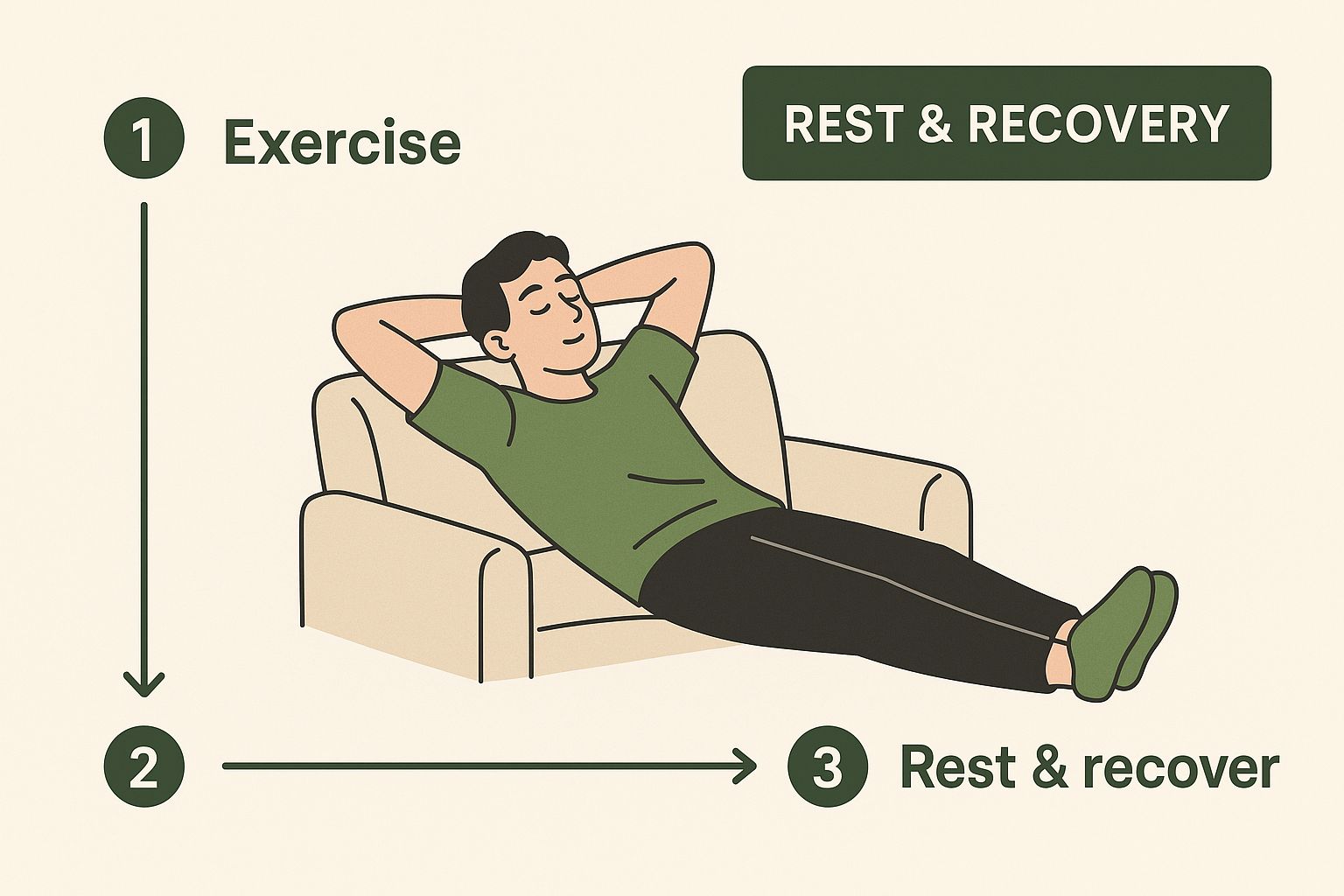
As you can see, true recovery isn’t just about stopping; it's about actively supporting your body's amazing ability to heal and rebuild.
Gentle Movements for Big Gains
Let’s be clear: this isn't another workout. The goal here is low-impact, low-intensity activity that elevates your heart rate just a touch without adding more stress to your tired muscles.
Some of my go-to methods for active recovery include:
- Light Cardio: A casual 20-30 minute walk outside, a slow spin on a stationary bike, or a few easy laps in the pool are perfect. You should be able to hold a conversation without getting winded.
- Dynamic Stretching: Forget holding a stretch for 30 seconds. We're talking about movement. Think gentle leg swings, arm circles, and torso twists to loosen things up and improve your range of motion.
- Foam Rolling: This is a game-changer for working out knots and releasing tension in the fascia surrounding your muscles. It can be a little uncomfortable, but it pays off by improving flexibility and easing that deep ache.
A crucial piece of advice: Never push through sharp pain. Active recovery should feel good—restorative, not punishing. Your body knows best, so listen to it.
Once you’ve wrapped up your gentle session, it's time to think about nutrition. You've kickstarted the repair process, now you need to provide the building blocks. This is where a supplement like our Peak Performance Bone Broth Collagen Powder can make a real difference. It delivers key proteins that support your connective tissues, joints, and muscles.
Combining gentle movement with targeted nutrition is a simple but powerful system for bouncing back stronger and getting back to what you love, faster.
Modern Tech for Advanced Muscle Relief
Technology has seriously leveled up the recovery game, bringing tools that were once reserved for pro athletes right into our homes. If you’ve nailed down the basics of stretching and nutrition but still feel that post-workout ache, these advanced methods can be a total game-changer.
One of the most powerful tools in this arena is electrical muscle stimulation, or EMS. These devices work by sending gentle electrical pulses to your muscles, causing them to contract and relax. This isn't as intense as it sounds; it actually mimics your body's natural muscle movements, which helps crank up circulation, clear out metabolic junk, and quiet down pain and stiffness. Think of it as a targeted, passive workout for your sore spots.
Find Your Ideal Recovery Tool
Different gadgets offer different benefits, so the best one for you really depends on what you're dealing with. Percussion massagers, for example, are incredible for digging into deep-tissue knots. Compression therapy systems are a lifesaver for reducing swelling after a long run or a big race.
But when you need precise, controlled relief for a specific area, an EMS device is tough to top. Our Peak Performance Muscle Stimulator is designed for just that—delivering powerful, targeted stimulation exactly where you need it. It's my go-to for accelerating recovery in my quads after a heavy leg day or easing tightness in my shoulders and lower back.
The global muscle stimulator market is on track to hit nearly USD 1.06 billion by 2033. This isn't just a fleeting trend; it shows a massive shift toward using technology to manage pain and supercharge fitness recovery. You can read more about the market trends on Straits Research.
Comparing Your Tech Options
To help you figure out what might work best, here’s a quick rundown of the most popular recovery technologies out there:
| Technology | Best For | Key Benefit |
|---|---|---|
| Muscle Stimulators | Targeted pain relief & muscle re-education | Increases blood flow & reduces pain signals |
| Percussion Massagers | Deep-tissue knots & general tightness | Breaks up fascial adhesions & relieves tension |
| Compression Therapy | Post-endurance swelling & fluid buildup | Enhances circulation & flushes out lactate |
And don't forget the low-tech options that still work wonders. Simple thermal solutions can make a huge difference. For instance, things like heated blankets for muscle relief use gentle warmth to soothe tight muscles and improve blood flow. By combining a few of these different approaches, you can build a personalized recovery system that keeps you performing at your best.
Go Straight to the Source with Topical Solutions
While nutrition and active recovery are great for tackling soreness from the inside out, sometimes you need to deal with the pain right now. When a specific muscle group—like your quads after a heavy leg day or your shoulders after a big pressing session—is screaming for help, that's where topical solutions come in.
These are the creams, gels, and patches you can apply directly to the skin for fast, targeted relief.
Many of these products work by creating a clever sensory distraction. Ingredients like menthol and camphor give you that classic cooling or warming sensation, which essentially hijacks the pain signals on their way to your brain. It’s a simple but incredibly effective way to get some immediate relief from that deep, nagging ache.
Other topicals contain ingredients like arnica, known for its anti-inflammatory properties that can help reduce local swelling. Speaking of natural anti-inflammatories, it's worth exploring how certain supplements can help, too; many people are surprised to learn about the benefits of dandelion root for this very reason.
Get Convenient, Sustained Relief
Creams and gels are fantastic, but patches have a unique edge: they deliver active ingredients continuously, without you having to do a thing. This makes them perfect for stubborn soreness or for those hard-to-reach spots like your lower back or between your shoulder blades.
We designed our Peak Performance Muscle Recovery Patches for exactly this purpose. Slap one on and get hours of consistent relief, so you can go about your day without constantly having to stop and reapply a greasy cream. This kind of convenience makes them a must-have in any serious recovery toolkit.
There's a reason you're seeing more and more of these products on the market. The global demand for medical sports muscle patches was already around USD 4.6 billion in 2023 and is expected to hit USD 7.3 billion by 2030. That kind of growth tells you one thing: athletes and everyday gym-goers are finding they really work.
If you're curious about this trend, you can discover more insights on Verified Market Reports.
Your Top Questions About Muscle Soreness Answered
Even when you do everything right, you'll still have questions about dealing with post-workout soreness. Let's tackle some of the most common ones I hear so you can build a smarter recovery plan.
Should I Work Out if I'm Still Sore?
This is a big one. Generally, if your muscles are screaming at you, it’s best to give them a break. Pushing through intense pain is a fast track to injury.
But that doesn't always mean you have to sit on the couch. Gentle, active recovery—think a light walk or some easy stretching—can actually speed things up by getting blood flowing. If the soreness is just mild, you could also train a different muscle group. The golden rule here is to listen to your body. If the pain feels sharp or severe, a rest day is your best friend.
How Long Does This Soreness (DOMS) Actually Last?
Ah, Delayed Onset Muscle Soreness, or DOMS. It typically creeps in 12 to 24 hours after your workout and really makes itself known between the 24 and 72-hour mark.
For most people, the achiness fades away within three to five days. How long it sticks around really depends on how hard you went, your fitness level, and how seriously you take your recovery.
Do Ice Baths Actually Work?
Yes, they really do—if you can brave the cold! Many athletes swear by cold water immersion, and for good reason. The icy temperature helps constrict blood vessels, which can dial down the swelling and inflammation that cause all that pain.
While it's definitely an intense experience, it’s a proven way to manage DOMS, especially after a truly brutal training session.
Think of it like this: heat draws blood to an area, while cold pushes it away. Right after a workout, your goal is to calm down inflammation, so ice is the way to go.
Heat or Ice: Which One Should I Use?
The classic debate! The answer comes down to timing.
- Ice First: For the first 24-48 hours, stick with ice. It's your go-to for reducing that initial inflammation and numbing the immediate soreness.
- Heat Later: After that window has passed, heat becomes your ally. It boosts blood flow, helps relax those stiff, tight muscles, and promotes the healing process.
A great strategy is to alternate between them. A warm bath or a heating pad followed by some gentle stretching can do wonders for that lingering tightness.
Here at Peak Performance, we know that recovery is where the real progress happens. If you're looking for a simple, powerful way to support your joints and connective tissues, consider adding our Peak Performance Bone Broth Collagen Powder to your post-workout routine.
Also in Blog


A Guide to Third Party Tested Supplement Brands


Dietary Supplement B12: The Scientific Link to Fighting Anemia and Boosting Energy

