


Boost Your Health with Organic Prebiotic Powder
At its core, an organic prebiotic powder is basically specialized food for the good guys living in your gut. Think of it like premium-grade fertilizer for your internal garden—it helps your beneficial bacteria (your probiotics) thrive, which is the absolute foundation for great digestive health.
Understanding Your Gut's Ecosystem
To really get what an organic prebiotic powder does, it helps to picture your gut as a bustling, complex garden.
In this garden, probiotics are the beautiful flowers and plants you want to see flourish. But just like any garden, those plants need the right kind of nourishment to grow strong. That’s exactly where prebiotics come into the picture.
Prebiotics are a special type of dietary fiber that your body actually can't digest. Instead, they make the journey all the way to your lower digestive tract, where they become the perfect meal for your resident good bacteria, like Bifidobacteria and Lactobacilli. This process helps these helpful microbes multiply, strengthening their numbers and, in turn, your overall health.
The Organic Advantage
Choosing an organic source is a critical distinction here. An organic prebiotic powder guarantees that the ingredients come from plants grown without any synthetic pesticides, herbicides, or genetically modified organisms (GMOs). This commitment to purity means you’re giving your gut the cleanest fuel possible, without any unwanted chemicals that might mess with its delicate balance.
The real job of a prebiotic isn't just to be "fiber," but to be a selective fuel source. It specifically feeds the helpful bacteria while starving the less desirable ones, which helps you actively cultivate a healthier, more balanced gut microbiome.
This targeted nourishment is what makes prebiotics so special compared to other types of fiber. While lots of fibers are good for you, prebiotics are uniquely built to support the most beneficial strains of bacteria living in your gut.
The image below breaks down the simple but powerful relationship between prebiotics and your gut health.

As you can see, the powder acts as a direct food source to create a thriving digestive environment.
Prebiotics vs Probiotics At a Glance
It's easy to mix up prebiotics and probiotics, but they have very different—and equally important—jobs. Probiotics are the live bacteria themselves, while prebiotics are the food that helps them flourish.
Think of it this way: if you want a beautiful lawn, you can either throw down new grass seed (probiotics) or you can fertilize the grass you already have (prebiotics). For the best results, you do both.
Here’s a quick breakdown to clear things up:
| Feature | Prebiotics | Probiotics |
|---|---|---|
| What It Is | A type of non-digestible fiber. | Live beneficial bacteria. |
| Main Function | Acts as food for good gut bacteria. | Adds good bacteria to your gut. |
| Common Sources | Chicory root, garlic, onions, bananas. | Yogurt, kefir, kimchi, supplements. |
| Analogy | Fertilizer for the garden. | The seeds and plants in the garden. |
They work together as a team. You need prebiotics to keep your probiotics healthy and effective, creating what’s known as a synbiotic effect.
Why This Matters for Your Health
The massive focus on gut health isn't just some wellness trend; it's backed by real science and soaring consumer demand.
The global prebiotics market was valued at an incredible USD 6.05 billion in 2021 and is on track to hit USD 21.2 billion by 2030. That kind of growth shows just how much people are waking up to the connection between a healthy gut and overall wellness. You can learn more about the growing prebiotic market trends and see for yourself.
Bringing an organic prebiotic powder into your daily routine is a simple, proactive way to cultivate a thriving internal ecosystem. It’s about so much more than just digestion—it’s about giving your body the foundational support it needs to feel its best, from the inside out.
The Health Benefits of a Thriving Gut Microbiome
When you consistently nourish your gut with an organic prebiotic powder, you're doing way more than just helping your digestion. You're kickstarting a powerful ripple effect that touches almost every aspect of your health. Think of it like tending to the roots of a tree—when the roots are healthy, the whole tree flourishes.
This is exactly what happens inside you. When the good bacteria in your gut are well-fed and thriving, the positive outcomes are real, tangible, and reach far beyond just your stomach.
It all starts with better digestion and regularity, of course. A happy, balanced gut breaks down food more efficiently. This means less of that annoying bloating and discomfort, and a much smoother digestive process overall.
Better Nutrient Absorption
Here's where it gets interesting. A well-fed microbiome isn't just a passive resident; it becomes an active partner in your health. These beneficial microbes get to work producing short-chain fatty acids (SCFAs), like butyrate, which are absolutely crucial for keeping your gut lining strong and intact.
A stronger gut wall means your body can pull more of the essential vitamins and minerals out of the food you eat. It’s a game-changer. Suddenly, every meal is providing more fuel and more value, because you're actually absorbing the good stuff.
Your gut is home to roughly 70% of your immune system. A healthy microbiome helps regulate immune responses, making your body more resilient and better equipped to handle challenges.
Feeding your gut with prebiotics is one of the most direct ways to support this critical headquarters of your body's defense system.
Stronger Immunity and Mood
The "gut-immune axis" isn't just a buzzword; it's a constant, bustling communication highway between your microbiome and your immune cells. A flourishing gut ecosystem helps keep that communication clear and balanced, which prevents your immune system from either overreacting or not showing up when you need it.
Then there's the gut-brain axis, which is just as fascinating. This connection links your digestive system directly to your brain, influencing everything from your mood to how clearly you think. A healthy gut supports the production of key neurotransmitters like serotonin—often called the "feel-good" chemical—which helps keep your mood stable and positive. The link is undeniable, and you can learn more about the importance of phytonutrition and gut health right here on our blog.
In short, a thriving microbiome, powered by an organic prebiotic powder, creates a cascade of incredible benefits:
- Smoother Digestion: Say goodbye to bloating and hello to regularity.
- Enhanced Nutrient Uptake: Get more bang for your buck from every single meal.
- Bolstered Immune System: Support your body's natural defenses right at the source.
- Improved Mood Balance: Nurture the gut-brain connection for a more positive outlook.
While prebiotics are a fantastic tool for directly feeding your good gut bacteria, they're part of a bigger picture. Other natural foods can also play a huge role. For instance, many people are now looking into the benefits of olive oil for digestion and gut health to complement their wellness routine.
Ultimately, by focusing on the foundational health of your gut, you're taking a powerful step toward transforming your overall well-being from the inside out.
Decoding Labels and Common Ingredients
Trying to figure out what's in your supplements can feel like a chore, but when it comes to organic prebiotic powder, the label is your best friend. It’s less of a science textbook and more of a recipe telling you exactly how that powder plans to help your gut.
Learning to read this recipe is a game-changer. It means you can pick a product that actually lines up with your body's unique needs. Suddenly, intimidating words like "fructooligosaccharides" just become names for the tools you're using to build a healthier gut. Let's pull back the curtain on some of the most common players you'll see on that ingredient list.
Unpacking the Top Prebiotic Fibers
Here’s a key thing to remember: not all prebiotic fibers are created equal. Each one comes from a different source and acts a little differently in your gut. Brands choose them carefully based on the benefits they deliver and how easy they are on your system.
To help you get familiar with the usual suspects, here's a quick rundown of what you'll often find inside the tub.
Common Organic Prebiotic Fiber Sources
| Prebiotic Fiber | Common Organic Source | Key Benefit |
|---|---|---|
| Inulin | Chicory Root | A well-studied powerhouse for feeding beneficial Bifidobacteria. Very effective. |
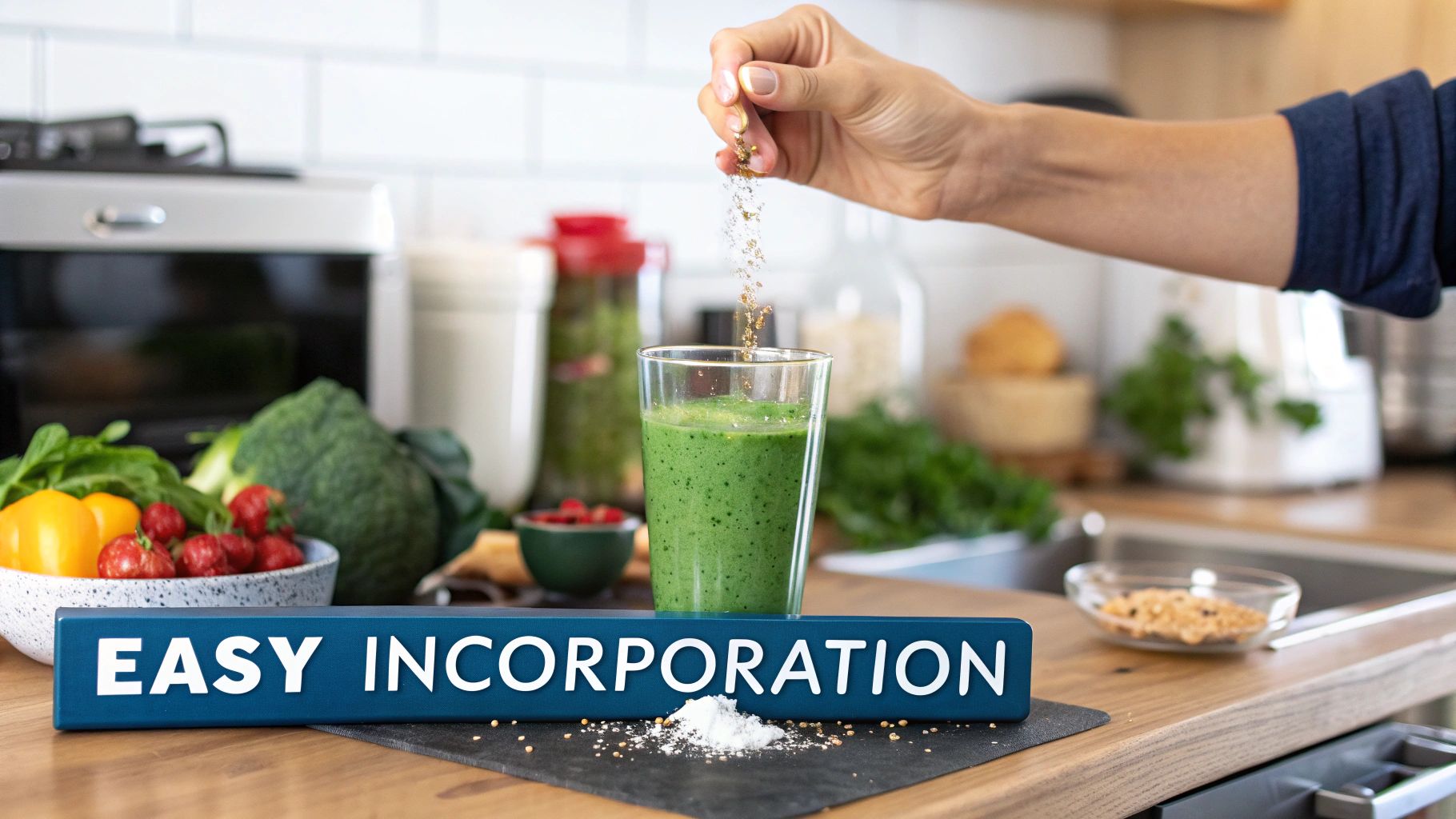
| Fructooligosaccharides (FOS) | Agave, Bananas, Onions | Shorter-chain fiber that nourishes a wide range of good bacteria. Mildly sweet. |
| Acacia Fiber (Acacia Senegal) | Acacia Tree Sap | Exceptionally gentle on the gut. It ferments slowly, minimizing gas and bloating. |
| Galactooligosaccharides (GOS) | (Often derived from lactose) | Known for supporting both Bifidobacteria and Lactobacilli populations. |
| Jerusalem Artichoke Fiber | Jerusalem Artichoke Tuber | A natural source of inulin that also provides other nutrients like iron and potassium. |
As you can see, the specific fiber matters. A fast-fermenting fiber like inulin from chicory root provides a quick meal for your microbes, which is great for a big boost. On the other hand, a slow-fermenting one like acacia fiber offers a gentler, more sustained release of nutrients, perfect if you have a sensitive stomach.
Key Takeaway: The type of fiber in an organic prebiotic powder dictates how it works. Fast-fermenting fibers offer a rapid boost, while slow-fermenting ones provide gentle, sustained support for your microbiome.
You'll often find that the best organic prebiotic powders don't just stick to one ingredient. They create a blend. By combining multiple types of fibers, they can nourish a wider variety of good bacteria all at once. Think of it as offering your gut microbes a full-course buffet instead of just a single dish.
Once you can spot these key ingredients, you can see right past the marketing fluff. You'll be able to confidently grab a product off the shelf, knowing it contains the right kind of fuel for your gut garden.
How to Easily Add Prebiotics to Your Daily Routine
The best supplement is always the one you actually take. The good news? Weaving an organic prebiotic powder into your life doesn't require some massive overhaul of your habits. The real secret is to simply attach it to routines you already have locked in.
Most high-quality powders are completely flavorless and dissolve without a fight, which makes them incredibly easy to work with. You can add a scoop to just about anything you're already eating or drinking, and you won’t even notice a change in taste or texture. Think of it as a stealthy health upgrade for the meals you already love.
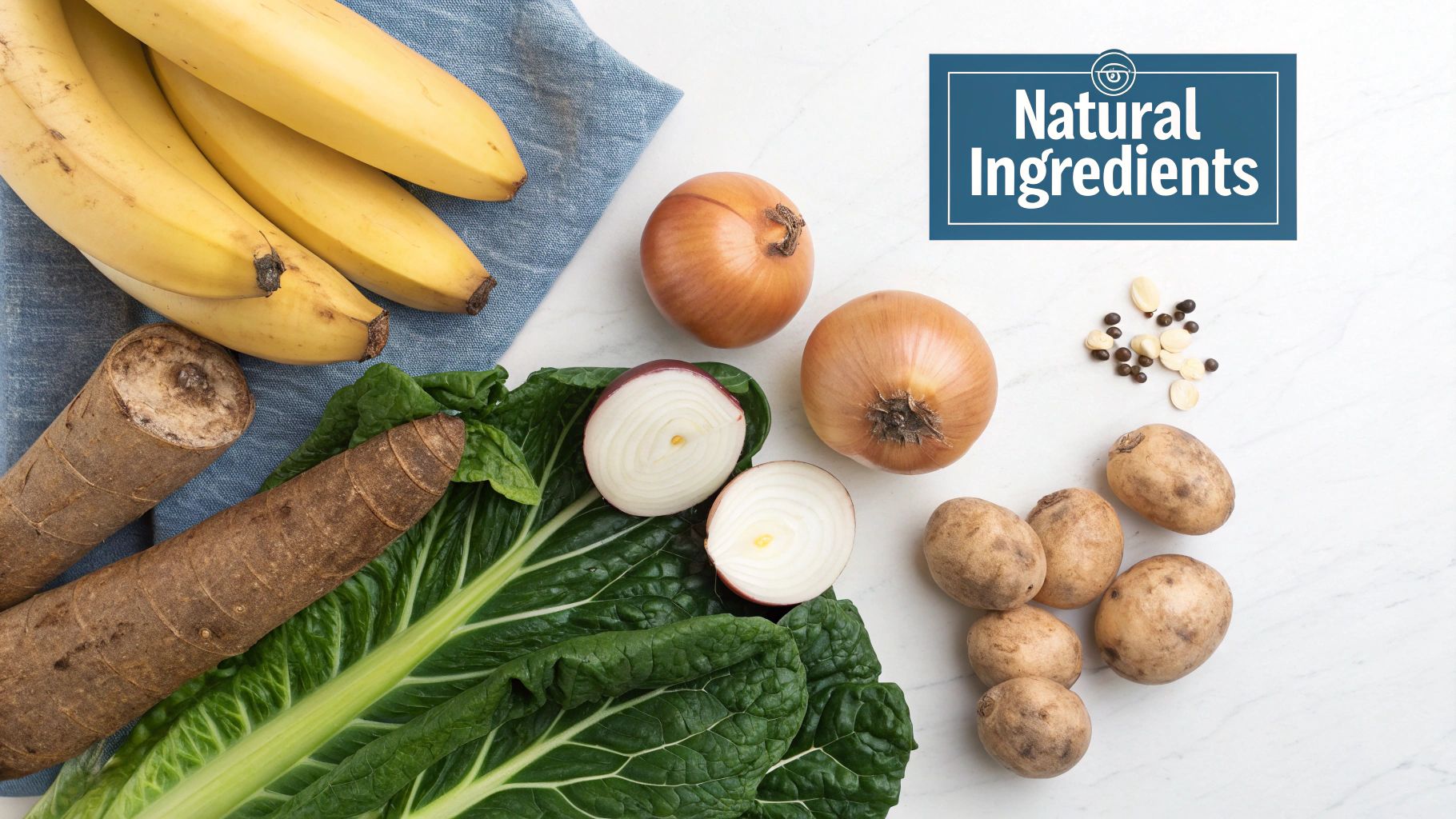
This simple "add-on" method gets rid of the friction that trips most people up when they're trying to build a new habit. You don't have to carve out extra time or whip up something complicated.
Simple Ways to Get Started
Getting creative is part of the fun, and you'll quickly see that prebiotic powder can go almost anywhere. To get you started, here are a few dead-simple ideas:
- Morning Coffee or Tea: Just stir a scoop right into your morning brew. It’ll dissolve seamlessly, giving you a gut health boost before your day really even gets going.
- Smoothies and Shakes: This is a classic for a reason. Toss your powder into a post-workout protein shake or a morning fruit smoothie.
- Yogurt or Oatmeal: Mix it into your yogurt, oatmeal, or even a chia pudding. It’s an effortless way to add fiber and prebiotics to your breakfast.
- Soups and Sauces: Because it’s tasteless, you can even stir it into savory stuff like soups, stews, or pasta sauces right before you serve them.
These tricks make taking prebiotics a simple, thoughtless part of your existing routine—and that’s the key to making it stick for the long haul.
Best Practice Tip: Start slow. For the first week, try using about half the recommended serving. This gives your digestive system and gut microbiome a little time to adjust to the new fiber, which can help you sidestep any potential gas or bloating.
Finding Your Perfect Timing
While you can take prebiotic powder any time of day, some people find a certain time just works better for them. Maybe taking it in the morning feels right to support your digestion all day. Others might prefer it in the evening.
Honestly, there’s no single "right" answer here. Just experiment and see what feels best for your body and your schedule.
The goal is to make this habit sustainable. By adding a scoop to something you’re already doing, like that morning coffee, you're laying the groundwork for consistent gut support. It’s also smart to avoid things that can mess with your gut, like artificial sweeteners. That’s a big reason why so many people are finally learning why they should never drink diet soda or other sugary drinks. By making these small, smart additions, you empower your gut without making your life more complicated.
Choosing a High-Quality Organic Prebiotic Powder
Let's be real—walking down the supplement aisle can feel overwhelming, especially with the explosion of gut health products. Not all prebiotic powders are made the same, and if you want to see actual results, you have to choose a high-quality one. Think of it like buying fertilizer for your internal garden. You wouldn't throw just anything on your prize-winning roses, right? You want the good stuff.
The first and most important thing to look for is the certification. A USDA Organic seal is non-negotiable. It’s your guarantee that what’s inside was grown without synthetic pesticides or GMOs, giving you a clean, pure starting point.
Read Beyond the Front Label
This is where you need to put on your detective hat and scrutinize the ingredient list. A top-tier organic prebiotic powder should have a short and sweet list of ingredients. The goal is to find a product that’s free from junk that can actually work against your gut health goals.
Here's what to dodge:
- Hidden Fillers: Ingredients like maltodextrin are cheap bulking agents that add zero nutritional value. They just take up space.
- Artificial Sweeteners: Things like sucralose or aspartame can throw your gut microbiome out of whack, completely defeating the purpose of taking a prebiotic in the first place.
- Unnecessary Additives: A pure, effective formula doesn't need artificial colors, flavors, or preservatives.
A clean label is a huge green flag. It tells you the brand is focused on purity and potency, not just flash. Good products often blend different types of fibers, like organic inulin powder, to feed a broader range of your good gut bacteria. You can learn more about the benefits of specific prebiotic fibers to get a better handle on what you're looking for.
Quality Check: The best powders are always third-party tested. This is where an independent lab verifies that the product is pure, potent, and free from contaminants like heavy metals. It ensures what’s on the label is exactly what’s in the container.
This push for quality is no accident; it’s part of a massive consumer shift toward functional, natural ingredients. In fact, the global prebiotic fiber market is expected to jump from USD 7.1 billion in 2025 to USD 13.1 billion by 2035. That’s a huge leap, and it shows just how many people are waking up to the importance of gut health. By sticking to certified organic, filler-free, and third-party tested products, you’re making sure your investment actually pays off for your health.
Common Questions About Prebiotic Powder Answered
Jumping into the world of gut health supplements can feel a little overwhelming. Even with something as straightforward as an organic prebiotic powder, it’s normal to have questions. What should I expect? How do I use it? Does it fit my diet?
We get it. This section is designed to give you direct, no-nonsense answers to the most common questions we hear. Think of it as your quick-start guide to clear up any final uncertainties before you start feeding your microbiome what it needs to thrive.
How Long Until I Notice Benefits
Patience is a virtue, especially when you're cultivating your internal garden. The timeline for feeling the benefits of a prebiotic powder is different for everyone—after all, each of us has a completely unique gut microbiome.
Some people report noticing improvements in their digestion, like less bloating and more regularity, within the first one to two weeks of consistent use. For others, it might take closer to a month to feel bigger shifts in energy or overall well-being. The real secret is consistency. Taking it daily gives your good gut bacteria the steady fuel they need to multiply and flourish.
Can I Take Prebiotics and Probiotics Together
Absolutely! In fact, we highly recommend it. Taking prebiotics and probiotics together creates a powerful synergistic effect, a combo often called "synbiotic therapy."
Here’s an easy way to think about it:
- Probiotics are the new, beneficial bacteria—the seeds for your garden.
- Prebiotics are the specialized food that helps those good bacteria thrive—the fertilizer.
When you take both, you’re not just introducing helpful microbes; you’re also giving them the perfect food to ensure they stick around, grow, and build a healthy colony in your gut. This one-two punch often gets you better and faster results than using either supplement on its own.
Are Prebiotic Powders Vegan and Keto-Friendly
Yes, most high-quality organic prebiotic powders are designed to fit right into different dietary lifestyles. Since they come from plant-based fiber sources like chicory root or acacia, they are naturally vegan.
The demand for plant-based ingredients is skyrocketing. The global prebiotic ingredients market hit USD 7.79 billion in 2025 and is projected to climb to USD 12.38 billion by 2030. Plant-based sources make up over 70% of that market, which shows just how much people trust clean, organic ingredients. You can find more prebiotic market trends on Mordor Intelligence.
Prebiotic powders are also a great tool for anyone on a ketogenic diet. Because they are non-digestible fibers, they don’t count toward your net carb intake. This means you can support your gut health without kicking yourself out of ketosis. Just be sure to check the label for any added sugars or sneaky, carb-heavy fillers.
Ready to cultivate a thriving gut microbiome with a pure, effective supplement? The Peak Performance Organic Prebiotic Powder is USDA certified, third-party tested, and designed for maximum gut support. Start your journey to better digestive health today.
Also in Blog


How to Increase Stamina Naturally and Boost Energy


How to Increase Energy Naturally

