


Your Guide to Vitamin C Supplement Benefits
A vitamin C supplement is basically a concentrated dose of ascorbic acid that helps you hit your daily nutrient goals. For a lot of us, it’s a smart nutritional insurance policy, filling in the gaps that modern diets and busy lifestyles often create.
Why You Might Need a Vitamin C Supplement
Let's be real—life gets busy. It can be incredibly difficult to get all the nutrients our bodies truly need to function at their best. Even if you’re eating well, things like daily stress, how our food is processed, and even just simple dietary preferences can leave you short on one of the most important nutrients there is: Vitamin C.
Think of Vitamin C as your body's on-call, 24/7 repair crew. It's an essential micronutrient, which is a science-y way of saying your body can't make it. You have to get it every single day, either from the food you eat or a high-quality supplement.
The Modern Diet and Nutrient Gaps
While a diet packed with fresh fruits and veggies is always the goal, it's not always realistic. The simple journey our food takes from the farm to our plates can reduce its nutrient content. Cooking methods, especially boiling, are notorious for zapping Vitamin C, and even just storing produce for a while causes this fragile vitamin to break down.
This reality creates a "nutrient gap" for many people. It’s not about making bad choices; it’s just a consequence of our modern food system. This is precisely where a well-made supplement becomes a practical way to ensure you’re consistently getting what your body needs to operate at 100%.
It's clear people are catching on. The global vitamin C market was valued at approximately USD 2.24 billion and is projected to nearly double by 2034, all thanks to a huge surge in people focusing on preventive health. You can dig into the full vitamin C market research to see just how much demand is growing.
Key Takeaway: Your body can't make or store Vitamin C. You need a steady, daily supply to keep crucial systems running, and a supplement is a reliable way to bridge the gap between your diet and your body's actual needs.
To put it in perspective, here's a quick look at the essential jobs Vitamin C is doing behind the scenes every single day.
Key Functions of Vitamin C in Your Body
A quick look at the essential jobs Vitamin C performs, showing why a high-quality supplement can make a real difference.
| Function | Simple Explanation | Why It Matters for You |
|---|---|---|
| Immune Defense | It helps your immune cells work properly. | A stronger immune system means you're better equipped to handle seasonal bugs. |
| Collagen Production | It's a key building block for collagen. | Supports healthy skin, joints, and gums. It's your body's natural "glue." |
| Antioxidant Power | It neutralizes harmful free radicals. | Helps protect your cells from damage caused by stress and environmental toxins. |
| Iron Absorption | It helps your body absorb iron from plants. | Crucial for maintaining energy levels and preventing iron deficiency. |
Understanding these roles makes it obvious why a daily shortfall is something you want to avoid.
Beyond Diet: Why a Supplement Makes Sense
It's not just about what might be missing from your food. Our modern lives throw a lot at us, and that can actually increase how much Vitamin C we need.
Several things can drain your body's Vitamin C reserves:
- Daily Stress: Both physical and emotional stress make your body burn through Vitamin C faster as it tries to manage the physiological response.
- Environmental Exposure: Living in the modern world means exposure to pollutants and toxins, which create free radicals. Your body uses Vitamin C to fight that oxidative damage.
- Immune Demands: Anytime your immune system kicks into high gear, it needs more Vitamin C to fuel its cellular army.
For all these reasons, choosing a supplement from a brand you trust is a game-changer. A product like our Peak Performance Vitamin C Capsules, which gets its Vitamin C from real food sources like Acerola cherries and includes an organic fruit and veggie blend, offers a natural approach to filling those gaps and supporting your wellness goals.
The Real Health Benefits of Taking Vitamin C

When you hear "Vitamin C," your mind probably jumps straight to fending off a cold. And yes, it’s a total rockstar for immune support. But limiting it to that role is like only using a high-end smartphone to make calls—you're missing out on so much more.
The truth is, a quality vitamin C supplement is one of the most fundamental tools for long-term wellness. Its influence reaches deep into your body's most critical daily operations, from your skin's youthful glow to the health of your cardiovascular system.
A Master Antioxidant for Cellular Protection
Think of your body as a busy factory. Just by doing its job—like creating energy—it produces industrial waste. In your body, this "waste" comes in the form of unstable molecules called free radicals, which cause damage to your cells in a process known as oxidative stress.
Vitamin C is the factory’s elite cleanup crew. As a powerful antioxidant, it zips around your system, neutralizing these free radicals before they can wreak havoc on healthy cells. This constant protection is key to slowing down the aging process at a cellular level and lowering your risk for chronic health issues.
By actively fighting oxidative stress, Vitamin C helps defend your cellular machinery from the daily wear and tear caused by everything from environmental toxins to internal metabolic processes.
This role as a cellular bodyguard is perhaps its most important, laying the groundwork for many of its other benefits.
The Foundation of Youthful Skin and Strong Joints
One of Vitamin C’s most impressive jobs is its non-negotiable role in creating collagen. Collagen is the most plentiful protein in the body, literally acting as the "scaffolding" that holds you together. It’s the magic behind firm skin, flexible joints, and strong blood vessels.
Here’s the catch: your body can’t make collagen without Vitamin C. It’s the spark that ignites the entire production line.
- For Your Skin: A steady supply helps maintain skin elasticity, which can slow the appearance of fine lines and wrinkles.
- For Your Joints: It's absolutely vital for building and repairing cartilage, the smooth, rubbery cushion in your joints that allows you to move without pain.
- For Wound Healing: Collagen is the primary material your body uses to form new tissue and heal everything from a paper cut to a major injury.
Supporting this foundational protein with a reliable vitamin C supplement helps you feel and look vibrant from the inside out. For a deeper dive into how different functional blends can supercharge these effects, check out the 5 surprising benefits of Collagen Matcha for skin, focus, and energy.
Enhancing Iron Absorption and Energy Levels
Ever feel drained and foggy, even when you’re eating plenty of healthy, plant-based foods? You might be dealing with poor iron absorption. Iron is crucial for making hemoglobin, the protein in your red blood cells that ferries oxygen from your lungs to every other part of your body. Without enough oxygen, your energy tanks.
Dietary iron comes in two forms: heme iron (from animal foods) and non-heme iron (from plants). The thing is, our bodies are notoriously bad at absorbing non-heme iron on their own.
This is where Vitamin C becomes your secret weapon. It massively boosts your body's ability to absorb this non-heme iron from foods like spinach, lentils, and beans. Taking a vitamin c supplement with an iron-rich meal can make a world of difference in how much of that mineral your body actually gets to use. The result? More sustained energy to power through your day.
Beyond Immunity to Overall Wellness
While the focus on immunity has driven a huge spike in vitamin C use—consumption nearly doubled during the COVID-19 pandemic—the science keeps uncovering benefits that extend far beyond just fighting off sniffles. For example, recent research has even linked higher vitamin C intake to healthier body composition, showing just how broad its impact on our well-being really is.
Of course, to truly optimize your health, it’s smart to understand which nutrients play well together. You can learn more about other core supplements in our guide on the top 10 supplements most people should take.
How to Navigate Different Vitamin C Types
Walking into the supplement aisle can feel overwhelming. You’ll see dozens of bottles, all claiming to offer the best vitamin c supplement, but the labels tell very different stories. Getting a handle on the key differences is the first step toward picking a product that actually works for your body and your health goals.
Here’s the thing: not all Vitamin C is created equal. The forms can range from purely synthetic, lab-created molecules to nutrient-rich extracts pulled directly from whole foods. Each type has its own personality, affecting how your body absorbs it and how gentle it is on your system.
Synthetic vs. Natural Sources: A Clear Distinction
At the most basic level, vitamin C supplements fall into two camps: synthetic or natural. This distinction is crucial because it often determines not just the vitamin itself, but also what else comes along for the ride.
Synthetic Ascorbic Acid is what you’ll find in most products. It's chemically identical to the vitamin C you'd get from an orange, but it’s made in a lab. Because it's cheap to produce, it absolutely dominates the market. While it works, it’s an isolated nutrient—it shows up to the party alone, without the other beneficial compounds that are naturally present in whole foods.
Natural, Food-Derived Vitamin C, on the other hand, comes from concentrated plant sources. One of the most potent and popular is the Acerola cherry. Unlike its synthetic cousin, vitamin C from acerola comes with a whole support team—bioflavonoids, polyphenols, and other phytonutrients that exist naturally in the fruit.
These natural co-factors are thought to boost the bioavailability and effectiveness of the vitamin. In short, they help your body recognize and use it more efficiently. Think of it as getting a key with a perfectly designed handle, making it much easier to unlock the door to better health.
Even though the core Vitamin C molecule is the same, your body's ability to absorb and use it can be influenced by these companion nutrients. It's why so many people are now leaning toward a whole-food approach to supplementation.
This chart shows the Recommended Dietary Intake (RDI) for Vitamin C, highlighting how our daily needs change based on age and life stage.
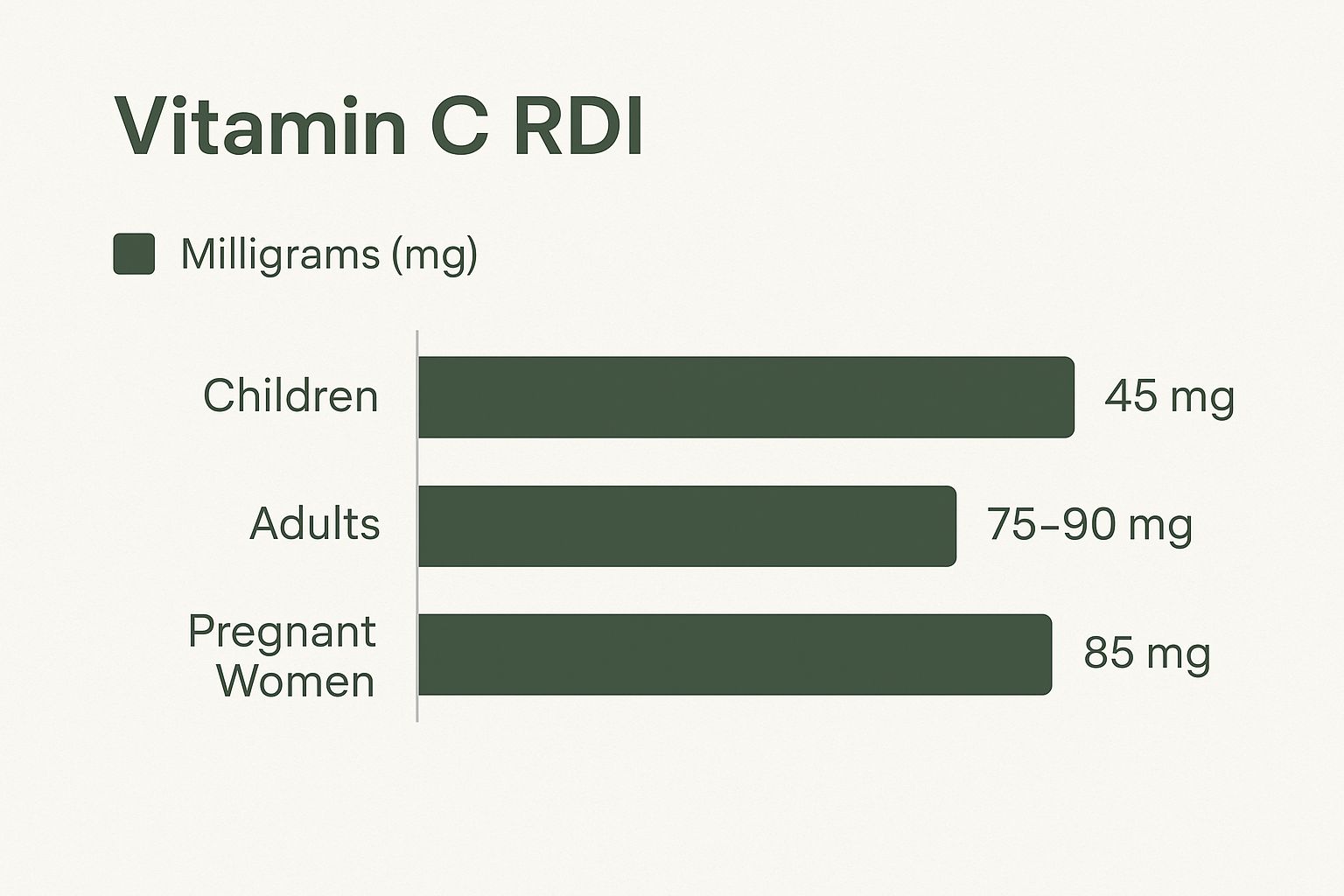
As you can see, most adults need between 75-90 mg daily. Pregnant women require a bit more to support the baby's development.
Capsules, Buffered C, and Liposomal Formulas
Beyond the source, vitamin C comes in different delivery formats. Each one is designed to solve a specific problem, like avoiding stomach upset or maximizing absorption. Knowing these will help you find the best match for your body.
Here's a breakdown of the most common options:
- Standard Capsules: This is the most straightforward format. It’s simply a measured dose of vitamin C powder (either ascorbic acid or a food-based source) in a capsule. They are convenient and great for precise dosing.
- Buffered Vitamin C: If you find pure ascorbic acid too harsh, buffered forms are a game-changer. The vitamin is bound to minerals like calcium, magnesium, or sodium, which neutralize its acidity and make it much gentler on the stomach.
- Liposomal Vitamin C: This is a more advanced delivery system. Here, the vitamin C is wrapped in tiny, fat-based spheres called liposomes. This fatty layer acts like a bodyguard, protecting the vitamin from being destroyed by digestive juices and allowing it to be absorbed more effectively into your bloodstream and cells.
The market definitely reflects this diversity. You'll see vitamin C segmented by form (like sodium ascorbate, a buffered type) and by source (natural vs. synthetic). While the cheaper synthetic options still lead the pack, there's a clear and growing demand for natural, plant-based products as more people seek out cleaner labels. You can explore the trends in the vitamin C market to see exactly how consumer preferences are shifting.
To make things even clearer, let's look at these forms head-to-head.
This comparison table can help you choose the best vitamin C option for your specific health needs and preferences.
Comparing Common Vitamin C Supplement Forms
| Form | Source | Key Benefit | Potential Drawback |
|---|---|---|---|
| Ascorbic Acid | Synthetic (lab-made) | Inexpensive and widely available | Can be acidic and cause stomach upset for some |
| Buffered C | Synthetic (bound to minerals) | Gentle on the stomach, good for sensitive individuals | May contain added minerals you don't need |
| Liposomal C | Synthetic or Natural | Superior absorption and bioavailability | Typically more expensive than other forms |
| Whole-Food C | Natural (e.g., acerola cherry) | Contains natural co-factors for better utilization | Higher cost and lower Vitamin C concentration per gram |
Ultimately, the "best" form really depends on your unique body, budget, and health goals.
The Power of Whole Food Formulations
For anyone looking for a more holistic option, a vitamin c supplement from whole foods offers a pretty compelling advantage. It goes beyond just delivering an isolated nutrient and instead provides it in a form your body is built to recognize.
Our Peak Performance Vitamin C Capsules are a perfect example of this philosophy in action. By using Vitamin C sourced from Acerola cherries (which are not organic), they deliver the nutrient in a natural, food-based context.
What really sets this approach apart is the inclusion of other synergistic ingredients. The formula is boosted with an organic fruit and vegetable blend, which provides a whole spectrum of phytonutrients that work right alongside the vitamin C. This creates a supplement that more closely mimics what you'd get from eating an actual piece of fruit, delivering benefits that go way beyond the vitamin itself. Choosing a whole-food supplement is a fantastic way to ensure you're getting a well-rounded, bioavailable, and body-friendly form of this essential nutrient.
How to Choose a High-Quality Vitamin C Supplement
Now that you know the different types of vitamin C out there, you're ready to take the next step: picking the right one for you. This isn't just about grabbing the first bottle you see on the shelf. It’s about becoming a savvy label-reader who can spot true quality and see right through the marketing fluff.
Think of choosing a high-quality supplement as an investment in your well-being. Once you learn what to look for—from the source of the nutrient to what’s hiding in the “other ingredients” list—you can confidently pick a product that will genuinely support your body.
Decode the Label: Look for Source and Synergy
Your first stop on any supplement label should be the source of the vitamin C itself. This is a massive clue about the product's quality and the brand's philosophy. You’ll usually find one of two options: lab-created synthetic ascorbic acid or a source derived from whole foods.
While synthetic ascorbic acid definitely works, many of us prefer a form our body is more familiar with. A food-derived source like Acerola cherry delivers vitamin C in its natural state, bundled with other beneficial plant compounds you just don't get from an isolated, synthetic version.
Here’s a simple way to think about it: synthetic ascorbic acid is like a solo guitarist—talented, but alone. A food-based source is like the entire band playing together. The guitarist is still the star, but the richness and depth you get from the full ensemble is a completely different experience.
This natural synergy is exactly why whole-food supplements are so compelling. They don’t just give you a single nutrient in isolation; they offer a complete package that your body is designed to recognize and use far more effectively.
Don't Skip the "Other Ingredients" List
After checking the vitamin source, flip the bottle over and find the "Other Ingredients" section. This is where low-quality products often show their true colors. An ideal vitamin c supplement will have a clean, short, and understandable list.
Here’s what you want to avoid seeing:
- Artificial Fillers & Binders: Things like magnesium stearate, silicon dioxide, and titanium dioxide are manufacturing aids. They make production cheaper or bulk up the capsule, but they offer zero nutritional benefit to you.
- Artificial Colors & Flavors: These are completely unnecessary. A quality product doesn't need to be dressed up with fake colors or tastes, which can also be a source of sensitivity for some people.
- Common Allergens: If you have sensitivities, keep an eye out for soy, gluten, or dairy. The best supplements are intentionally formulated to be free from these common allergens.
A short list of recognizable "other ingredients" is a fantastic sign. It shows the company prioritized purity over cutting production costs.
The Gold Standard: What to Look For in Practice
Let’s make this practical. We can use a real-world product as a benchmark for what a high-quality label should look like. A supplement like our Peak Performance Vitamin C Capsules is a perfect example of these principles of purity and synergy in action.
Here’s a quick rundown of how it checks out:
- Food-Based Source: The Vitamin C is derived entirely from Acerola cherries, providing the nutrient in its natural, whole-food form.
- Synergistic Blend: It also includes an organic fruit and vegetable blend. This adds a wide spectrum of phytonutrients that work in concert with the Vitamin C, amplifying its benefits.
- Clean Label: The "other ingredients" list is minimal and clean, completely avoiding synthetic fillers, binders, or artificial anything.
This approach ensures you’re getting a supplement that is not only potent but also clean and aligned with a holistic view of health. Taking care of your body means understanding that nutrients often work as a team. For instance, it's helpful to know about other crucial partnerships, which you can learn about in our article on vitamin D and K benefits.
By using these simple guidelines, you can go from being a confused shopper to an empowered one, fully capable of choosing a vitamin c supplement that will truly support your health goals.
Finding Your Optimal Vitamin C Dosage
So you know how to pick out a high-quality vitamin C supplement. Great. But that brings up the next obvious question: "How much should I actually be taking?" The truth is, there's no single magic number. Finding your ideal dose is less about following a rigid rule and more about listening to what your own body needs.
The right amount of vitamin C for you can shift depending on your age, how active you are, and what you're trying to achieve with your health. Think of it like a flexible dial you can turn up or down, not a fixed prescription.
RDA vs. Optimal Intake
First, let's clear something up. There’s a huge difference between the Recommended Dietary Allowance (RDA) and what might be an optimal amount for you.
The RDA is just the bare minimum you need to avoid getting a deficiency disease, like scurvy. For most adults, that’s a pretty low bar—around 75-90 mg per day.
But simply preventing a deficiency isn’t the same as truly thriving. Many of us aim for a higher intake to get more targeted benefits, especially for our immune systems. When your body is under stress from an illness, a tough workout, or even just a demanding week, its need for vitamin C can skyrocket.
Key Insight: The RDA is the dose you need to not get sick. An optimal dose is the amount that helps you feel and perform your best. For many people, that optimal level is much higher than the RDA, especially when you need a little extra support.
For example, some research points to 100-200 mg per day as a good target for building a resilient immune system. That's a solid step up from just hitting the minimum.
Finding Your Upper Limit with Bowel Tolerance
So how do you figure out that "just right" amount without going overboard? There's a surprisingly simple and practical way to do this at home: finding your bowel tolerance.
Because vitamin C is water-soluble, your body is smart about it—it uses what it needs and gets rid of the rest. If you happen to take too much at one time, the most common side effect is some mild digestive feedback, like loose stools or a crampy stomach.
The idea is straightforward. You slowly increase your daily dose until you feel the very first signs of that mild digestive change. That point is your personal upper limit, or bowel tolerance. Once you find it, you just scale back your dose to a comfortable level right below that mark. It’s a safe way to customize your intake, as the official tolerable upper limit for adults is set at a very high 2,000 mg per day.
Best Practices for Taking Your Supplement
Once you've got a handle on your target dose, how and when you take your vitamin C actually makes a difference. A few simple tweaks can help you get the most out of it:
- Take It with Meals: Swallowing your vitamin C with food can really help your body absorb it. It’s also a lot gentler on your stomach this way.
- Split Your Dose: Instead of one big dose, try splitting it into two or three smaller ones throughout the day. This keeps your blood levels of vitamin C more stable, giving your body steady, round-the-clock support.
- Pair It for Power: Don't forget that vitamin C is a team player. It famously helps your body absorb iron from plant-based foods. Try taking your supplement with an iron-rich meal, like a big spinach salad or a bowl of lentil soup, to boost both nutrients.
By tailoring your dose and timing, you can seamlessly work a vitamin C supplement into your daily routine. For more ideas on how to keep your body's defenses strong, check out our guide on 5 tips for boosting your immune system. And as always, it’s a good idea to chat with your doctor to get advice that’s truly personalized for you.
Your Top Vitamin C Questions, Answered
Alright, you've got the basics down, but I know there are probably still a few questions bouncing around in your head. It's totally normal. So let's tackle some of the most common curiosities and myths head-on. My goal is to give you clear, straight-up answers so you can feel 100% confident about adding this powerhouse nutrient to your routine.
Can I Really Get All My Vitamin C from Food?
In a perfect world? Maybe. In the real world we live in? It’s a lot tougher than you'd think.
Yes, fruits and veggies are loaded with vitamin C. But the nutrient itself is incredibly fragile. The clock starts ticking the second that produce is picked. Its potency degrades during shipping, while it sits on a shelf, and especially when you cook it.
For example, boiling your vegetables can literally leach a huge chunk of their vitamin C right into the water. So even if your plate looks incredibly healthy, you might be falling short of the optimal levels your body needs to truly thrive.
That's why so many of us see a high-quality supplement as a "nutritional insurance policy." It’s a simple, reliable way to fill the gap between what your diet gives you and what your body actually needs for peak performance, day after day.
Is Natural or Synthetic Vitamin C Better?
This is a fantastic question, and it really gets to the core of what makes a great supplement. Chemically speaking, the synthetic ascorbic acid made in a lab is identical to the vitamin C you'd find in an orange. But the way your body experiences it is a whole different story.
Natural vitamin C, especially from a real food source like Acerola cherries, never shows up alone. It comes as part of a package deal, complete with other beneficial compounds like bioflavonoids and phytonutrients that it grew with.
You can think of it like this: synthetic vitamin C is a single, isolated musical note. Food-derived vitamin C is the entire, rich chord. Both are technically music, but the full chord has a depth and completeness that the single note just can't match.
These natural co-factors are believed to help your body recognize, absorb, and use the vitamin more effectively. This is a huge reason we chose the source we did for our Peak Performance Vitamin C Capsules. While the star of the show is vitamin C from Acerola cherry (which is not organic), we also include an organic fruit and vegetable blend to deliver the nutrient in a more holistic, body-friendly form.
What Happens If You Take Too Much Vitamin C?
One of the best things about vitamin C is how safe it is. Because it’s a water-soluble vitamin, your body is pretty smart about it—it doesn't hang on to large amounts. It just takes what it needs at the moment and gets rid of any extra through your urine.
Thanks to this built-in safety net, it’s extremely difficult to take a dangerous amount. The official tolerable upper intake level for adults is a very generous 2,000 mg per day.
If you do happen to take more than your body is comfortable with, the side effects are usually pretty mild and pass quickly. The most common sign is a bit of digestive grumbling, like loose stools or an upset stomach. This is actually where the concept of "bowel tolerance" comes from—it's a practical way to figure out your personal ideal dose without causing any discomfort.
When Is the Best Time to Take a Vitamin C Supplement?
To really maximize what you get out of your supplement, a little bit of timing strategy can go a long way. The single most important tip? Take it with food. A meal in your stomach helps buffer the vitamin C, which boosts absorption and prevents any potential irritation.
Another pro-level move is to split up your dose. For instance, if your goal is 500 mg a day, try taking a 250 mg capsule with your breakfast and another with your dinner.
This simple tweak has a few big wins:
- Keeps Levels Steady: It gives your body a more consistent supply of vitamin C to work with all day long.
- Boosts Absorption: Your system can absorb smaller amounts more efficiently than one giant dose.
- Cuts Down on Waste: By giving your body only what it can handle at one time, you ensure less of the good stuff gets flushed away.
By following these simple tips, you can weave vitamin C into your daily life and know you’re getting the absolute most from every single capsule.
At Peak Performance, our mission is to craft supplements that are pure, powerful, and perfectly aligned with your health goals. Our Vitamin C Capsules, sourced directly from Acerola Cherry and boosted with an organic fruit and veggie blend, are designed to give your body the premium support it deserves.
Also in Blog


A Guide to Third Party Tested Supplement Brands


Dietary Supplement B12: The Scientific Link to Fighting Anemia and Boosting Energy

