


Choosing the Best Vitamin A Supplement
A vitamin A supplement is a product that delivers a concentrated dose of vitamin A, a critical fat-soluble nutrient that’s a heavy hitter for vision, immune function, and cellular health. These supplements generally come in two main flavors: provitamin A (like beta-carotene), which your body converts into vitamin A as it sees fit, and preformed vitamin A (like retinyl palmitate), which is already in its active form and ready to go to work.
What Is a Vitamin A Supplement and Why Is It Important?
Think of vitamin A as a master key for your body. It’s responsible for unlocking a whole range of essential functions, from helping you see in low light to keeping your immune system strong and ready for action.
While the best place to start is always a balanced diet, the reality is that modern lifestyles, dietary restrictions, or individual health issues can create a nutritional gap. This is where a high-quality vitamin a supplement can step in and become a real cornerstone of your wellness routine.
It’s crucial to understand the two primary forms available, because one isn't automatically better than the other—they just serve different needs. The right choice for you really depends on your specific health goals and how your body handles certain nutrients.
The Two Faces of Vitamin A
When you dive into the world of vitamin A, you’ll find it’s split into two main camps, each with its own unique job to do:
-
Provitamin A Carotenoids: This is the form you get from plants, with beta-carotene being the most famous example. It’s found in all those brightly colored fruits and vegetables. The cool thing about provitamin A is that your body only converts what it needs into active vitamin A. This built-in safety switch makes it a fantastic option for general health maintenance. Our Vitamin A Capsules, which are derived from Natural Beta Carotene and also contain organic carrot juice root, are a perfect example of this natural, body-regulated approach.
-
Preformed Vitamin A: This is the "active" form, ready for your body to use immediately without any conversion steps. You’ll find it in animal-based foods. Because it’s so direct, it's a powerful choice for anyone who needs readily available support. Our USDA Organic Vitamin A Drops contain vitamin A as retinyl Palmitate, offering a highly bioavailable option.
To help you see the difference at a glance, here’s a quick breakdown of these two forms.
Quick Guide to Vitamin A Supplement Forms
| Attribute | Provitamin A (e.g., Beta-Carotene) | Preformed Vitamin A (e.g., Retinyl Palmitate) |
|---|---|---|
| Source | Plant-based (fruits, vegetables) | Animal-based (liver, dairy, fish) |
| Body's Role | Body converts it to active vitamin A as needed | Ready for immediate use by the body |
| Best For | General wellness and safe, long-term support | Targeted support for specific deficiencies |
| Safety | Very safe; the body regulates conversion | Higher risk of toxicity if taken in excess |
Choosing the right form is all about matching the supplement to your personal health needs and dietary patterns.
This infographic really drives home the main benefits this powerhouse nutrient supports.
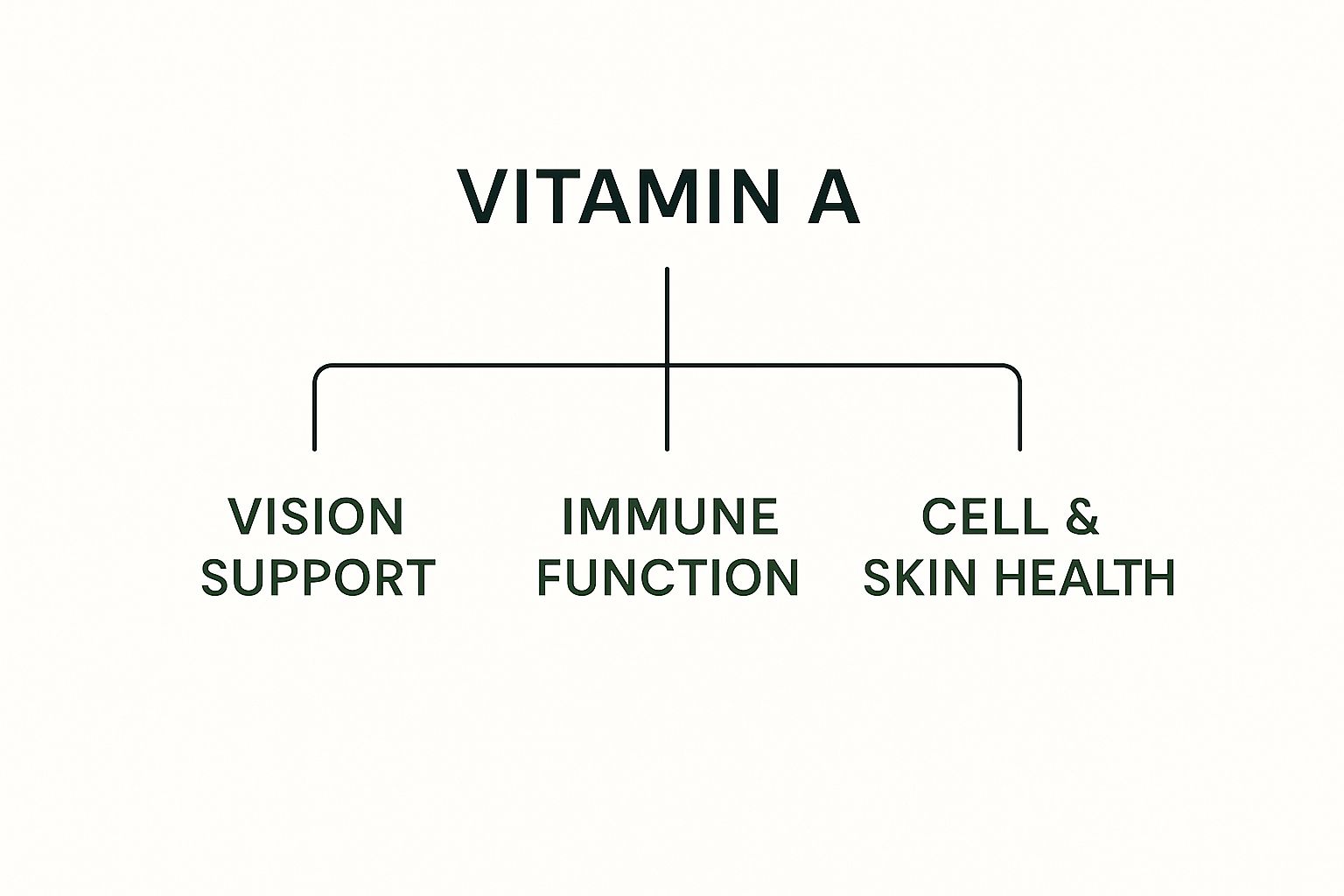 As you can see, vitamin A is fundamental for maintaining healthy vision, a robust immune response, and the integrity of your skin and cells.
A Growing Need for Quality Supplementation
The word is definitely getting out about how important this nutrient is. The vitamin A market was valued at around USD 679 million in 2024 and is expected to blow past USD 1.05 billion by 2032. This surge shows a growing global awareness of its benefits, not just in supplements but in functional foods and cosmetics, too. You can dig into the numbers in the full market analysis on Data Bridge Market Research.
Vitamin A’s role extends far beyond what many realize. It's a key player in cellular communication, helping to regulate everything from fetal development to the repair of skin tissue. Its impact on the immune system is particularly profound, as it helps strengthen the body's mucosal barriers in the eyes, lungs, and gut, which are our first line of defense against pathogens.
While vitamin A is a must-have for overall health, it’s just one piece of the puzzle. For those focused on performance, exploring other top supplements for various fitness goals can give you a bigger picture of how to build a well-rounded supplement stack. Understanding how different nutrients work together is what creates a truly effective wellness strategy.
The Science-Backed Health Benefits of Vitamin A
When we talk about vitamin A, we're going far beyond just basic nutrition. Getting enough of this nutrient fuels some of your body's most critical systems. It's not about just checking a box on your daily intake; it's about giving your body the raw materials for sharp vision, a tough immune system, and healthy, glowing skin.
Think of a high-quality vitamin A supplement as a powerful tool to ensure these systems are primed to perform at their absolute best. The health benefits are well-established, showing just how vital this nutrient is for feeling good every single day. Let's dig into the science and see how vitamin A actually works to protect and support your body.
A Cornerstone of Healthy Vision
One of vitamin A's most well-known jobs is keeping your eyesight sharp, especially when the lights are low. You can think of it as the secret ingredient for your eyes' "night mode."
Here’s why: vitamin A is absolutely essential for creating rhodopsin, a special light-absorbing pigment in your retina. When light hits your eye, rhodopsin starts a chain reaction of signals to your brain that lets you see. Without enough vitamin A, your body can't make enough rhodopsin, leading to trouble seeing in dim light—a condition called night blindness.
For anyone serious about supporting their vision, a steady intake of vitamin A is a must. If you want to dive deeper into how diet impacts sight, you can find great eye health and nutrition tips from trusted experts. It’s a great way to see how nutrients work together for total eye function.
Fortifying Your Immune Defenses
Vitamin A also moonlights as a tough gatekeeper for your immune system. Its main duty is to reinforce your body's first lines of defense against unwanted invaders like bacteria and viruses.
It does this by maintaining the strength of your mucosal barriers—those protective linings in your eyes, lungs, and gut. These barriers are designed to trap pathogens before they can get into your bloodstream. Vitamin A keeps these surfaces healthy and strong, making it much harder for germs to get a foothold.
It also plays a key role in making and deploying white blood cells, like T-cells, which are the immune system's soldiers for identifying and neutralizing threats.
The World Health Organization (WHO) actually recommends vitamin A treatment for kids with severe measles because it's been proven to reduce mortality rates. This just goes to show its powerful, direct impact on the immune response during a crisis.
This immune-boosting role is exactly why a dependable vitamin A supplement can be so valuable, especially when you feel like you need an extra layer of defense. While vitamin A is a beast on its own, it often works even better when paired with other key players. You can learn more about these partnerships in our guide on the synergistic benefits of vitamin D and K.
Promoting Radiant Skin and Cellular Health
The link between vitamin A and skin health is so well-known that its derivatives, called retinoids, are rockstar ingredients in the world of dermatology. At its core, this nutrient is fundamental to cell growth and differentiation—the process your body uses to create new cells and make sure they do their specific jobs right.
For your skin, this translates into some major perks:
- Encouraging Cell Turnover: Vitamin A helps your skin ditch old, damaged cells and bring in fresh, new ones. This keeps your complexion looking smooth and vibrant.
- Supporting Collagen Production: It has a hand in stimulating collagen, the protein that gives skin its firm, youthful bounce.
- Aiding in Repair: By boosting new cell growth, vitamin A helps the skin heal from damage caused by the sun and everyday pollutants.
This cellular support isn't just skin-deep. It happens all over your body, helping with tissue repair and keeping everything structurally sound. Whether you get it from plants or a more direct source, having enough vitamin A keeps this vital cycle of renewal humming along.
How To Choose Your Ideal Vitamin A Supplement
Alright, let's talk about picking the right vitamin A. It really boils down to choosing between two main types: provitamin A and preformed vitamin A. Making the right call here is key to hitting your health goals, and the best choice truly depends on your body, your diet, and what you’re trying to achieve.
Walking down the supplement aisle can feel like a pop quiz you didn't study for. But once you get the core differences between these two forms, the process gets a whole lot simpler. It’s not about finding one that's universally "better"—it's about finding the one that’s a better fit for you.
Let’s break them down.
The Plant-Based Pathway: Provitamin A
Provitamin A, with beta-carotene being the most well-known, is the kind you find in plants. Think of it as a smart, "just-in-time" delivery system for your body. When you take a supplement with beta-carotene, your body only converts it into active vitamin A when it needs it.
This built-in regulation is its biggest advantage. It acts as a natural safety net, making it much harder to get too much. Because of this, a provitamin A supplement is a fantastic choice for general wellness, daily maintenance, and especially for anyone following a plant-focused lifestyle.
The Direct Route: Preformed Vitamin A
On the other hand, you have preformed vitamin A, like retinyl palmitate. This is the "active" form, meaning it’s bioavailable and ready for your body to use straight away—no conversion needed. This makes it a seriously powerful option for anyone who needs more direct support.
So, who might benefit from this direct approach?
- Individuals with Conversion Issues: Some people have genetic quirks that make it tough for their bodies to turn beta-carotene into active vitamin A. For them, a preformed supplement is the only way to ensure they’re getting what they need.
- Those with Specific Health Goals: If a healthcare provider has spotted a deficiency and wants to raise your levels quickly, the immediate action of preformed A is often the way to go.
- People with Malabsorption Conditions: Certain digestive issues can mess with nutrient conversion, making a ready-to-use form far more effective.
The global demand for vitamin A speaks volumes about its importance. The market was valued at around USD 628.2 million in 2025 and is expected to climb by 5.3% each year through 2032. This isn't just a trend; it reflects a growing awareness of vitamin A's role in tackling deficiencies that impact millions worldwide, including a staggering 190 million preschool-aged children.
Making Your Decision
Choosing your ideal vitamin a supplement really just comes down to matching your needs to the right type.
Here’s a quick-glance table to help you decide:
| Consideration | Choose Provitamin A (Beta-Carotene) If... | Choose Preformed A (Retinyl Palmitate) If... |
|---|---|---|
| Primary Goal | You want general wellness support and a plant-based option. | You need targeted support or have known conversion difficulties. |
| Safety Profile | You prefer a form with a very low risk of toxicity because your body regulates it. | You're working with a professional to fix a known deficiency. |
| Dietary Style | You're vegan or plant-forward and want a supplement from a plant source. | Your diet lacks animal products, and you want to skip the conversion step. |
| Lifestyle | You're building a foundational supplement routine for long-term health. | You want a highly bioavailable form for immediate and maximum absorption. |
At the end of the day, both forms are effective tools for supporting your health. The best one is simply the one that clicks with your biology and lifestyle. For more help building a solid supplement foundation, you might find our article on the top 10 supplements most people should take useful.
And of course, chatting with a healthcare professional can give you personalized insights to help you make the best possible choice for your unique body.
Understanding Safe Vitamin A Dosage
 When it comes to fat-soluble vitamins like A, the old saying "more is better" definitely doesn't apply. Since your body holds onto it, getting the dosage right is the key to unlocking its benefits safely. Knowing the numbers empowers you to use a
vitamin a supplement effectively without stepping into risky territory.
When it comes to fat-soluble vitamins like A, the old saying "more is better" definitely doesn't apply. Since your body holds onto it, getting the dosage right is the key to unlocking its benefits safely. Knowing the numbers empowers you to use a
vitamin a supplement effectively without stepping into risky territory.
Flipping over a supplement bottle can feel like trying to read a foreign language. You’ll see acronyms like RDA and UL, which are basically your guardrails for safe use. Let's break down what they actually mean so you can supplement with complete confidence.
Decoding Dosage Recommendations
Think of these guidelines as a trusted roadmap for your health. They clearly mark the "safe travel zone," making sure you get what you need without going overboard.
-
Recommended Dietary Allowance (RDA): This is the sweet spot—the average daily amount most healthy people need to function well and keep deficiency at bay. For adult men, the RDA for vitamin A is 900 mcg RAE, and for adult women, it's 700 mcg RAE.
-
Tolerable Upper Intake Level (UL): This is your absolute ceiling. It’s the maximum daily dose you can take without inviting negative side effects. For preformed vitamin A, the UL for adults is 3,000 mcg RAE. Pushing past this limit day after day is where the trouble can start.
It's crucial to know that these numbers apply to preformed vitamin A. Provitamin A carotenoids, like the beta-carotene you get from plants, don't have a UL. Your body is smart and only converts what it needs, making them a much safer bet for everyday supplementation.
The Safety Difference Between Supplement Forms
The form of vitamin A you take makes a world of difference in its safety. This is where you really need to understand the distinction between beta-carotene and retinyl palmitate.
Your body handles them in completely different ways. Imagine one is a smart faucet and the other is a firehose.
With beta-carotene, your body has an intelligent "faucet" it can turn on and off as needed. It only converts the amount required to create active vitamin A, making the risk of buildup almost zero. That’s why our plant-based Vitamin A Capsules, derived from Natural Beta Carotene and also containing organic carrot juice root, are a fantastic choice for worry-free, daily wellness.
Preformed vitamin A, on the other hand, is like that firehose—it’s on full blast. Your body absorbs it directly, and any extra gets sent to your liver for storage. While our USDA Organic Vitamin A Drops are a potent option for those who need a direct hit, it's vital you stick to the recommended dose to avoid overwhelming your system.
Recognizing the Risks of Too Much Vitamin A
Consistently taking high doses of preformed vitamin A can lead to a condition called hypervitaminosis A, or vitamin A toxicity. This is what happens when your liver becomes overloaded from storing too much.
While getting acutely sick from one massive dose is rare, chronic toxicity from taking a little too much over a long time is a genuine concern. The symptoms can sneak up on you, ranging from mild to more severe issues:
- Dizziness and nausea
- Headaches and blurred vision
- Pain in your joints and bones
- Dry, rough skin and even hair loss
- In serious cases, liver damage
Some people are more susceptible, including older adults, anyone with a liver condition, and those who drink a lot of alcohol. This is exactly why it's always smart to talk with a healthcare professional before starting a new supplement, especially one with a preformed, active ingredient. They can guide you to the right form and dose for your unique situation, ensuring you get all the benefits without any of the risks.
When to Choose a Supplement Over Dietary Sources
Look, I’m a big believer in a food-first approach to nutrition. Nothing beats getting your nutrients from whole foods, where they work together in perfect harmony. But let’s be real—even the most dedicated healthy eater can have gaps in their diet.
That’s where a high-quality vitamin A supplement comes in. Think of it as your nutritional insurance policy, stepping in to make sure your body has everything it needs to perform at its peak. The trick is knowing when your diet might not be cutting it.
Mapping Out Vitamin A in Your Diet
Before you can know if you’re falling short, you have to know what a full tank looks like. Vitamin A shows up on our plates in two main forms, and you'll find them in different aisles of the grocery store.
- Provitamin A (Carotenoids): This is the version you get from plants. Your body takes these colorful compounds, like beta-carotene, and converts them into active vitamin A when it needs it.
- Preformed Vitamin A (Retinoids): This is the active, ready-to-use form. It’s found almost exclusively in animal products, so your body can put it to work right away.
To help you see where your diet stands, here’s a quick rundown of some of the best food sources for both types of vitamin A.
Top Dietary Sources of Vitamin A
| Vitamin A Type | Rich Food Sources | Example Serving |
|---|---|---|
| Provitamin A | Carrots, sweet potatoes, spinach, kale, cantaloupe, red bell peppers | A medium sweet potato or a half-cup of raw carrots |
| Preformed Vitamin A | Beef liver, cod liver oil, eggs, milk, salmon, cheese | 3 ounces of beef liver or one tablespoon of cod liver oil |
Getting your vitamin A from food is fantastic. Some people even take it a step further by learning how to grow carrots at home, which is a great way to get fresh, beta-carotene-rich produce. But even with the best intentions, life sometimes gets in the way.
When Your Diet Needs a Helping Hand
Certain situations can make it tough to get enough vitamin A from food alone. In these cases, a supplement isn’t just a nice-to-have—it’s a strategic move to keep you healthy and resilient.
1. Navigating Dietary Restrictions If you’re a vegan or follow a strict plant-based diet, you're not getting any preformed vitamin A. Zero. You can load up on carotenoid-rich veggies, but your body’s ability to convert them into usable vitamin A can be a bit of a wildcard. Everything from your genetics to your gut health affects how well this process works.
A supplement can be a complete game-changer here.
- Our Vitamin A Capsules are a plant-based beta-carotene option, derived from Natural Beta Carotene and also containing organic carrot juice root, making them a perfect fit for a plant-forward lifestyle.
- For more direct support, our USDA Organic Vitamin A Drops contain vitamin A as retinyl Palmitate, bypassing the conversion process entirely.
The global vitamin supplements market is projected to skyrocket from USD 55.19 billion in 2025 to nearly USD 99.78 billion by 2034. This explosive growth shows a massive shift toward people proactively using supplements, including vitamin A, to fill nutritional gaps. You can dive into the numbers in a recent vitamin supplements market report.
2. Overcoming Malabsorption Issues Some health conditions mess with your body's ability to absorb nutrients, especially fat-soluble vitamins like A. If you're dealing with issues like celiac disease, Crohn's, or cystic fibrosis, your gut might not be pulling in the nutrients it needs, no matter how healthy your diet is. For people facing these challenges, a highly bioavailable liquid supplement can often be a much more effective way to get vitamin A into your system.
3. Meeting Increased Needs During Certain Life Stages Your body’s demand for vitamin A isn’t a flat line—it spikes at different points in your life. Pregnant and breastfeeding women need more to support their baby’s development and enrich their milk. Infants and young children also have higher requirements for healthy growth and a strong immune system.
During these critical windows, a carefully chosen supplement ensures those increased needs are met safely. It's similar to how we need more of other key nutrients, like vitamin D, during different seasons or life stages. If you want to learn more, check out our guide on how to get the vitamin d you need as we head into winter.
Your Questions About Vitamin A, Answered
I get it—navigating the world of supplements can feel overwhelming. Even when you know the basics, you probably have specific questions about how a vitamin A supplement fits into your life. Let's clear up the confusion.
This section is all about tackling those common questions head-on with clear, practical answers so you can feel confident about what you're putting in your body.
Can I Just Eat a Ton of Carrots?
While carrots are champions of beta-carotene, relying solely on them for your vitamin A might leave you short. Think of your body as a little factory. The efficiency of its production line—in this case, turning beta-carotene into usable vitamin A—is different for everyone.
A few things can slow down that conversion process:
- Your Genetics: Some of us simply have genetic quirks that make us less efficient converters. It's just the way we're built.
- Gut Health: A happy, healthy gut is crucial for absorbing and using nutrients properly.
- Dietary Fat: Vitamin A is fat-soluble, which means you need to eat it with some fat for your body to absorb it.
So, while a diet packed with colorful veggies is always a fantastic move, a supplement can act as your nutritional safety net. For a plant-based approach, our Vitamin A Capsules offer a reliable source of natural beta-carotene. If you want to skip the conversion step completely, our USDA Organic Vitamin A Drops deliver the active form directly.
What's the Real Difference Between Your Capsules and Drops?
The main difference between our two vitamin A supplements boils down to the form of the vitamin and how it's delivered. The right one for you really depends on your personal health goals.
Our Vitamin A Capsules contain natural beta-carotene and also contain organic carrot juice root. This is a "provitamin," meaning your body converts it into active vitamin A on an as-needed basis. This makes it an excellent choice for general wellness, long-term support, and anyone on a plant-based diet.
On the other hand, our USDA Organic Vitamin A Drops provide vitamin A as retinyl Palmitate, which is the preformed, active version. The liquid format is super bioavailable for quick absorption, making it perfect for people who need more direct support, might have trouble with nutrient conversion, or just love the convenience of adjusting their dose with a simple dropper.
The choice between provitamin and preformed vitamin A is a perfect example of personalized nutrition. One offers a gentle, self-regulating approach, while the other provides a direct, potent solution. Understanding your body's unique needs is key to selecting the most effective tool for your wellness arsenal.
Is It Possible to Take Too Much Vitamin A?
Yes, you absolutely can, and this is a crucial point to understand. The risk is almost exclusively with preformed vitamin A (retinyl palmitate). Since it’s already in its active form, your body stores any excess in the liver instead of getting rid of it. Over time, this buildup can lead to a condition called hypervitaminosis A, or vitamin A toxicity.
This is exactly why it's so important to stick to the recommended dosage on the label and talk with your healthcare provider.
Provitamin A from sources like beta-carotene, however, is a much safer ballgame. Your body has a brilliant built-in regulatory system; it only converts what it needs into active vitamin A. This natural "off-switch" dramatically reduces the risk of toxicity. While eating a massive amount of beta-carotene can cause a harmless (and reversible) condition where your skin turns a bit yellowish-orange (carotenemia), it's not the same as vitamin A toxicity and doesn't pose a health risk.
Why Does "USDA Organic" Really Matter for a Supplement?
When you see that USDA Certified Organic seal on a supplement, it’s a powerful statement about purity and quality. It’s not just some marketing buzzword; it’s a guarantee that the product has met incredibly strict standards from the farm all the way to the bottle.
Here’s what that seal actually means for you:
- No GMOs: The ingredients are from non-genetically modified organisms. Simple as that.
- Clean Sourcing: The plants were grown in soil free from prohibited stuff like synthetic fertilizers and nasty pesticides.
- No Harsh Chemicals: The final product is made without irradiation, industrial solvents, or synthetic food additives.
For our Vitamin A Capsules, it ensures the organic carrot juice root is as pure as it gets. For our USDA Organic Vitamin A Drops, it applies to the carrier oils and every other ingredient, protecting the integrity of the whole formula.
Choosing organic means you're consciously nourishing your body with a clean, high-integrity product, free from the junk found in many non-organic supplements. It’s a commitment to your health.
Ready to support your vision, immune system, and overall wellness with a high-quality, clean formula? Explore the Peak Performance collection and find the perfect vitamin A supplement for your health goals today. Whether you prefer the plant-based power of our Vitamin A Capsules or the direct support of our USDA Organic Vitamin A Drops, you can trust you're getting a pure and potent product.
Also in Blog


How to Increase Stamina Naturally and Boost Energy


How to Increase Energy Naturally

