


How to Stay Energized All Day The Ultimate Daily Guide
If you're serious about having consistent energy all day, the work doesn't start with your morning coffee. It starts the night before.
Lasting, high-quality energy isn't a quick fix you can find in a bottle or a cup. It's meticulously built while you sleep, during that deep, restorative rest that truly sets the stage for everything you do from sunrise to sunset.
Build Your Energy Foundation the Night Before
Most people hunting for more energy focus on morning routines or afternoon pick-me-ups. That’s a mistake—it completely misses the most important piece of the puzzle.
Real, sustainable vitality isn’t created on the fly. It's manufactured overnight. Think of your body as a high-performance factory. The night shift is when all the critical maintenance happens: machinery gets repaired, inventory is restocked, and everything is prepped for the next day's production run. Pushing through on minimal sleep is like trying to run that factory with broken equipment and no raw materials. It's a recipe for breakdown.
This whole nightly repair process is governed by your circadian rhythm—your body's internal 24-hour clock. When you work with this clock by sticking to a consistent sleep schedule, you allow your body to cycle through its essential sleep phases efficiently. These cycles are non-negotiable for consolidating memories, regulating hormones, repairing muscle tissue, and clearing out metabolic junk from your brain. Skimp on sleep, and you throw a wrench in the entire system, which leads directly to fatigue, brain fog, and a sour mood the next day.
Prioritize a Consistent Sleep Schedule
This might be the single most powerful tool you have for boosting your energy: a consistent sleep-wake cycle.
That means going to bed and waking up at roughly the same time every single day. Yes, even on weekends. This consistency is what anchors your circadian rhythm, making it far easier to fall asleep at night and, more importantly, to wake up feeling genuinely refreshed without needing a blaring alarm.
When your body can anticipate when to rest and when to be alert, it becomes incredibly efficient at managing its energy stores. An erratic schedule, on the other hand, is like giving your internal clock a bad case of jet lag without ever leaving your time zone. You just end up feeling groggy and out of sync.
Optimize Your Sleep Environment
Your bedroom should be a sanctuary dedicated to rest, not a multi-purpose room filled with distractions. To create an environment that promotes deep sleep, you need to dial in three key factors: light, temperature, and noise.
- Go Dark: Light exposure, especially the blue light spewing from our screens, slams the brakes on melatonin production—the hormone that tells your brain it's time to wind down. Your room should be as dark as a cave. Think blackout curtains, covering any small LEDs, and shutting down all electronics at least an hour before bed.
- Stay Cool: Your body temperature naturally needs to drop to initiate sleep. Keeping your bedroom on the cool side, somewhere between 60-67°F (15-19°C), supports this biological process and helps you stay asleep longer.
- Keep it Quiet: Random noises can easily pull you out of deep sleep cycles, even if you don't fully wake up. A white noise machine or a good pair of earplugs can create a consistent, peaceful soundscape that masks disruptions.
The impact of quality sleep isn't just a "nice to have"—it's a measurable performance enhancer. Getting 7-9 hours of rest each night is the most direct investment you can possibly make in your daytime energy, focus, and productivity.
The data connecting sleep to performance is just overwhelming. Adults who consistently get 7–9 hours of sleep report much higher energy levels than those who don't. In fact, sleeping fewer than 6 hours is linked to a 30–50% greater likelihood of feeling tired during the day. Each hour of lost sleep can also slow your reaction time by 5–10% and makes you 20–40% more likely to report that your work performance suffered.
To really dial in this foundation, you have to get serious about your sleep setup. Start by learning more about choosing the right mattress for deep, restorative sleep, because a supportive mattress is a non-negotiable part of a sleep-friendly bedroom. For a complete game plan on optimizing your entire nightly routine, check out our guide on how to get better sleep to perform at your best.
Design a High-Energy Morning Routine
How you kick off your day is everything. That first hour can either launch you into a state of vibrant, focused energy or sentence you to an uphill battle against fatigue until your head hits the pillow. Once you’ve laid the groundwork with solid sleep, the next move is to engineer a morning routine that shifts your body from rest to action.
This isn’t about cramming more stuff into your morning. It’s about making a few smart, strategic choices that pay huge energy dividends all day long.
And the very first one is simple: hydrate. After 7 to 9 hours without water, your body is naturally dehydrated, which shows up as sluggishness and brain fog. A big glass of water right after waking up is like flipping the power switch for your cells. It gets your metabolism going and wakes up your entire system.
Let the Sun In
Before you even think about coffee, reach for a far more powerful, natural stimulant—sunlight. Getting natural light in your eyes within the first hour of waking is a non-negotiable for resetting your body's internal clock, your circadian rhythm.
This simple habit tells your brain to stop producing melatonin (the sleep hormone) and provides a healthy, natural jolt of cortisol. A morning cortisol spike is exactly what you need; it’s your body's built-in "wake-up call" that sharpens focus and ramps up alertness. Seriously, just 10 to 15 minutes outside or even sitting by a bright window can make a massive difference in how you feel for the rest of the day.
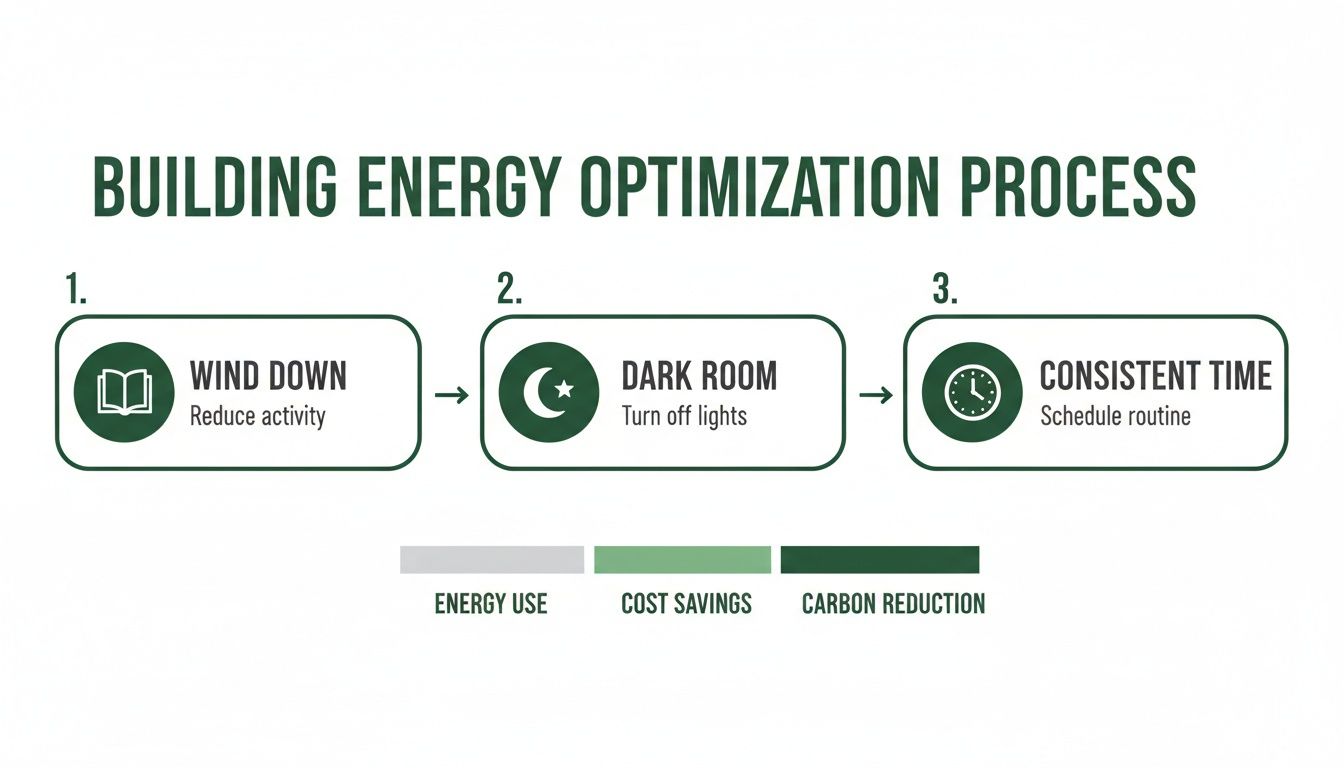
As you can see, a powerful morning routine is built on the back of great evening habits. Get those right, and you're setting the stage for success.
Build a Crash-Proof Breakfast
Your first meal is critical for stabilizing your blood sugar, which is the secret to dodging those dreaded energy crashes. The goal is to eat a meal that provides a slow, steady burn of fuel, not a quick flash in the pan.
Too many people start their day with simple carbs and sugar (think pastries, sugary cereals, or even just toast with jam). That sends your blood sugar skyrocketing, only to have it come crashing down a couple of hours later, leaving you desperate for another coffee and feeling completely drained.
To get off that rollercoaster, build your breakfast around three pillars:
- Protein: Eggs, Greek yogurt, or a clean protein powder. This keeps you full and provides the building blocks for neurotransmitters that control your focus and mood.
- Healthy Fats: Think avocado, nuts, seeds, or a drizzle of olive oil. Fats slow down digestion, giving you that gradual release of energy and keeping hunger at bay.
- Complex Carbs & Fiber: Oatmeal, whole-grain toast, or berries are perfect. They provide sustained energy without the nasty blood sugar spike.
A balanced breakfast doesn’t just fuel your body; it stabilizes your brain. By preventing sharp glucose fluctuations, you maintain clearer thinking and avoid the irritability that often comes with a mid-morning energy dip.
This simple formula ensures you have both the physical fuel and mental clarity to attack your most important work right from the start. To go even deeper, check out our complete guide on how to create a morning routine that truly works for you.
Morning Habits That Boost vs Drain Your Energy
It's easy to fall into morning traps that feel productive but actually sabotage your energy. Here’s a quick look at the habits that build you up versus those that tear you down.
| Energy-Boosting Habit | Energy-Draining Habit | Why It Works or Fails |
|---|---|---|
| Drink a full glass of water. | Reach for coffee first. | Hydration kickstarts your metabolism. Caffeine on an empty stomach can spike cortisol and jitters. |
| Get 10 mins of sunlight. | Scroll through your phone in bed. | Sunlight sets your circadian rhythm. Blue light from screens confuses it and floods you with reactive stress. |
| Eat a protein-rich breakfast. | Grab a sugary pastry or carb-only meal. | Protein and fat stabilize blood sugar for hours. Sugar causes a rapid spike and an inevitable crash. |
| Identify your top 3 priorities. | Check emails and notifications immediately. | This sets a proactive tone for the day. Reacting to your inbox lets other people's agendas run your morning. |
Switching just one or two of these habits can completely change the trajectory of your day, shifting you from reactive and tired to proactive and energized.
Prime Your Brain for Success
Finally, a truly high-energy morning isn't just about the physical; it's about the mental. Before the world starts pulling you in a million different directions, take just five minutes to prime your brain for focus and clarity.
This tiny investment helps you get ahead of decision fatigue before it even has a chance to set in.
A five-minute meditation can quiet the mental chatter and dramatically improve your ability to concentrate. Another killer technique is to simply write down your top three priorities for the day. This creates a clear roadmap, so you can channel your energy into what actually matters instead of wasting it on the endless stream of emails and notifications.
When you start your day with intention, you take control. You set a proactive, energized tone for everything that follows.
Fuel Your Body for Lasting Performance
You know that dreaded 2 PM feeling? It’s not a mandatory part of your day—it's a flashing warning light from your body. It’s a signal that your current fueling strategy just isn't cutting it.
If you want to master how to stay energized all day, you have to start treating nutrition and hydration as your primary performance tools, not as an afterthought.
The real key to unlocking steady, reliable energy is managing your blood sugar. Think of your energy like a campfire. A quick rush of sugar is like throwing a handful of dry leaves on the fire—you get a big, bright flame that vanishes almost instantly, leaving you cold.
But protein, healthy fats, and fiber? They're the dense, seasoned logs. They provide a slow, steady burn that keeps you warm and energized for hours.
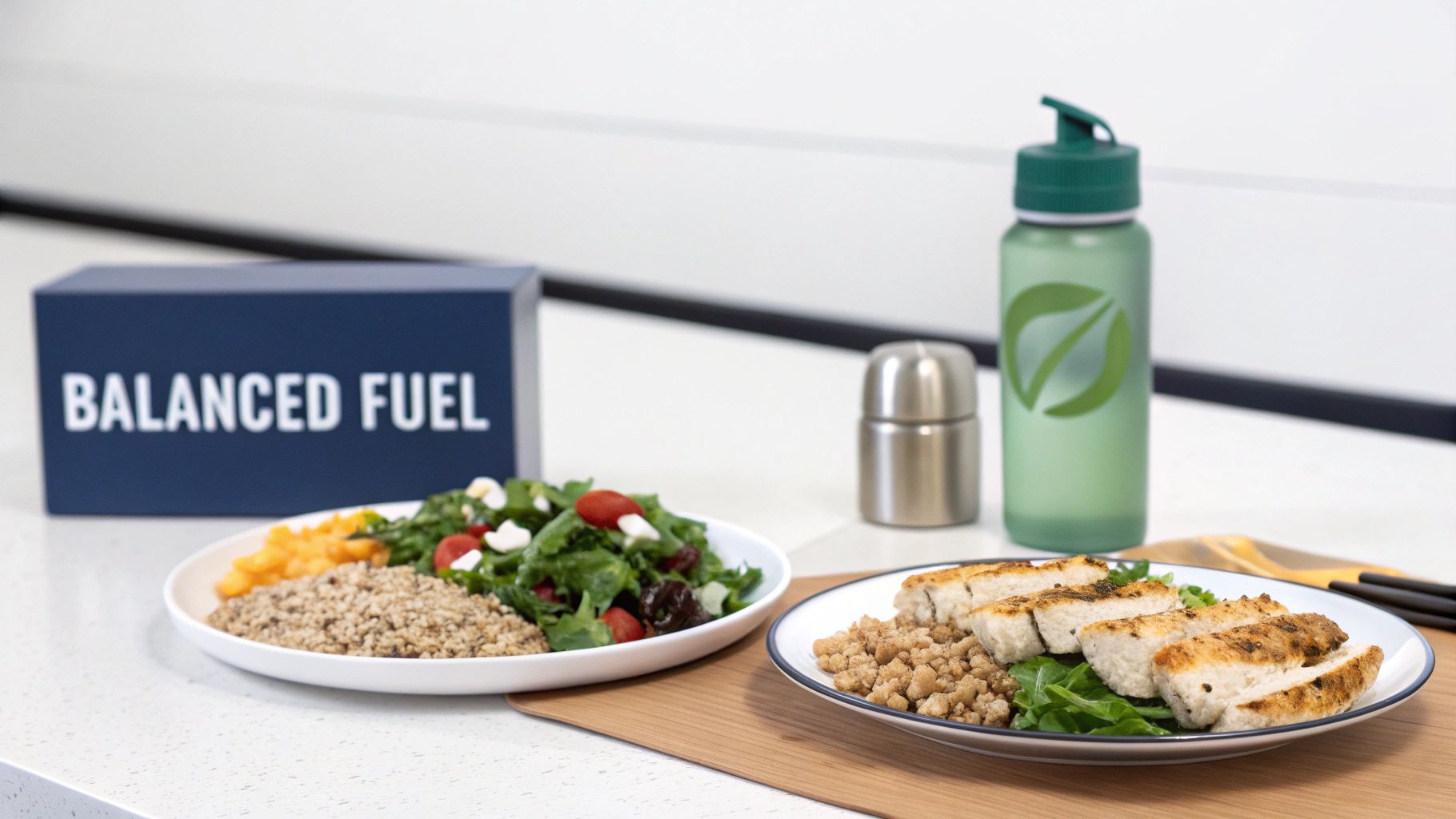
This steady burn is what prevents the dramatic energy spikes and valleys that tank most people's afternoons. When you get off that rollercoaster, you maintain not just physical stamina but also mental clarity and focus.
Structure Your Meals for Stability
The secret to stable blood sugar is surprisingly simple: every single time you eat—whether it’s a full meal or a quick snack—combine protein, healthy fats, and fiber. This powerful trio slows down digestion, ensuring glucose enters your bloodstream gradually.
Forgetting this rule is exactly what sets you up for an energy crash. A lunch of pasta with red sauce (almost entirely carbs) or a snack of crackers will give you that brief lift followed by a massive slump.
Here are a few real-world examples of what this looks like:
- Lunch: A big salad (fiber) topped with grilled chicken or a can of chickpeas (protein), half an avocado (fat), and a ton of colorful veggies.
- Snack: A crisp apple (fiber) with a generous spoonful of almond butter (protein and fat).
- Quick Meal: A smoothie blended with Greek yogurt or a scoop of protein powder, a handful of spinach, berries, and a tablespoon of chia seeds.
This isn't about restrictive dieting; it's just smart composition. You're building meals that work for you.
Your afternoon energy levels are a direct reflection of your lunch choices. Prioritize a balanced plate with protein, fat, and fiber to sidestep the post-meal slump and power through your afternoon.
Also, don't let yourself get ravenously hungry. Skipping meals puts a huge amount of stress on your body and almost always leads to grabbing whatever is fast and easy later. Keep smart, balanced snacks on hand to bridge the gap.
The Critical Role of Hydration
We often forget this one, but hydration is just as important as the food you eat. Even mild dehydration—we're talking as little as a 1-2% loss of body water—can seriously impair cognitive function, kill your focus, and make you feel exhausted.
Before you automatically reach for another coffee, just ask yourself: have I had enough water?
Fatigue is one of the very first signs your body is thirsty. When you're dehydrated, your blood volume actually decreases. This forces your heart to work harder to pump oxygen and nutrients to your muscles and brain, which is an enormous drain on your energy.
So, how much do you really need? The old "eight glasses a day" rule is a decent starting point, but a more personalized approach is way better. A solid guideline is to drink half your body weight in ounces of water per day. For example, a 160-pound person should aim for around 80 ounces.
Creative Ways to Stay Hydrated
Let's be honest, chugging plain water all day can feel like a chore. The trick is to make it easy, accessible, and even enjoyable.
- Start Your Day with Water: The very first thing you should do when you wake up is drink a large glass of water to rehydrate after a long night's sleep.
- Carry a Water Bottle: Keep a reusable water bottle on your desk or in your bag. It's a constant visual reminder to sip throughout the day.
- Eat Your Water: A lot of fruits and vegetables are packed with water. Cucumbers, watermelon, celery, and oranges are all great hydrating snacks.
- Infuse with Flavor: Get bored easily? Add slices of lemon, cucumber, mint, or a handful of berries to your water to make it more appealing.
Proper hydration is such a simple strategy, but it's profoundly effective. It supports every single function in your body, from nutrient transport to temperature regulation—all of which are essential for keeping your energy levels high.
Weave Strategic Movement into Your Day
When your energy dips, the last thing you probably feel like doing is moving. It's a classic paradox: you have to expend energy to get energy. But it's not about forcing a grueling gym session. The real secret is strategically weaving short bursts of movement into your day to keep your internal engine humming.
Think about it—sitting for hours on end is a notorious energy vampire. It slows down your circulation, tanks the amount of oxygen getting to your brain, and brings on that all-too-familiar sluggishness and mental fog. A quick, strategic movement break acts as an instant reset button for your entire system.
Getting your body moving again boosts blood flow, delivering a fresh shot of oxygen and nutrients to your brain and muscles. This also triggers a release of endorphins—your body’s natural mood-lifters—giving you an immediate mental and physical lift that can completely turn your afternoon around.
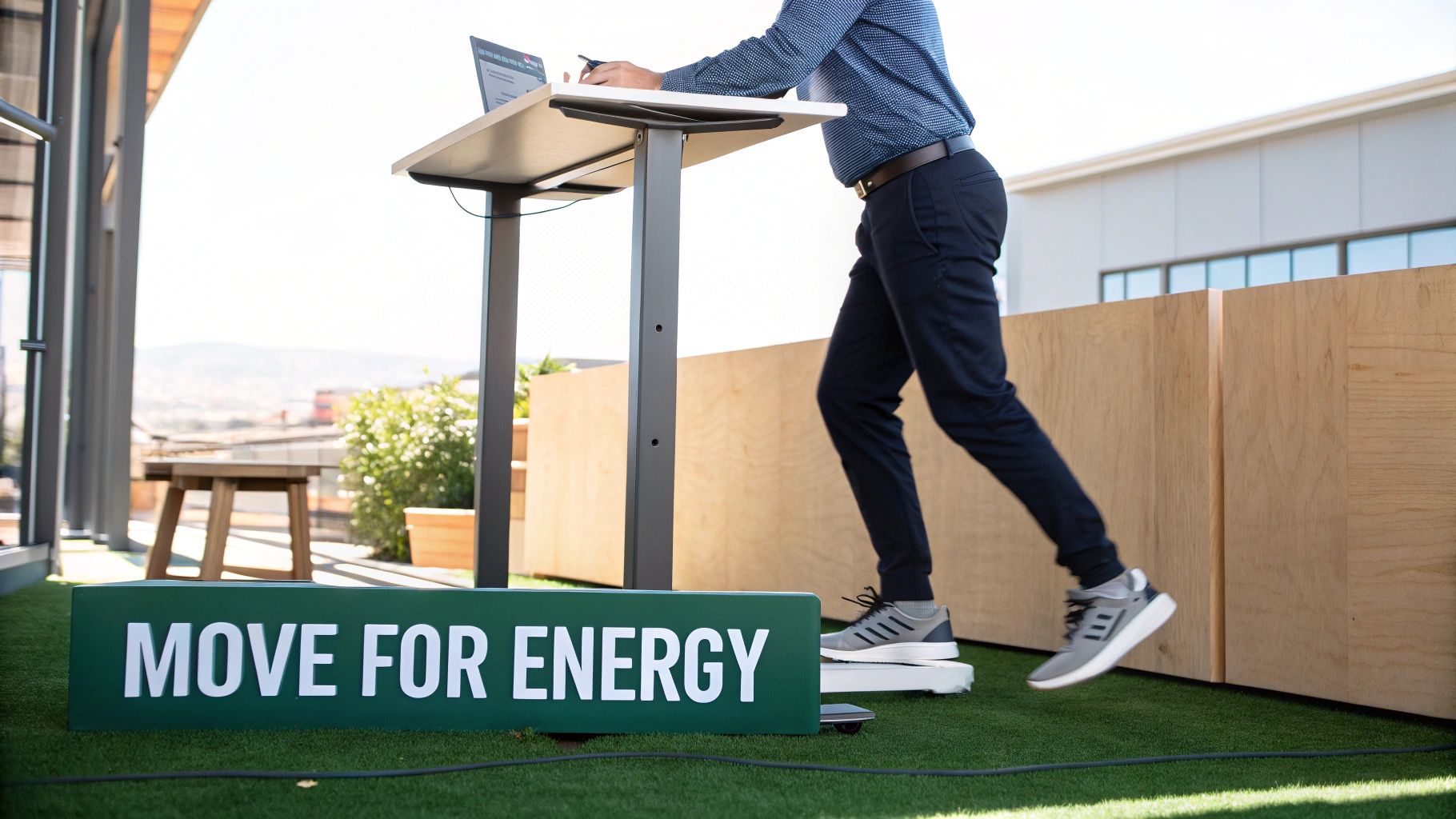
Embrace "Exercise Snacks"
Let's kill the all-or-nothing mindset that says only an hour at the gym counts. To maintain energy all day long, you need to get familiar with the idea of "exercise snacks"—short, accessible bursts of activity you can sprinkle throughout your schedule.
These micro-workouts are usually just 5 to 10 minutes long, but they're incredibly powerful. The goal isn't to build muscle or endurance; it's to push back against the lethargy that creeps in when you’ve been sedentary for too long.
Think of them as quick interventions. The moment you feel that first hint of brain fog or fatigue, that’s your cue. A brisk walk, a few simple stretches at your desk, or a quick set of bodyweight exercises can instantly reboot your focus and alertness.
- Brisk Walk: Just step outside for 10 minutes. The combination of movement, fresh air, and daylight is a potent recipe for clearing your head.
- Desk Stretches: You don't even have to leave your chair. Simple neck rolls, shoulder shrugs, and torso twists can release tension and get your blood flowing again.
- Bodyweight Circuit: Try a quick round of 20 squats, 10 push-ups (against a wall or your desk is perfect), and 30 seconds of jumping jacks. It’s just enough to get your heart rate up and shake off the cobwebs.
The science on this is solid. Research shows that even a single 10–30 minute walk can immediately boost perceived energy and cut down on fatigue for the next 2–4 hours. If you want to dive deeper into the powerful, dose-dependent effects of physical activity, you can learn more about research on exercise and energy.
Protect Your Mental Stamina with Structured Breaks
Physical fatigue is only one side of the coin. Cognitive burnout is just as draining—if not more so. Staring at a screen and grinding through complex tasks for hours depletes your mental reserves, leading straight to decision fatigue and a total inability to concentrate.
Just like your body needs to move, your brain needs structured rest to recharge. This is where you can bring in specific techniques designed to manage focus and fend off mental exhaustion before it starts.
Your brain isn’t wired for hours of unbroken focus. Building in deliberate mental breaks isn’t a sign of weakness; it’s a strategic necessity for maintaining high-quality cognitive performance all day long.
One of the most effective tools for this is the Pomodoro Technique. It's a ridiculously simple but powerful system for managing both your time and your mental energy.
Here's how it works:
- Set a timer for 25 minutes. Dedicate this block to one single, focused task. No multitasking, no email checks, no distractions.
- Work until the timer goes off. Give that one task your full, undivided attention.
- Take a 5-minute break. This is non-negotiable. Get up, stretch, grab some water, or just stare out the window. Do something completely unrelated to your work.
- Repeat. After the short break, set another 25-minute timer. Once you’ve completed four of these "Pomodoros," take a longer break of 15-30 minutes.
This method works by breaking your workflow into manageable sprints, which prevents mental burnout and ensures your brain gets the regular recovery it needs to stay sharp. When you combine these short mental breaks with your physical "exercise snacks," you've got a powerful one-two punch against any kind of fatigue.
Use Caffeine and Supplements Strategically
Movement and nutrition are the bedrock of good energy, but let's be real—sometimes you need a targeted boost to get through the day. This is where a smart approach to caffeine and supplements comes in.
Used correctly, they can be incredible tools. Used without a plan, they can wreck your sleep and leave you running on fumes. The secret isn't just what you take, but when and why. It’s all about working with your body’s natural rhythm, not against it.
Master Your Caffeine Timing
Caffeine is a powerful tool, but most people use it like a sledgehammer. Gulping down coffee the second your alarm goes off or chugging it all afternoon messes with your natural cortisol cycle and is a surefire way to sabotage your sleep.
A moderate dose of 100–200 mg (roughly one cup of coffee) can give you a measurable boost in alertness and reaction time that lasts for 3–5 hours. The key is to time it right. Try waiting about 90 minutes after you wake up before your first cup. This lets your morning cortisol peak do its job naturally, making the caffeine hit more effectively and helping you avoid building a tolerance.
The single biggest mistake people make with caffeine? Drinking it too late. Even a single cup of coffee at 3 PM can be messing with your deep sleep cycles at 11 PM, long after you stop feeling "wired."
To protect your sleep—the ultimate energy source—you need a hard cutoff time. Consuming caffeine even 6 hours before bed can make it harder to fall asleep and reduce your total rest. For most of us, that means no caffeine after 12 PM or 2 PM, period.
Go Beyond Basic Caffeine
While we all know caffeine, it's not the only game in town for enhancing focus and energy. Newer compounds are emerging that offer a similar lift without the classic downsides like jitters, anxiety, or the dreaded crash.
This is where performance nutrition is getting really interesting. For example, some alternatives can provide a much smoother, cleaner energy that sharpens cognitive function without making you feel overstimulated. If you want to dive deeper into options that give you a more refined boost, you can learn more about paraxanthine vs caffeine in our detailed guide.
Support Your System with Targeted Supplements
Beyond stimulants, the right supplements can work at a cellular level to fire up your body's own energy-producing machinery. Instead of just giving you a temporary jolt, they help you build a more resilient and efficient internal engine. This is about tackling the root causes of fatigue, whether it’s nutrient gaps or just being overloaded with stress.
Think of it this way: your energy is made in tiny cellular powerhouses called mitochondria. The right nutrients act as the raw materials and maintenance crew for these powerhouses.
- B-Vitamins: These guys are absolutely critical for converting the food you eat into usable cellular energy (ATP). If you're low on B-vitamins, especially B12, it's a very common reason for feeling tired all the time.
- Adaptogens: Ingredients like Ashwagandha and Rhodiola don't give you a direct jolt of energy. Instead, they help your body get better at handling stress—which is a massive energy vampire. By helping you adapt, they prevent burnout and keep your energy reserves topped up.
- Nootropics: These are compounds that specifically support your brain. Something like L-Theanine (found in green tea) can put you in a state of calm focus, sharpening your mind without the jitters you might get from too much coffee.
This is exactly how we formulate Peak Performance products. Our blends are designed to provide synergistic support for both your body and your brain. By combining high-quality, bioavailable ingredients, our supplements help fill nutritional gaps, support your mitochondria, and fight the fatigue that comes from daily stress. It’s a strategic approach designed to help you build sustainable energy from the inside out.
Troubleshooting Your Energy Plan
Even with a perfect plan, life gets in the way. You might hit an unexpected wall or wonder how you’re supposed to cram these new habits into an already-packed day. Let's tackle some of the most common hurdles head-on so you can troubleshoot in real-time and keep your momentum.
A question I hear all the time is, "I did everything right—why am I still so tired?" It's a frustrating spot to be in, but it’s a huge clue. It usually means it's time to look past the big three (sleep, food, movement) and hunt for the silent energy thieves.
Chronic stress is a major one. It keeps your body simmering in a low-grade "fight-or-flight" mode, which burns through your energy reserves faster than anything. Another culprit can be hidden nutritional gaps. Even with a "healthy" diet, it's easy to fall short on key players like iron or B-vitamins, which are the spark plugs for your cellular energy factories.
How Do I Fit This Into My Crazy Schedule?
The thought of a total routine overhaul is daunting. I get it. The secret isn't to add more to your plate; it's to make tiny, strategic upgrades that compound over time.
Don't try to change everything at once. Just pick one small thing and own it for a week.
- Week 1: Focus only on drinking a big glass of water right after you wake up. That's it.
- Week 2: Keep the water habit, but now add a 10-minute walk outside sometime before lunch.
- Week 3: Now, stack on a protein-forward afternoon snack to kill that 3 PM slump.
This is called "habit stacking," and it works because it's manageable. You’re building a high-energy routine brick by brick, not trying to construct the whole skyscraper in a weekend.
The goal isn’t perfection. It’s about making a 1% improvement every day. Those tiny gains add up to a massive shift, creating a lifestyle that feels energizing and natural, not forced.
How Do I Beat the Afternoon Slump for Good?
Ah, the 3 PM crash. It feels inevitable, but I promise you, it's not. If you consistently hit a wall in the afternoon, it's almost always a signal that your lunch was too heavy on simple carbs, you're getting dehydrated, or you've been sitting still for too long.
Your first line of defense is a quick, three-part intervention the moment you feel it coming on:
- Hydrate: Before anything else, chug a full glass of water. More often than not, what we perceive as fatigue is actually just dehydration.
- Move: Get up for a 5-minute "exercise snack." A brisk walk around the block or a few sets of air squats will get your blood flowing and jolt your brain awake.
- Smart Snack: If you’re actually hungry, reach for something with protein and healthy fat to keep your blood sugar stable. Think a handful of almonds or an apple with a spoonful of peanut butter.
This simple trio short-circuits the most common causes of the slump before it can take you down. For a deeper dive into more expert-backed techniques, check out these proven tips and strategies to boost your energy and focus.
At Peak Performance, we know that sustainable energy is built from the inside out. Our supplements are designed with clean, targeted ingredients to support your body's natural energy pathways, buffer against stress, and sharpen your mental clarity. Start building a more resilient system by exploring our full range of products at https://buypeakperformance.com.
Also in Blog


Boost Focus: Best Eye Support Supplements for 2026


The 3 AM Wakeup: Your Guide to Cortisol Support Supplements

