


How to Create a Morning Routine You Can Stick With
Let’s be real. Waking up to a screeching alarm and immediately diving into a firehose of emails and social media notifications is no way to start the day.
That’s a reactive morning. It puts you on defense, instantly responding to everyone else's agenda before you've even had a sip of water or a single clear thought. A proactive morning, on the other hand, is about taking control. It sets a calm, focused tone that gives you the upper hand against whatever chaos the day throws at you.
We’re not talking about some rigid, 90-minute boot camp you have to start tomorrow. The goal is simply to be intentional. Even five minutes of conscious action can create a powerful ripple effect that boosts your productivity and protects your mental space all day long.
Your Quick Morning Routine Blueprint
The secret isn’t in doing more; it’s in doing the right things first. I break it down into three pillars: hydrate, move, and mindfulness.
Pick one tiny habit from each category and anchor it to something you already do. This is how you build a routine that actually sticks without feeling like a chore.
A massive cultural shift is happening right now, with more people than ever prioritizing daily wellness. It's not just a trend. Recent surveys show that 84% of US consumers now consider wellness a top priority in their daily lives.
This isn't fluff. It's proof that dedicating a few minutes to yourself in the morning—whether through movement, mindfulness, or better nutrition—is a core part of living a balanced, high-performance life.
Before you build your routine, it's helpful to understand the fundamentals of what gives you energy in the first place. Exploring some natural ways to increase energy and boost your vitality can give you some great ideas to build on.
If you want to see what this looks like in the real world, check out how our founder gets it done in a day in the life of Peak Performance Founder, Talor Zamir.
"Your morning sets up the success of your day. So many people wake up and immediately check text messages, emails, and social media. I use my first hour awake for my morning routine." - Caroline Ghosn
Let’s look at the real-world impact of these two approaches side-by-side.
Reactive Morning vs. Proactive Morning
| Area of Impact | Reactive Morning (No Routine) | Proactive Morning (With Routine) |
|---|---|---|
| Focus | Scattered attention, easily distracted. | Sharp and intentional from the start. |
| Stress Levels | High anxiety, feeling overwhelmed early. | Calm, grounded, and in control. |
| Productivity | Busyness without real progress. | Prioritized tasks get done efficiently. |
| Mindset | Negative or anxious, driven by external demands. | Positive and centered on personal goals. |
| Decision-Making | Impulsive and often poor choices. | Clear, strategic, and well-thought-out. |
| Energy | Drained quickly, reliant on caffeine. | Sustained energy throughout the day. |
See the difference? One path leads to burnout, the other to consistent peak performance.
The best part is that starting is incredibly simple. Try this tonight: put a high-quality reusable water bottle on your nightstand.
When you wake up, it's the first thing you'll see. It’s a simple visual cue that prompts you to hydrate immediately, kickstarting your metabolism and clearing brain fog before your thumb even thinks about opening another app. That's a win.
Designing Your Customized Morning Plan
Generic checklists rarely stick because they ignore how you actually live. Instead, build your morning routine around your natural energy highs, personal ambitions, and the real clock on your wall. Think of it less as a rigid timetable and more as a living roadmap—one that flows with you, not against you.
Begin with a simple observation exercise. Over the next few days, jot down when your mental focus feels strongest. Note the first things that pull you off course each morning. Finally, list the non-negotiable tasks that prime you for a winning day.
Identify Your Anchor Habits
Armed with that insight, pick a handful of anchor habits—small, manageable actions that become the backbone of your routine. Aim for habits you can finish in five minutes or less, one from each category:
- Mind: Clear out mental clutter. Try a brief meditation, jot down three items you’re grateful for, or read a single page from a favorite book.
- Body: Wake up your muscles. Roll out of bed for ten deep stretches, drink a full glass of water, or spend one minute on light cardio like jumping jacks.
- Spirit: Connect with purpose. Glance over your day’s goals, repeat a motivating affirmation, or sit quietly and visualize the hours ahead.
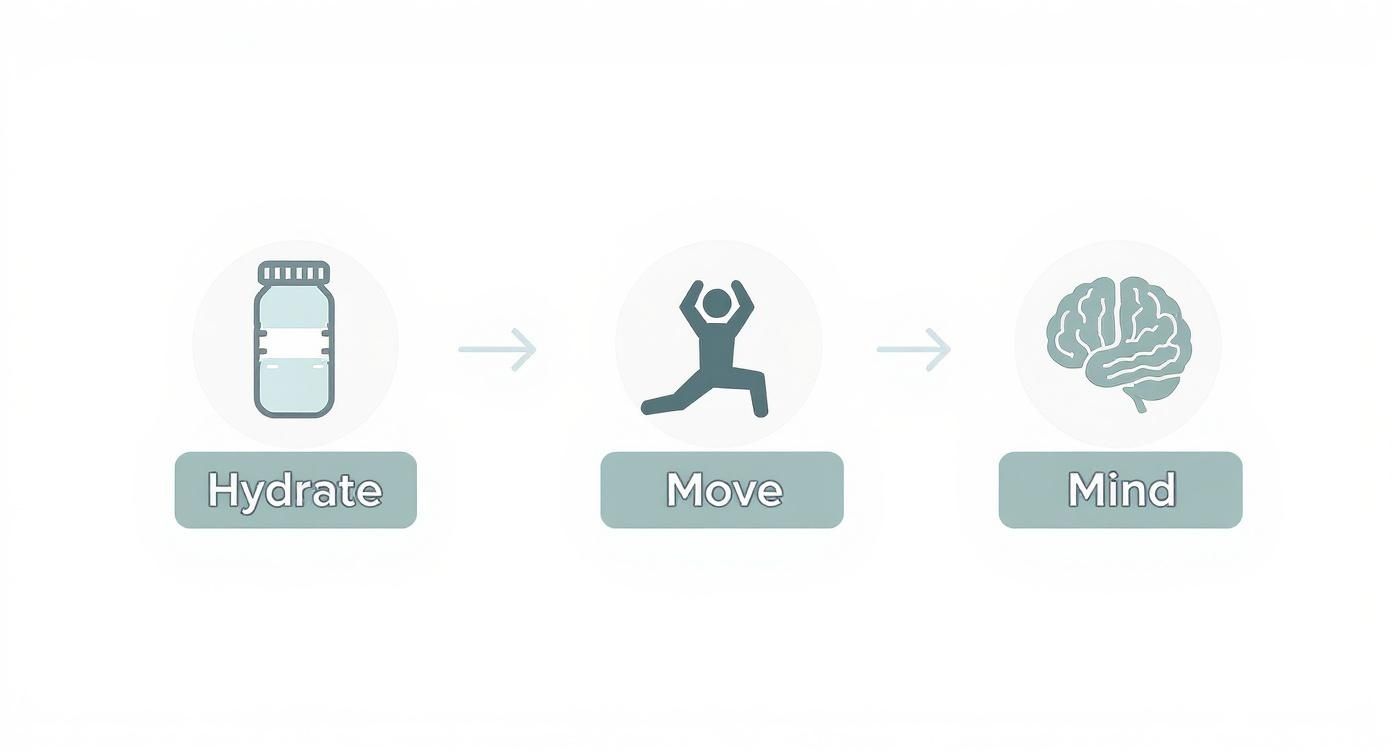
Starting with hydration, moving into gentle motion, and then engaging your mind helps you wake up both body and brain in a logical sequence.
Connect Habits To Triggers
Now comes the magic: tether each new habit to something you already do. This simple trick reduces reliance on willpower and keeps you consistent.
For example, place a Habit Tracker Journal and pen right on your alarm clock. The moment your hand silences the alarm, it lands on the journal. No extra thought required.
Your environment is more powerful than your willpower. Design your space to make your desired habits the easiest choice, and you’ll follow through almost automatically.
If stretching is on your list, roll out a yoga mat next to your bed before lights out. When you swing your legs over the edge each morning, your feet hit the mat and the stretch almost happens by itself.
A strong morning often begins the night before. Explore strategies for improving your sleep quality so you wake up energized and ready. By the end of this process, you’ll hold a clear, personalized blueprint—one that fits your life and sparks momentum from the instant you open your eyes.
Mastering Habit Stacking and Timing

Having a plan is a great start, but getting new habits to actually stick is where the real magic happens. This is precisely where habit stacking comes into play. It’s a simple but incredibly effective technique for weaving new behaviors into your day until they become second nature.
The core idea is to piggyback a new habit you want to build onto an existing one you already do without thinking. Instead of trying to muster up motivation—which we all know comes and goes—you rely on an automatic trigger.
Think of it as a domino effect. Your current habit is the first domino that reliably falls every day, and your new habit is the next one in line. For instance: "After I turn off my alarm, I will drink a full glass of water." The alarm is the trigger, and the water is the new, easy-to-implement behavior.
How To Build Your First Habit Stack
The formula couldn't be simpler: After [Current Habit], I will [New Habit].
The key is to start small. Don't try to build some massive, complicated sequence on day one. Just pick one or two stacks to build some momentum.
Here are a few practical examples to get the gears turning:
- After my feet hit the floor, I will do five deep stretches.
- After I finish my first glass of water, I will take my daily vitamins.
- After I start my coffee maker, I will write down three things I'm grateful for.
This approach takes the decision-making out of the process, which is huge. It makes it far more likely you'll follow through, even on those groggy mornings when your energy is at an all-time low.
A well-designed morning schedule isn't just about checking boxes; it’s about anchoring your body and mind. It sets a positive, intentional tone for everything that follows.
Building a structured morning can seriously boost your productivity and overall wellbeing. Even simple sequences—like hydrating and then moving for just 15 minutes—can create a massive ripple effect throughout your day. You can discover more insights about building an effective schedule and see how tiny tweaks lead to big results.
Optimizing Your Routine's Timing and Flow
Once you’ve got a couple of stacks going, the next layer to consider is timing and sequence. The order of your habits really does matter. Certain activities can prime your brain and body for what comes next, making the entire routine more powerful.
For example, starting with hydration is a classic for a good reason—it kickstarts your metabolism, rehydrates your cells, and helps clear away any brain fog. Likewise, doing a few minutes of light movement before you sit down to meditate or journal can help release physical tension, making it way easier to quiet your mind.
The sequence of your nutrition is also crucial. Knowing the best time to take vitamins can dramatically increase their absorption, ensuring you're getting the full benefit from your supplements.
Pay attention to your personal energy cycles, too. If you’re sharpest right after waking up, maybe that’s the perfect time to tackle your most important task or plan out your day. If you feel more creative after that first coffee hits, maybe that’s when you should do your journaling. Experiment a bit and find a sequence that feels both natural and energizing for you.
High-Impact Morning Habits
You’ve got your timing and habit stacks mapped out—now let’s dive into the actions that really move the needle. These simple routines pack a punch, boosting energy, sharpening focus, and setting the tone for your entire day. Pick the ones that click with you and watch how quickly your mornings transform.
Think of these as the foundation under every great morning. They’re tried-and-true practices that shift your momentum from groggy to go.
Kickstart With Immediate Hydration
Your body spends eight hours without water while you sleep. Reaching for a glass first thing:
- Wakes up your metabolism
- Flushes out overnight toxins
- Improves cognitive function
I keep a tall, reusable water bottle on my nightstand—and trust me, it works as a silent alarm. Before my feet touch the floor, I’ve already downed half a liter. If you want a little zing, squeeze in fresh lemon for a dose of vitamin C and digestive enzymes.
Incorporate Gentle Movement
You don’t need to turn your living room into a gym. A few minutes of mobility simply shakes off stiffness and gets your blood pumping. Here’s what I rotate through most mornings:
- Simple Stretches: Neck rolls, shoulder shrugs, hamstring stretches right beside the bed.
- Yoga Flow: A 5-minute sun salutation on a comfy yoga mat revives every muscle.
- Cold Exposure: A quick blast in the shower jolts you wide awake and builds mental grit. Learn more about the surprising benefits of a cold shower.
Practice Intentional Mindfulness
If you rush from pillow to phone, you’re already behind. A brief pause—just five minutes—can clear the mental clutter. You might:
- Sit quietly and follow your breath.
- Meditate with a focus on your goals for the day.
- Jot down three things you’re grateful for to kick off a positive mindset.
These moments of presence lower stress and make it easier to zero in on what matters next.
Morning Habits By The Numbers
Here’s what a recent consumer survey revealed about top performers:
| Behavior | Percentage |
|---|---|
| Early breakfast | 49% |
| Getting fresh air | 46% |
| Drinking water as often as coffee | 42% |
“A morning routine is your daily declaration that you are in charge of your day, not the other way around. It’s the ultimate form of self-respect.”
Finally, give yourself an hour free from email, social media, and news feeds. This digital detox preserves your focus and prevents you from reacting to everyone else’s agenda before you even sip your coffee. It might just be the most powerful habit you adopt.
Overcoming Challenges And Maintaining Your Routine
You know that moment when you’ve nailed your wake-up time for weeks and then life throws you a curveball—late flights, midnight emails, an unexpected bug? It’s easy to feel your routine slipping through your fingers.
That said, a morning plan that bends with you—rather than breaks—will serve you far better. Flexibility is the secret sauce when travel, sleepless nights, or illness try to knock you off course.
Common Pitfalls
-
Overcommitting
Trying to squeeze in every habit at once often backfires. Your motivation drains fast when the list feels endless. -
Skipping the Basics
Ignoring a glass of water or a few stretches in favor of extra sleep can stall your progress before you even start. -
All-Or-Nothing Mindset
Thinking “I blew it, might as well quit” keeps you trapped in a cycle of false starts. -
No Check-Ins
If you never pause to review what’s working, dated or clunky habits stick around way too long.
On mornings when you’re running on empty, switch to a minimum viable morning. A quick routine—five minutes of gentle stretching, a big gulp of water and jotting down one thing you’re grateful for—can reset your entire day. For an extra lift, stir in a scoop of Organic Reds superfood blend.
“Small wins compound. Adjust, not abandon, when mornings derail.”
Weekly Routine Check In
Carving out just ten minutes each week to reflect keeps your morning ritual fresh and aligned with shifting priorities.
Sit down with a notebook and ask yourself:
- Which habit felt almost too easy to maintain?
- Where did you find yourself rushing or hitting “skip”?
- Did each practice truly uplift your energy and mood?
- What’s one tiny experiment you’ll try next week?
You might swap your regular coffee for a focus-boosting Mushroom Coffee. Or maybe shift your wake-up time by just five minutes.
| Pitfall | Fix |
|---|---|
| Overcommitting | Prioritize 1–2 anchor habits |
| Perfectionism | Rely on your minimum viable morning |
| Skipped Steps | Place visual cues like a water bottle where you can’t miss it |
| Lack Of Review | Block off time for a weekly check-in |
By making small course corrections, you’ll keep momentum going—no matter what life throws at you. Stay curious, patient and kind to yourself.
Expert Tips
Tackling tiny habit shifts month after month beats huge overhauls every time. In my experience, gradual wins stack up faster than a midnight scramble to reinvent your entire routine.
- Set one focused goal—like waking up 15 minutes earlier—and build consistency around it.
- Jot down daily progress in a dedicated notebook or planner.
- Lean on environmental cues: stash your Organic Greens tin beside the coffee maker.
- Celebrate even the smallest victories to fuel your forward motion.
Consistency thrives on compassion and self-awareness. Cherish every tiny win, and let it light the path to your next successful start.
“Routine maintenance is care, not punishment. Keep refining.”
With these strategies, you’ll build a morning routine that weathers every twist life sends your way. Progress isn’t about perfection—it’s measured in persistence.
Common Morning Routine Questions
Even with the best intentions, building a new routine always brings up a few questions. When you're trying to nail down a morning flow that actually sticks, it’s completely normal to run into some obstacles. Let's tackle some of the most common hurdles I hear about so you can fine-tune your approach and keep moving forward.
How Long Should My Morning Routine Be?
Honestly, there's no single right answer here. Some people feel amazing after a quick, focused 15-minute routine, while others need a more relaxed 60 minutes to feel ready for the day.
The real goal is consistency over duration. A 20-minute ritual you do every single day is infinitely more powerful than a perfect, hour-long plan you only stick with for a week before burning out.
My advice? Start small. Pick just two or three core habits that take about 15–20 minutes combined. Once that feels like second nature, you can always layer in another activity if it feels right.
What's The Best Way To Wake Up Earlier Without Feeling Exhausted?
Here’s the secret: it’s not just about setting an earlier alarm. You have to shift your entire sleep schedule, and that starts the night before.
Begin by moving your bedtime earlier by just 15 minutes each night. Let your body adjust to that for a few days, then you can start nudging your wake-up time to match. This gradual approach avoids that awful, groggy feeling you get from a sudden change.
To make this work, you need a solid wind-down ritual.
- About an hour before bed, dim the lights in your house.
- Put away your phone and other screens. The blue light can interfere with your natural melatonin production.
- Make sure your bedroom is cool, dark, and quiet.
A consistent sleep and wake time is the bedrock of waking up feeling genuinely refreshed and ready to go.
How Can Parents Possibly Fit in a Routine with Morning Chaos?
For parents, the name of the game is flexibility. The single most effective strategy I've seen is to wake up just 15–30 minutes before your kids do. That small, quiet window is your golden time. Use it for your most important habits—the ones that are just for you, like meditation, journaling, or a good stretch.
You can also find creative ways to bring your kids into a simplified version of your routine. Maybe you do a quick family stretch together, share one thing you're grateful for at the breakfast table, or have them help you throw ingredients into a blender for a smoothie.
Combining that little bit of sacred, quiet time for yourself with shared family moments makes a routine feel realistic and sustainable, not like another thing to stress about.
Missing a day isn’t a failure—it’s feedback. Don’t let one slip-up derail your progress. Just notice what happened, adjust if needed, and get right back to it the next day without judgment. The goal is progress, not perfection.
And if you miss a day? Don't sweat it. Just pick it right back up tomorrow. Real consistency is built over weeks and months, not in one perfect day.
At Peak Performance, we believe a powerful day starts with a powerful morning. Fuel your new routine with our USDA-certified organic superfoods and supplements, designed to give you the clean energy and focus you need to thrive. Explore our full range of products at buypeakperformance.com.
Also in Blog


How to Increase Stamina Naturally and Boost Energy


How to Increase Energy Naturally

