


What are adaptogens? What They Do for Stress and Energy
Put simply, adaptogens are a special class of plants, herbs, and mushrooms that help your body adapt to and better handle stress.
Think of them like a thermostat for your system. When stress cranks up the internal heat, adaptogens help cool you down. When you’re feeling depleted and run down, they help bring your energy back up to a comfortable, steady state. They don’t force a reaction; they help your body find its own balance.
The Three Defining Rules of an Adaptogen
So, what really makes an adaptogen an adaptogen? It's not just any old beneficial plant. To earn the title, an herb has to meet three very specific, science-backed criteria. This framework is what separates true adaptogens from other botanicals and explains how they offer such unique support for the stressors of modern life.
Imagine your body is a high-performance car navigating a road full of potholes and unexpected turns—those are life's daily stressors. Adaptogens act like an advanced suspension system. They absorb the shocks and help you maintain a smooth, steady ride without overcorrecting and spinning out.
This is the key: they don’t force your body in one direction. They simply help it find its own equilibrium, time and time again.
Let's break down the three official rules that every true adaptogen must follow.
| Criterion | What It Means for You |
|---|---|
| 1. Non-Toxicity | Safe for long-term use with minimal to no side effects at normal doses. |
| 2. Non-Specific Defense | Builds your body's overall resilience against all kinds of stressors—physical, chemical, and biological. |
| 3. Normalizing Effect | Helps restore balance (homeostasis) by either toning down overactive systems or boosting underactive ones. |
These aren't just arbitrary guidelines; they are the scientific foundation that makes these plants so powerful and reliable for building resilience.
The Non-Toxic Rule
First things first: a true adaptogen must be safe and non-toxic. This means it should cause virtually no side effects when you take it at normal therapeutic doses. Unlike many pharmaceuticals that come with a laundry list of potential issues, adaptogens work gently with your body’s own rhythms.
This safety profile is non-negotiable. It’s what allows for consistent, long-term use without disrupting your body's normal functions. The whole point is to support your system, not to introduce a new set of problems.
The Non-Specific Defense Rule
Second, an adaptogen has to provide a non-specific defense against a massive range of stressors. This is what makes them so incredibly versatile. They don’t just target one isolated issue; they enhance the overall resilience of your entire body, helping it withstand physical, chemical, and biological challenges.
Whether you're staring down a brutal deadline at work, recovering from a tough workout, or just dealing with environmental toxins, adaptogens help fortify your defenses across the board. They bolster your body’s fundamental ability to cope, no matter where the stress is coming from.
An adaptogen doesn’t have a single, specific action. Instead, it helps you respond to any influence or stressor, normalizing your physiological functions along the way.
The Normalizing Effect Rule
Finally, and this is where the real magic happens, an adaptogen must have a normalizing or balancing effect on the body. This is their “thermostat” function in action. They work to bring your body back to homeostasis—its natural state of equilibrium.
For instance, if your primary stress hormone, cortisol, is running way too high, an adaptogen can help bring it down. But if your cortisol is too low because of adrenal burnout, it can help bring it back up. They modulate your body’s responses, making sure everything runs smoothly without going to extremes.
Formulations like our Adrenal Support Liquid Drops are designed with this very principle in mind, combining herbs that work synergistically to help restore that crucial internal balance.
The History and Science of How Adaptogens Work
While adaptogens might seem like the latest wellness trend, their roots go back thousands of years. Ancient healing practices like Ayurveda in India and Traditional Chinese Medicine (TCM) have leaned on these powerful plants for centuries. They were the original tools for boosting vitality, promoting a long life, and building resilience against all the curveballs life throws at us. Herbs like ashwagandha and ginseng were foundational in these traditions long before modern science could even begin to explain why they worked so well.
The actual term "adaptogen," however, is much newer. It was coined back in the 1940s by a Soviet scientist, Dr. Nikolai Lazarev. He was tasked with a fascinating mission: find natural substances that could help soldiers, athletes, and laborers endure extreme physical and mental stress without completely burning out. His research became the foundation for how we understand these unique plants today.
Dr. Lazarev was the one who set the three core criteria for what makes a plant a true adaptogen, which this infographic breaks down nicely.
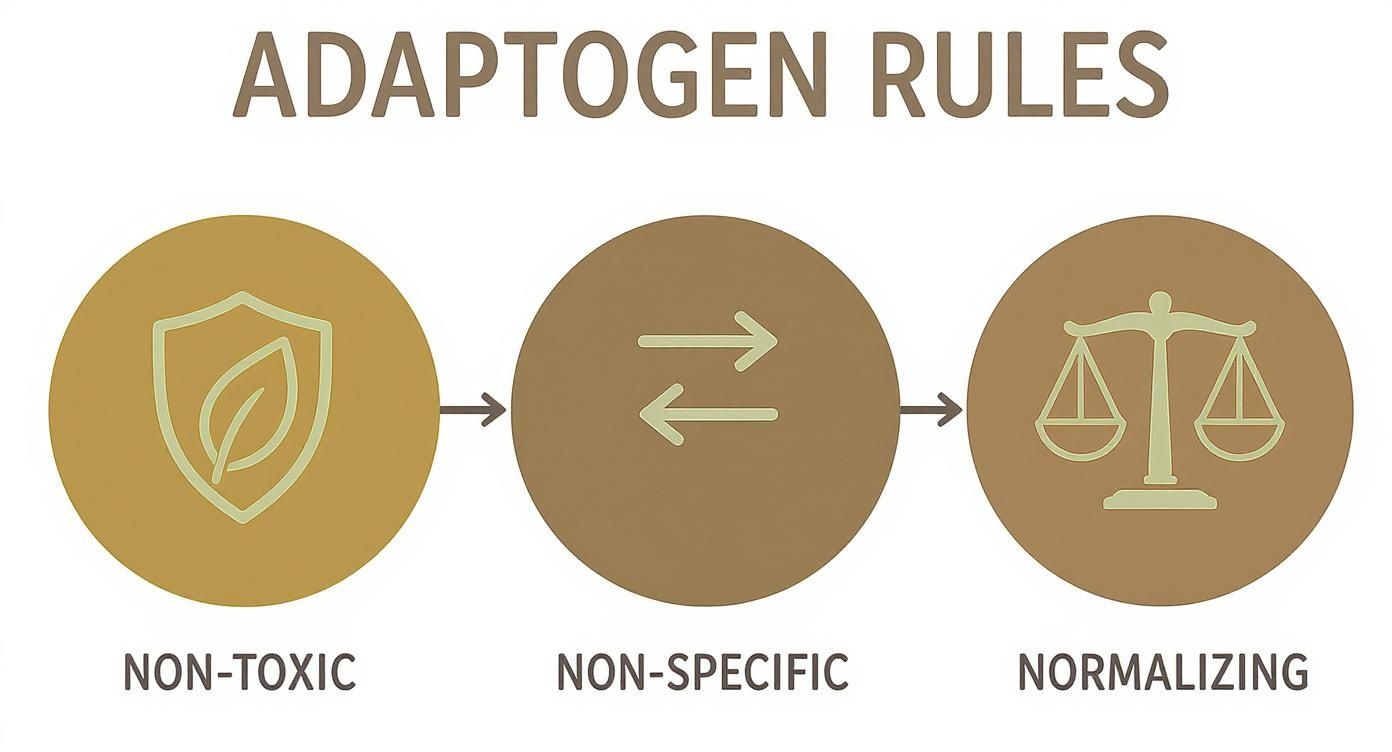
Essentially, a plant has to be non-toxic, help the body resist all kinds of stressors in a non-specific way, and bring the body back to a state of balance.
Unlocking the Science Behind Stress Resilience
So, how do these ancient herbs actually pull this off in our high-stress modern world? The secret is in how they interact with your body’s main stress response system, the Hypothalamic-Pituitary-Adrenal (HPA) axis.
You can think of the HPA axis as your body's command center for stress. Anytime you face a stressor—a looming deadline at work, a brutal workout, or even just an argument—this system fires up.
Here’s a quick look at how the HPA axis works:
- Hypothalamus: Your brain spots a threat and sends out an alarm signal.
- Pituitary Gland: This gland gets the message and immediately tells the adrenal glands to get ready.
- Adrenal Glands: Sitting on top of your kidneys, these glands pump out stress hormones, with the most famous one being cortisol.
That cortisol jolt is fantastic in the short term. It gives you the energy and focus you need to deal with whatever is in front of you. The problem is, when stress becomes chronic, this system stays switched on, leading to constantly elevated cortisol. This state, which many call "adrenal fatigue," is what leaves you feeling wired, tired, anxious, and completely overwhelmed.
How Adaptogens Support Your HPA Axis
This is exactly where adaptogens come in. They don’t just block your stress response—that would be counterproductive. Instead, they work as smart modulators for your HPA axis. They help fine-tune the conversation between your brain and your adrenal glands, preventing them from either overreacting or getting completely exhausted.
Adaptogens essentially make your body's stress response more intelligent. They improve the signaling within the HPA axis, so you get a strong response when you need one, but you can return to calm and balance much faster afterward.
What this means is you get a smoother, more controlled cortisol curve instead of a jarring spike and a hard crash. Adaptogens help your body "adapt" by making you less reactive to stressors and more resilient over the long haul. By supporting this delicate internal system, they help you maintain steady energy and a clear, calm mind.
Products like our Adrenal Support Liquid Drops are built around this very principle, using a blend of potent adaptogenic herbs. This kind of synergistic formula is designed to nourish the adrenal glands and promote a balanced HPA axis, helping you move through your daily challenges with more stability and grace.
A Guide to the Most Popular Adaptogenic Herbs
Alright, we've covered the what and the why of adaptogens. Now it's time to meet the all-stars—the most researched and widely-used plants in this incredible family.
Think of this as a lineup of specialists. Each herb brings something unique to the table, and knowing their individual strengths is the key to figuring out which one might be the right fit for you. Some are masters at calming a frazzled system, while others are all about boosting your mental and physical energy. Let's get into it.
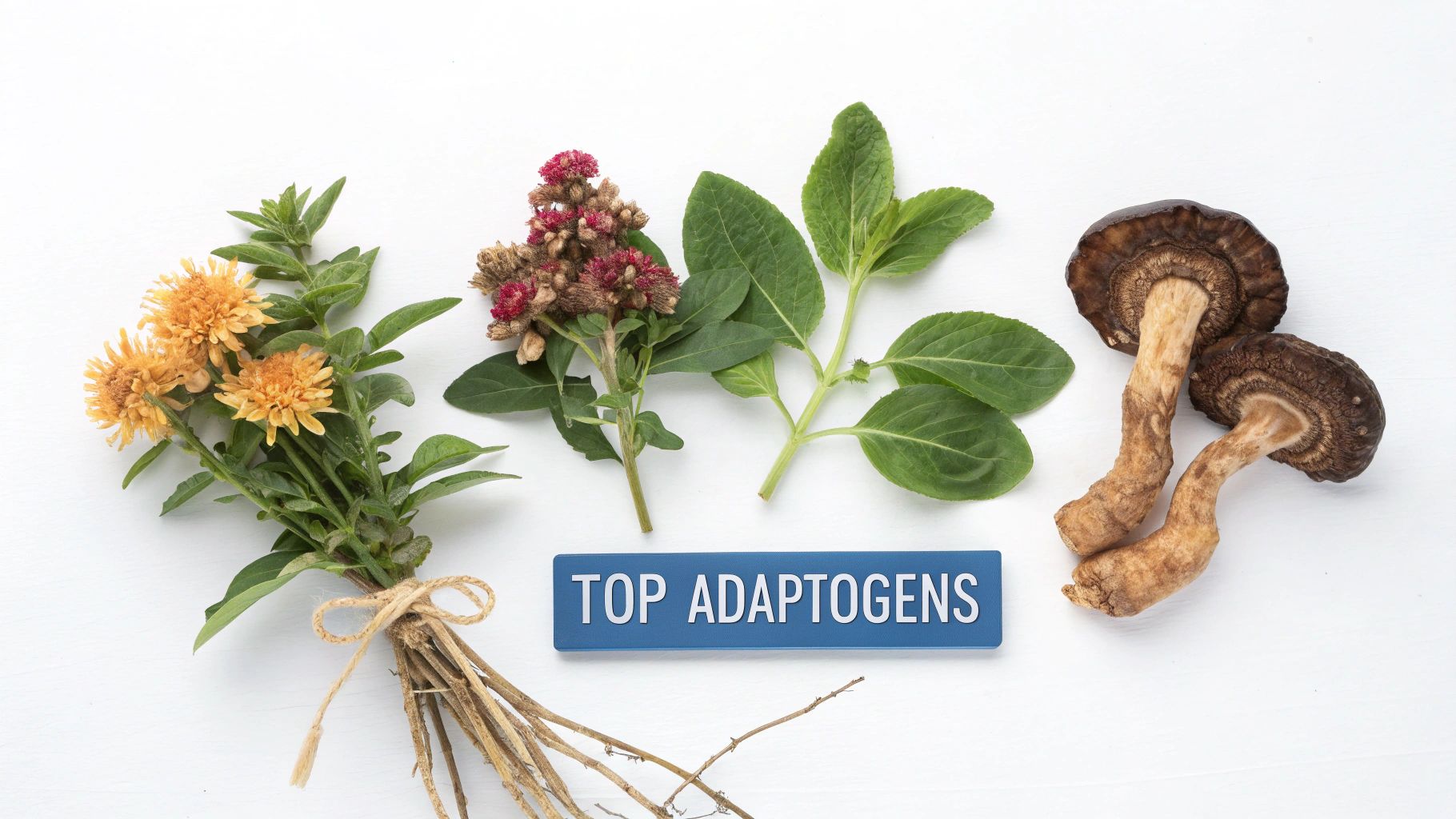
Ashwagandha: The Stress Soother
If you’ve heard of only one adaptogen, it's probably ashwagandha (Withania somnifera). This root has been a cornerstone of Ayurvedic medicine for centuries, where it's known as a Rasayana, or a rejuvenator. The name itself translates to "smell of the horse," hinting at its power to impart stallion-like strength and vitality.
Ashwagandha is most famous for its deeply calming effects. It helps dial down the body's primary stress hormone, cortisol, making it a powerful ally for anyone feeling wound up or anxious. By gently moderating the HPA axis, it helps you find a sense of calm without knocking you out.
This is what people turn to ashwagandha for:
- Stress and Anxiety Reduction: It’s a game-changer for taking the edge off chronic stress and promoting a more centered state of mind.
- Improved Sleep Quality: By quieting the nervous system, it can make it easier to drift off and get that deep, restorative sleep we all need.
- Enhanced Vitality: Even though it's calming, it also helps build up your baseline energy and resilience over time.
Rhodiola Rosea: The Fatigue Fighter
Feeling totally drained? Brain fog setting in? Meet Rhodiola rosea. This incredibly resilient plant thrives in the harsh, cold mountains of Europe and Asia. Legend has it that Vikings used it to boost their endurance for long voyages.
Rhodiola is your go-to for sharpening mental and physical performance. It’s known for cutting through brain fog, improving focus, and increasing stamina, which is why you'll find it in the toolkits of athletes, students, and driven professionals.
What's great is that it provides a clean, sustained energy lift—not the jittery spike and crash you get from a triple espresso. It works by helping your cells produce energy more efficiently, allowing you to stay sharp and on your game when the pressure is on.
Rhodiola is perfect for those days you need to fight off fatigue and stay mentally clear. It gives you a balanced boost to stay alert and focused without feeling overstimulated.
Holy Basil (Tulsi): The Spirit Calmer
In India, Holy Basil, or Tulsi, is revered as "The Queen of Herbs" for its incredible ability to support the mind, body, and spirit. It’s considered sacred in Ayurveda and is often brewed into a daily tea to foster a sense of inner peace and well-being.
Tulsi has this unique, grounding energy that helps clear mental clutter and gently lift your mood. It works by helping your body cope with both psychological and environmental stress, protecting you from the inside out.
It's not just ancient wisdom, either. The modern world is catching on, with the Tulsi market segment projected to grow at the highest rate among adaptogens—a CAGR of 7.14%—from 2025 to 2034.
Medicinal Mushrooms: The Immune Modulators
The adaptogen family isn't just limited to leafy herbs and roots; it also includes some seriously powerful fungi. Reishi and Cordyceps are two of the heavy hitters here, each offering benefits that extend beyond stress into immune support and physical performance.
-
Reishi Mushroom (Ganoderma lucidum): Often called the "Mushroom of Immortality," Reishi is prized for its calming nature and its powerful ability to support immune health. It’s fantastic for promoting relaxation and deep sleep, making it a perfect evening ritual. It also has other impressive benefits, like those detailed in this piece on Reishi mushroom's skin benefits.
-
Cordyceps Mushroom (Cordyceps sinensis): Known for its remarkable energy-boosting properties, Cordyceps is a favorite among athletes for a reason. It helps improve the body's oxygen utilization at a cellular level, which translates to better stamina, endurance, and overall physical output.
Ultimately, choosing the right adaptogen is about listening to what your body is telling you. Our guide on using adaptogens for stress relief can help you tune in. For broad-spectrum support, a smart blend like our Adrenal Support Liquid Drops combines several of these powerhouses to give your body balanced, comprehensive backup.
How to Choose a High Quality Adaptogen Supplement
With the wellness world buzzing about adaptogens, the market is absolutely flooded with choices. It’s no surprise, really—the adaptogen industry is on track to hit USD 16.32 billion by 2030, and North America is leading the charge. But all this popularity creates a real challenge: How do you cut through the noise to find a high-quality supplement that actually delivers?
Don't let the options overwhelm you. Once you know how to read a label and spot a few key markers of quality, you can choose a product with total confidence. It really all boils down to purity, potency, and smart formulation.
Decoding the Supplement Label
The first step is learning to read labels like a pro. Not all supplements are created equal, and the details on the back of the bottle tell you everything you need to know. The real story isn't on the front; it's in the Supplement Facts panel.
Here’s what you should absolutely insist on:
- Organic Certifications: Always look for the USDA Organic seal. This is your guarantee that the herbs were grown without nasty synthetic pesticides, herbicides, or fertilizers. It’s a simple way to minimize your exposure to chemicals you just don’t want in your body.
- Third-Party Testing: This is non-negotiable. Third-party testing means an independent lab has double-checked the product for purity and potency. They verify it’s free from contaminants like heavy metals and, just as importantly, that it actually contains what the label claims. To dig deeper into this, check out our guide on what is third-party testing.
- Standardized Extracts: For an adaptogen to work, it needs a specific concentration of its active compounds. Standardization guarantees you’re getting an effective dose. For example, a quality ashwagandha extract will be standardized to a certain percentage of withanolides, its key active ingredient.
The Power of Synergistic Blends
While single-herb supplements have their place, there's a powerful advantage to using a well-crafted blend. Different adaptogens have unique strengths—some are calming, others are energizing, and some are focused on immune support. A synergistic blend combines several adaptogens that work together to give your body’s stress-response system more balanced, comprehensive support.
Think of it like building a championship team. You wouldn’t want a team of only quarterbacks. You need a diverse roster with complementary skills to cover all your bases. A good adaptogen blend does the exact same thing for your body.
A well-formulated blend can offer far broader benefits than a single herb alone. By combining different adaptogens, you get a multi-faceted approach to building resilience, supporting energy, and promoting calm all at once.
This is the whole idea behind formulations like our Adrenal Support Liquid Drops. We combined herbs like Rhodiola, Ashwagandha, and Holy Basil to create a balanced formula that nourishes your adrenal glands and helps your body adapt to stress from multiple angles. It’s a convenient and effective way to get that broad-spectrum support without having to juggle a half-dozen different bottles. A thoughtfully designed blend takes all the guesswork out of stacking adaptogens and ensures you get a harmonious, effective result.
Integrating Adaptogens Into Your Daily Routine
Knowing what adaptogens are is one thing, but actually weaving them into your life is where you'll see the real magic happen. This isn’t about a massive lifestyle overhaul. It's about finding simple, sustainable ways to slip them into the habits you already have.
The single most important thing with adaptogens is consistency. These herbs work with your body over time, gently nudging you back toward equilibrium over weeks and months. Taking them here and there just won’t cut it if you're looking for that deep, resilience-building effect, so finding a method that clicks with your daily flow is everything.

Finding the Right Form for You
Adaptogens come in a few different forms, and each has its perks. Honestly, the best one is simply the one you'll actually take every day.
- Powders: Super versatile. You can mix adaptogen powders right into your morning smoothie, coffee, tea, or even a bowl of oatmeal. If you already have a daily beverage ritual, this is an easy win.
- Capsules: For anyone who just wants to get it done, capsules are a no-brainer. They're pre-measured, there's no taste, and they're perfect for traveling or just keeping things quick and simple.
- Tinctures (Liquid Drops): These are concentrated liquid extracts that your body can absorb really quickly. The best part is the dosing flexibility—you can adjust your amount drop by drop, making them perfect for finding your personal sweet spot.
Products like our Adrenal Support Liquid Drops are designed for exactly this. The liquid format makes it easy to add to a glass of water or juice, giving you total control over your dose so you can build a consistent, personalized routine.
Timing Your Adaptogens for Optimal Results
You wouldn't chug a double espresso right before bed, and the same logic applies here. A little strategic timing can make a huge difference in how effective your adaptogens are by syncing them up with your body's natural rhythm.
A good rule of thumb is to match your adaptogens to your energy needs throughout the day. If you want to dig deeper into this, our article on how to create a morning routine has some great tips for building healthy habits.
Morning: This is the time for your more stimulating or energizing adaptogens like Rhodiola or Cordyceps. They can help shake off fatigue, sharpen your focus, and get you ready to tackle the day.
Evening: Save your calming adaptogens, such as Ashwagandha or Reishi, for later. Taking them in the evening can help you unwind, quiet your nervous system, and set the stage for a great night's sleep.
Start Low and Go Slow
When you're first starting out with adaptogens, the golden rule is to begin with a low dose. This gives your body a chance to acclimate and lets you tune in to how you feel without overwhelming your system.
Pay attention to the small shifts in your energy, mood, and sleep. This is your body giving you feedback. It’ll help you decide whether to stick with your current dose or slowly increase it until you find what feels right for you. To complement this, you might also look into other natural ways to reduce anxiety to support your new regimen.
Your Adaptogen Questions, Answered
As you get started with adaptogens, it's completely normal for a few questions to pop up. Think of this section as your go-to FAQ, designed to give you clear, straightforward answers so you can feel confident adding these powerful herbs to your routine.
We’ll cover everything from timing to safety, giving you the practical guidance you need to get the most out of them.
How Long Does It Take for Adaptogens to Work?
This is probably the number one question we get. Unlike popping a pain reliever that works in an hour, adaptogens play the long game. They aren't a quick fix; they're a strategy for building deep resilience from the inside out.
I like to think of it like tending to a garden. You don't see a sprout the first time you water a seed. But with consistent care over weeks and months, that seed grows into a strong, vibrant plant that can handle the elements. Adaptogens work the same way, gradually nourishing and strengthening your internal systems.
Most people start to notice the first subtle, yet meaningful, shifts after about two to four weeks of consistent, daily use. These early signs might look like:
- More even-keeled energy throughout the day, without the usual afternoon slump.
- Feeling less "on edge" or reactive to everyday stressors.
- Deeper, more restorative sleep.
The truly profound effects build over several months as the adaptogens help to retrain and regulate your body's stress response system. Patience and consistency are everything here.
Can I Take Multiple Adaptogens at the Same Time?
Yes, absolutely! In fact, combining adaptogens is a cornerstone of both traditional herbalism and modern practice. You might hear this called "stacking," and it's all about synergy.
Different herbs have different strengths. They work on slightly different pathways in the body to manage stress. By combining them, you get a much more comprehensive and balanced effect than you would from just a single herb. It’s like putting together a team of specialists—each one brings a unique skill to the table to get the job done right.
For instance, you could pair an energizing adaptogen like Rhodiola with a calming one like Ashwagandha. The result? Smooth, focused energy without any jitters or anxiety. This is the whole principle behind well-designed formulas.
Combining adaptogens creates a multi-pronged approach to stress management. A smart blend can support energy, promote calm, and bolster immune function all at once, offering holistic support for your entire stress response system.
This is exactly why we created blends like our Adrenal Support Liquid Drops. We've taken the guesswork out of stacking by combining complementary herbs in the right ratios to create a powerful synergistic effect that builds your resilience in one simple formula.
Are There Side Effects or People Who Should Avoid Adaptogens?
By definition, true adaptogens are non-toxic and considered very safe for most people at the recommended doses. They're known for being gentle. That said, everyone's body is different, and individual reactions can vary.
When you're first starting out, some people might notice mild, temporary side effects like a bit of digestive upset or a slight headache as their body adjusts. And if you take a stimulating adaptogen like Rhodiola too late in the day, it might make it harder to wind down for sleep.
While they're safe for most, some people should be more cautious and always talk to their doctor before trying them. This is especially true for:
- Pregnant or breastfeeding women: There just isn't enough research on using adaptogens during this time.
- Anyone with an autoimmune condition: Because some adaptogens can nudge the immune system, they could potentially affect conditions like rheumatoid arthritis or lupus.
- Those on certain medications: Adaptogens can interact with some drugs, including immunosuppressants, thyroid medication, and blood pressure medications.
Your doctor or a qualified healthcare provider knows your health history and can give you the best advice. Keeping them in the loop is always the smartest way to supplement safely and effectively.
At Peak Performance, we're obsessed with providing the highest quality, USDA organic supplements to support your health journey. Our Adrenal Support Liquid Drops are expertly formulated with a powerful blend of adaptogens to help you manage stress and build resilience, the way nature intended.
Also in Blog


Tongkat Ali: 10 Warning Signs Your Vitality Is Slipping


Top 10 Signs Your Body Needs Beet Root Capsules

