


Clear Skin Starts on the Inside: How Burdock Root Helps Acne
You can do everything “right” for acne, wash your face twice a day, switch cleansers, cut out random foods, and still wake up to the same stubborn breakout on your chin or jaw. That's frustrating because it makes skin feel like the problem, when the deeper story is often about digestion, inflammation, and how the body clears waste. Burdock root has earned renewed attention in beauty-from-within circles because it sits at that intersection, as a traditional herbal food with modern data on fiber, prebiotic activity, and skin-supportive compounds.
Why Stubborn Acne Often Starts in the Gut, Not on the Skin
A lot of adults treat acne like a surface issue. They scrub harder, layer on drying products, and hope the next breakout is the last one, but skin often reflects what's happening lower down in the body. When digestion is sluggish, the microbiome is off balance, or inflammation keeps simmering in the background, the skin can become one of the places that shows it first.
The gut-skin connection in plain language
The gut-skin axis is a simple idea. What happens in the intestines can affect inflammatory signals, oil production, and how reactive the skin feels. That's why a gut-health approach often pairs better with acne care than harsh, skin-only routines, especially when breakouts keep returning in the same pattern.
A practical starting point is learning how your digestion behaves around meals, stress, and sleep. If that feels unfamiliar, a helpful overview like how to support gut health can make the basics easier to understand. For a more specific acne angle, the article on how to improve gut health naturally is a useful companion read.
Burdock root fits into this conversation because it has long been used as an internal-support herb rather than just a topical ingredient. Its fiber content, prebiotic fructans, and bitter-tasting compounds make it a natural fit for adults who want to support clearer skin from the inside rather than only chasing surface symptoms.
Practical rule: if acne is frequent, inflamed, and slow to settle, think beyond the cleanser. Digestion and inflammation deserve attention too.
What Burdock Root Actually Is and Where It Comes From
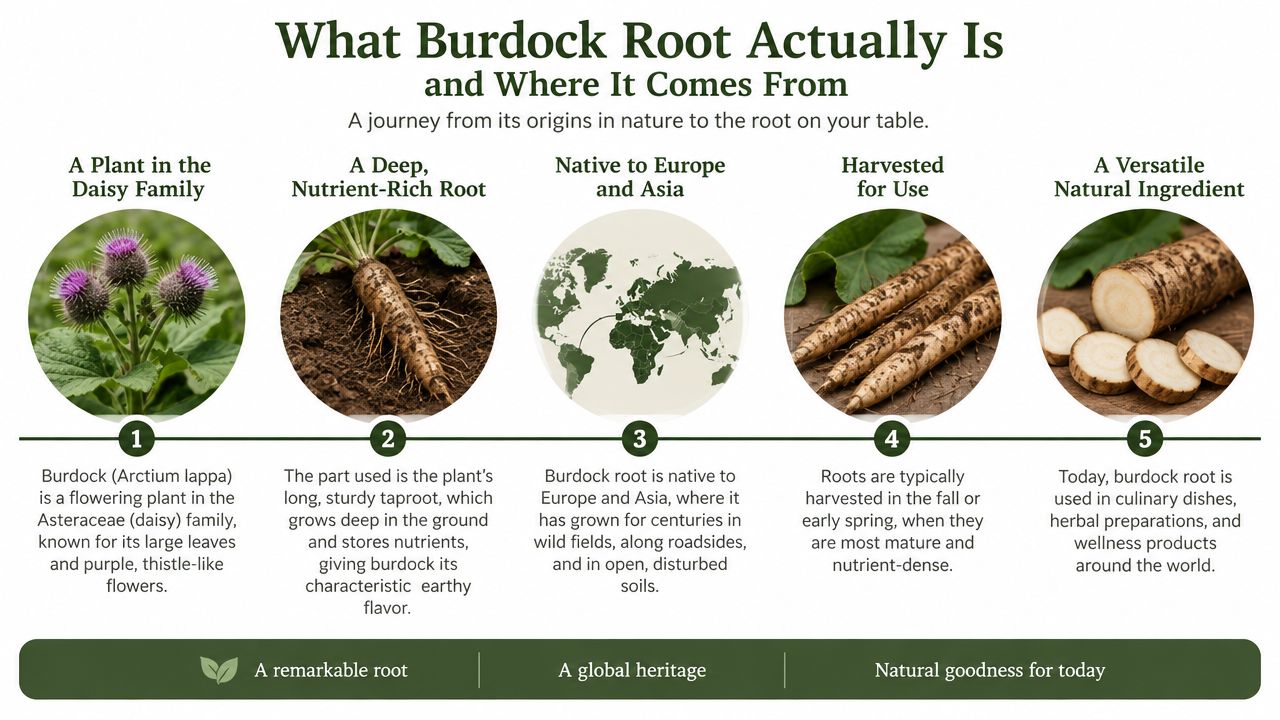
Burdock root comes from Arctium lappa, a biennial plant in the Asteraceae family with a long taproot and broad leaves. In its first year it grows low to the ground, then it sends up a flowering stalk in the second year. That root is the part most often used in food and herbal preparations, especially in East Asian cooking and traditional Western herbalism.
A root with a long record
Historical references place burdock root in European herbalism back to the medieval period, and by the Renaissance it was established enough to appear in major herbals by Leonhart Fuchs, John Gerard, and Nicholas Culpeper (source record). That matters because the plant's reputation didn't appear out of nowhere. It was carried forward for centuries as both food and herbal support.
Its modern nutrition profile is just as useful. The raw USDA-style record lists 72 kcal per 100 g, 17.30 g carbohydrates, 3.30 g fiber, 1.53 g protein, and 0.15 g total fat in raw burdock root (USDA-style ingredient record). In cooked form, it stays modest at 88 kcal per 100 g, with 21.20 g carbohydrates and 1.80 g fiber in the same source. That's why it sits comfortably between food and function.
People also remember burdock because its burrs inspired Velcro, which is a good reminder that this is a plant with a memorable shape, a practical history, and a very grounded culinary identity. If you want to think of it, picture a root that has been eaten, brewed, and used in traditional households for generations, not a trendy one-note supplement.
The Phytochemical Profile That Makes Burdock Root Functional
Burdock root may look plain, but its chemistry is what keeps it in both food and herbal formulas. The root contains inulin-type fructans, phenolic compounds, and antioxidant activity, a profile that differs from a starch-heavy root vegetable. One review reports that dried root material contains about 15% ITFs, and describes these fructans as linear β-D-(2→1)-linked fructose chains with a terminal glucose (review on inulin-type fructans).
Why that matters for skin
These inulin-type fructans are poorly digested in the small intestine and then become fuel for colonic fermentation. That helps explain why burdock behaves more like a functional fiber ingredient than a standard root side dish. Per the review cited above, they are linked with short-chain fatty acid production and other downstream metabolic effects, which is why burdock keeps appearing in gut-support discussions.
Phenolic and lignan compounds add another layer. One extraction study reported inulin ranging from 0.27 to 4.0 g/100 g dry weight and phenolic compounds of 10.35 to 18.16 mg GAE/g dry weight, along with antioxidant activity in extracted roots (extraction study). The study also found that water-based ultrasound-assisted extraction improved recovery of both inulin and phenolics, which is a useful reminder that processing affects what ends up in a formula.
A peer-reviewed peptide study gives the clearest skin-focused signal. A solution containing 46 low-molecular-weight peptide fractions from burdock roots showed anti-acne activity, antibacterial and antioxidant effects, and no toxicity in fibroblast cultures (peptide study). That does not make burdock a cure, but it does support calling it a functional skin-support ingredient.
| Key Phytochemicals in Burdock Root and Their Skin-Relevant Functions | ||
|---|---|---|
| Compound | Typical Concentration | Skin-Relevant Action |
| Inulin-type fructans | About 15% in dried material, per the review cited above | Prebiotic support for gut fermentation and downstream inflammatory balance |
| Phenolic compounds | 10.35 to 18.16 mg GAE/g dry weight (study) | Antioxidant support for oxidative stress linked to irritated skin |
| Burdock peptides | 46 low-molecular-weight fractions tested (study) | Anti-acne, antibacterial, and antioxidant activity in lab testing |
How Burdock Root May Support Clearer Skin From the Inside
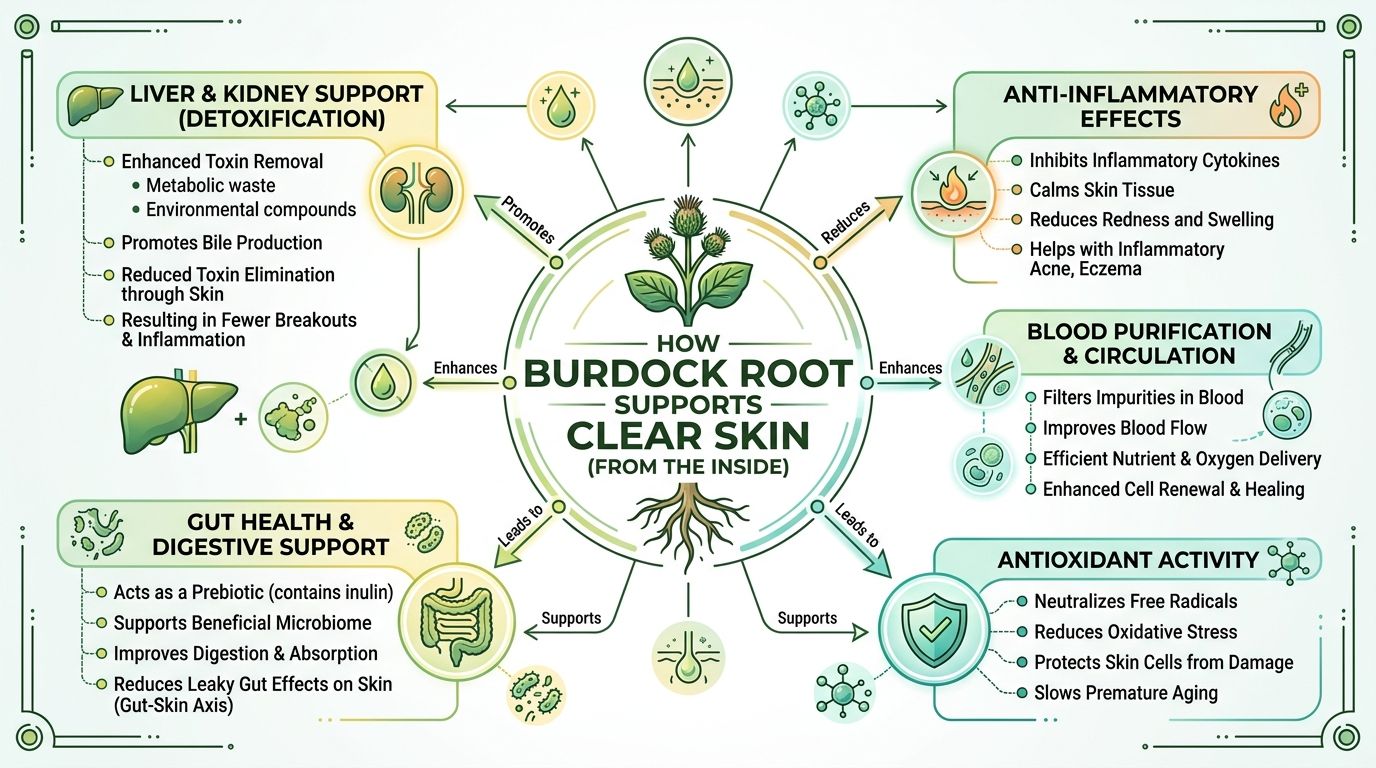
A person dealing with stubborn breakouts often wants one clear answer, but burdock root works more like a small set of supports that stack together. Its skin value comes from gut support, antioxidant activity, and anti-inflammatory signaling, so the practical question is whether those effects show up in acne-prone skin.
Gut support first, skin second
Burdock's inulin behaves like a prebiotic fiber, which may help feed beneficial fermentation in the colon. That matters because digestion and low-grade inflammation often move together, and acne-prone adults may feel the difference as steadier skin over time.
The clearest human signal comes from a volunteer study summarized in a 2024 review. In that study, a 0.02% gel-cream formulation of burdock extract was linked with a 36 to 52% decrease in acne severity index and about an 18% reduction in skin erythema over the study period (2024 review). The formulation context matters, because it shows burdock was tested as a skin-support ingredient, not as a vague detox idea.
That kind of result is promising, but it should be read carefully. It points to measurable skin changes, especially calmer redness and fewer active breakouts, rather than a dramatic cleanse.
Burdock's phenolic compounds and lignans add another layer. They are studied for antioxidant and anti-inflammatory behavior, which helps explain why burdock is often discussed alongside irritation, redness, and blemish control. For readers comparing internal support options for acne, the guide on when to try Neutralyze for acne can help separate routine support from product promises.
For adults who want a skin routine without prescription drugs, the most grounded way to read burdock is simple. It fits better as a digestive and inflammatory support herb than as detox hype. That is also why a Peak Performance liver support discussion can be useful when you are thinking about internal routines that aim to support clearer skin from within.
Forms of Burdock Root and Which Works Best for Skin Goals
Burdock root comes in several forms, and they're not interchangeable. Fresh root works well in food, dried slices are useful for tea, tinctures are more concentrated, and liquid drops give the easiest daily control. If your main goal is skin support, the right form depends on whether you want gentle food-level support or a more consistent internal routine.
Choosing a form without getting lost
Hot water extracts pull out inulin well, which makes tea and decoction useful for fiber-oriented support. Alcohol or standardized extracts may be more practical when you want a more consistent dose of phenolic compounds. That's one reason people who use burdock for skin often prefer concentrated forms over casual kitchen brewing.
| Burdock Root Forms Compared for Skin Goals | ||
|---|---|---|
| Form | Potency | Best For |
| Fresh root | Gentle, food-like support | Soups, broths, everyday cooking |
| Dried slices | Moderate | Traditional decoction or tea |
| Tincture | More concentrated and portable | People who want a simple liquid routine |
| Standardized extract | Predictable and strong | Users who want repeatable dosing |
| Liquid drops | Concentrated and easy to measure | Daily skin-focused routines without brewing |
| Capsules | Convenient but less flexible | People who prefer swallowing pills |
For skin-focused adults, liquid drops are often the easiest to keep consistent. They don't require simmering, they're easier to dose than loose root, and they fit into a morning or evening routine without much friction. That matters because consistency usually beats novelty in any internal-support plan.
Peak Performance's Organic Burdock Root Liquid Drops fit that use case, especially for readers who want a liquid format rather than tea or capsules. If you're comparing internal options, look at the product page for Organic Burdock Root Liquid Drops and think in terms of routine fit, not hype.
How to Use Burdock Root Drops in a Daily Routine
A simple routine works better than an overcomplicated one. For most adults who want to test burdock for skin support, the goal is to start low, stay consistent, and watch how digestion and skin respond together. Internal herbs tend to be most useful when you give them enough time to show their pattern.
A practical starting rhythm
A common starting point is 1 mL, roughly 20 drops, of a 1:5 tincture, or 5 to 10 drops of a concentrated extract, taken 15 to 20 minutes before meals. That timing is useful because people usually want digestive support as part of the acne routine, not separate from it. If the body tolerates it well, the amount can be increased gradually over about two weeks.
Morning and early evening are the most practical windows for many adults. The first dose can pair with breakfast or a light pre-meal routine, and the second dose can fit before dinner. Keeping the rhythm steady matters more than chasing an exact minute.
Some people like to stack burdock with superfood powders. Morning chlorella or spirulina can fit a chlorophyll-rich routine, while a greens blend later in the day can keep the internal-support pattern consistent. If you take caffeine, supplements, or prescriptions, spacing them out is smart because it makes it easier to notice what's helping and what isn't.
Here's a simple checklist before you begin:
- Start small: introduce one burdock product at a time so you can track skin changes clearly.
- Watch digestion: note bloating, stool changes, and appetite before assuming anything about acne.
- Keep the routine steady: use the same timing daily instead of changing doses constantly.
- Be patient: assess results over several weeks, not a couple of days.
Safety, Interactions, and the Truth About Detox Claims
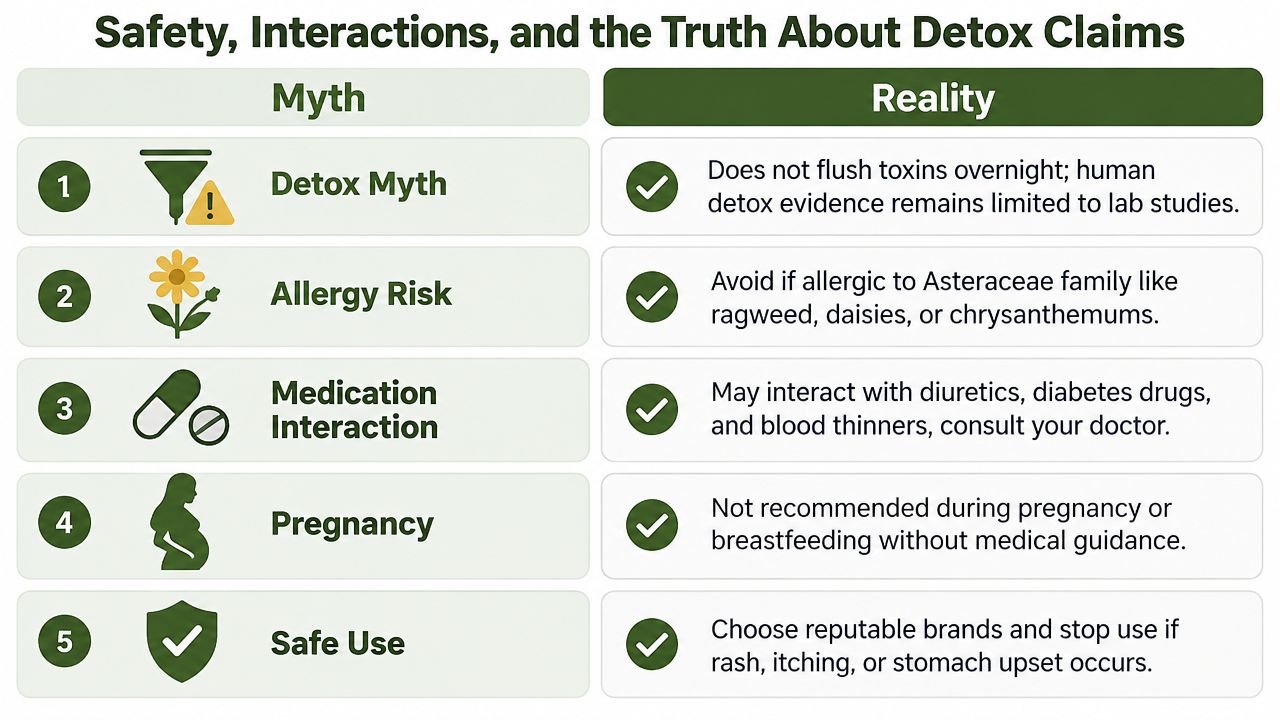
Burdock root is a supportive herb, not a registered medicine for liver disease, acne, diabetes, or any other condition. That distinction matters because internal “detox” marketing often takes a few promising lab findings and turns them into broad promises that the evidence doesn't support. The safer, more honest view is that burdock may support normal body processes, but it doesn't replace medical care.
Who should be cautious
People with Asteraceae allergies should be careful, especially if they react to ragweed, daisies, or chrysanthemums. Burdock can also be an issue for people who are pregnant or breastfeeding, since safety data are limited and historical herbal use included uterine-stimulating concerns. Children under 12 should not use it casually without medical guidance.
Medication interactions matter too. Burdock may affect blood sugar, so anyone using insulin or sulfonylureas should be cautious. There are also concerns around anticoagulants, including warfarin, clopidogrel, and DOACs, so users on blood-thinning therapy should speak with a clinician first. A 2025 consumer health source also advises caution for people with kidney or liver conditions and for those on diuretics (consumer health guidance).
Important: don't stack multiple burdock teas, tinctures, and drops at the same time just because each one seems mild. Combined use can push the overall exposure higher than you intended.
A recent toxicology report found repeated oral exposure up to 450 mg/kg/day did not produce structural injury or immune suppression in animals (toxicology report discussed in the safety source). That's reassuring, but it's still not the same thing as human safety data. Raw roots are also a separate issue, since unprocessed plant material can contain compounds you don't want to improvise with at home.
Before starting, run this quick check:
- Allergy check: no ragweed, daisy, or chrysanthemum allergy.
- Medication check: no relevant blood sugar or blood-thinning interactions.
- Health status check: not pregnant, breastfeeding, or managing kidney or liver disease without clinician input.
- Product check: one burdock product at a time, from a reputable source.
Key Takeaways and a Simple FAQ for Skin-Conscious Users
Burdock root fits best as a gut-and-inflammation support herb, while the detox story stays unproven.
The clearest human skin signal discussed earlier came from a volunteer formulation study, and it involved a topical gel-cream, not oral drops.
Liquid drops remain the simplest daily option for readers who want steady use without extra steps.
Expect weeks, not days, before judging whether your skin is changing.
It can support dermatologist care, not replace it.
Quick FAQ
How long until I see skin changes?
Usually think in
weeks, not days. Internal support tends to show up slowly, much like other skin routines that work from the inside out.
Can I use it with hormonal acne treatments like spironolactone?
Possibly, but only with clinician guidance if you're already using prescription acne care. Burdock may interact with medicines that affect blood sugar or fluid balance.
Is it vegan and non-comedogenic?
Internal burdock root drops are typically plant-based. Because they are taken orally, comedogenicity is not the same issue it is with a cream or oil.
How is burdock different from dandelion root?
Both are traditional bitter roots, but burdock is more often tied to
inulin-type fibers and internal routines aimed at skin support.
Does topical burdock oil work as well as internal drops?
Not in the same way. Topical products may soothe the surface, while internal drops are meant to support digestion and whole-body balance.
If you want a simple routine that matches this skin-first, inside-out approach, the next step is to compare liquid-drop formats and decide whether a daily burdock habit fits your schedule.
Peak Performance offers USDA Organic Burdock Root Liquid Drops in a format designed for easy daily use. If you want to build a skin-supportive internal routine around burdock root, visit Peak Performance and review the drops alongside your current acne and gut-health plan.


