


Milk Thistle: Top 10 Internal Hacks for a Radiant Glow
You've bought the serum, added an exfoliating acid, upgraded the moisturizer, and still catch the same reflection in the bathroom mirror: dull skin, occasional breakouts, and an uneven tone that topical products haven't fixed. That's frustrating, especially when your shelf is full of expensive formulas that promise radiance.
My opinion is simple: topicals matter, but they're only one part of the glow equation. Skin also reflects sleep, diet, stress, digestion, medication use, alcohol intake, and how your body handles oxidative stress. Milk thistle is interesting because its traditional role centers on liver support, yet its active compounds offer a useful way to think about beauty from the inside out. It isn't a miracle cleanse, and it won't replace medical care, but it can fit into a thoughtful internal routine.
Why Your Glow Routine Might Be Missing the Inside Piece
A reader I'll call Maya had a familiar routine. She washed gently, layered a vitamin serum, used an exfoliant on schedule, and applied sunscreen every morning. Her products were sensible, but her skin still looked tired. She was also sleeping irregularly, eating ultra-processed meals between meetings, drinking more often than she wanted, and treating supplements as an afterthought.
That pattern matters because skin doesn't operate separately from the rest of the body. The liver processes compounds from food, alcohol, and medication, while the body's antioxidant and inflammatory systems influence the environment in which skin cells function. That doesn't mean a supplement can “flush toxins” overnight. It means a topical routine can't compensate for every internal stressor.
Milk thistle fits this conversation through silymarin, its best-known seed compound. The herb has a documented medicinal history stretching back more than 2,000 years, including references from Dioscorides and Pliny the Elder, as recorded by the U.S. National Cancer Institute's milk thistle overview. That history doesn't prove a modern beauty benefit, but it does explain why milk thistle remains so recognizable in liver-support formulas.
My practical view: use milk thistle as a supporting habit, not as permission to keep drinking heavily, sleeping poorly, or ignoring persistent skin changes.
The inside-out approach also includes less glamorous choices. Consistent sleep, fewer ultra-processed foods, sensible alcohol limits, movement, hydration, and a diet rich in plants will usually move the needle more reliably than adding another complicated capsule stack. For readers who want to explore a broader gut and skin routine, GutRx collections skin health can provide a useful place to compare that category of support.
The ten hacks below keep milk thistle in its proper role. They focus on product quality, realistic habits, and the safety questions most beauty-focused supplement content skips.
What Milk Thistle Actually Is and Why Silymarin Matters
Milk thistle, or Silybum marianum, is a flowering botanical traditionally associated with liver and gallbladder support. The seeds contain a group of plant compounds known collectively as silymarin. Think of the seed as the whole workshop and silymarin as the part of the workshop doing the specialized work. A product made from a defined seed extract is different from a spoonful of generic ground plant material.
Silymarin is commonly discussed for three functions. First, it has antioxidant activity, meaning it can participate in the body's defense against oxidative processes. Second, it's studied for its relationship with cell membranes, particularly in liver cells. Third, researchers have examined its influence on inflammatory signaling. Those mechanisms help explain the ingredient's reputation, but laboratory activity doesn't automatically translate into clearer skin in humans.
The label is where the distinction becomes practical. “Milk thistle” may refer to a whole-seed powder, an extract, or a standardized extract with a declared silymarin concentration. Those forms shouldn't be treated as interchangeable. The HerbalGram clinical overview of milk thistle describes a substantial history of clinical investigation, including an estimated 50 clinical studies involving more than 2,400 patients using a proprietary German preparation, while its monograph summarizes 21 studies totaling 2,370 participants.
That research record is meaningful, but it isn't a blank cheque for beauty claims. Most of the historical and clinical attention has focused on liver-related conditions, not radiant skin. For that reason, I'd choose a transparent product that identifies the seed extract and its silymarin content rather than relying on a dramatic “detox” label.
A liquid option such as Organic Milk Thistle Extract may suit someone who dislikes capsules, but the important question remains the same: does the label tell you what extract you're getting?
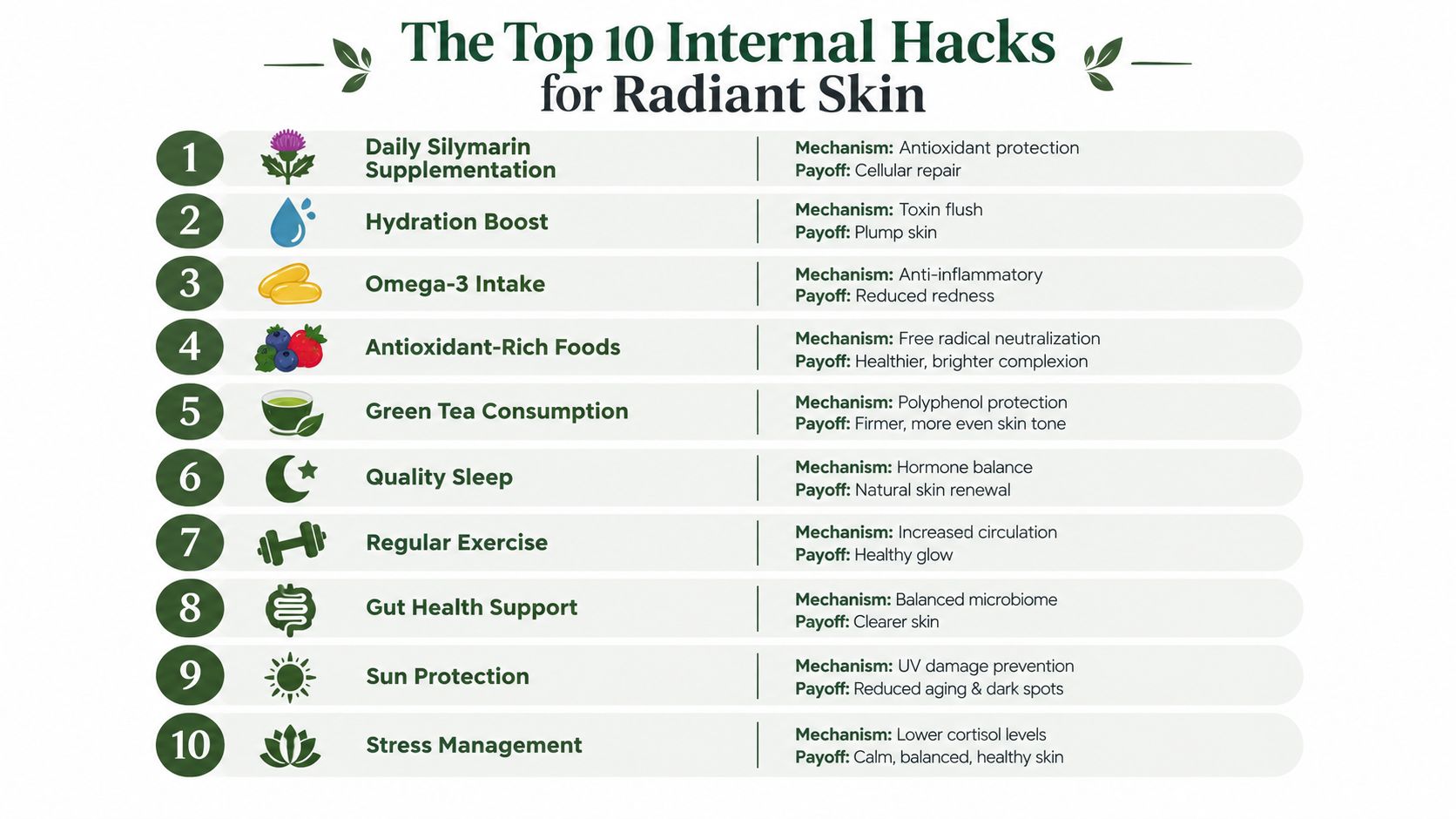
The Top 10 Internal Hacks for Radiant Skin
If your topical routine is carefully planned but your meals, sleep, and supplement choices are chaotic, your glow routine has an inside gap. Milk thistle can fit into a beauty-from-within plan, but it works best alongside habits that support antioxidant defenses and normal detoxification pathways.
-
Use a clearly labeled silymarin product.
Choose a milk thistle seed extract that states its silymarin content. Products vary, so do not assume a capsule, powder, and extract deliver the same amount. Skip the “mega-dose” mindset. The NCCIH milk thistle review reports that evidence remains insufficient for firm conclusions about its health effects, which makes transparent labeling more useful than aggressive claims. -
Take it with a meal if that improves tolerance.
Follow the product label and take milk thistle with food when appropriate. A simple schedule you can tolerate beats a complicated protocol that leaves you nauseated or gets forgotten. -
Build antioxidant variety into meals.
Add berries, leafy greens, beans, nuts, and colorful vegetables across the week. These foods provide a wider range of nutrients than a single capsule and give your skin-support routine a stronger foundation. -
Put cruciferous vegetables on the menu.
Broccoli, cabbage, and cauliflower turn “detox support” into an ordinary meal rather than a dramatic cleanse. Add them to lunch or dinner several times during the week, especially when the alternative is another heavily processed snack. -
Combine sleep, alcohol reduction, and hydration into one consistency habit.
Set a 7 to 8 hour sleep window, keep at least 2 alcohol-free days, and aim for roughly 1.5 to 2 liters of fluids when that suits your body and medical needs. Reducing alcohol and ultra-processed foods removes recurring sources of strain that milk thistle cannot cancel out. Drink with meals and keep a bottle nearby, but do not treat excessive water as a toxin flush. -
Lower the stress load with actions you will repeat.
A short walk, a slower evening meal, or a few minutes of breathing practice is more useful than an elaborate biohacking plan. Stress control will not create instant radiance, but it can make sleep, food choices, and supplement consistency easier to maintain. -
Treat gut support as a separate decision.
Milk thistle does not automatically create a reason to take a probiotic. If you choose one, select a clearly labeled product and introduce it separately so you can identify any digestive benefits or unwanted effects. -
Review the routine instead of taking supplements on autopilot.
Cycling milk thistle can be a reasonable personal preference when there is no clear reason for indefinite use, but it is not a proven requirement for maintaining “responsiveness.” Record digestion, energy, skin changes, and unwanted effects. Use that record to decide whether continuing makes sense. -
Judge results by skin-relevant changes, not detox language.
Look for a calmer, more consistent routine rather than expecting a capsule to erase acne or pigmentation. Milk thistle belongs in the internal support category, not in the role of a replacement for medical care. -
Keep the beauty-from-within plan modest.
The practical goal is to reduce avoidable oxidative stress, support everyday habits, and see whether a well-chosen milk thistle product fits your routine. It should not be used to manage a medical liver problem without appropriate care.
What the Clinical Evidence Actually Shows
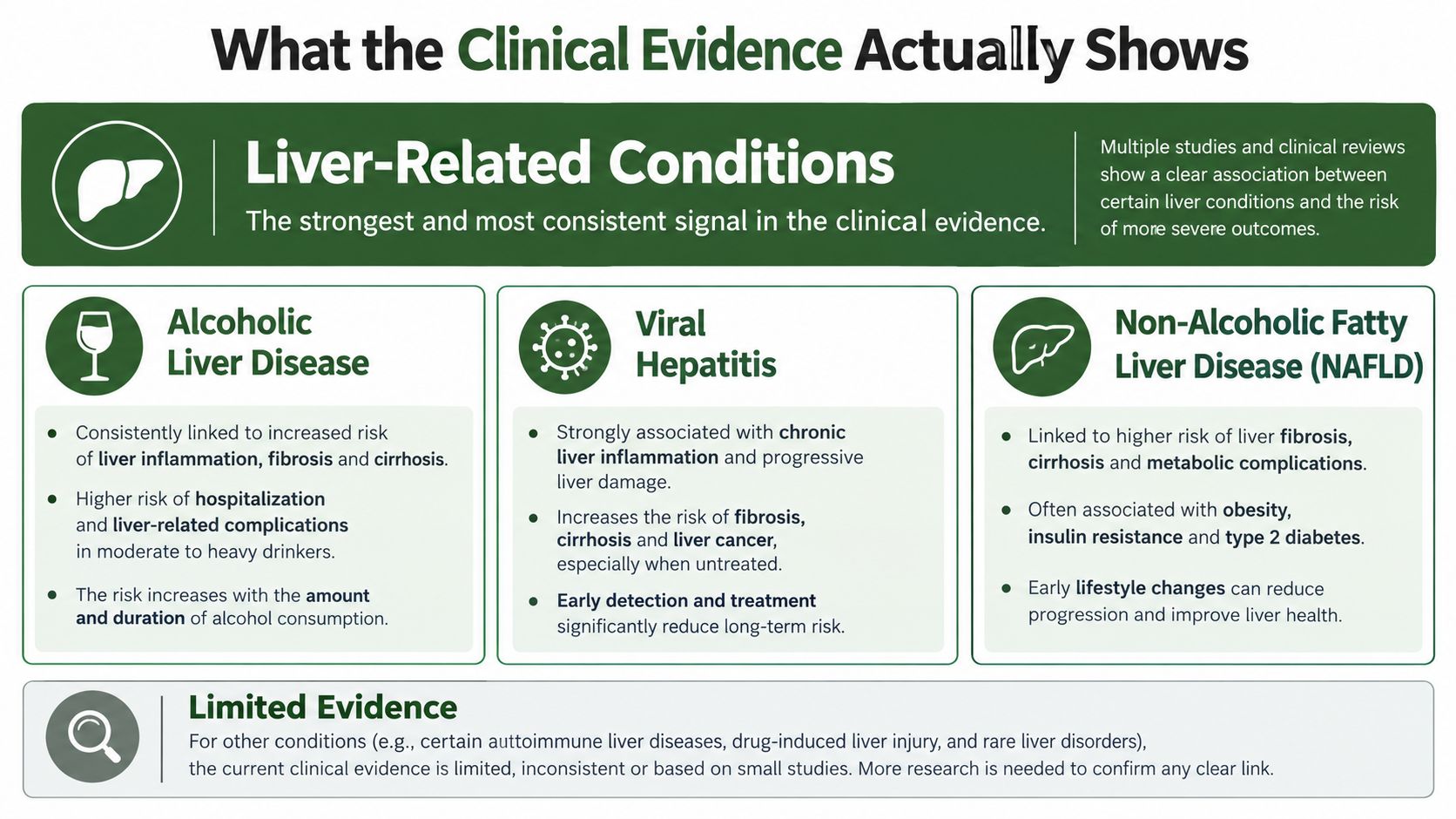
Milk thistle has a stronger research identity in liver health than in skin radiance. The clinical record includes investigations involving cirrhosis, alcoholic liver disease, hepatitis, and liver injury associated with certain drugs. The HerbalGram summary reports that most studies in its reviewed preparation described positive effects, but study quality, formulations, and outcomes varied.
That distinction matters because “studied” and “proven for every purpose” are not the same thing. The NIH LiverTox review says milk thistle has not been implicated in causing serum enzyme elevations or clinically apparent acute liver injury. That supports a cautious safety discussion, not a promise that the supplement repairs every form of liver damage.
For specific conditions, the evidence remains mixed. The NIH NCCIH evidence summary says trials involving alcohol-related liver disease, hepatitis B and C, non-alcoholic fatty liver disease, and liver injury connected with chemotherapy, low oxygen, or toxins have been conflicting or too limited for firm conclusions.
My evidence grades
- Liver-related use: Moderate interest, not a standalone treatment. Milk thistle has a long history and a sizeable research record, but the evidence doesn't justify replacing diagnosis, monitoring, or prescribed care.
- Antioxidant activity: Plausible mechanism. Silymarin's antioxidant properties help explain the ingredient's appeal, but a mechanism isn't proof of a visible skin result.
- Inflammation support: Early and mixed. It's a reasonable research question, not a guarantee for redness or breakouts.
- Direct skin radiance: Limited human evidence. Be especially skeptical of claims that promise dramatic changes without a clear clinical trial.
- Detox or hangover claims: Marketing territory unless carefully defined. Your liver already performs its normal processing work. A supplement doesn't make heavy alcohol use safe.
For a deeper discussion of testing and supplementation in liver care, the Liver Masterclass with Siggi Clavien of The Liver Clinic is more useful than a generic “cleanse” promise.
Dosages, Standardized Extracts, and Formulation Choices
The correct dose depends on the extract, its silymarin concentration, the reason you're using it, and your health profile. Because the verified evidence here doesn't establish a universal beauty dose, I won't pretend that one number works for everyone. Follow the product label and ask a clinician or pharmacist before using a concentrated extract for a diagnosed condition.
| Format | Typical Silymarin Content | Bioavailability | Best For |
|---|---|---|---|
| Whole-seed powder | May be unstated | Variable | People who want a simple botanical powder, provided they accept uncertain potency |
| Standardized seed extract | Declared on the label | More predictable than an unlabeled powder | People who want transparent ingredient information |
| Liquid tincture or drops | Depends on the extraction and label | Depends on the formula | People who dislike capsules or prefer flexible serving sizes |
| Phosphatidylcholine-bound extract | Depends on the formula | Designed to improve delivery | People considering a specialized formulation with clear documentation |
| Tea | Usually not clearly stated | Variable | A gentle beverage ritual, not a precise silymarin strategy |
| Topical serum | Not equivalent to oral use | Applies locally | A separate skincare experiment, not a replacement for internal support |
Read the active amount, not the plant headline
A bottle can display a large weight for “milk thistle extract” while leaving the actual silymarin amount unclear. That makes comparisons difficult. Standardization is useful because it tells you more about the active complex than raw herb weight alone.
A liquid product may be convenient, but convenience doesn't prove higher absorption. A phytosome-style formula may be designed for improved uptake, but the formulation still needs a transparent label and a credible quality process. Choose the format you can use consistently without confusing oral support with topical skincare.
Safety Profile and Drug Interactions to Know About
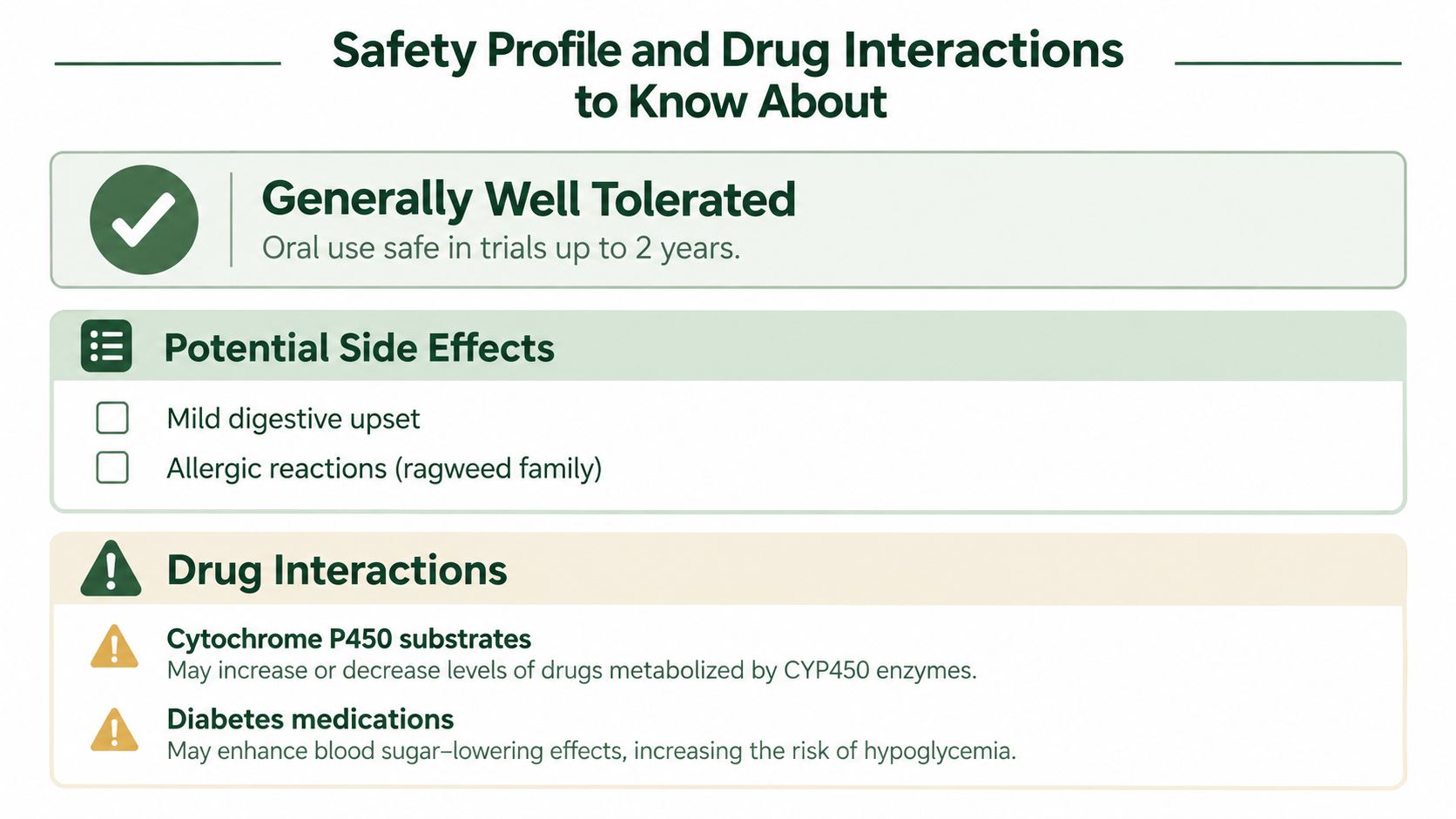
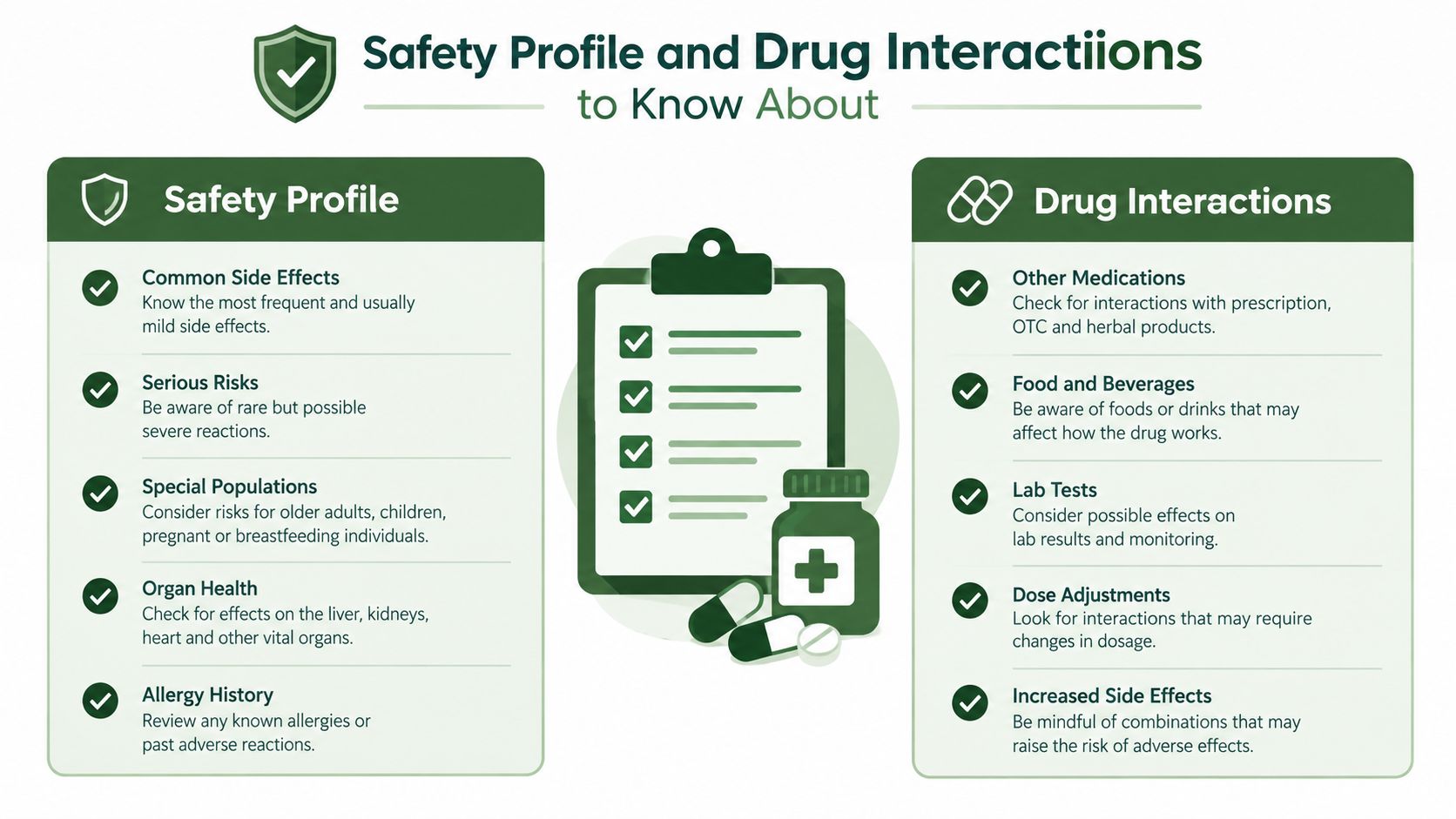
Milk thistle is often treated as harmless because it's a plant. That's sloppy advice. A botanical can be well tolerated by many people and still deserve caution when it changes blood sugar, interacts with medication pathways, or triggers an allergy.
The NIH MedlinePlus and LiverTox-linked safety information on milk thistle describes mixed evidence around interactions and notes concerns involving drug-metabolizing pathways and medicines such as warfarin, diabetes drugs, transplant medicines, and drugs with a narrow therapeutic range. The same source discusses reported concerns involving medications including raloxifene, simeprevir, sirolimus, nivolumab, and some antipsychotics.
Check these points before starting
- Prescription medicines: Ask a pharmacist to review the combination, particularly if you take warfarin, diabetes medication, transplant medication, or another medicine where small blood-level changes matter.
- Blood sugar: Milk thistle may lower blood sugar, so people using glucose-lowering medication shouldn't add it casually.
- Allergies: Milk thistle belongs to the daisy and ragweed family. Anyone with a known related allergy should seek professional advice first.
- Pregnancy and breastfeeding: Safety evidence is limited, so don't self-prescribe it during these periods.
- Existing liver disease: A supplement shouldn't delay testing or treatment for jaundice, persistent fatigue, abdominal swelling, abnormal liver enzymes, or other concerning symptoms.
Possible reactions can include digestive upset or allergic symptoms. Stop using the product and seek medical advice if you develop a significant reaction. I also wouldn't rely on separating milk thistle from prescription medication by a fixed interval as a guarantee of safety. Tell your prescriber exactly what you're taking, because interaction risk depends on the medicine and the extract.
How to Choose a High-Quality Milk Thistle Supplement
A polished “detox” label means little if you cannot verify what is inside. Buy a product you can inspect, compare, and trace from ingredient panel to testing record. Skip secret blends that make skin benefits sound guaranteed while hiding the actual extract amount.
Use this three-step label check
- Name the botanical and extract: Prefer Silybum marianum seed extract over a vague “proprietary liver blend.”
- Confirm the active amount: A useful mock label reads, “Silybum marianum seed extract 300mg standardized to 80% silymarin (240mg).” “Milk thistle 1000mg (no standardization)” gives you far less information, because the herb weight does not show the silymarin content.
- Verify the batch: Look for an accessible Certificate of Analysis, manufacturing details, and independent verification from USP, NSF, ConsumerLab, or Informed Choice when applicable. Check that the documentation matches the product and batch you plan to buy.
Use this choose supplements the smart way guide if supplement panels still feel confusing. The label should also identify the serving size, capsule or softgel format, liquid concentration, or phosphatidylcholine-bound formulation. Each format can suit a different preference, but none excuses missing information.
Choose the simplest formula that names the botanical, states the active compound, and provides traceable quality documentation. Avoid unnecessary dyes, extensive fillers, and blends that stop you from comparing products. If “detox” dominates the front label while testing details remain vague, leave it on the shelf.
Putting It Together in Your Daily Routine
Start with a routine you can evaluate, not a cabinet full of new products. In the morning, take the labeled serving of a transparent milk thistle extract with breakfast if that's how the product is intended to be used. Build that meal around a healthy fat, berries, chia seeds, and leafy greens, then keep hydration steady through the day.
Add the habits that make the supplement less important, not more. Move gently, include omega-3-rich foods if they suit your diet, reduce ultra-processed meals, and create an earlier bedtime. Choose a couple of alcohol-free days each week, then expand that habit if you notice it improves energy, digestion, or skin calmness.
An evening wind-down can be as simple as putting the kitchen away, avoiding automatic late-night snacking, and preparing tomorrow's breakfast. Don't add several supplements at once. If you change everything together, you won't know what helped or what caused a problem.
For more general ideas on building a liver-support routine, explore liver support resources. At the end of the week, ask yourself three questions: Is my digestion comfortable? Is my energy steadier? Does my skin look calmer? If the answer is no, maintain, adjust, or discontinue with a clinician's input rather than forcing the experiment.
Peak Performance offers USDA-certified organic superfood powders, daily supplements, coffee, protein blends, vitamins, and liquid milk thistle drops for people building a broader nutrition routine. If you want to compare those options with your inside-out glow plan, visit Peak Performance and review the product details before choosing.


