


Respiratory Support Supplements
When spring pollen hits or the first cold snap makes the air feel sharp, breathing can start to feel like work. Your nose runs, your eyes itch, and you notice every dusty room and closed-window morning a little more than usual. That's where respiratory support supplements can fit, not as a cure, but as a practical layer of support when the environment is doing the most.
The people who do best in seasonal transition usually don't rely on one fix. They reduce exposure, tighten up indoor air, and use targeted nutrients where the evidence is strongest. For a straightforward overview of daily prevention habits, prevention tips for lung function are a useful companion to the supplement decisions you make here.
Why Seasonal Transitions Challenge Your Lungs
The first sign is often subtle. You step outside on a windy morning, inhale, and your chest feels a little tighter than it did last week. By lunchtime, you're clearing your throat more often, and by evening your face feels puffy, your nose is congested, and you're trying to figure out whether it's pollen, dust, or just the air itself.

The trigger is usually cumulative
The CDC notes that breathing in pollen can cause sneezing, congestion, runny nose, and allergic conjunctivitis with red, watery, itchy eyes CDC pollen and health guidance. That matters because seasonal discomfort rarely comes from one thing at a time. It's usually pollen plus indoor dust, plus dry heated air, plus whatever irritation lingers from mold or pollution.
WHO says the combined effects of ambient and indoor air pollution cause about 7 million premature deaths each year, and it identifies particulate matter, ozone, nitrogen dioxide, sulfur dioxide, and carbon monoxide as major concerns WHO air pollution and health. That doesn't mean every seasonal flare-up is dangerous. It does mean the air itself is often part of the problem, not just your sensitivity to it.
Practical rule: if your symptoms worsen in a predictable season, treat the season as a trigger environment, not a random bad week.
A good supplement plan starts there. If you keep blaming only your immune system, you miss the bigger picture. If you adjust the environment and then choose ingredients with a plausible mechanism, the whole plan makes more sense.
Environmental Strategies to Reduce Respiratory Stress
Before you spend energy on supplements, clean up the inputs your lungs are dealing with every day. The goal is to lower the background burden so your body isn't fighting constant irritation. That makes any respiratory support supplement strategy more credible and more efficient.
Start with the room you sleep in
A bedroom filter does more than improve comfort. It changes what you inhale for eight hours straight. If you live in a dusty or pollen-heavy area, a purifier can help, and for a practical review of filtration options in dry, allergen-heavy conditions, Arizona dust and allergen control is a relevant read.
WHO's indoor-air guidance says people in damp or mouldy buildings have up to a 75% greater risk of respiratory symptoms and asthma WHO indoor air quality guidance. That's a strong reminder that moisture control is not cosmetic. It's respiratory care.
Match your behavior to the exposure
A few habits do a lot of work:
- Check pollen forecasts early: High counts change when you exercise, commute, or open windows.
- Shower after being outside: Pollen on hair and skin transfers to bedding and upholstery.
- Keep windows closed during high-pollen periods: Fresh air isn't helpful if it carries the trigger with it.
- Use filtered air conditioning when possible: It gives you circulation without the same exposure load.
Keep the exposure low first, then support the system. Supplements can't compensate for a room full of dust and dampness.
This is also where people overcorrect. They buy a capsule and ignore humidity, filters, and sleeping conditions. That usually leads to disappointment, because the inflammation never stops coming in. The foundation matters more than the bottle.
Clinical Evidence Behind Key Respiratory Ingredients
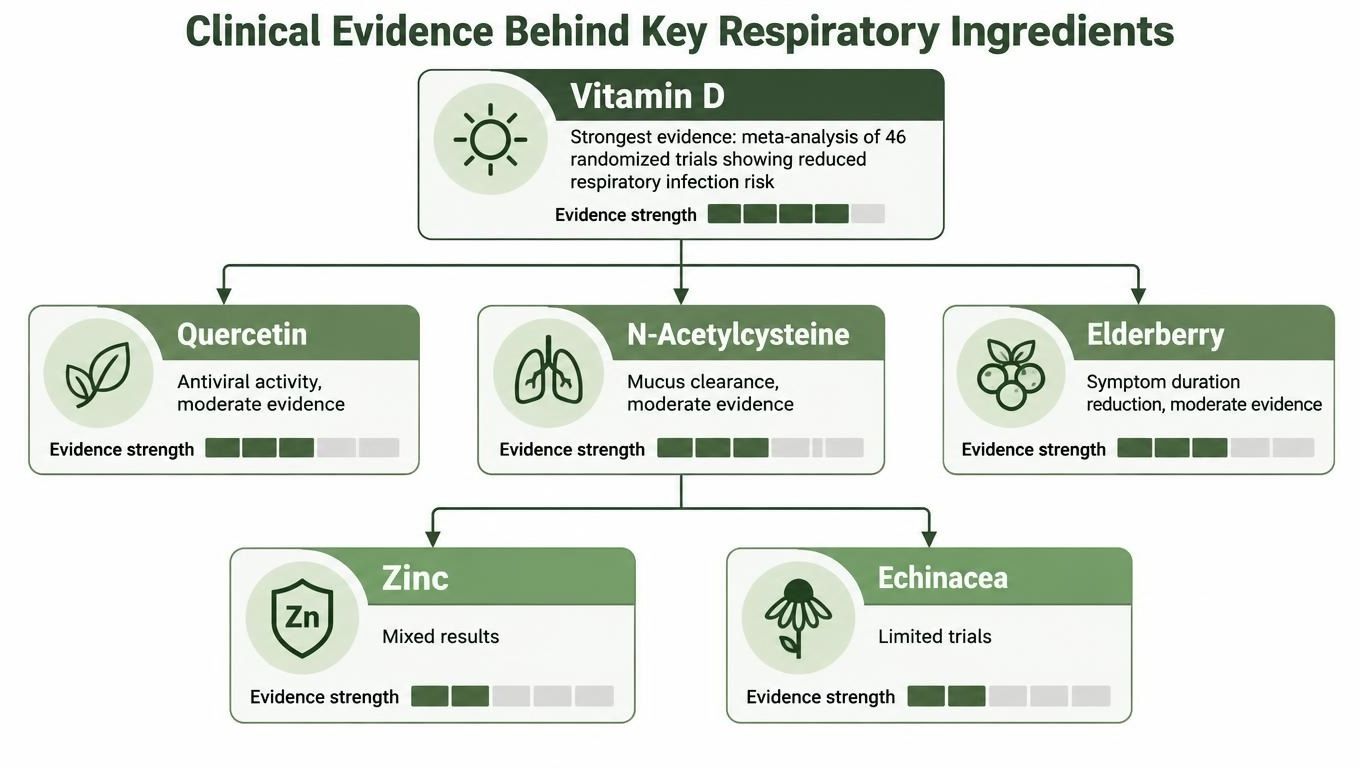
Clinical evidence varies by ingredient, dose, and exposure. A practical seasonal plan should therefore prioritize studies that connect a supplement with a defined respiratory outcome, while keeping the limits of each finding in view.
Vitamin D has the clearest starting point
A meta-analysis of 46 randomized controlled trials with 75,541 participants found that 400 to 1000 IU/day for up to 12 months reduced acute respiratory infection risk. Results varied between trials because baseline vitamin D status, dosing, and outcome definitions differed vitamin D meta-analysis. A separate systematic review found a 3% reduction in acute respiratory infection risk, with a risk ratio of 0.97 BMJ Global Health review.
The practical conclusion is measured rather than dramatic. Vitamin D makes the most sense when testing identifies insufficiency. Adding it to an already adequate status has a less convincing rationale, so seasonal planning should begin with individual need rather than a blanket high-dose routine.
Other ingredients target narrower problems
Omega-3 fatty acids have a more specific respiratory signal. In adults exposed to acute ozone, fish-oil supplementation at 3 g/day reduced the decline in FEV1 by 48% and the decline in FEV1/FVC by 70% versus placebo omega-3 and pollutant exposure study. This finding applies to a pollutant-related stress model, not to every person seeking general lung support.
Catechins have also been associated with lower respiratory tract infection incidence than placebo. A 2025 systematic review and network meta-analysis included 107 trials with 101,751 participants, indicating substantial research activity around oral nutritional supplements for respiratory infection prevention 2025 network meta-analysis. The size of the literature does not make every ingredient equally reliable, so formulation, patient context, and outcome quality still matter.
Supplement choices should sit alongside appropriate clinical review. For patients requiring ongoing monitoring, house call COPD management illustrates how follow-up can complement decisions about supportive nutrition.
A practical summary of ingredient mechanisms is available in this guide to respiratory health.
Choosing the Right Supplementation Strategy
The right strategy depends on what bothers you. Pollen-triggered discomfort, pollution exposure, and general seasonal maintenance are not the same problem, so they don't deserve the same formula. That's where many supplement routines go wrong.
Match the ingredient to the trigger
| Seasonal goal | Ingredients that make the most sense | Why they fit |
|---|---|---|
| Pollen sensitivity | Vitamin D, catechin-rich formulas, sometimes omega-3s | These line up better with immune modulation and inflammation control than broad “allergy blends.” |
| Pollution exposure | Omega-3s, antioxidant-supporting nutrients, N-acetylcysteine in some formulas | The logic is oxidative stress and airway irritation, not generic wellness. |
| General seasonal maintenance | Vitamin D optimization | This is the most evidence-backed single ingredient when status is low or insufficient. |
Read the label like a clinician would
Dosage matters, but more isn't automatically better. Vitamin D has benefit most plausibly when you're addressing deficiency or insufficiency, and that's why measured status is more useful than guesswork. Probiotics that have shown respiratory benefit tend to be multi-strain formulations or Bifidobacterium animalis, not just any bottle with a “immune support” label.
Safety matters too. If you take a vitamin K antagonist, be cautious with high-dose vitamin E. If you use blood-thinning medication, omega-3s deserve a medication review. And if you're immunocompromised, probiotics need more caution than most labels admit.
A product can be organic and still be vague, which is why label clarity matters. Peak Performance's Respiratory Lung Health Drops are one option in this category, especially for readers who want a liquid formula with a defined product page rather than a proprietary blend hidden behind marketing language.
Quality Verification and Safety Considerations
A respiratory supplement can look polished while still leaving basic questions unanswered. The label may not show whether ingredient amounts are accurate, contamination was assessed, or the contents match the front panel. Third-party verification belongs in the purchasing decision, particularly when seasonal exposure already makes symptoms harder to interpret.
What to look for before you buy
Check for independent testing from USP, NSF International, or ConsumerLab. These seals can help confirm that the label and contents correspond, as explained in what is third-party testing. Certification does not prove that a formula will improve respiratory symptoms, but it provides a meaningful check on manufacturing and product identity. For herbal formulas, look for testing that addresses heavy metals, microbial contamination, and the identity of the listed ingredients.
Read the serving instructions carefully. If vitamin D is included, taking it with food containing fat is more practical than relying on sporadic doses. A preventive plan also needs a clear purpose. Using a product before a predictable seasonal trigger is a different decision from adding it after symptoms have intensified.
Bring the actual bottle, not just the brand name, to your clinician if you use prescriptions.
Make the safety screen specific
Before adding a product, answer these questions:
- What is the exact dose per serving?
- Was it third-party tested?
- Does it contain a proprietary blend?
- Could it interact with my medications?
- Am I using it preventively or reactively?
The guide on how to read supplement labels explains how to distinguish a transparent formula from marketing-heavy packaging. That distinction matters when comparing products, especially if the label does not disclose individual ingredient amounts.
Stop the supplement and seek medical guidance if symptoms worsen after starting it. Increasing the dose without identifying the cause adds risk without providing a reliable strategy.
Building Your Seasonal Respiratory Routine
A useful routine is boring in the best way. It repeats. It shows up before the season does. It doesn't depend on motivation, and it doesn't change every time the weather shifts.
The rhythm that works
One patient-friendly pattern looks like this. Check pollen and air quality in the morning, then decide whether outdoor exercise belongs before or after exposure peaks. Keep filter changes and humidity checks on the calendar instead of waiting until symptoms force the issue.
Start supplementation two to three weeks before the usual seasonal trigger if you know your pattern. That gives the routine time to settle instead of waiting for a flare-up and reacting late. Keep a simple symptom journal so you can link weather, room conditions, and supplement timing to how you feel.
The point isn't perfection. It's consistency with the few habits that matter most.

Where products fit into the routine
Supplement formulas work best as part of a larger system, not as substitutes for it. If you want one standardized product option to fit into a daily routine, Respiratory Lung Health Drops can serve that role for readers who prefer a liquid format with a defined ingredient profile. The value isn't magic, it's convenience, consistency, and a clearer path to daily use.
That same logic applies to every other intervention in this article. Reduce exposure, keep the indoor environment stable, then choose the smallest effective supplement plan that matches your trigger pattern. When those pieces line up, you're not fighting the season, you're preparing for it.
Top 10 Actionable Steps for Respiratory Resilience
A seasonal respiratory plan works best when it stays simple enough to repeat. Use these ten steps as a practical checklist, not a perfect scorecard.
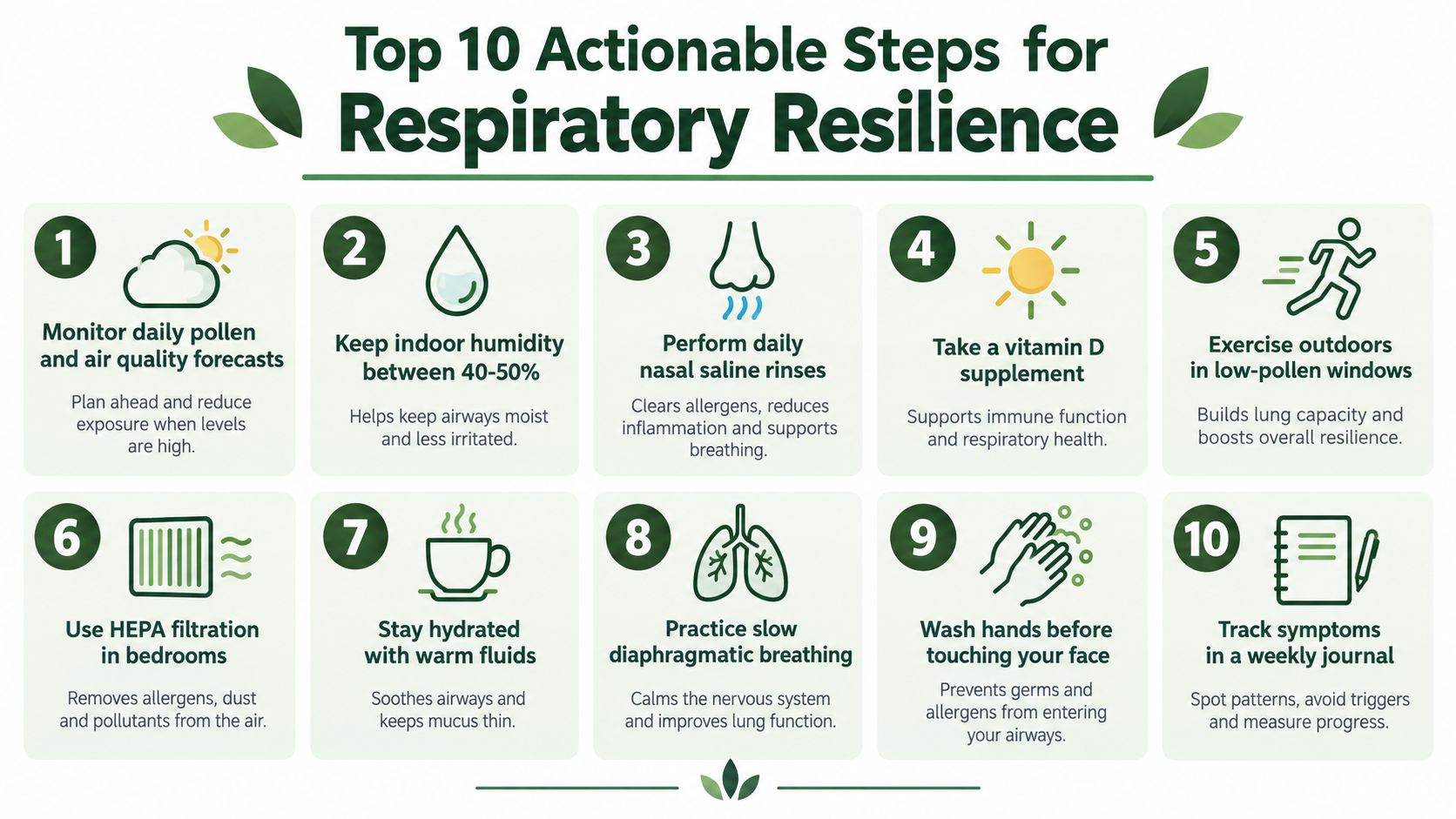
- Monitor daily pollen and air quality forecasts, so you can choose better times for outdoor activity.
- Keep indoor humidity in a healthy range, because damp spaces raise respiratory strain and mold exposure risk.
- Use filtered air in bedrooms and main living spaces, especially when windows need to stay closed.
- Shower and change clothes after outdoor exposure, so pollen doesn't ride into your home with you.
- Keep windows closed during peak allergy periods, and let filtered cooling do the ventilation work instead.
- Optimize vitamin D status, ideally with a clinician-informed plan if you suspect low levels.
- Use omega-3s for inflammation support when your trigger pattern points more toward irritation and pollution.
- Consider catechin-rich or other targeted antioxidant formulas, especially if your routine needs more than one mechanism.
- Choose third-party tested supplements with transparent labeling, and skip products that hide the dose.
- Review your plan with a clinician, especially if you take prescriptions or have chronic respiratory conditions.
The most useful routine is the one you can keep doing when the season changes again.
If you want a straightforward way to pair daily support with a cleaner ingredient profile, explore Peak Performance and review the Respiratory Lung Health Drops product page alongside your current routine. Use it as one piece of a larger plan built around exposure control, label transparency, and ingredients that actually match the job.
Also in Podcasts


