


Vegan Protein Powder: How to Pick the Right One for You
You hit snooze, rush through a breakfast built around fruit or toast, and promise yourself you'll eat properly at lunch. Then 10:30 arrives, your concentration slips, and the nearest vending machine suddenly looks like a sensible meal plan. For busy professionals and parents, a well-built smoothie can solve that problem, but only if it contains more than colorful produce and a sweet liquid base.
Pea protein is the anchor I recommend most often for morning fullness. It brings a useful combination of protein density, practical texture, and satiety support. The upgrades below show how to pair pea, rice, hemp, soy, or blended formulas with ingredients that make a smoothie more satisfying without turning breakfast into a complicated recipe.
The 6 - 45 Alarm and the Hunger That Hits at 10 - 30
At 6:45 a.m., convenience usually wins. A banana, fruit juice, sweetened yogurt, or a smoothie made mostly from berries may feel like breakfast, but those ingredients don't always provide enough staying power on their own. You get quick energy, then find yourself thinking about food again well before lunch.
Fruit isn't the problem. The problem is building breakfast around fruit without a substantial protein anchor. Juice removes much of the chewing and structure that makes food satisfying, while a smoothie with only fruit and yogurt can leave you short of the protein needed to support lasting fullness. The result is a breakfast that tastes good but doesn't match the demands of a packed morning.
Why protein belongs at breakfast
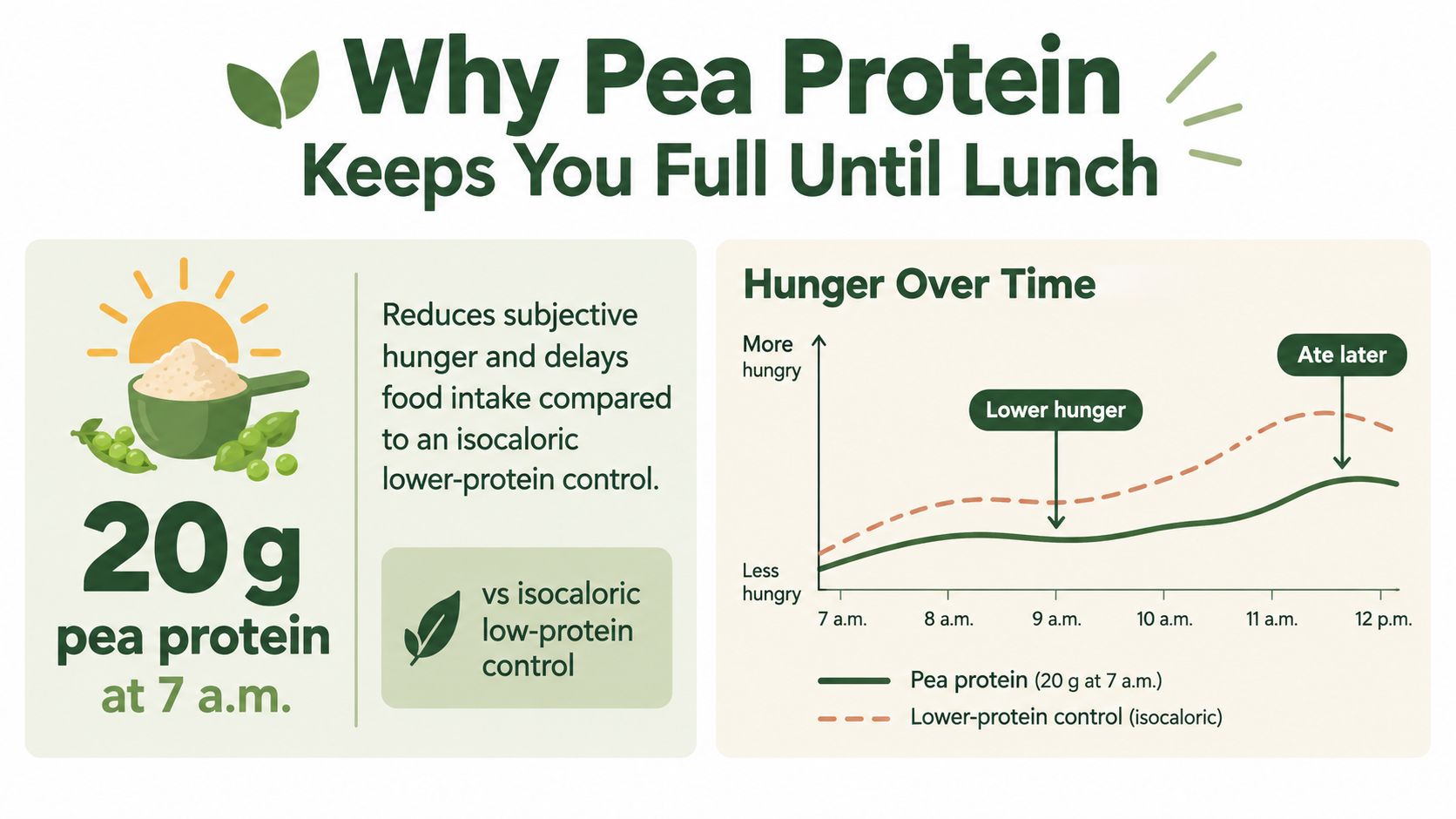
Protein helps turn a drinkable breakfast into a more complete meal. Pea protein is particularly useful because the available research supports a meaningful satiety effect. A 2011 randomized crossover study found that 20 g of pea protein produced greater short-term satiety than whey, egg albumin, and maltodextrin in the tested conditions, with lower food intake later in the morning in the published study.
That doesn't mean every pea smoothie will keep every person full until lunch. It does mean pea protein deserves a place at the center of a morning smoothie when appetite control matters. I use it as the default base, then add other plant proteins when a client needs a different amino-acid profile, flavor, texture, or allergy-friendly option.
Practical rule: Build the smoothie around the protein first, then add fruit, fats, fiber, and flavor.
The ten upgrades that follow use that principle. Pea protein provides the satiety foundation, while rice can complement its amino-acid profile, hemp can add a nutty note, soy can serve a complete-protein goal, and blended formulas can make the overall profile more balanced. The right powder is not just the one with the most impressive front label. It's the one you'll digest, enjoy, and use consistently.
Know Your Plant Protein Sources Before You Blend
Choose the powder by its job in the smoothie. Pea, rice, hemp, soy, and blended formulas differ in amino-acid balance, texture, flavor, and protein density. I use pea as the default for a filling breakfast, rice to complement it, hemp for seed flavor, soy for a complete standalone profile, and blends when convenience matters more than fine-tuning.
| Source | Protein per Scoop (approx.) | Key Strength | Best Smoothie Use | Watch Out For |
|---|---|---|---|---|
| Pea | Typically 20-25 g per 30 g scoop, varies by brand | Strong satiety support and a substantial protein dose | The main anchor for a breakfast smoothie | Earthy flavor and thicker texture |
| Rice | Typically 22-25 g for isolates | Hypoallergenic and generally clean-tasting | Blend with oats or pea protein in fruit smoothies | Relatively lower in lysine |
| Hemp | Typically 10-15 g per scoop, varies by brand | Nutty flavor and seed-based variety | Green smoothies where grassy notes fit | Lower protein density per scoop |
| Soy | Typically 20-25 g for isolates | Complete amino-acid profile | Recovery-focused or high-protein smoothies | Distinct taste and suitability concerns for people with soy allergies |
| Blend | Typically 20-25 g per scoop, varies by formula | Combines complementary sources | Everyday smoothies where balance matters | Proprietary blends can hide the amount of each protein |
Pea protein
Pea protein gives a smoothie a dense, creamy base and suits mornings when you need a breakfast that holds you over. Pea is typically lower in methionine, so use it alone for convenience or pair it with rice when amino-acid balance is a priority. Its fuller texture also works well with berries, oats, and unsweetened plant milk.
Rice protein
Rice protein makes sense for people avoiding several common allergens, and its flavor can be cleaner than some single-source plant powders. Its relatively lower lysine content makes it a stronger partner than a default standalone powder for many users. Pairing pea and rice improves their complementary amino-acid pattern, as explained in this guide to the difference between whey and plant protein.
Hemp and soy
Hemp belongs in a green smoothie when you want a nutty, earthy note. It is a poor choice for shoppers focused only on protein density, because a scoop often delivers less protein than concentrated pea, rice, or soy formulas.
Soy is the most practical standalone option here for a complete plant-protein profile. Choose an isolate when you want a higher-protein serving, then check the ingredient list if soy sensitivity is a concern.
Blended formulas earn their place when you want fewer decisions. Pea is typically lower in methionine, while rice is relatively lower in lysine, so combining them can improve essential-amino-acid completeness. Suitable pea and rice formulations have reported PDCAAS values around 0.9 to 1.0 at appropriate serving doses, according to this plant-protein quality review. Check the actual grams per scoop rather than assuming every blend uses meaningful amounts of each source.
Why Pea Protein Keeps You Full Until Lunch
At 6:45, a fruit-heavy smoothie can look like breakfast. By 10:30, hunger may tell you otherwise. 20 g of pea protein can produce a stronger short-term satiety response than a lower-protein control, according to the 2011 crossover study as reported in the original research. That finding gives pea protein a clear job in a morning smoothie: make the drink more filling than fruit or juice alone.
Use a powder serving that supplies roughly that protein quantity, then build around it with frozen berries and unsweetened plant milk. A modest spoonful of nut butter adds a smoother texture and makes the drink feel more substantial. Keep the formula practical. Pea protein should remain the main protein source, not a token scoop buried under fruit.
What the evidence actually supports
The appetite effect appears in more than one study setup. Another trial found that intact pea protein reduced food intake compared with placebo in both lean and obese men, although the reported reduction differed between the groups in the PLOS ONE trial. A separate acute randomized crossover trial also reported greater fullness and lower later hunger after a pea-protein drink taken before or with a carbohydrate-rich meal in healthy adults.
That does not make pea protein a hunger blocker. Pea protein is a credible satiety anchor, especially when the alternative is a smoothie dominated by fruit or juice. Fiber, fat, and the meal's total composition still influence how long breakfast carries you. Rice and hemp remain useful for texture, flavor, or variety, but pea is my first choice when a client wants a morning smoothie that holds up until lunch.
10 Morning Smoothie Upgrades That Actually Work
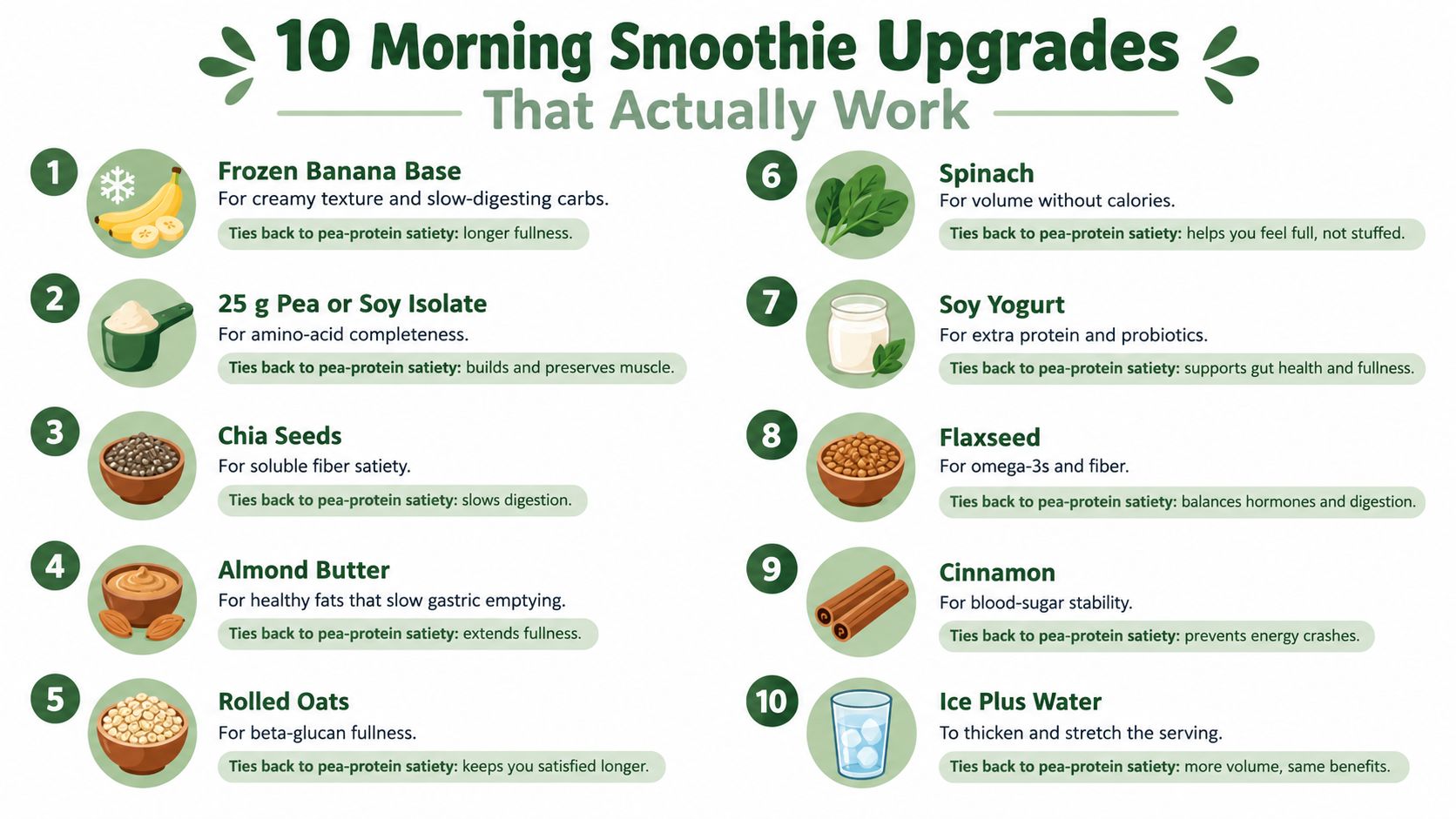
The best smoothie is the one that survives a rushed morning. Use these upgrades to improve fullness, texture, and flavor without making the recipe feel like a project.
- Start with frozen banana and pea or soy isolate. Frozen banana supplies sweetness and body, while pea protein supports the satiety goal. Choose soy when you want a complete standalone plant protein and tolerate soy well.
- Add chia or ground flax to pea protein. These seeds contribute viscosity and help create a thicker drink. That texture slows the drinking experience, while pea protein remains the main reason the smoothie feels more substantial than fruit alone.
- Use rice protein with oats. Rice protein can work well in a fruit-heavy smoothie, but its texture may feel chalky on its own. Oats give the drink more body and make the rice powder taste less exposed. Pair rice with pea when you want complementary amino acids rather than relying on rice alone.
- Put hemp in a green smoothie. Spinach, cucumber, herbs, or avocado can absorb hemp's grassy, nutty character more successfully than delicate berry flavors. Hemp is best treated as a strategic accent, not automatically as the sole protein base.
- Mask earthy flavors with cocoa and a date. Unflavored pea, hemp, and seed-based powders can taste distinctly plant-like. Cocoa adds depth, while a date gives sweetness that works particularly well with vanilla or chocolate protein.
- Choose soy isolate for a recovery-focused smoothie. Soy offers a complete amino-acid profile and fits a post-training drink when you want a plant protein with a more established standalone profile. Add fruit or oats if the smoothie also needs carbohydrate.
- Combine pea and rice in a complementary blend. Pea supplies the main satiety structure, while rice helps address pea's lower methionine and contributes to a more balanced amino-acid pattern. A pre-made blend is usually easier than measuring separate powders during a rushed morning.
- Add avocado for creaminess. Avocado changes the mouthfeel more effectively than extra powder. Its richness pairs well with pea protein, cocoa, citrus, or leafy greens and helps a thin smoothie feel like an actual breakfast.
- Use cinnamon, frozen cauliflower, or cold brew strategically. Cinnamon adds warmth, frozen cauliflower increases volume without taking over the flavor, and cold brew turns a protein smoothie into a morning coffee alternative. Choose one based on the taste you already enjoy.
- Finish with ice and enough liquid to control texture. Too little liquid produces a dense paste, while too much creates a thin drink that feels unsatisfying. Start conservatively, blend, and add more liquid only when needed. For more ways to turn a protein shake into a repeatable breakfast, browse the protein cookbook store.
The simplest formula is still the most reliable: a pea-based protein anchor, a fruit or vegetable base, one fiber-rich ingredient, and a flavor you actually like. If the powder tastes unpleasant, no amount of nutritional logic will make the habit last. For additional mixing ideas and texture fixes, use this guide to the best ways to mix protein powder.
How to Read a Vegan Protein Powder Label Like a Pro
Ignore the front of the tub until you've read the panel on the back. “Plant-based,” “clean,” and “high protein” don't tell you enough about the actual formula, dose, digestibility, or quality controls.
Start with the protein line
Look at the serving size first, then compare the listed protein with the total scoop weight. A long ingredient list isn't automatically poor, but the named protein sources should appear clearly rather than being buried inside an unexplained proprietary blend.
A product that lists pea, rice, hemp, soy, or another source by name gives you more information than one that just says “plant protein blend.” You should be able to identify what you're taking and decide whether that source fits your goal.
Check amino acids and testing
A single plant protein can have limiting amino acids. Pea and rice combinations are useful because their amino-acid gaps complement one another. If the label provides a complete amino-acid profile, use it. If it provides a protein-quality score, a PDCAAS around 0.9 to 1.0 can indicate a practical quality range for a suitable pea-rice formula and adequate serving dose as discussed in the plant-protein quality guide.
Third-party testing deserves equal attention. Look for a current certificate or clear testing information covering identity, potency, and contaminants. NSF Certified for Sport, Informed Choice, and USP are different programs, so don't treat every seal as interchangeable. The point is verification, not decoration.
Heavy metals deserve particular scrutiny. Consumer Reports coverage found that plant-based protein powders averaged nine times more lead than dairy protein powders and twice as much as beef-based powders in its reported testing coverage. That doesn't mean every vegan protein powder is unsafe, but it does mean plant-based status isn't a substitute for quality control.
Label check: Confirm the serving size, named protein sources, amino-acid information, contaminant testing, sweeteners, and whether the product hides doses inside a proprietary blend.
Be cautious with added sugars, vague “natural flavors,” and formulas that make impressive claims without disclosing meaningful testing details. For a broader label-reading framework, use this guide on what to look for in protein powder.
Matching the Right Powder to Your Morning Goal
Choose the formula for the morning you need, not the other way around. A person facing back-to-back meetings needs a different smoothie from someone drinking a recovery shake after training. Start with the goal, then check whether the protein source, serving size, and added ingredients support it.
| Goal | Best Protein Type | Dose | Why It Works |
|---|---|---|---|
| Appetite control | Pea protein with fiber | Around 20 g of pea protein | Matches the amount tested in satiety research and gives a fruit-based smoothie more staying power |
| Balanced everyday breakfast | Pea-rice blend | Use the labeled serving | Combines complementary amino-acid profiles with a familiar smoothie texture |
| Recovery after training | Soy isolate or pea-rice blend | Choose a serving that meaningfully contributes to your daily protein | Soy provides a complete plant profile, while a blend broadens amino-acid coverage |
| Meal replacement support | Blend with added nutrients and healthy fats | Follow the product serving and build the rest around whole-food ingredients | Powder alone does not provide the full structure of a meal |
| Sensitive digestion | Simple pea, rice, or hemp-rice formula | Start with the labeled serving and assess tolerance | A shorter ingredient list makes troublesome ingredients easier to identify |
My practical recommendations
For appetite control, use a straightforward pea protein with chia, flax, oats, or avocado. Pea protein is the most useful choice when staying full until lunch is the priority, especially when the smoothie also contains fiber and fat. The goal is a balanced breakfast, not an oversized shake that depends on sweetness.
Choose a pea-rice blend for an everyday smoothie when you want broader amino-acid coverage and a dependable texture. As noted in the label-reading section, a properly formulated pea-rice blend can reach a useful PDCAAS range. Read the amino-acid panel and serving size rather than assuming every blend performs equally well.
For training recovery, choose soy isolate or a pea-rice formula that contributes meaningfully to your daily protein. Soy is the clearest single-source option here. For a meal replacement, choose a blend with added nutrients and healthy fats, then add whole-food ingredients such as fruit, oats, or nut butter. The powder supports the meal. It does not replace the meal's full structure.
Peak Performance sells an Organic Vegan Protein Powder in Vanilla and an Organic Vegan Protein Powder in Chocolate. Vanilla fits berries, banana, cinnamon, and coffee. Chocolate works better with cocoa, dates, nut butter, and frozen cauliflower.
Choose the flavor you'll finish. Consistency beats a theoretically perfect powder that stays untouched in the cupboard.
Coffee drinkers can combine chilled coffee, plant milk, ice, and a compatible protein flavor, then use these Cartograph Coffee recipe ideas for more combinations.
A protein smoothie works best as one part of your diet. If you have kidney or liver disease, are pregnant or breastfeeding, or follow a medically restricted diet, set your protein target with a qualified healthcare professional before making shakes a daily habit.
Peak Performance's vanilla and chocolate options give you practical flavors for a pea-centered morning smoothie. Visit Peak Performance to compare the formulas and choose the one you will use consistently.
Also in Podcasts


