


Selenium
You're probably feeling that 3 PM dip already, and selenium matters because adults need 55 micrograms a day while the upper limit is 400 micrograms a day, from all sources combined. That tiny gap between too little and too much is why the mineral can support a steadier, more resilient metabolism when it's handled with care.
If your energy feels fine in the morning and then falls apart after lunch, the usual advice often starts with coffee, meal timing, or another “metabolism hack.” Those can help at the margins, but they don't replace the trace mineral work happening inside your cells, where selenium supports the enzyme systems that keep fuel use, thyroid activity, and oxidative balance running in sync.
The Midday Slump and the Missing Mineral
The mid-afternoon crash usually gets blamed on willpower, lunch, or not enough sleep. In practice, I've found that busy professionals often stack several small stressors at once, then wonder why caffeine stops feeling like a fix. Selenium is one of the minerals that can remain in the background until the system starts to feel sluggish.

Why the “energy problem” can be a nutrient problem
Selenium is incorporated into at least 25 human selenoproteins as the amino acid selenocysteine, including glutathione peroxidases, thioredoxin reductases, and iodothyronine deiodinases. Those proteins connect selenium intake to redox control, antioxidant defense, and thyroid-hormone activation. That matters because the body's energy output depends on enzymes doing their job, not just on eating enough calories. Selenium and selenoproteins in human physiology
Practical rule: if your day already includes stress, irregular meals, and lots of stimulant use, don't assume the fix is more coffee. The basics, including trace minerals, often matter more than another hack.
This is why selenium belongs in any serious conversation about metabolism. It isn't a standalone booster, and it doesn't work like a stimulant. It supports the internal machinery that helps you feel normal energy in the first place.
For readers who like the bigger picture of trace mineral balance, the broader context in this overview of trace minerals helps connect selenium to the rest of the nutrient stack.
How Selenium Powers Your Metabolic Engine
Selenium's job is subtle but decisive. It shows up in enzyme systems that help turn thyroid hormone into its active form, and it also helps protect cells from the oxidative wear that can slow performance over time. That's why low selenium status can feel less like a dramatic deficiency and more like a persistent drag.
Thyroid activation and energy output
One of selenium's most important roles is supporting the conversion of thyroxine (T4) into triiodothyronine (T3) through selenium-dependent deiodinase enzymes. T3 is the more biologically active thyroid hormone, so this conversion matters for normal metabolic function and energy regulation. Selenium also supports thyroid-hormone synthesis and antioxidant protection, which is why iodine and selenium are often discussed together in thyroid nutrition. Thyroid-hormone metabolism and selenium
Antioxidant defense inside the cell
The same mineral also supports glutathione peroxidase activity, which helps reduce hydrogen peroxide and lipid hydroperoxides. In plain terms, that means selenium helps maintain cellular cleanup systems that protect tissues under daily stress. It's not a general-purpose antioxidant in isolation, it's part of a coordinated enzyme network.
Selenium supports enzyme systems, not miracle energy. If a supplement claims it can replace sleep, food quality, or medical care, that's the wrong promise.
That distinction matters for formulation too. A capsule can be useful when it helps people hit a nutritionally appropriate intake, but it's not a substitute for the rest of the metabolic foundation. If your routine already includes structured eating, enough protein, and sensible caffeine use, selenium helps that routine work more smoothly rather than trying to override it.
For readers comparing habits that support metabolic health, a guide to metabolic health can be a useful complement to the nutrient-first approach here. The most practical takeaway is that selenium supports the machinery, while the rest of your habits determine how hard that machinery has to work.
Recommended Intake and Safety Guidelines
The safest way to think about selenium is as a mineral with a narrow useful range. Too little is a problem, and too much is a different problem. That's why I always start with intake targets before talking about supplements.
The numbers that actually matter
In the United States and Canada, the Recommended Dietary Allowance for adults is 55 micrograms per day. That rises to 60 micrograms during pregnancy and 70 micrograms during breastfeeding. The adult Tolerable Upper Intake Level is 400 micrograms per day, about 7.3 times the adult RDA, because excessive intake can cause selenosis. NIH selenium fact sheet
Children need less, and the margin stays important across life stages. Infants from birth through 6 months need 15 micrograms daily, infants 7 to 12 months need 20 micrograms, children ages 1 to 3 need 20 micrograms, ages 4 to 8 need 30 micrograms, and ages 9 to 13 need 40 micrograms. The adult Estimated Average Requirement is 45 micrograms per day, which explains why the adult RDA is set where it is.
How to stay in range
Use this simple check before adding a selenium product:
- Count food first: If you regularly eat selenium-rich foods, don't stack a high-dose supplement without checking the total.
- Add supplement doses in micrograms: Selenium should be labeled in mcg per serving, not left vague.
- Watch for hidden sources: Multivitamins, mineral blends, and fortified products can add up fast.
- Adjust for life stage: Pregnancy, breastfeeding, and childhood change the target range.
- Stop guessing at the top end: More isn't better once you're already near the upper limit.
A final caution. The European Food Safety Authority sets a lower adult upper level of 255 micrograms per day, so the same intake can look very different depending on which safety framework you use. That's one reason I tell clients to think in terms of total daily exposure, not just one capsule.
Food Sources and Supplementation Strategies
Food is the first place to look, but selenium is one of those nutrients where geography really matters. Soil content changes the mineral profile of crops and animal feed, so a food that looks “rich” in one place may be modest in another. That's why generic advice can be frustratingly incomplete.

Why Brazil nuts are useful, but tricky
The NIH reports that one Brazil nut can contain about 68 to 91 mcg of selenium, while the adult upper intake limit is 400 mcg per day from food, beverages, and supplements combined. That means one nut can deliver a large share of the day's upper range, and repeated servings can become risky if you're also taking a multivitamin or a selenium capsule. NIH consumer selenium fact sheet
Practical rule: treat Brazil nuts like a variable food, not a standardized dose.
When a supplement makes sense
For many busy adults, a labeled supplement is easier to manage than trying to estimate soil-driven variation in food. That's where a product such as Selenium Capsules can fit into a routine, especially if intake from food is inconsistent. The useful question isn't whether you “need selenium,” it's whether you can reach a safe, steady total without overshooting.
Selenium also works best in context with other nutrients. Iodine is the obvious partner because both are involved in thyroid metabolism, but the practical point is broader, enough total nutrition must be present for the system to function normally. If your diet is inconsistent, a capsule can smooth the day. If your diet is already rich in selenium-heavy foods, a capsule might be unnecessary or even excessive.
Selenium Deficiency Signs and Who Needs More
Deficiency isn't common in North America, but marginal intake can still show up as a low-grade energy problem. I look more at patterns than at one symptom in isolation. Fatigue, brain fog, weaker recovery, and a general sense that your body isn't bouncing back as it should can all point toward a nutrition issue.
Who should pay extra attention
People with digestive disorders can absorb nutrients less efficiently, so they're more likely to miss the mark even with a decent diet. Older adults can also be vulnerable because appetite, digestion, and routine quality often shift over time. Athletes and highly active people may also need a closer look, not because exercise creates a selenium problem by itself, but because turnover and total demand can make small gaps more noticeable.
What to notice in daily life
A selenium issue often doesn't announce itself with a dramatic symptom. It looks more like a pattern.
- Persistent low energy: You wake up tired and hit a wall again by afternoon.
- Slower recovery: Workouts or stressful weeks leave a longer tail than they used to.
- Brain fog: Tasks that should feel routine take more concentration than usual.
- Immune drag: You seem to stay “off” longer than expected after minor illnesses.
If that description fits, the next step isn't to self-prescribe a large dose. It's to assess total intake, review food patterns, and talk with a clinician if symptoms persist. Selenium supports metabolism, but it doesn't replace proper evaluation when fatigue has a medical cause.
Integrating Selenium into Your Daily Metabolic Routine
The easiest selenium habit is the one that fits into a real morning, not an idealized one. I prefer routines that remove decision fatigue, because busy adults don't need another thing to remember after lunch.
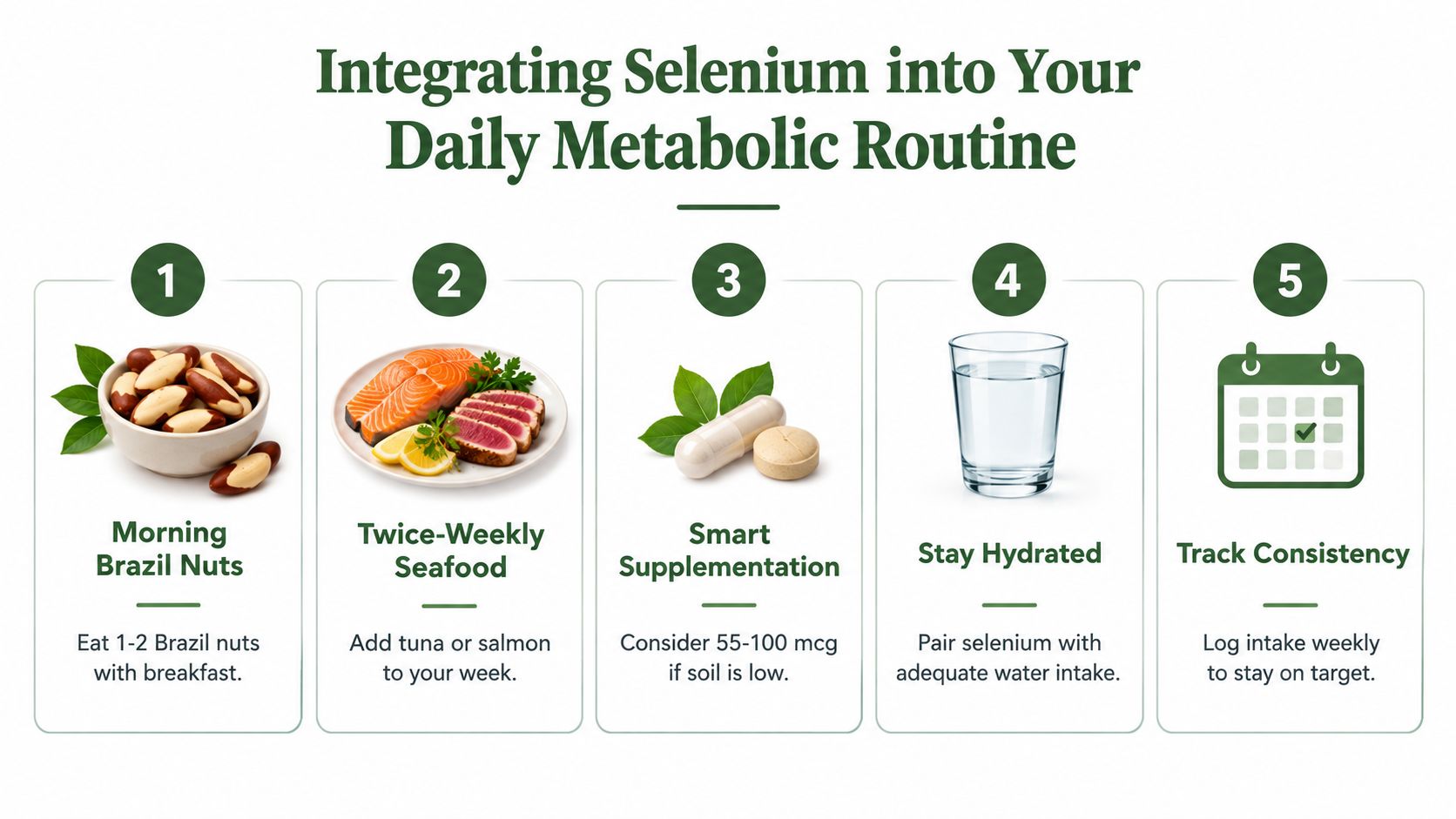
Build the habit around consistency
Start with food on the days it's easy, then use supplementation only if it helps close a gap. A sensible routine might include seafood across the week, a measured supplement on lower-intake days, and a quick mental check on other selenium sources before you take anything extra. The point is to avoid accidental stacking.
Make timing simple
Selenium doesn't need elaborate scheduling, but it does need awareness. If you already take iodine or a multinutrient, review the total label carefully, then compare it with your food intake before adding another product. For broader supplement timing, this best time to take vitamins guide can help you build a more orderly routine.
Keep the routine realistic
- Use breakfast as your anchor: If you take supplements in the morning, they're less likely to be forgotten.
- Don't stack blindly: Brazil nuts plus a multivitamin plus selenium capsules can become too much quickly.
- Pick one tracking method: A phone note or weekly checklist is enough.
- Stay food-first when possible: Supplements should fill gaps, not replace meals.
If you want one supplement option that fits this kind of disciplined routine, Peak Performance offers Raw Whole Food Selenium in capsule form, and its product page is a practical place to check serving details before you decide how it fits with the rest of your intake. The right product is the one that lets you stay within range consistently.
Peak Performance makes it easier to build a selenium routine without guesswork, with products that fit into a busy schedule and support a more deliberate approach to daily nutrition. If you want a simple way to review selenium capsules alongside your broader supplement stack, visit Peak Performance and check what fits your intake goals.
Also in Podcasts


