


Are Greens Powders Worth It for Your Health?
So, are greens powders worth it?
The real answer? It depends. For some, they're an absolute game-changer—a convenient nutritional safety net for a busy life. For others who already have their diet dialed in, they might just be an expensive habit.
Let's cut through the noise and figure out if they’re right for you.
Decoding the Hype Behind Greens Powders

Greens powders seem to be everywhere these days, popping up in smoothies and shaker bottles across social media. But what are you actually drinking?
At their core, these are simply dehydrated, powdered blends of some of the most nutrient-packed foods on the planet—leafy greens, fruits, algae, and herbs. Think of them as a nutritional multi-tool. Super handy in a pinch, but they're not meant to replace the entire toolbox of whole foods.
The biggest draw is pure convenience. Let’s be honest, life gets in the way of a perfect diet. When you’re rushing between work, the gym, and family, hitting your daily veggie quota can feel impossible. Research confirms this, showing most of us have a "nutrient gap" because we just don't eat enough fruits and vegetables. Greens powders were created to help bridge that gap.
Before we dive deep, let's get a bird's-eye view of the pros and cons.
Greens Powders At a Glance
| Factor | Potential Pros | Potential Cons |
|---|---|---|
| Nutrition | Concentrated source of vitamins, minerals, and antioxidants to fill dietary gaps. | Lacks the fiber and complete nutrient profile of whole foods. |
| Convenience | Quick and easy to prepare, perfect for busy lifestyles. | Not a substitute for a balanced diet and healthy eating habits. |
| Cost | Can be more affordable than buying a wide variety of fresh, organic produce. | A significant monthly expense compared to buying staple vegetables. |
| Digestion | Often contain probiotics and enzymes to support gut health. | Some ingredients or fillers may cause digestive upset in sensitive individuals. |
| Regulation | - | Quality and potency can vary wildly; supplements are not strictly regulated. |
This table gives you the lay of the land, but the real story is in the details.
Why Are They So Popular?
This isn't just another wellness fad. The explosion of greens powders points to a bigger shift in how we think about health—and the numbers prove it.
The global market for these supplements hit USD 2.43 billion this year and is on track to more than double by 2035. That kind of growth shows a massive demand for easy, plant-based nutrition. You can dig into more of the market data over at market.us.
So, what's driving the frenzy? It boils down to a few key things:
- A Nutritional Insurance Policy: For picky eaters or anyone with a chaotic schedule, a daily scoop provides peace of mind that you're covering your nutritional bases.
- Targeted Health Goals: Many formulas are designed for specific outcomes. For instance, our own Peak Performance Organic Greens is crafted to help boost energy, support digestion, and fortify your immune system.
- Simplicity and Ease: It doesn't get much easier than mixing a spoonful of powder into your water or smoothie for a quick nutrient infusion.
This guide is designed to give you a balanced, realistic look at whether greens powders are a smart move for your health. No hype, just the facts, so you can make a choice that actually works for you.
Decoding the Ingredient Label
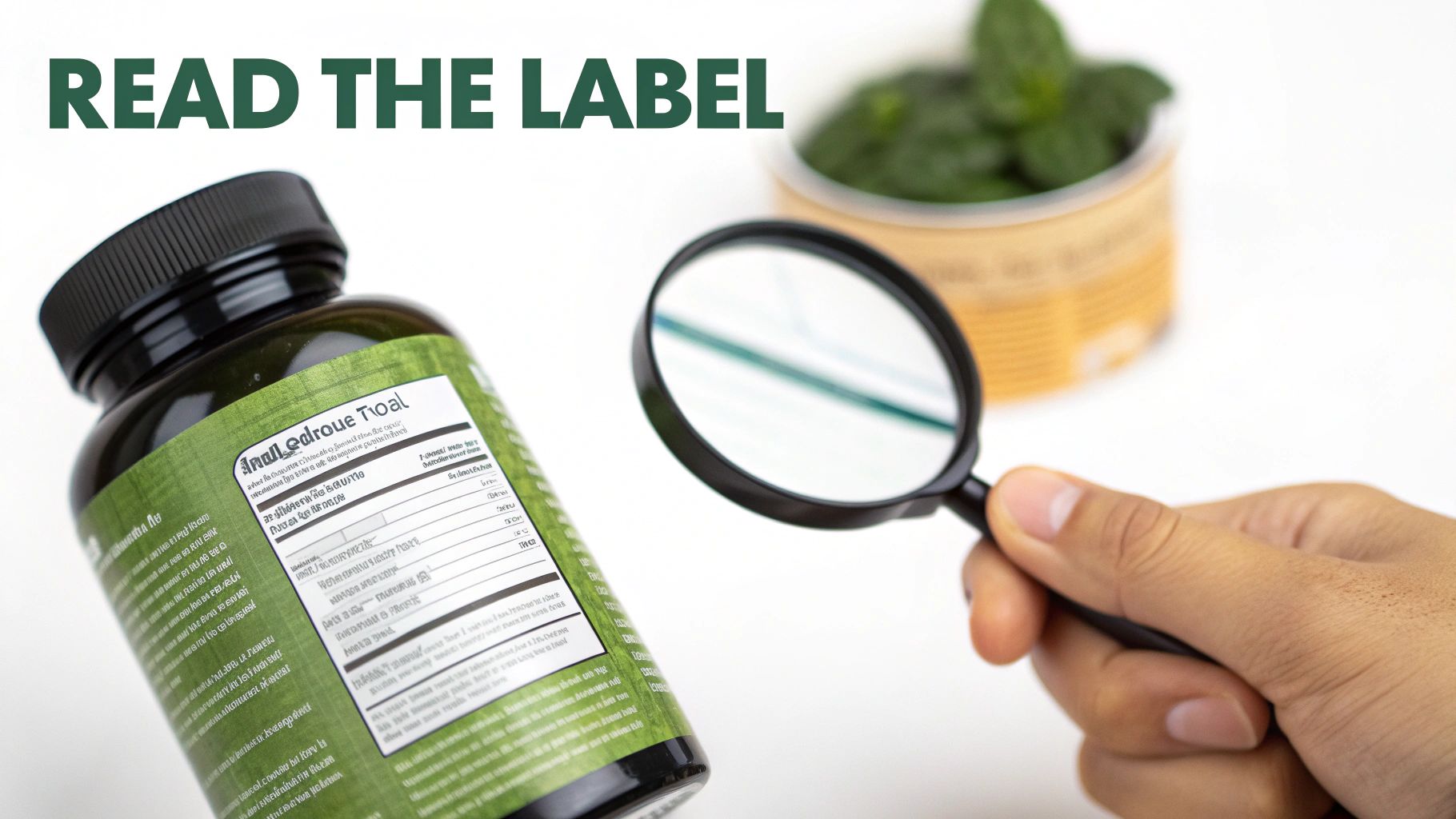
Before you can decide if a greens powder is right for you, you’ve got to know what’s actually in the tub. Let’s be honest, staring at one of those long ingredient lists can feel like you’re trying to read a botanical textbook.
But it’s not as complicated as it looks. Most quality powders are built around a few core categories of ingredients, each with a specific job to do.
Think of it like building a high-performance team for your body. The star players are the greens themselves—they form the nutritional bedrock of the entire formula.
Core Greens and Superfoods
This is the heart and soul of any greens powder. It’s where you’ll find a mix of nutrient-dense ingredients that deliver a concentrated blast of vitamins, minerals, and chlorophyll.
- Leafy Greens and Grasses: Things like spinach, kale, barley grass, and wheatgrass are the foundation. They’re loaded with vitamins A, C, and K, plus essential minerals like iron and calcium.
- Algae: Spirulina and chlorella are two absolute powerhouses. These microalgae are packed with protein, antioxidants, and B vitamins, giving the powder its signature vibrant color and a serious nutritional punch.
- Antioxidant-Rich Fruits: You’ll often see ingredients like berries and acai thrown into the mix. Their job is to help your body combat oxidative stress, protecting your cells from the damage caused by free radicals.
But the best formulas don't stop there. They add specialized ingredients to provide more targeted support for different systems in your body.
Functional Blends for Added Support
These are the specialists on the team, brought in to help with everything from digestion to stress management. These additions are what really separate a basic powder from a truly premium one.
Our Peak Performance Organic Greens Superfood, for example, is carefully formulated with over 25 organic ingredients designed to work in synergy. It’s not just about the greens; it’s about the functional blends that support key areas of your health.
- Probiotics: These are the "good" bacteria that help maintain a healthy gut microbiome—something that's absolutely crucial for digestion and a strong immune system. You want to see specific strains listed along with a clear CFU (colony-forming unit) count.
- Digestive Enzymes: Enzymes like amylase and lipase give your body a hand in breaking down food more efficiently. This can help reduce bloating and improve how well you absorb nutrients from your food.
- Adaptogens: These are herbs like ashwagandha or Rhodiola rosea that help your body adapt to and manage stress. They support hormonal balance and can give you a greater sense of calm and focus throughout the day.
Key Takeaway: The single most important thing to look for on any label is transparency. If a company hides its ingredient amounts behind a vague "proprietary blend," that’s a red flag. A reputable brand will be proud to show you exactly how much of each key ingredient you’re getting in every single scoop.
So, What Health Benefits Can You Actually Expect?
When you stir that scoop of green powder into your glass, what's really happening inside your body? The labels promise a lot—more energy, a rock-solid immune system, better digestion. But let's cut through the hype and look at what's actually going on.
Most of the benefits come down to a concentrated blast of vitamins, minerals, and antioxidants. Think of these as the essential tools your body needs to run smoothly. Antioxidants, for example, from ingredients like spirulina and kale, help your body fight back against cellular damage from oxidative stress—a natural process tied to aging and chronic disease.
This is a big reason why greens powders have taken off. More and more people are aware that they might have nutritional gaps in their diet. According to market research, a major driver for the growth of green supplements is this awareness, especially in places like North America where people are actively looking to address deficiencies and support their long-term health. You can see more on these consumer health trends on futuremarketinsights.com.
A Clean Boost in Energy and Vitality
One of the first things people notice is a natural lift in energy. This isn't the jittery buzz you get from caffeine. Instead, it’s a steady, sustained energy that comes from nutrients like B vitamins and iron, which are plentiful in leafy greens.
These nutrients are crucial for converting food into fuel for your cells. It’s a completely different mechanism than stimulants. To understand where greens powders fit in, it helps to look at the world of other caffeine-free energy supplements. By consistently getting these key nutrients, you can help your body fight off that afternoon slump and feel more vibrant all day long, without the inevitable crash.
Supporting Your Gut and Immune Health
A healthy gut is ground zero for overall wellness, and a lot of the better greens powders are built with this in mind. They often contain a powerful one-two punch for your digestive system:
- Probiotics: These are the "good guys"—beneficial bacteria that help create a balanced gut microbiome, which is critical for digesting food and absorbing all those great nutrients.
- Digestive Enzymes: Think of these as helpers that give your body a hand in breaking down food more effectively. The result is often less bloating and discomfort after you eat.
Here’s the kicker: when you support your gut, you’re also giving your immune system a major boost. A huge part of your immune system is actually located in your gut. So, a happy, balanced gut microbiome translates directly to a stronger, more resilient immune defense. Want to dive deeper? We cover this in detail in the top benefits of greens powder in our detailed guide.
It's worth remembering that while the individual ingredients in greens powders are often backed by solid research, studies on the final, blended formulas are still catching up. The best way to think about them is as a powerful insurance policy for your diet, not a silver bullet.
Comparing Costs of Powders vs Whole Foods
Let's talk about the bottom line. Is a tub of greens powder actually worth the money?
When you first see the price tag, it’s easy to get sticker shock. But we need to look past that initial number and compare it to the real-world cost of getting the same nutrients from whole foods.
A daily scoop of a high-quality greens powder usually lands somewhere between $1.50 and $2.50. On its own, that might seem like a pricey drink. But think about what it would take to replicate that scoop at the grocery store—buying organic spinach, kale, spirulina, chlorella, probiotics, and a handful of digestive enzymes separately.
That shopping list adds up, and fast.
The True Cost of Fresh Produce
The price you pay at checkout for fresh produce is only part of the story. There are a few hidden costs that sneak up on you when you rely only on whole foods:
- Food Waste: We’ve all been there. You buy a big container of organic spinach with the best intentions, only to find it wilted and slimy in the back of the fridge a week later. That’s literally throwing money away.
- Seasonal Pricing: The cost of superfoods like berries and avocados can swing wildly depending on the time of year. This makes it tough to keep your grocery budget consistent week to week.
- The Convenience Factor: Time is money. The hours you spend shopping for a dozen different ingredients, then washing, chopping, and preparing them all... that has real value, especially when life gets busy.
This is where powders really start to make sense. You’re not just paying for ingredients; you’re paying for a streamlined process.
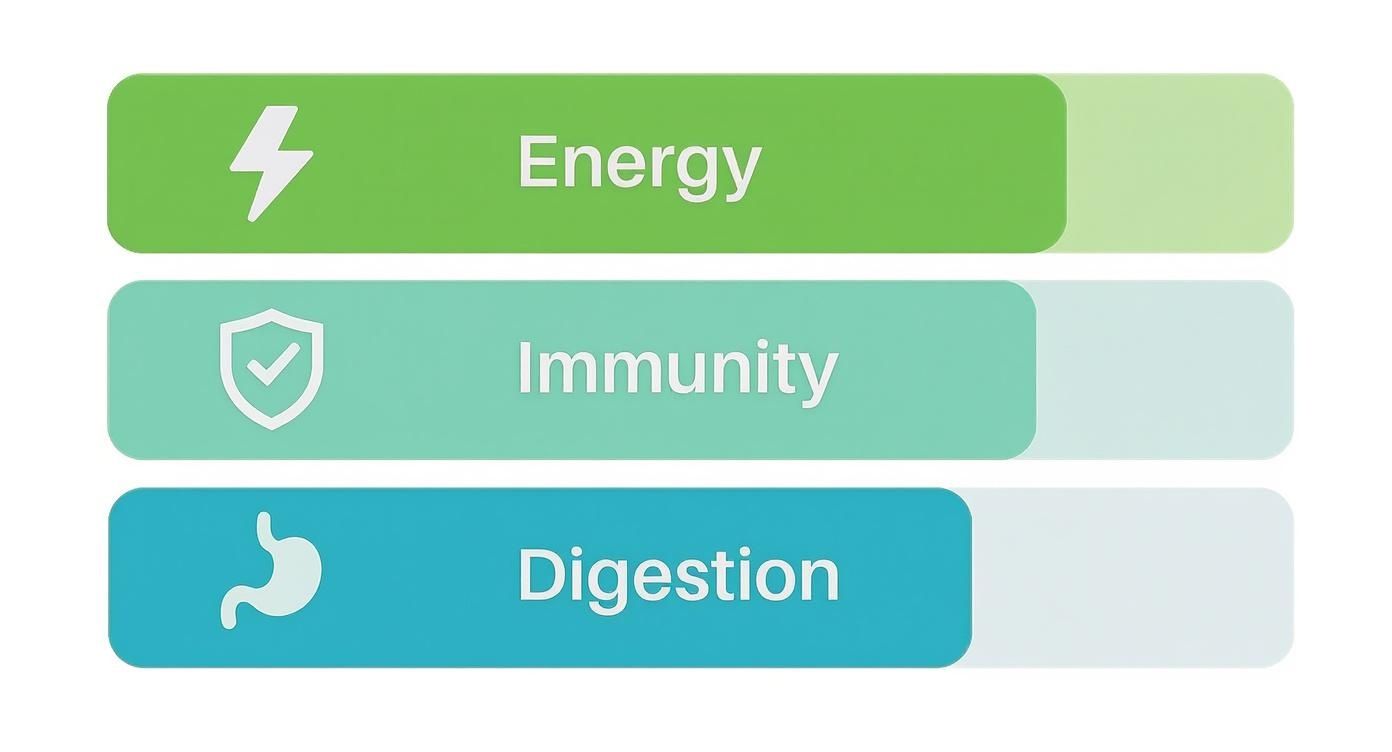
As you can see, a single scoop delivers benefits across the board for energy, immunity, and digestion—something that would require a complex and expensive combination of foods and supplements to achieve otherwise.
A Side-by-Side Cost Breakdown
To put things in perspective, let's look at a simple cost comparison. This table breaks down the estimated daily expense of getting key nutrients from a greens powder versus buying them as individual whole foods.
Daily Cost of Greens Powders vs Whole Foods
| Nutrient Source | Estimated Daily Cost | Key Considerations |
|---|---|---|
| Greens Powder (1 Serving) | $1.50 - $2.50 | Fixed cost, zero food waste, high convenience, and broad nutrient diversity. |
| Equivalent Whole Foods | $4.00 - $7.00+ | Variable cost, high risk of spoilage, time-consuming preparation, difficult to source all ingredients. |
The numbers show that while the upfront cost of a tub of powder might seem high, the daily investment is often much lower than trying to build the same nutritional profile from scratch.
When you factor in the sheer variety of hard-to-find superfoods and powerful antioxidants packed into one serving, powders can be an incredibly efficient way to nourish your body. You can learn more about these powerful compounds in our top antioxidant-rich foods list.
Of course, if you enjoy a more hands-on approach and want to save some money, cultivating your own nutrient-packed microgreens at home is a fantastic and rewarding option.
In the end, while nothing can fully replace whole foods in a healthy diet, greens powders offer a solid financial argument. When you account for the convenience, the elimination of food waste, and the broad spectrum of nutrients you get in every scoop, they often prove to be the more practical and cost-effective choice.
Potential Risks and Who Should Be Cautious
Greens powders are an amazing way to get a concentrated dose of nutrients, but let's be real—they aren't a magic bullet for everyone. It's important to look at the whole picture, downsides included, so you can figure out if they actually make sense for your health and your life.
One of the biggest issues with the entire supplement industry is the loose regulation. The FDA doesn't give supplements the same rigorous pre-market approval for safety and effectiveness that they demand for prescription drugs. This "wild west" environment means you sometimes run into problems with product purity, misleading labels, or even contamination with things like heavy metals.
The Missing Fiber Factor
There's one huge difference between a scoop of greens powder and a big plate of fresh vegetables: dietary fiber. When you dehydrate and pulverize produce, almost all of that crucial fiber gets stripped away.
And fiber is a non-negotiable for good health. It's the unsung hero that:
- Keeps your digestion running smoothly and feeds the good bacteria in your gut.
- Helps you feel full and satisfied after eating, which is a game-changer for weight management.
- Slows down sugar absorption, preventing those nasty energy spikes and crashes.
A greens drink just can't give you that same feeling of fullness or the powerful digestive benefits you get from eating whole plants.
When Too Much of a Good Thing Is Bad
It’s absolutely possible to get too much of a good thing, especially with certain vitamins. A key one to watch is Vitamin K, a fat-soluble vitamin found in high amounts in common greens powder ingredients like kale and spinach.
While Vitamin K is essential for things like blood clotting and bone health, getting massive doses can be a problem. It’s known to interfere with common blood-thinning medications, and that interaction can have serious consequences.
Because of these potential issues, some people need to be extra careful.
Who Should Talk to a Doctor First
Before you start adding a greens powder to your daily routine, it's always a smart move to run it by your doctor. This is especially true if you're in one of these groups:
- Pregnant or breastfeeding women: Your nutrient needs are in a class of their own during this time, and some of the herbal ingredients in greens blends might not be safe.
- Anyone with kidney disease: The kidneys have to process minerals, and high concentrations of things like potassium can put a strain on already compromised organs.
- People taking medication: As we just covered, the risk of interaction with blood thinners is real, but other prescription drugs can be affected, too.
Ultimately, while our Organic Greens Superfood is meticulously formulated for safety and purity, having a conversation with your doctor is the best way to ensure it’s the right fit for you.
How to Choose a High-Quality Greens Powder
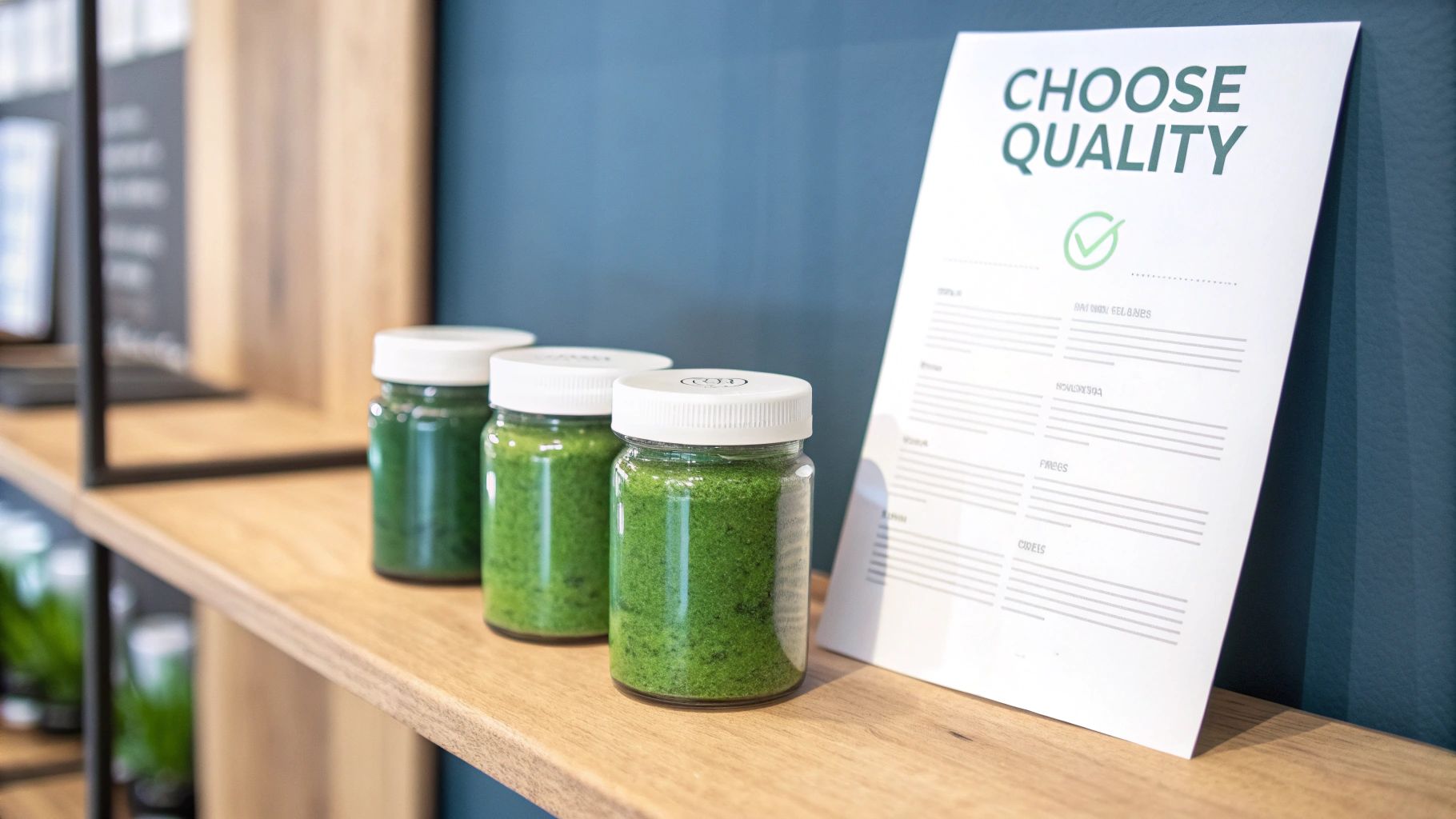
Walking down the supplement aisle—or scrolling online—can feel like a tidal wave of options. So, how do you cut through the noise? If you’re trying to figure out if a greens powder is truly worth it, you need to know how to spot a genuinely effective product among the pretenders.
Your first line of defense should always be third-party testing. The supplement industry is a bit like the Wild West; it isn't tightly regulated, which makes independent verification an absolute must. Keep an eye out for certifications from reputable organizations like NSF or USP right on the label.
Think of these seals as a guarantee. They confirm the product has been tested for purity and potency, ensuring it's free from contaminants and that what's on the label is actually what’s in the tub. If you want to dive deeper, we break down why this is so critical for your safety in our guide that explains what is third-party testing.
Look for Label Transparency
A high-quality brand isn’t shy about what’s in its formula. Be wary of products that hide their key ingredients behind a "proprietary blend." This is a classic trick that obscures the exact amount of each ingredient, making it impossible to know if you're getting a dose that actually does anything.
Look for a fully transparent label that spells out the specific amount of every single ingredient. This kind of detail shows the company is confident in its formula and has nothing to hide.
Ingredient quality also matters just as much as quantity. The best powders, like our own Peak Performance Organic Greens Superfood, use USDA-certified organic and non-GMO ingredients. This is your assurance that you're getting a clean product free from pesticides and unwanted chemicals, helping you get the maximum benefit from every scoop.
Avoid Unnecessary Additives
A truly beneficial greens powder should be all about the nutrients, not cheap fillers. A quick scan of the ingredient list tells you a lot about a product's integrity. Be on the lookout for red flags like:
- Artificial sweeteners and flavors: Things like sucralose or synthetic "natural flavors" are just dead weight and can detract from the health benefits.
- Fillers: Additives like maltodextrin or silica are often used to add bulk but offer zero nutritional value.
Ultimately, the decision to use a greens powder comes down to balancing cost, convenience, and how it stacks up nutritionally against whole foods. While North America is leading the demand, driven by a wellness-focused culture, about 30% of consumers remain skeptical and stick with whole foods. You can read about consumer trends on Vitaquest.com to see the full picture.
By prioritizing purity, transparency, and clean ingredients, you can confidently choose a powder that is truly worth the investment.
Your Greens Powder Questions, Answered
Even after getting the facts, you probably still have a few practical questions bouncing around. Let's tackle the most common ones people ask when they're trying to figure out if greens powders are really worth it.
When’s the Best Time to Drink It?
For the best possible nutrient absorption, a lot of people swear by taking their greens powder first thing in the morning on an empty stomach. The idea is that your body can take in all those vitamins and minerals without anything else getting in the way.
But honestly, consistency is way more important than timing. If a morning drink just doesn't work for you, don't sweat it. Mixing it into an afternoon smoothie for a pick-me-up or using it post-workout is just as effective. The real key is finding a time that makes it an easy, sustainable daily habit.
Can It Replace My Multivitamin?
This is a big one. While a high-quality greens powder packs a huge range of vitamins and minerals, it's not always a perfect one-for-one swap for a traditional multivitamin. Some formulas might be low in specific nutrients you personally need, like Vitamin D or iron.
The best way to know for sure is to pull up the nutritional panels for both your greens powder and your multivitamin. Put them side-by-side and compare the Daily Value (DV) percentages. This will show you if there are any major gaps you need to fill, letting you make a smart call instead of just guessing.
How Long Until I See Results?
This really varies from person to person. It all depends on your current diet, your lifestyle, and your overall health. Some people feel a real difference in their energy levels and digestion within the first week.
For others, the benefits are a bit more subtle and might take a few weeks to really kick in. Think of it less like a quick fix and more like a long-term investment in your health. The most powerful changes happen with consistent, daily use over time, giving your body foundational support day in and day out.
Ready to fill in your nutritional gaps with a clean, potent formula? Peak Performance offers the USDA Organic certified Organic Greens Superfood Powder, loaded with over 25 superfoods, probiotics, and enzymes to support your energy and digestion, every single day.
Also in Blog


10 Natural Alternatives to Energy Drinks for Sustained Focus in 2025


