


The Ultimate Guide to the Best Grass Fed Protein Powder
When you're looking for the best grass-fed protein powder, it all boils down to one simple thing: what the cow ate. A genuinely grass-fed protein, like ours at Peak Performance, gives you a cleaner, more nutrient-dense profile. It's the same difference you see between a wild-caught salmon and its farm-raised cousin. This one detail is the foundation of a superior supplement.
What Makes Grass Fed Protein a Superior Choice
Think about a wild salmon swimming freely in the ocean, eating its natural diet. Now picture a farm-raised salmon stuck in a crowded pen, fed processed pellets. The wild salmon is leaner, packed with more beneficial fats, and free from all the junk that comes with a controlled, artificial environment.
This same idea applies directly to your protein powder. The source—what the cow was eating every day—is the single biggest factor that determines the quality of the final product.
A cow's natural diet is grass. It's what they're built to eat. When they graze on open pastures, the milk they produce is fundamentally different from the milk of cows stuck in conventional feedlots, munching on corn and soy. That difference carries right through into the protein powder.
The Purity You Can Taste and Feel
Grass-fed protein simply offers a cleaner profile, mainly because it sidesteps the common practices of industrial dairy farming. Conventionally raised cattle are often pumped with hormones to boost milk production and given routine antibiotics to fend off sickness in their cramped living quarters. Traces of these can easily end up in the final product you consume.
In stark contrast, the best grass-fed protein powders come from cows that live on open pastures. This results in a product that is naturally:
- Free from added hormones and rBGH (recombinant bovine growth hormone).
- Without routine antibiotic use, leading to a more natural and cleaner supplement.
- Lower in inflammatory fats that are often linked to grain-fed diets.
This commitment to purity isn’t just for elite athletes. It’s for anyone who wants to fuel their body with high-quality, unadulterated ingredients.
A Growing Demand for Quality
The shift toward cleaner, more natural supplements isn't just a fleeting trend; it's a movement backed by serious consumer demand. The global market for grass-fed protein was valued at $122.8 million in 2021 and is on track to hit $280.6 million by 2031. This explosive growth is fueled by people like you who are actively searching for natural, hormone-free, and antibiotic-free protein sources. You can read more about the grass-fed protein market growth to see just how big this shift is.
The core idea is simple but powerful: a healthier, more naturally raised animal produces a higher-quality, more beneficial product. The protein powder you choose directly impacts the fuel you put in your body.
At the end of the day, understanding where your protein comes from is the first step to making a smart choice. It helps you realize that quality doesn't start in the factory; it starts out in the pasture.
Choosing Your Ideal Type of Grass Fed Protein
So, you’ve decided to go with grass-fed protein. Smart move. But now comes the next choice: which type is right for you? This isn't a one-size-fits-all situation. Think of it like picking the right tool for a job—you wouldn't use a hammer to saw a board.
The best grass-fed protein powder is the one that actually matches what you're trying to achieve. Are you looking to build muscle and bounce back faster after a workout? Or is your focus more on supporting your joints, skin, and overall wellness? The answer will steer you toward the perfect protein.
Before we dive in, this visual makes it crystal clear why skipping conventional, grain-fed protein is the first and most important step.
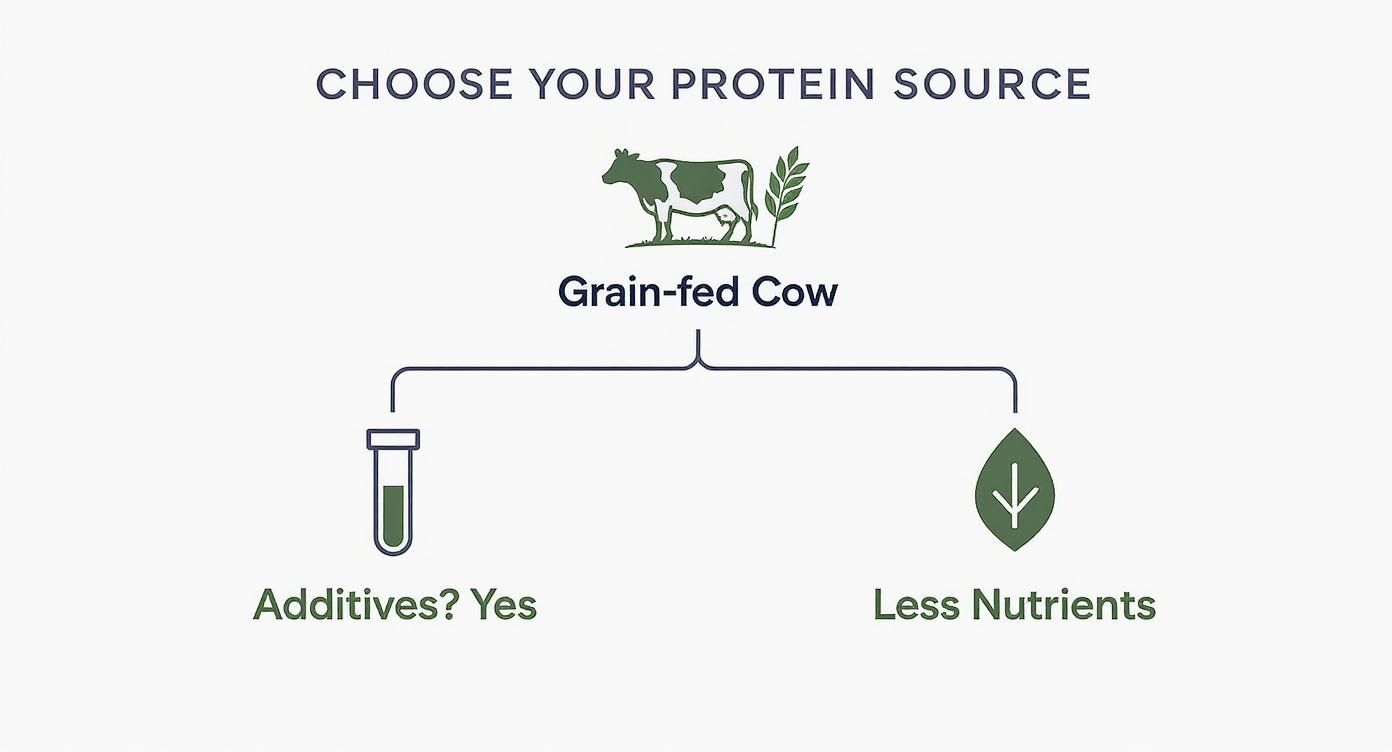
As you can see, choosing a grass-fed source helps you sidestep the additives and nutritional compromises that often come with grain-fed options. It’s simply the cleaner path.
Grass Fed Whey Protein: Your Muscle-Building Ally
There’s a reason grass-fed whey is the go-to for so many people. It’s derived from milk and is a complete protein, meaning it’s packed with all nine essential amino acids your body needs for muscle repair and growth. It generally comes in two forms: concentrate and isolate.
- Whey Concentrate: This is the less processed of the two, which means it holds onto more of the good stuff found in milk. It has a bit of fat and lactose, giving it a richer, creamier taste. It's a fantastic choice for an everyday protein boost.
- Whey Isolate: This is the more refined version. It goes through extra filtering to strip out most of the fat and lactose, which bumps up the protein content per scoop. It’s perfect for anyone with lactose sensitivities or those who are dialed in on a low-carb or low-fat diet. Plus, it digests super fast, making it ideal for that post-workout shake.
Whey is a powerhouse, but if you're curious how it stacks up against other options, check out our guide on the difference between whey and plant protein.
Grass Fed Collagen for Foundational Support
While whey is busy building muscle, grass-fed collagen is working behind the scenes to support your body's entire structure. Collagen is the most plentiful protein in the body, acting as the literal glue for your skin, hair, nails, joints, and even your gut lining.
Think of whey as the bricks for building a house, while collagen is the mortar holding everything together. Both are essential for a strong structure, but they perform different roles.
As we get older, our natural collagen production takes a nosedive. Adding a high-quality grass-fed collagen, like Peak Performance Grass Fed Collagen Peptides, can help you fight back by supporting skin elasticity, joint mobility, and a healthy gut. It’s truly a foundational supplement for long-term health.
Comparing Grass Fed Protein Powder Types
To make things even clearer, here’s a quick breakdown to help you pick the right protein for your goals.
| Protein Type | Primary Use Case | Key Benefit | Ideal For |
|---|---|---|---|
| Grass-Fed Whey Concentrate | Daily Protein Boost | Balanced nutrition with a creamy taste | General fitness and muscle maintenance. |
| Grass-Fed Whey Isolate | Post-Workout Recovery | Fast absorption and high protein purity | Athletes and those with lactose sensitivity. |
| Grass-Fed Collagen | Joint & Skin Health | Supports connective tissues and gut health | Anyone seeking anti-aging and joint support. |
By understanding these key differences, you can stop guessing and start choosing the grass-fed protein that will genuinely help you hit your health and fitness goals.
Decoding the Label to Find a Truly Clean Product
In a market flooded with flashy packaging and over-the-top promises, the only thing that really matters is the ingredients label. It's your single source of truth.
This is where you cut through the noise and see what a product is really made of. Learning to read and understand that label is the most critical skill you can develop to find the best grass-fed protein powder for your health.
The U.S. protein supplements market hit a staggering $10.49 billion in 2024 and is on track to more than double by 2034. Grass-fed options, in particular, are seeing a 38% year-over-year surge in interest. This explosion of choice is great, but it also creates a ton of confusion. A clean, simple label is what separates a truly premium product from all the pretenders.
Spotting Unwanted Additives and Fillers
The first thing to look for is a short, simple ingredient list. A high-quality grass-fed protein doesn't need a laundry list of chemicals to be effective or taste good.
When you scan the label, keep an eye out for these common red flags:
- Artificial Sweeteners: Things like sucralose, aspartame, and acesulfame potassium are often thrown in to make a product "zero-calorie," but they can cause digestive chaos for many people and have some questionable long-term health effects.
- Gums and Thickeners: Ever seen xanthan gum, guar gum, or carrageenan on a label? They're added to improve the texture and make the powder mix better. The downside is they can lead to bloating and gut discomfort, especially if you're sensitive.
- Fillers: Some brands bulk up their powders with cheap fillers like maltodextrin (a highly processed carb). This adds zero nutritional value and can cause an unwanted blood sugar spike.
A truly clean product, like the ones we've formulated at Peak Performance, prioritizes purity above all else. We leave these unnecessary ingredients out, focusing on delivering pure, effective protein without the junk.
The Non-Negotiable Role of Certifications
Certifications are your guarantee of quality. They’re proof that a brand has gone the extra mile to have its claims verified by an objective third party. Without them, you're just taking a company's word for it.
A certification isn't just a logo on a bottle; it's a promise of accountability. It tells you the product has met rigorous standards for sourcing, purity, and safety that go far beyond a simple marketing claim.
Two of the most important seals to look for are:
- USDA Organic: This is a big one. It ensures the product is made without synthetic pesticides, GMOs, or artificial junk. For a dairy protein, it also means the cows weren't treated with hormones or pumped full of antibiotics.
- Third-Party Testing: This is absolutely critical for safety. It means an independent lab has tested the product for nasty contaminants like heavy metals, microbes, and other impurities. A brand that invests in third-party testing is showing you they're committed to transparency and your safety.
Mastering this skill is essential. Our in-depth guide on how to read supplement labels can give you even more confidence when you shop. By prioritizing products with these verifiable credentials, you can be sure you're getting a supplement that is not only effective but genuinely clean and safe.
Integrating Grass Fed Protein for Maximum Impact
Having the best grass fed protein powder on your shelf is one thing, but knowing how to use it is where the magic really happens. The post-workout shake is a classic for good reason, but if you only think inside the shaker bottle, you're missing out.
The real goal is to weave high-quality protein into your daily routine. This way, you’re consistently fueling your body, keeping hunger at bay, and supporting muscle health all day long—not just in the hour after you leave the gym.
Beyond the Post-Workout Window
Timing your protein around a workout is definitely a smart move. When you consume a fast-absorbing protein like whey isolate within an hour or so of finishing your session, you give your muscles the exact building blocks they need to start repairing and growing.
But your body’s need for protein doesn't just switch off after that window closes. For a deeper look at how to fuel your body for performance, this guide to pre and post-workout nutrition is an excellent resource. Thinking about your protein strategy more broadly can unlock even better results.
Delicious and Simple Ways to Boost Your Protein
Making protein a regular part of your diet shouldn’t feel like a chore. The clean, smooth taste of a high-quality grass-fed whey makes it incredibly easy to mix into foods you already eat and love.
Here are a few of my favorite ways to do it:
- The Power Smoothie: I'll blend a scoop of protein with frozen berries, a big handful of spinach, some almond milk, and a tablespoon of chia seeds. It’s a nutrient-packed meal that keeps me full for hours, perfect for a busy morning.
- Fortified Oatmeal: Just stir a scoop of vanilla or unflavored protein powder into your oatmeal after it’s cooked. This gives it a creamy texture and a serious protein kick that’ll keep you satisfied until lunch.
- Protein-Packed Baking: You can add protein powder to almost any recipe for pancakes, muffins, or energy bites. It’s a simple trick to make a snack more balanced and muscle-friendly.
The goal is to make hitting your protein targets effortless. When your supplement can be added to a smoothie, a bowl of oatmeal, or your favorite baked goods, consistency becomes second nature.
Products like our Peak Performance Grass-Fed Whey Protein are designed specifically for this kind of versatility. It mixes in smoothly, without any clumps or that chalky aftertaste you get from lower-quality powders.
At the end of the day, the best protein powder is the one you actually use consistently. If you want to dive deeper into the science of recovery, check out our article on finding the best protein after a workout. By making it a simple part of your meals, you’ll get the most out of your investment in your health.
Common Marketing Traps to Avoid When Shopping
Walking down the supplement aisle can feel like navigating a minefield. Every label is screaming bold claims, and it's tough to know who to trust. This is where you need to put on your skeptic's hat. If you can learn to spot a few common marketing traps, you'll be able to sidestep the junk and find the best grass fed protein powder that actually does what it says.
One of the biggest red flags is vague or wishy-washy labeling. You'll see phrases like "made with grass-fed whey" or "from grass-fed cows" plastered on the front. Sure, it sounds great, but it doesn't actually guarantee the product is 100% grass-fed. A cow could be fed a diet of 90% grain but wander into a pasture once a week, and a company could technically use that phrase.
A truly transparent brand won't hide behind clever wording. Look for clear, unambiguous language like "100% Grass-Fed" and, even better, a third-party certification to prove it. Without that, you're likely just looking at a marketing gimmick.
Spotting Protein Spiking and Fillers
Another dirty little secret in the industry is a practice called protein spiking. This is where a manufacturer dumps cheap, nitrogen-rich amino acids—like glycine or taurine—into the powder. Why? Standard protein tests work by measuring total nitrogen to estimate protein content. These fillers artificially inflate the number on the label, so you think you're getting 25 grams of pure whey, but a good chunk of it is just cheap filler that does nothing for muscle growth.
Your best defense here is to become a label detective. Flip the tub over and scan the ingredient list. If you see individual amino acids listed separately from the primary protein source, that's a potential sign of spiking. A high-quality protein powder will have a short, clean ingredient list with the protein source right at the top.
The Booming Market and the Need for Scrutiny
The demand for clean, high-quality supplements has absolutely exploded. The global protein powder market hit around $24.24 billion in 2024 and is still climbing. Within that, animal-based proteins like grass-fed whey make up about 55% of the demand simply because they work so well. Unfortunately, that kind of rapid growth attracts shady players looking to make a quick buck by cutting corners. You can learn more about the high-protein powder market here and see why doing your homework is more important than ever.
The simplest way to avoid all these traps is to stick with brands that value transparency and back up their claims with proof. At Peak Performance, our Grass Fed Whey Protein and Collagen Peptides are both third-party tested for purity and potency. We believe what's left out of our products is just as important as what goes in, so you get a clean, effective supplement without the marketing tricks.
Grass-Fed Protein FAQs
Jumping into the world of supplements can feel a little overwhelming. Let's clear up some of the most common questions we get about grass-fed protein so you can feel totally confident in what you're buying.
Is Grass-Fed Protein Really Better Than Regular Whey?
If you care about purity and nutrient quality, then yes, there’s a real difference. Grass-fed protein comes from cows that live how nature intended—grazing on grass in open pastures.
This lifestyle means a cleaner final product, one that isn't bogged down with the added hormones or routine antibiotics so common in conventional dairy farming. While the final nutrition stats on the powder label might look similar, the source is what truly matters. Certified grass-fed protein usually comes from farms that value animal welfare and sustainable practices, which means higher-quality milk from the start.
Can I Take Grass-Fed Protein if I'm Lactose Intolerant?
This is a great question, and the answer comes down to which type of grass-fed protein you choose. If you know you're sensitive to lactose, your best bet is to go for a grass-fed whey protein isolate.
The "isolate" process is incredibly effective at filtering out nearly all the lactose and fat. What’s left is an exceptionally pure protein that’s much easier for most people to digest.
- Grass-Fed Whey Concentrate: This form keeps more of the milk's natural components, including a higher amount of lactose. It might cause issues if you're intolerant.
- Grass-Fed Whey Isolate: This is the go-to for whey lovers with lactose sensitivity. It’s processed to remove the vast majority of the lactose.
Of course, for a completely dairy-free option, you could also try grass-fed collagen, which is naturally lactose-free.
Choosing a grass-fed whey isolate gives you all the muscle-building benefits of whey without the digestive drama that lactose can cause. It’s the cleanest, most targeted form of whey you can get.
When Is the Best Time to Use Grass-Fed Protein Powder?
Honestly, the "best" time really depends on your goals. There’s no single right answer, but you can definitely time it to get the most out of every scoop.
For anyone focused on muscle recovery and growth, the classic advice is to have a shake within 30-60 minutes after a workout. People call this the "anabolic window," a time when your muscles are practically starving for nutrients to start repairing themselves.
That said, what matters most for long-term results is hitting your total daily protein goal consistently. Using a shake for a quick breakfast or as a snack between meals is also a fantastic way to crush hunger and keep your energy steady all day long.
Will Grass-Fed Protein Powder Help with Weight Loss?
It can be a game-changer for weight management. Protein is famous for being the most filling macronutrient, which means it helps you feel full and satisfied for much longer than carbs or fats. A protein shake can be a powerful tool to curb cravings and stop you from overeating later.
Beyond just feeling full, protein is crucial for protecting your lean muscle, especially when you're cutting calories. By holding onto that muscle, you keep your metabolism firing on all cylinders, encouraging your body to burn fat for energy. When you pair a top-quality grass-fed protein powder with a solid diet and regular exercise, it can absolutely give your weight loss journey a serious boost.
At Peak Performance, our mission is to deliver the cleanest, most effective supplements out there. Our Grass-Fed Whey Protein Isolate is sourced from 100% grass-fed cows and rigorously third-party tested, so you can be sure you're giving your body the pure fuel it needs to thrive.
Also in Blog


Whey vs Egg Protein An Unbiased Comparison

