


Best Recovery Foods for Athletes: Peak Performance Fast
The best recovery foods are always a strategic mix: high-quality protein to rebuild muscle, easily digestible carbohydrates to restock your energy stores, and antioxidants to cool down inflammation. Simple combos like Greek yogurt with berries, chicken and sweet potato, or a well-made recovery shake are perfect for getting the process started.
Why Post-Workout Nutrition Is Your Secret Weapon
Ever wonder what really separates good athletes from the truly great ones? It’s often what they do in that first hour after the training session ends.
Think of a tough workout as a controlled demolition of your muscle fibers. Your post-workout meal is the expert construction crew that shows up to rebuild everything stronger than before. That’s why the best recovery foods for athletes are a non-negotiable part of any serious training plan.
This isn’t just about feeling less hungry; it’s about giving your body the exact raw materials it needs to adapt and get better. Skip this critical window, and you’re signing up for longer-lasting soreness, a higher risk of injury, and a frustrating performance plateau. Your body is screaming for resources—answer the call.
The Three Pillars of Post-Workout Recovery
To really dial in your results, you need to focus on three core nutritional goals immediately after a workout. This simple framework strips away the noise and clarifies what your body needs most after being pushed to its limits. Nailing these pillars is the key to smarter food choices that prevent injury, fight off fatigue, and unlock consistent gains.
| Recovery Pillar | Primary Goal | Key Nutrients |
|---|---|---|
| Repair | Mend micro-tears in muscle fibers to build strength and size. | Protein (amino acids) |
| Replenish | Restock depleted muscle glycogen (your primary fuel source). | Carbohydrates |
| Reduce | Manage exercise-induced inflammation and oxidative stress. | Antioxidants, Phytonutrients |
Understanding this process is the first step toward making your nutrition work for you, not against you. For a deeper dive into the practical side of this, check out our guide on post-workout recovery tips to make sure you’re getting the most out of every single session.
A Growing Focus on Recovery
The laser focus on post-workout nutrition isn't just another fitness trend. It’s a rapidly growing field backed by solid science and embraced by top athletes everywhere.
The global sports nutrition market, which includes recovery foods, was valued at roughly USD 58.72 billion in 2024 and is projected to smash USD 104 billion by 2033. This explosion in growth shows just how much the world is waking up to the fact that recovery is just as important as the workout itself.
Your recovery nutrition isn't just a meal; it's an investment in your next performance. The food you choose directly influences how quickly you adapt, how strong you become, and how consistently you can train.
Ultimately, viewing food as a powerful tool is a complete game-changer. The right nutrients at the right time are your secret weapon for faster recovery and hitting your peak. To get a better handle on specific food choices and timing, explore this ultimate guide to post-workout recovery foods.
Repairing Muscle with High-Quality Protein Sources
After you’ve pushed your body to its limits, your muscles are screaming for one thing: repair. A tough workout literally creates microscopic tears in your muscle fibers. To mend that damage and come back stronger, your body needs amino acids—the building blocks of protein. This entire process is called muscle protein synthesis, and it's the absolute foundation of getting bigger, faster, and stronger.
Think of it like a construction crew fixing a damaged wall. The amino acids are the fresh bricks and mortar. If you don't supply them, the wall stays weak. A steady stream of high-quality protein gives your crew everything they need to not only patch the holes but add a whole new, reinforced layer. This is why protein is non-negotiable in any serious recovery plan.
But for athletes, not just any protein will do. You need to zero in on complete proteins, which pack all nine essential amino acids your body can't make on its own. These are the most efficient fuel sources for rebuilding muscle.
Top Whole-Food Protein Sources
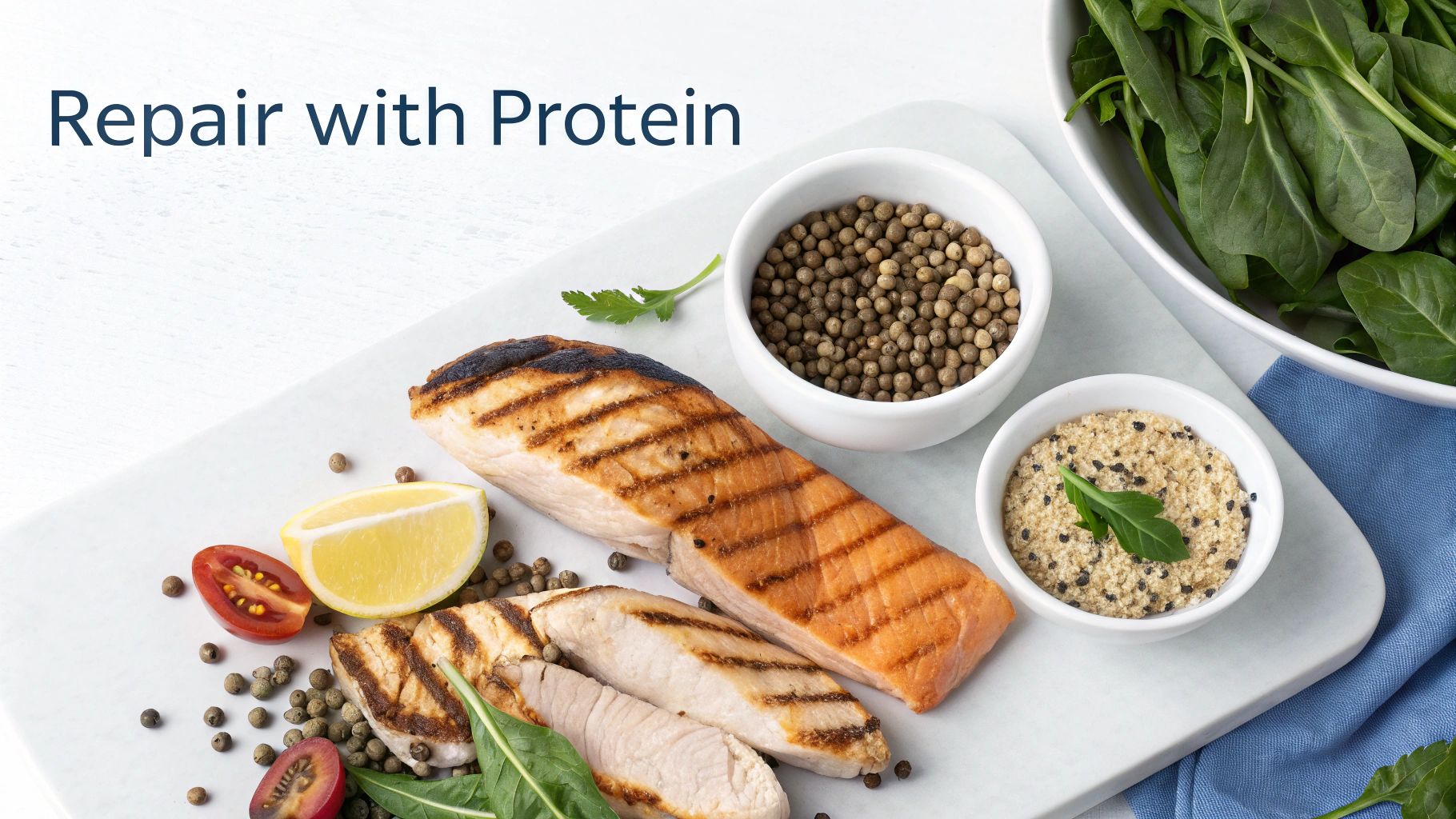
Building your diet around a variety of whole-food proteins is the bedrock of a smart recovery strategy. These foods don't just deliver amino acids; they come packaged with other critical nutrients that boost your overall performance and health.
- Lean Chicken and Turkey: A staple for a reason. A single serving can pack over 30 grams of top-tier protein, giving your muscles a massive dose of rebuilding material.
- Salmon: More than just protein, salmon is loaded with omega-3 fatty acids. These are potent anti-inflammatories that can seriously help calm down that post-workout muscle soreness.
- Greek Yogurt: This is a true recovery powerhouse. It delivers a one-two punch of fast-acting whey and slow-release casein protein, which means your muscles get a sustained drip of amino acids for hours.
- Eggs: Often called nature's perfect protein. Eggs have all the essential amino acids and are especially rich in leucine, the amino acid that basically flips the "on" switch for muscle protein synthesis.
- Plant-Based Options: If you’re plant-based, combining foods like lentils and quinoa gives you a complete protein profile. This ensures you're not missing any of the amino acids you need for optimal recovery.
Accelerating Recovery with Targeted Supplementation
Whole foods are king, but let's be real—sometimes you need protein that's fast, concentrated, and easy to get down, especially right after a workout. This is where the right supplements can be a total game-changer.
For immediate, no-nonsense muscle repair, a shake made with Grass Fed Beef Protein Powders is an incredible choice. It sends a highly bioavailable surge of protein and collagen peptides straight to your muscles, kickstarting recovery without making your digestive system work overtime. If you need some inspiration, checking out some effective protein smoothie recipes can give you great ideas.
To take things a step further and protect the muscle you've already built, you can bring in specialized compounds. Advanced HMB Capsules are a secret weapon for dedicated athletes. HMB (beta-hydroxy beta-methylbutyrate) is a metabolite of leucine that’s been proven to slow down muscle protein breakdown.
Think of HMB as your muscle's personal security guard. While protein is busy rebuilding, HMB stands watch to prevent your body from breaking down existing muscle for energy. This helps you hold onto your gains and recover much more efficiently.
This two-pronged attack—giving your body protein to rebuild while using HMB to stop breakdown—creates the perfect storm for muscle growth and adaptation. To dive deeper into picking the right supplement for you, check out our guide on the best protein powder for muscle recovery. By combining smart whole-food choices with strategic supplementation, you're giving your body the full toolkit it needs to repair, rebuild, and dominate your next workout.
Replenishing Your Energy with Smart Carbohydrates
If you think of high-quality protein as the construction crew that rebuilds your muscles, then smart carbohydrates are the fuel powering the entire operation.
Imagine your muscles have a specialized fuel tank. Every intense workout drains that tank—what we call your muscle glycogen stores—down to empty. And trying to start your next session on fumes is a surefire way to stall out.
This is why replenishing glycogen isn't just a good idea; it's non-negotiable for anyone serious about consistent performance. Right after a workout, your body is primed to soak up carbs and convert them back into glycogen. Your muscles become incredibly sensitive to insulin, the hormone that acts like a key, unlocking your muscle cells to let glucose in from your bloodstream.
By eating the right carbs at the right time, you jump-start this whole process. You’re making sure your energy reserves are locked and loaded for whatever comes next, which is one of the simplest and most effective ways to crush fatigue and keep your intensity high, day after day.
Simple vs. Complex Carbs: The Right Fuel at the Right Time
Not all carbs work the same way, and for recovery, timing is everything. You need to know the difference between simple and complex carbs to get this right.
-
Simple Carbohydrates: These are your first responders. Think bananas, berries, or a little bit of honey. Their basic sugar structure means they digest fast, delivering a quick hit of glucose to your bloodstream that your hungry muscles can grab immediately. This makes them perfect for that crucial 30-60 minute window right after you train.
-
Complex Carbohydrates: These are your long-haul energy providers. Foods like sweet potatoes, oats, quinoa, and brown rice are built from longer, more complex sugar chains. They take more time to break down, which gives you a slower, steadier stream of energy. Eating these in the hours after your initial recovery snack is how you fully top off your glycogen tanks for the long run.
This one-two punch—a quick shot of simple carbs followed by a sustained release from complex carbs—is a cornerstone of effective athletic recovery.
The Power of Combining Carbs and Protein
While carbs are the main fuel source, something almost magical happens when you pair them with protein.
It turns out that eating protein with your post-workout carbs can actually speed up glycogen replacement even more than eating carbs by themselves. The amino acids from the protein basically give the insulin response a boost, opening the door wider for glucose to flood into your muscle cells.
It's a true win-win. You're giving your body the building blocks to repair muscle (protein) and the energy to fuel that repair process (carbs) all at once. A simple but powerful example is a recovery shake with a quality protein source blended with a banana, or even a bowl of Greek yogurt with fresh fruit and a drizzle of honey.
This strategic refueling is exactly why post-workout nutrition is such a massive part of the sports nutrition world. In 2024, liquids made up 45.9% of all sports nutrition products, mostly because they're convenient and absorb quickly. Products like protein powders, BCAAs, and creatine are all designed to help with glycogen replenishment, tissue repair, and hydration. You can discover more insights about these market trends to see just how important this is.
By understanding how to refuel with smart carbohydrates, you give your body the exact energy it needs to recover completely and come back stronger.
Taming Inflammation With Antioxidant-Rich Foods
Let's get one thing straight: muscle soreness isn't a badge of honor. It’s a signal from your body. After you crush a tough workout, your body kicks off a natural inflammatory response, which is a key part of how your muscles repair themselves and grow stronger. But when that inflammation sticks around too long or gets out of hand, it sabotages your recovery, keeps you sore for days, and can even put you on the fast track to an injury.
This is where antioxidant-rich foods become your best friend in the kitchen. Think of the oxidative stress from a hard training session as tiny bits of "rust" forming inside your cells. Antioxidants are your body's clean-up crew, swooping in to neutralize these damaging free radicals and quiet the inflammatory fire. Nailing your nutrition here helps you manage that inflammation, cut down on soreness, and get back to training faster.
The smartest athletes know that recovery is no longer an afterthought—it's a central pillar of performance. In fact, a whopping 90% of active consumers now think about their health holistically, recognizing that what they eat after the gym is just as critical as the workout itself. Foods and supplements proven to combat exercise-induced inflammation are now a non-negotiable part of that strategy. You can dig into the research on this wellness shift to see just how seriously athletes are taking recovery.
The Best Anti-Inflammatory Foods for Athletes
The most effective way to fight off exercise-induced inflammation is to load your plate with a wide variety of colorful, nutrient-packed whole foods. These powerhouses are filled with unique compounds that protect your cells and kickstart your recovery.
- Tart Cherries: These are a true game-changer for athletes. They’re packed with anthocyanins, potent antioxidants that have been shown to seriously reduce muscle pain and strength loss after a grueling workout.
- Berries: Blueberries, strawberries, and raspberries are practically bursting with antioxidants and polyphenols. These compounds help shield your cells from damage and support a balanced inflammatory response.
- Leafy Greens: Don't skip your greens. Spinach, kale, and other dark leafy vegetables are loaded with vitamins and antioxidants like beta-carotene and vitamin C that help fight oxidative stress body-wide.
Healthy Fats and Spices That Fight Back
It’s not just about fruits and veggies. Certain healthy fats and spices offer powerful anti-inflammatory benefits that are perfect for dialing in your recovery. They’re super easy to add to your post-workout meals for an extra healing boost.
By proactively managing inflammation with the right foods, you’re doing more than just soothing sore muscles. You’re building an internal environment that supports faster, more efficient muscle repair and adaptation. This is how you train harder and more consistently over the long haul.
If you're looking to build a truly bulletproof anti-inflammatory diet, our guide on a complete antioxidant-rich foods list has plenty of other ideas for your next grocery run. Healthy fats are another cornerstone of this approach.
- Avocados: Loaded with heart-healthy monounsaturated fats, potassium, and carotenoids, avocados are fantastic for reducing inflammation and supporting your cardiovascular system.
- Nuts and Seeds: Almonds, walnuts, and chia seeds are all excellent sources of healthy fats, fiber, and antioxidants that help your body keep its inflammatory response in check.
- Turmeric and Ginger: These spices are anti-inflammatory royalty. Curcumin in turmeric and gingerol in ginger are potent compounds known to help soothe sore muscles and calm down systemic inflammation.
The Unsung Heroes: Hydration and Micronutrients
You can have the most dialed-in protein and carb strategy in the world, but if you’re dehydrated, the whole recovery process grinds to a halt. Proper hydration and micronutrient intake are the unsung heroes of athletic performance—often overlooked, but absolutely critical for everything else to work.
Think of your circulatory system as a superhighway for nutrient delivery. After a workout, protein and carbs are the precious cargo. Water is the fleet of trucks carrying that cargo to your beat-up muscle tissues. But when you're dehydrated—even by as little as a 2% loss in body weight—your blood literally thickens. Traffic on that highway slows to a crawl, and the delivery of vital nutrients gets seriously delayed.
This slowdown is a direct roadblock to muscle protein synthesis and glycogen replenishment. Your cells are left starving for the materials they need to repair and refuel. The result? You stay sore longer, and your muscles just can't adapt as well as they should.
Beyond Water: Replacing Key Electrolytes
When you sweat, you’re not just losing water. You’re also dumping critical minerals called electrolytes. The main players are sodium and potassium, which are responsible for keeping your fluids balanced, your nerves firing correctly, and your muscles contracting. If you don't replace them, you're setting yourself up for cramps, fatigue, and a lackluster recovery.
In fact, just chugging plain water after a really sweaty session can sometimes backfire. It can dilute the electrolytes you have left, making the problem even worse. Your post-workout drink or meal needs to actively put back what you lost.
- Sodium: This is essential for fluid retention, helping your body actually hold onto the water you drink. A pinch of sea salt in your shake, some pickles, or a handful of salted nuts can do the trick.
- Potassium: It works hand-in-hand with sodium to manage fluid balance and is a non-negotiable for proper muscle function. You’ll find it packed into bananas, avocados, and sweet potatoes.
The Power of Micronutrients
While protein and carbs get all the glory, micronutrients—vitamins and minerals—are the behind-the-scenes crew running the entire recovery operation. They are the skilled technicians and engineers making sure the whole rebuilding project runs smoothly. Without them, muscle repair, energy production, and inflammation control all take a nosedive.
Think of micronutrients as the ‘spark plugs’ for your metabolic engine. You can pour all the high-octane fuel (macros) you want into the tank, but without that spark from vitamins and minerals, your body can’t turn that fuel into real recovery and growth.
Making sure your diet is loaded with these compounds is a game-changer for any athlete looking to hit their peak potential. They’re the small details that make a massive difference in how fast you bounce back.
Essential Micronutrients for Athlete Recovery
A handful of vitamins and minerals play an outsized role in getting you back in the game faster. Focusing on foods rich in these specific micronutrients can give you a serious edge. Here are the heavy hitters you need to know.
| Micronutrient | Role in Recovery | Top Food Sources |
|---|---|---|
| Magnesium | Aids in muscle relaxation, reduces cramping, and is involved in energy production. | Leafy greens, nuts, seeds, dark chocolate. |
| Zinc | Plays a key role in protein synthesis and repairing damaged tissues. | Meat, shellfish, legumes, seeds. |
| Vitamin C | A powerful antioxidant that helps manage inflammation and supports collagen formation for healthy joints. | Berries, oranges, bell peppers, broccoli. |
| Vitamin D | Essential for bone health and modulating the immune system, which is stressed during intense training. | Fatty fish, fortified milk, egg yolks. |
| B Vitamins | Critical for energy metabolism, helping your body convert the food you eat into usable fuel. | Whole grains, eggs, lean meat, legumes. |
Getting these micronutrients from whole foods is always the best approach. A colorful, varied diet is your best insurance policy for covering all your bases and ensuring your body has every tool it needs to rebuild and come back stronger.
Building Your Ultimate Post-Workout Recovery Meal
Knowing which foods can help you recover is one thing. Actually putting them together into a meal that tastes great and gets the job done is the real secret. Let’s get practical and build the ultimate post-workout recovery meal, moving from the what to the how.
The goal here isn't a rigid diet, but a simple, flexible template. You want to combine high-quality protein, smart carbs, and anti-inflammatory compounds into one simple, satisfying meal. Get this right, and you not only kickstart muscle repair but also make the whole process something you actually look forward to.
The Perfect Recovery Meal Formula
The foundation of a great recovery meal is a simple ratio that ensures you're hitting all your targets. Think of it as a checklist for your plate.
- Protein First (20-40g): This is your non-negotiable. Your muscles are screaming for amino acids, so give them a high-quality, easily digestible source.
- Smart Carbs Next (40-80g): Pair that protein with a mix of simple and complex carbs. This duo will rapidly restock your glycogen stores and provide sustained energy for the hours ahead. The harder you trained, the more you’ll need.
- Add an Anti-Inflammatory Boost: Toss in a serving of antioxidant-rich fruits, veggies, or healthy fats. This will help your body manage soreness and the oxidative stress that comes from a tough workout.
Following this simple formula is the fastest way to give your body exactly what it needs to rebuild, refuel, and cool down inflammation, setting you up for a stronger comeback tomorrow.
This diagram breaks down the core components that are absolutely essential for post-workout recovery.
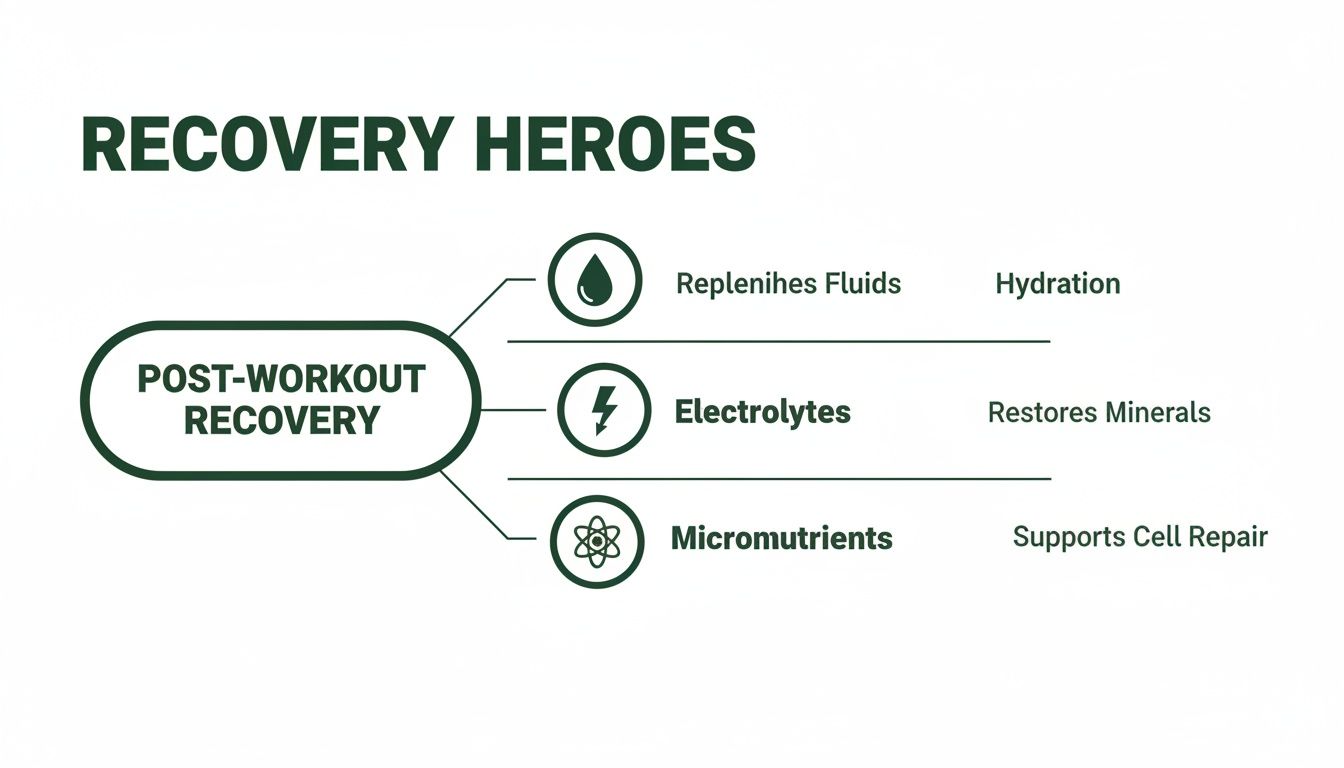
It’s a great visual reminder that while protein and carbs are the stars, hydration, electrolytes, and micronutrients are the critical support system that makes it all work.
Recovery Meal and Snack Ideas in Action
So, what does this look like on a plate (or in a shaker cup)? Whether you need a full meal or a quick snack on the go, these ideas pull all the key elements together.
The Power Recovery Smoothie (Under 5 Minutes):
When you’re short on time, nothing beats a smoothie. It’s fast, efficient, and delivers nutrients in a pre-digested form, meaning your body can absorb them almost instantly.
- Base: 1-2 scoops of our Grass Fed Beef Protein Powders for a clean hit of protein and collagen.
- Carbs: 1 banana and a handful of frozen berries (tart cherries are fantastic for fighting inflammation).
- Booster: A scoop of Creatine Powder to help restore cellular energy and pull water into your muscles.
- Liquid: Water or unsweetened almond milk.
This isn't just a smoothie; it's a recovery powerhouse. The protein gets to work on muscle repair, the fruit replenishes glycogen, and the creatine supercharges the whole process by helping regenerate ATP—your body's primary fuel source.
The Classic Recovery Plate (Full Meal):
When you have time to sit down for a proper meal, this plate has everything your body is craving.
- Protein: 4-6 oz of grilled salmon or chicken breast.
- Carbs: 1 medium sweet potato and a cup of steamed broccoli.
- Anti-inflammatory Fat: Half an avocado, sliced right on top.
Think of these as your go-to templates. Feel free to mix and match your favorite ingredients. As long as you stick to the core principles, you'll build a recovery nutrition plan that works perfectly for you.
Got Questions About Recovery Nutrition? We’ve Got Answers.
When it comes to dialing in your recovery, a lot of questions pop up. Let's tackle some of the most common ones with simple, science-backed answers to help you get the most out of your hard work.
How Soon Do I Really Need to Eat After a Workout?
You’ve probably heard of the "anabolic window," and while the idea of a strict 30-minute deadline has been softened by research, the principle is solid. Your best bet is to eat within 1-2 hours after you finish your workout. Think of your body like a sponge in this timeframe—it’s primed to soak up nutrients, kickstart muscle repair, and aggressively restock its energy (glycogen) stores.
Now, if you’re an athlete training twice a day or have another session coming up fast, that window shrinks. For you, getting that recovery fuel in sooner, ideally within 60 minutes, can be a game-changer for your next performance.
Are Supplements Necessary, or Can I Just Eat Real Food?
A smart diet built on whole foods is non-negotiable. That's your foundation. But let's be real—supplements bring a level of convenience and targeted efficiency that’s tough to replicate with a meal, especially right after a tough session.
A recovery shake using a high-quality protein, like our Grass Fed Beef Protein Powders, is absorbed much faster and more easily than, say, a chicken breast. It gets to your muscles when they need it most. Plus, certain supplements can deliver specific compounds at doses that fast-track the recovery process.
Supplements don’t replace good nutrition; they amplify it. They fill the gaps and offer targeted support when your body is screaming for it, helping you squeeze every last drop of progress out of your training.
For example, something like our Advanced HMB Capsules helps slam the brakes on muscle breakdown. At the same time, Creatine Powder gets to work restoring your cellular energy. These are benefits you just can’t get from diet alone.
What Are the Absolute Worst Foods to Eat After Training?
What you don't eat is just as critical as what you do. After a workout, you need to dodge foods that actively sabotage your recovery. The main offenders are:
- Greasy or Fried Foods: These are loaded with fats that slam the brakes on digestion. That means the proteins and carbs your muscles are desperate for get stuck in traffic.
- Sugary Processed Junk: Sure, you need carbs, but a candy bar or a bag of chips will send your energy levels on a rollercoaster and won't give you the quality fuel you need to rebuild.
- Alcohol: Honestly, it’s one of the worst things you can put in your body post-workout. It dehydrates you, gets in the way of protein synthesis, and can fire up inflammation—basically undoing all your hard work.
How Much Does Sleep Really Matter for Recovery?
Think of sleep as the ultimate force multiplier for your nutrition. It’s during deep sleep that your body releases a flood of human growth hormone, which is absolutely essential for repairing and rebuilding muscle tissue. You can have the perfect diet, but without enough quality sleep, your body simply can't put those nutrients to good use.
Making 7-9 hours of quality sleep a priority is just as crucial as what’s on your plate. It’s when your body finally gets to work, taking all those awesome recovery foods and using them to build you back stronger for whatever you’re taking on next.
At Peak Performance, we’re obsessed with creating clean, powerful supplements that actually support your recovery and help you crush your goals. Check out our full lineup, from top-tier protein powders to specialized recovery formulas, and find your next level.
Also in Blog


10 Natural Alternatives to Energy Drinks for Sustained Focus in 2025


