


The Best Way to Mix Protein Powder for Smooth Shakes
Let’s be honest, we've all been there: shaking a protein cup like our life depends on it, only to be met with a gritty, lumpy mess. It's a frustrating end to a good workout. But what if I told you the secret to a perfectly smooth shake isn’t some expensive gadget or complicated technique?
It all boils down to one simple, foundational rule: liquid first, then powder.
This single change in your routine is a total game-changer. Adding the powder on top of the liquid prevents that sticky, cement-like layer from forming at the bottom of your shaker. It’s the first and most important step toward a clump-free drink, whether you're just using a basic shaker or a powerful blender.
The Art of the Smooth Protein Shake
Once you’ve got the liquid-first principle down, the next thing to consider is your equipment. The tool you use can make or break the final texture, especially when you start adding other ingredients.
A standard shaker bottle is your best friend for a quick post-gym refuel. It’s fast, convenient, and gets the job done for most powders. However, if you're looking to create a more substantial, nutrient-dense smoothie with things like frozen fruit, spinach, or nut butter, a blender becomes non-negotiable. It has the power to pulverize everything into that silky consistency we're all after.
Your Protein Powder and Liquid Make a Difference
Not all protein powders are created equal when it comes to mixability. The source of the protein and how it's processed dramatically changes how it behaves in liquid. Some are just naturally more prone to clumping than others.
Here's what I've seen in my experience:
- Beef Protein: A finely milled Grass Fed Beef Protein Powder can mix surprisingly well, but you’ll want to give it a really vigorous shake to get it just right.
- Plant-Based Protein: Many modern vegan blends, like our Organic Plant Protein Powder, are specifically formulated to avoid that classic gritty texture you might find in older plant-based options.
- Collagen & Bone Broth: Specialty powders, such as this Bone Broth + Collagen Protein Powder, often dissolve much better in warm liquids. The temperature can make a huge difference.
The biggest mistake I see people make is not matching their mixing method to their protein type. A blender can rescue a stubborn powder, while a high-quality powder might mix perfectly with just a spoon. It's all about understanding that relationship.
Ultimately, you have to consider your variables. Cold water can sometimes make powders clump up, while room-temperature or slightly warm liquids tend to help them dissolve more easily. Getting these basics right will build a solid foundation for a better protein experience every single time.
Protein Mixing Methods at a Glance
Choosing the right tool for the job is half the battle. This table breaks down the most common methods so you can see what works best for your routine and protein type.
| Mixing Method | Best For | Smoothness Level | Pro Tip |
|---|---|---|---|
| Shaker Bottle | Post-workout whey, casein, or well-formulated plant proteins | Good to Great | Use a shaker with a blender ball or mesh screen for best results. Shake vigorously for at least 30 seconds. |
| Electric Blender | All protein types, especially thick or clumpy powders; ideal for adding fruit, ice, or greens | Excellent | For thick smoothies, add more liquid if the blades get stuck. A quick pulse at the end helps break up any remaining bits. |
| Spoon/Fork & Cup | Highly soluble powders like collagen or whey isolate in a pinch | Fair to Poor | Stir continuously while slowly adding powder to the liquid to prevent clumping. Works best with room-temp liquid. |
| Handheld Frother | Collagen or fine protein powders mixed into coffee or milk | Good | Perfect for single servings. Mix in a taller cup to avoid splashing. |
As you can see, a blender is the undisputed champion for smoothness, but a good shaker bottle is often all you need for a simple, on-the-go shake. The key is to know your options and pick what works for you.
Choosing Your Mixing Tools Wisely
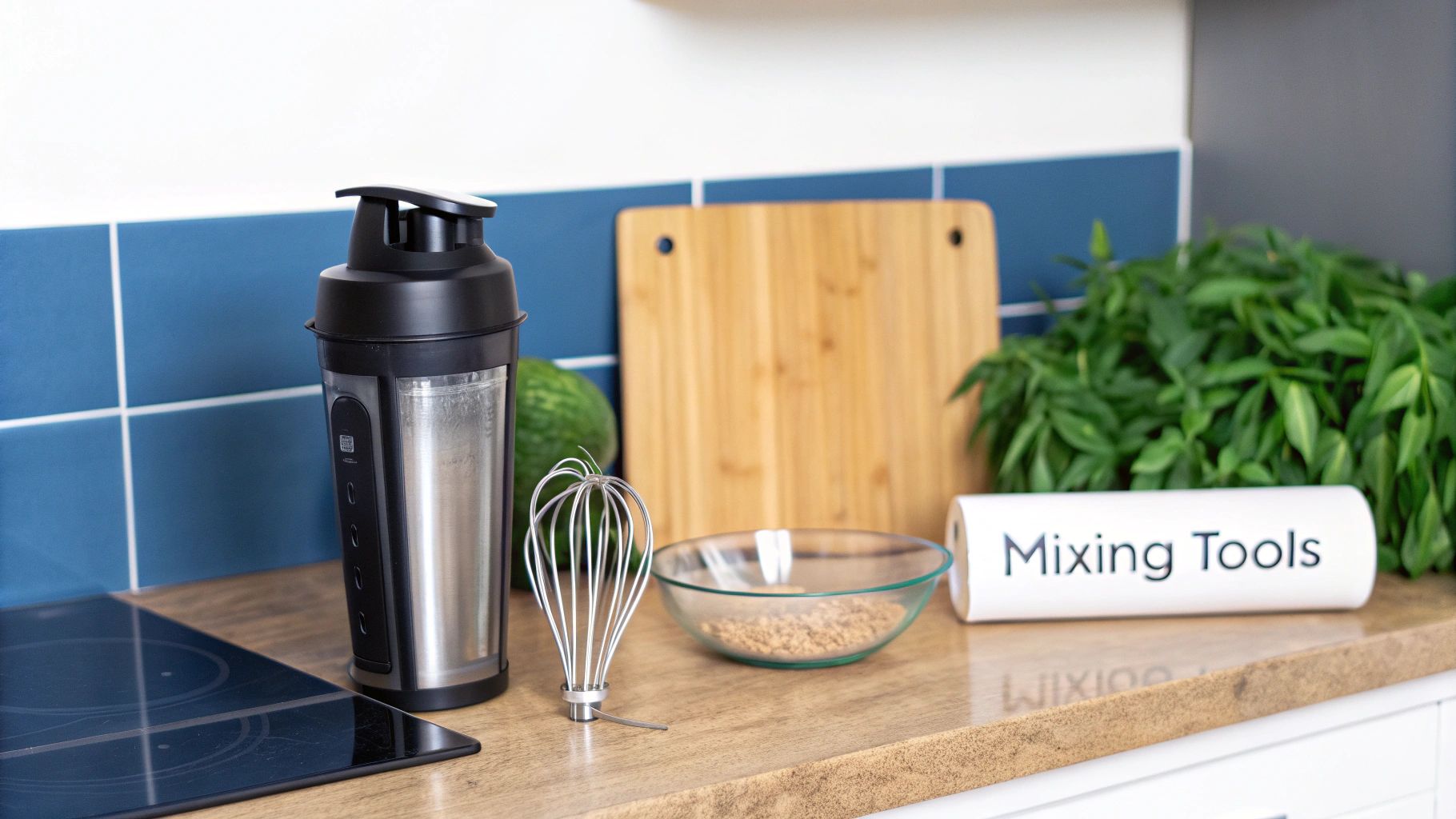
Let's be honest, the tool you use to mix your shake can make or break the entire experience. This isn't just about avoiding clumps; it's about matching the right gear to your routine, your goals, and even the specific protein powder you're using.
For grabbing a quick protein hit right after a gym session or at your desk, you can’t beat the convenience of a classic shaker bottle. They’re portable, easy to clean, and get the job done. My advice? Look for one with a secure, leak-proof lid (nobody wants a gym bag disaster) and a solid mixing mechanism, like a blender ball or a built-in mesh screen.
But a shaker bottle has its limitations. The moment you want to create a more substantial, nutrient-dense smoothie with add-ins like frozen fruit, a handful of spinach, or some chia seeds, it's time to graduate. A shaker just won't cut it.
When to Upgrade to a Blender
This is where a real blender earns its spot on your counter. A good one will pulverize just about anything you throw at it, turning stubborn powders and fibrous greens into a perfectly smooth, drinkable meal.
This is especially important for certain types of protein. For example, to get our Organic Plant Protein Powder to that ultra-creamy consistency everyone loves, a high-speed blend is really the best way to go.
Key Takeaway: A blender isn't just about a smoother texture—it's about unlocking versatility. It transforms a basic protein drink into a complete, blended meal, ensuring everything from your greens to your amino acids is perfectly combined.
You can see this principle of power-for-the-task scaled up in professional settings. Commercial kitchens often rely on something like an industrial immersion blender for big batches, proving that the right motor power is key.
You don't need a commercial-grade machine, but picking the right tool for your own needs is crucial. Whether you prioritize the on-the-go ease of a shaker or the meal-making power of a blender, making the right call ensures every shake is a good one. It's the first step to truly enjoying your protein and getting all its benefits, including the all 9 essential amino acids your body needs.
Why the Type of Protein Dictates Your Mix
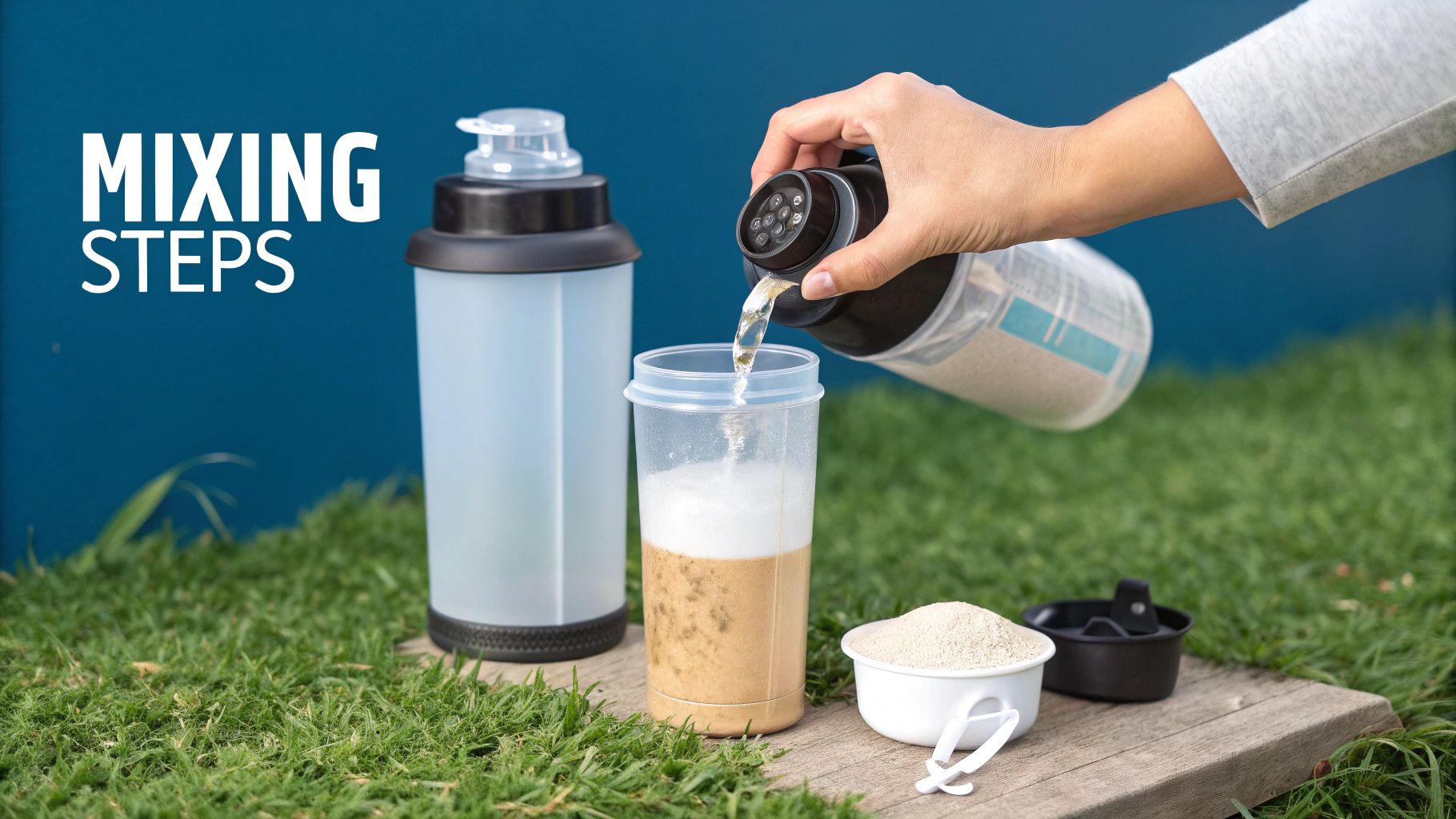
Ever switched protein brands and found yourself wondering why the new one dissolves like a dream while the old one always put up a fight? It’s not just your shaking technique. The real secret is rooted in the protein's source—whether it’s whey, casein, beef, or plant-based. This is the number one factor that determines the final texture of your shake.
Each protein type has a completely unique molecular structure and particle size. Some are naturally fine and just melt into liquid, while others are coarser and more stubborn. Getting a handle on these differences is the first step to mastering your mix.
Think about it this way: whey protein isolate (WPI) is famous for mixing into a smooth, almost juice-like consistency because its structure allows it to dissolve completely. On the flip side, some plant-based proteins are notorious for leaving behind a gritty settlement at the bottom of your shaker. It's all in the science of the powder itself.
Comparing How Different Proteins Mix
You can't use the same approach for every powder and expect the same results. A high-quality whey isolate might only need a few swirls with a spoon, but a dense beef or plant protein almost always requires the power of a blender to get truly smooth.
Here’s a quick breakdown of what to expect:
-
Plant-Based Powders: These can sometimes have a gritty texture because of their natural fiber content. That's a common complaint. We specifically formulated our Organic Plant Protein Powder with finely milled ingredients to tackle this head-on and deliver a much smoother experience.
-
Beef Protein Powders: Beef protein is a fantastic dairy-free option, but it's often denser and needs a more vigorous shake or a quick blitz in the blender to fully incorporate. Don’t be afraid to give it some extra muscle! For more specific advice, our guide to getting the most from beef protein powder has you covered.
The bottom line is this: stop treating all protein powders the same. If your shake is stubbornly clumpy, chances are the protein's source is the real culprit. The fix is often as simple as swapping your spoon for a blender or just shaking for a few extra seconds.
Mastering Your Mixing Technique
Having the right shaker or blender is a great start, but the best way to mix protein powder really comes down to technique. A few simple tweaks can be the difference between a gritty, lumpy mess and a perfectly smooth shake. It all starts with one golden rule.
Always, always add your liquid to the shaker cup or blender before the powder. This one small change is a game-changer. It prevents the powder from clumping into that thick, cement-like paste at the bottom of your cup. Honestly, it’s the easiest fix for the most common mixing mistake I see.
This simple breakdown illustrates the core process for a flawless shake.
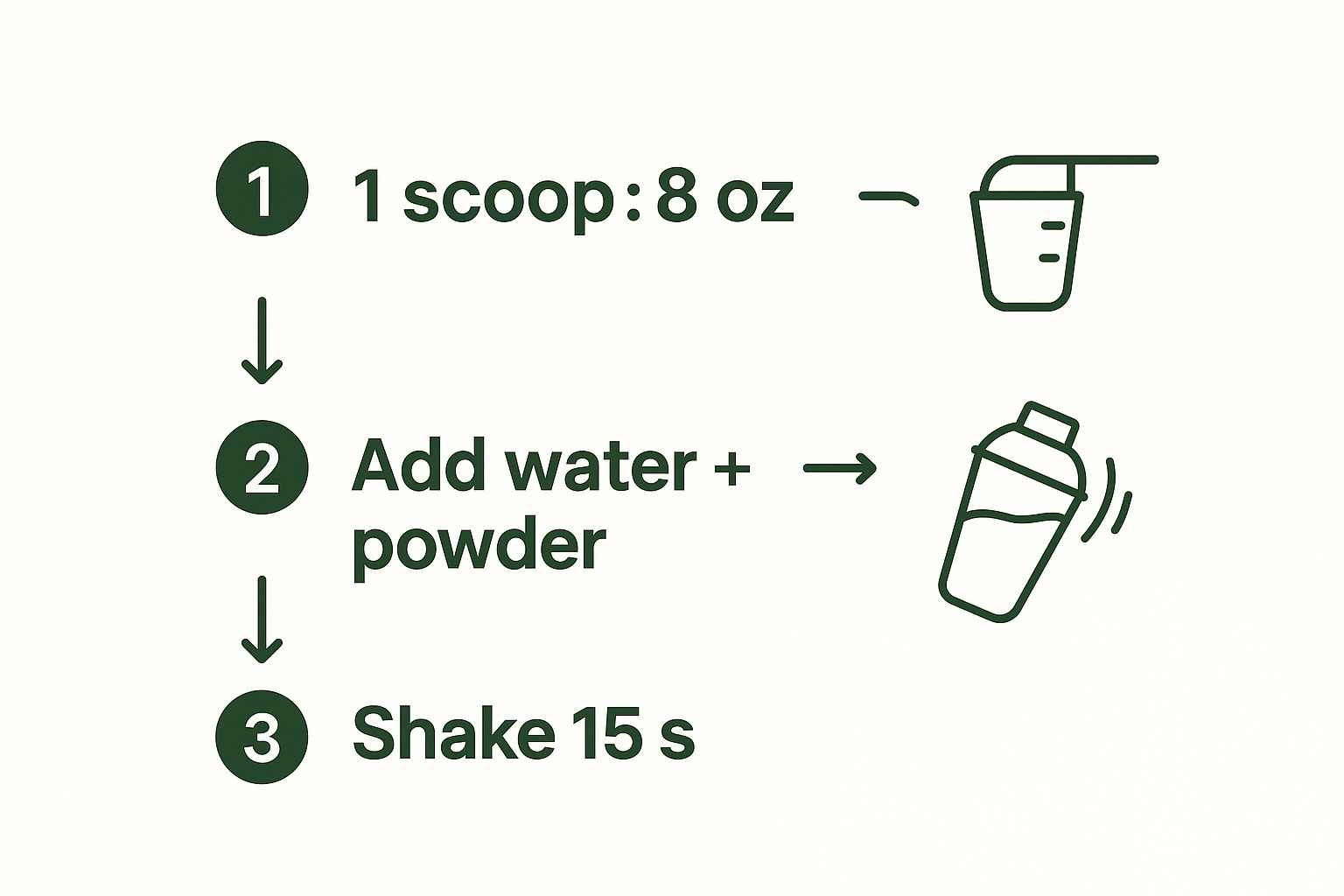
As you can see, it's not complicated. A good ratio, the right ingredient order, and a quick, vigorous shake are all it takes to get that clump-free result every time.
Fine-Tuning Your Mix
The perfect liquid-to-powder ratio can vary quite a bit depending on the protein you're using. A solid starting point is 8 ounces of liquid for every scoop of powder, but think of that as a guideline, not a strict rule. Don't be afraid to experiment.
For example, some proteins, like our Bone Broth + Collagen Protein Powder, benefit from slightly warm liquid. The gentle heat helps the collagen dissolve completely, giving you a much smoother texture.
Pro Tip: After shaking or blending, let your drink sit for 60-90 seconds. This little pause allows the powder to fully hydrate and dissolve, breaking down any tiny micro-clumps that might still be lingering. The result is an unbelievably smooth finish.
This resting period isn't just an old gym trick; it's backed by science. Research on protein dispersion shows that a thorough, short mix followed by a brief rest can achieve near-perfect consistency. If you want to dive deeper, you can discover more insights on protein dispersion and how mixing protocols impact the final result. Mastering these small details is what elevates your shake from just good to truly great.
Troubleshooting Common Protein Shake Problems
Even when you think you've done everything right, you can still end up with a lumpy, foamy, or gritty shake. It's frustrating, but once you understand what's causing these problems, you can fix them for good and get a perfectly smooth drink every time.
The most infamous issue, of course, is the dreaded clump. Those dry, powdery pockets are a real pain. More often than not, this is a storage problem. If your protein powder is exposed to humidity, it starts to clump up in the container before you even scoop it out. The best defense is simple: store it in a cool, dry place and make sure that lid is screwed on tight.
Another culprit can be the temperature of your liquid. Dumping protein powder into very hot liquid can essentially "cook" the protein on contact, creating lumps that are nearly impossible to break up. Always stick to cool or room temperature liquids for the initial mix.
Tackling Texture Issues
So what about when your shake turns into a giant foam-fest? This is super common, especially with whey proteins, and it’s a direct result of shaking too hard. You’re whipping too much air into the protein molecules. The fix is easy: either shake a little less vigorously or just let the shaker sit for a minute or two. The foam will settle right down.
A gritty texture is a different beast entirely. This usually comes down to the protein's particle size or its source, something you see a lot with certain plant-based proteins. A powerful blender is your best friend here, as it can pulverize those particles into a much smoother consistency.
Expert Insight: The source and processing of your protein powder matter immensely. During manufacturing, things like particle size and pH are carefully controlled to create a stable powder that dissolves well. This science is what separates a premium, smooth-mixing powder from a gritty, unpleasant one.
While a great shake is important, don't forget that your body's ability to use those nutrients is the real goal. To keep your internal systems running strong, check out our guide on how to support liver function.
Your Protein Mixing Questions Answered
We've gone over the gear and the basic techniques, but there are always a few lingering questions that pop up. Getting these sorted is often the last piece of the puzzle to truly nailing your protein shake routine.
Why Does My Protein Powder Get So Foamy?
If you've ever shaken up a whey protein, you know what I'm talking about—that thick, airy layer of foam on top. This happens because all that vigorous shaking is literally whipping air into the protein molecules, just like when you're making a meringue.
It's an easy fix, though. First, try shaking a bit less like you're angry at it. A firm but gentle motion is all you need. If you still have foam, just let the shaker sit on the counter for a minute or two. The foam will settle down on its own, leaving you with a much smoother drink.
Can I Mix Protein Powder With Hot Liquids Like Coffee?
You absolutely can, and it's a great way to start the day. But you have to do it right, otherwise you'll end up with a lumpy, cooked mess. Don't ever just dump a scoop of powder directly into a hot mug of coffee or tea—the heat shock will cause the protein to clump up instantly.
Here’s the trick: make a slurry first. In a separate cup, mix your powder with just a splash of room-temperature water or milk. Stir it until you have a smooth, thick paste. Then, you can slowly pour your hot liquid in while stirring. This lets you raise the temperature gradually without cooking the protein. It works perfectly with powders like our Bone Broth + Collagen Protein Powder for an extra nutrient kick in your morning brew.
Key Insight: The "slurry method" isn't just a suggestion—it's essential for hot liquids. Making a paste first ensures the protein dissolves properly before it hits the heat, giving you a perfectly smooth, clump-free drink every time.
My Plant-Based Protein Is Always Gritty. What Can I Do?
That gritty texture is a well-known challenge with some plant proteins. It often comes down to their natural fiber content and how the powder is milled. If your shaker bottle just isn't getting the job done, the best solution is to bring in the big guns: a blender.
Giving your plant-based shake an extra 30-60 seconds in a blender provides the power needed to pulverize those stubborn particles, resulting in a much creamier texture. While we designed our Organic Plant Protein Powder to be finely milled for better mixing, a blender will always take that smoothness to the next level.
Another pro-tip is to just let the shake rest for about five minutes after mixing. This gives the powder time to fully hydrate and soften, which can make a surprising difference. This little trick also works wonders for denser powders like our Grass Fed Beef Protein Powder, especially in a smoothie.
At Peak Performance, we’re convinced that the quality of your protein directly impacts the quality of your results. That’s why our powders are formulated for fantastic mixability and absorption—so you can finally stop worrying about clumps and just enjoy a perfect shake. Explore our full range of high-grade protein powders today.
Also in Blog


How to Increase Stamina Naturally and Boost Energy


How to Increase Energy Naturally

