


How to Support Liver Function: Expert Tips for Better Health
Forget the extreme "cleanses." Real, lasting liver support comes from making smart, sustainable choices every single day. The best approach is a simple one: eat nutrient-rich foods, keep a healthy weight, move your body regularly, and cut back on things that tax your system, like alcohol and heavily processed foods.
Your Liver's Role and Why It Matters More Than Ever
Think of your liver as your body's unsung hero. This three-pound organ is a powerhouse, juggling over 500 vital functions without ever taking a break. It’s not just a simple filter; it's a sophisticated processing plant that metabolizes nutrients, stores essential vitamins, and keeps your blood sugar stable.
Basically, everything you eat, drink, and even breathe gets processed by your liver. It’s your front-line defense against the constant barrage of toxins in our modern world.
The Modern Burden on Your Liver
These days, our livers are under more pressure than ever. From environmental pollutants and chronic stress to diets loaded with sugar and processed junk, the strain is immense. This isn't meant to scare you, but to make you aware. Being proactive about your liver health isn’t a luxury anymore—it’s a must for long-term wellness.
The numbers are pretty stark. Liver diseases are a massive global health problem, causing around 2 million deaths each year. That’s roughly 1 in every 25 deaths worldwide. To see the full scope of this issue, you can read the research on its global impact and understand why this conversation is so important.
To give you a clearer picture, here’s a quick summary of how you can support this crucial organ.
Quick Guide to Supporting Your Liver
This table breaks down the core pillars of liver health into simple, actionable steps. It's an at-a-glance guide to the key strategies we'll be diving into.
| Strategy Pillar | Key Action | Primary Benefit |
|---|---|---|
| Diet & Nutrition | Eat whole, unprocessed foods. Focus on leafy greens, cruciferous veggies, and healthy fats. | Provides antioxidants and nutrients to reduce inflammation and support detoxification pathways. |
| Lifestyle Habits | Maintain a healthy weight through regular exercise and limit alcohol consumption. | Reduces fat buildup in the liver (NAFLD risk) and lessens the direct toxic load on liver cells. |
| Minimize Exposure | Reduce contact with environmental toxins, processed foods, and unnecessary medications. | Decreases the overall detoxification burden, allowing the liver to function more efficiently. |
| Targeted Support | Incorporate liver-supportive supplements like milk thistle, turmeric, or a comprehensive blend. | Provides specific compounds that help protect liver cells, enhance function, and promote regeneration. |
By focusing on these four areas, you can build a powerful foundation for a healthy, resilient liver.
The most incredible thing about your liver is its ability to regenerate. It can heal itself. By making conscious, consistent choices, you can dramatically reduce its workload and support its natural power to function at its peak.
This is about building a foundation of habits that empower your liver for the long haul, not about restrictive, short-term fixes. Simple, daily actions are what truly count.
Want to go deeper? To learn more about how your liver can be rejuvenated, don't miss our comprehensive liver masterclass with expert Siggi Clavien for some incredible insights.
Eating to Empower Your Liver
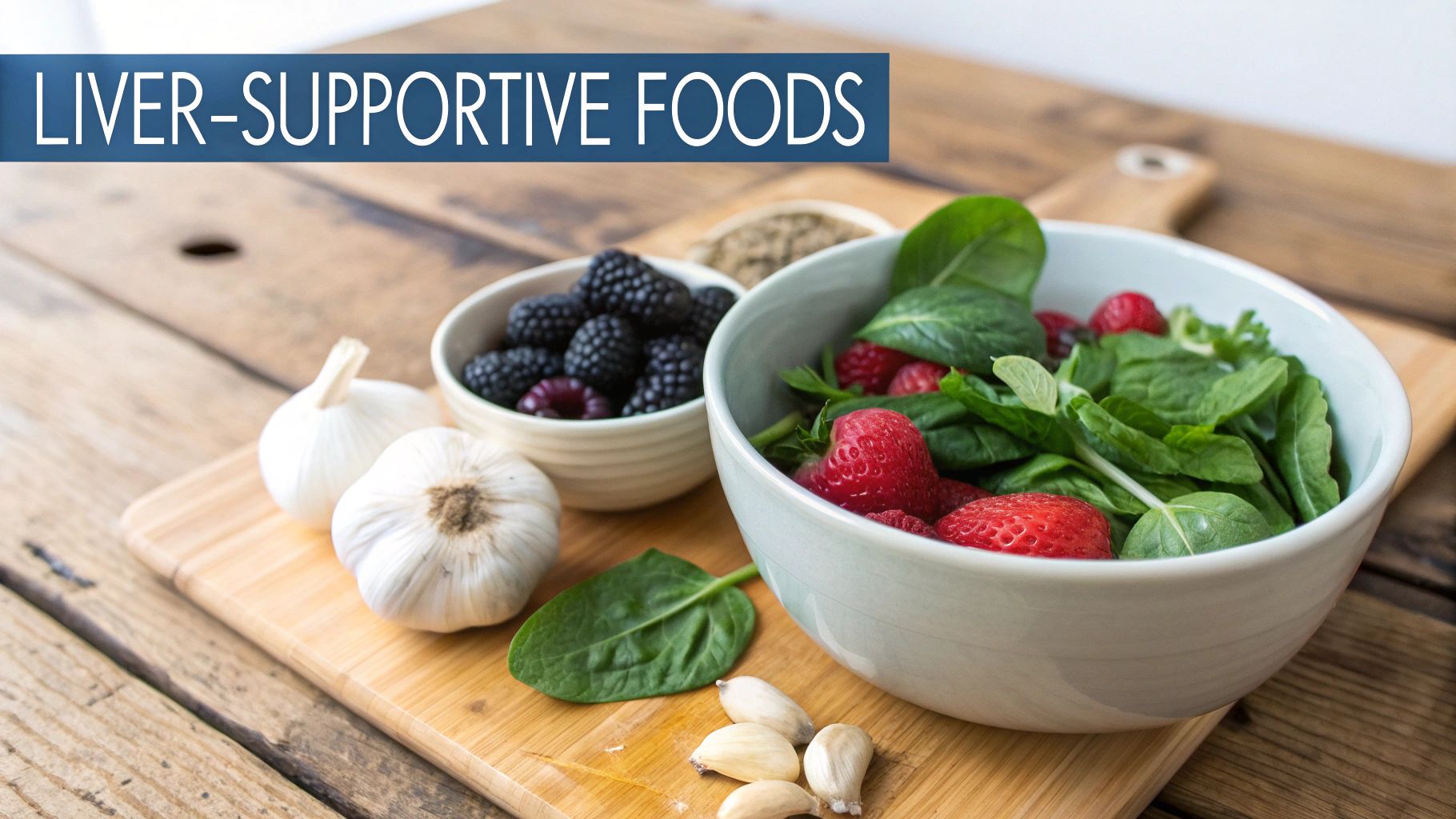
When we talk about supporting our liver, the conversation often turns to restriction—what to cut out. But I find it’s far more effective, and frankly more enjoyable, to focus on what you can add to your plate. Your diet is one of the most powerful and direct ways to give your liver the resources it needs to do its job well.
Think of certain foods as a dedicated support crew for your liver's detoxification and protective pathways. You don't need to do a radical, overnight diet overhaul. Just making a few strategic additions can make a world of difference.
Fuel Up on Cruciferous Vegetables
For me, cruciferous vegetables are an absolute non-negotiable for liver health. We're talking about broccoli, Brussels sprouts, cauliflower, and kale. Their superpower comes from a compound called glucosinolate, which is fantastic for firing up the liver's natural detox enzymes.
In simple terms, these veggies help your liver neutralize and clear out harmful junk from your system more efficiently. Building a simple habit, like adding a side of steamed broccoli to dinner or tossing a handful of kale into your morning smoothie, directly fuels these crucial processes.
The goal isn't dietary perfection; it's consistent nourishment. Adding just one serving of a liver-friendly food each day is a sustainable strategy that compounds over time, giving your body a steady stream of protective compounds.
Harness the Power of Antioxidants
Your liver cells are constantly under oxidative stress—it's just the nature of the hard work they do. Antioxidants are like tiny bodyguards that step in to protect these cells from getting damaged. Your best sources are vibrant, colorful fruits and vegetables.
- Berries: I love blueberries, raspberries, and cranberries because they’re loaded with anthocyanins, which are well-known for taming inflammation and shielding the liver.
- Beets: That incredible color in beets comes from betalains, another potent group of antioxidants that have been shown to support the liver’s Phase 2 detox process.
- Leafy Greens: Spinach and other greens are rich in glutathione, often called the "master antioxidant," which is absolutely vital for neutralizing free radicals.
The old saying "eat the rainbow" isn't just a cliché; it's solid, practical advice for getting a wide variety of these protective compounds. Starting your day with a smoothie packed with berries and spinach is an easy win for your liver.
Embrace Healthy Fats
Let’s get one thing straight: not all fats are bad. While unhealthy trans fats and too much saturated fat can lead to fat buildup in the liver, the right kinds of fats are absolutely essential for keeping inflammation in check.
A simple swap I make all the time is reaching for a handful of walnuts instead of processed snack foods. Walnuts are a great source of omega-3 fatty acids, which are known to help lower liver fat and improve enzyme levels. I also use extra virgin olive oil for my dressings, which provides oleic acid, another anti-inflammatory hero.
Here are a few simple, high-impact swaps you can try:
- Instead of creamy, dairy-based dips, go for mashed avocado with lime and cilantro.
- Instead of cooking with highly processed vegetable oils, use avocado oil or olive oil.
- Instead of grabbing chips or crackers, a small handful of walnuts or almonds is a much better choice.
These small changes help reduce the inflammatory burden on your body, freeing up your liver to function at its best. Adding fatty fish like salmon to your meals once or twice a week is another fantastic way to boost your intake of high-quality omega-3s. Ultimately, building a liver-friendly diet is about making enjoyable, nourishing choices—not about deprivation.
Lifestyle Habits for a Resilient Liver

While your diet provides the essential building blocks for a healthy liver, it’s your daily habits that truly create the right environment for it to thrive. Simple, consistent adjustments to your lifestyle can have a massive impact—often far more than you might realize.
The goal here isn't a dramatic, overnight overhaul. It's about making small, smart choices from the moment you wake up to the moment you sleep. These choices lighten your liver's workload, freeing it up to focus on its hundreds of other critical jobs.
Get Moving to Reduce Liver Fat
One of the most powerful things you can do for your liver is get regular physical activity. I'm not talking about training for a marathon. Even a brisk 30-minute walk on most days of the week makes a world of difference.
Exercise helps your body use glucose more efficiently, which in turn improves insulin sensitivity. This is huge, because insulin resistance is a primary driver of fat building up in the liver. When you move, you’re encouraging your body to burn triglycerides for fuel, which directly pulls that fat out of your liver cells.
A common hang-up is thinking you need punishing, high-intensity workouts to see results for your liver. While those are great, consistency is what really moves the needle. The key is to make movement a non-negotiable part of your day, just like brushing your teeth.
Maintain a Healthy Body Weight
Achieving and sticking to a healthy weight is arguably one of the most critical things you can do for your liver. Excess body fat, especially the kind that settles around your abdomen, is strongly tied to a condition called metabolic dysfunction-associated steatotic liver disease (MASLD). It's essentially an overload of fat in the liver.
This condition has quietly become a global epidemic, projected to affect 30.2% of the world's population by 2025. For people dealing with obesity, the numbers are even more stark, with the prevalence of MASLD jumping to 57.5%. It's a clear signal that managing weight is paramount for long-term liver health.
Manage Alcohol and Stress Levels
It’s no secret that too much alcohol is toxic to your liver cells. The byproducts created when your body metabolizes alcohol can trigger inflammation and cause serious damage. If you do drink, moderation is everything. Pay close attention to both how much you drink and how often.
But alcohol isn’t the only culprit. Chronic stress also takes a heavy toll. It keeps your body locked in a "fight or flight" mode, which can throw your hormones out of whack and fuel inflammation throughout your system. Finding healthy outlets for stress is non-negotiable for your liver and your overall well-being.
A few things that can really help:
- Mindful Moments: Just five minutes of deep breathing or meditation can tangibly lower your cortisol (stress hormone) levels.
- Quality Sleep: Aim for 7-9 hours of solid, restorative sleep each night. This is your body’s prime time for repair, and your liver is working hard during this period.
- Blood Pressure Management: Stress is a known driver of high blood pressure, which is linked to metabolic problems that directly impact the liver. You can learn more in our guide on natural ways to lower your blood pressure.
By weaving these habits into your life, you build a supportive ecosystem for your liver, allowing it to do its job without being constantly overburdened.
Recognizing Early Liver Health Warning Signs
When it comes to your liver, knowledge really is your most powerful tool. The idea isn't to scare you, but to help you become more aware of what your body might be trying to tell you.
Your liver is incredibly tough, but it’s not invincible. When it gets overloaded, it starts sending out quiet distress signals. These are often easy to write off as just part of a busy life, but if you learn to tune in, you can catch potential issues long before they become serious problems.
Listening to Your Body’s Whispers
The first hints of liver strain are almost never loud and obvious. They usually show up as vague, nagging symptoms you might blame on a stressful week or not enough sleep. The key is to look for a pattern, not just a one-off bad day.
Here are a few of the most common—and most overlooked—signs that your liver could use some extra support:
- Persistent Fatigue: This isn't your average "I'm tired" feeling. It’s a deep, relentless exhaustion that a good night’s sleep just doesn’t seem to touch. A struggling liver has trouble managing glucose, your body's main fuel source, which can lead to that profound, bone-deep fatigue.
- Unexplained Skin Issues: I've often found that your skin is a direct reflection of your internal health. If the liver can’t filter toxins from your blood efficiently, your body might try to eliminate them through your skin. This can manifest as itchiness, random rashes, acne, or eczema that just won't clear up with normal treatments.
- Digestive Troubles: Notice bloating, gas, or general discomfort, especially after eating fatty foods? That’s a classic clue. Your liver produces the bile needed to break down fats. If that process is sluggish, your digestion pays the price.
The real insight comes from telling the difference between a normal off-day and a consistent pattern. Feeling bloated once is one thing. Feeling bloated every time you eat a certain type of meal is a signal worth paying attention to.
When Symptoms Become More Obvious
If liver function continues to decline, the signs can become harder to ignore. These are definite red flags that mean it's time to talk to a healthcare professional for a proper diagnosis and guidance.
- Jaundice: A yellow tint to the skin and the whites of the eyes.
- Dark Urine: Urine that is consistently dark brown or orange.
- Swelling: Fluid retention that causes puffiness in your legs, ankles, or abdomen.
- Easy Bruising: Finding bruises on your body without any memory of an injury.
Being aware of these symptoms is a crucial first step. The global rate of chronic liver disease is on the rise. Projections show that by 2025, over 1 million people a year could be diagnosed with hepatocellular carcinoma (HCC), the most common type of liver cancer. If you want to dig into the data, you can learn more about the burden of chronic liver disease and see the trends for yourself.
By simply connecting with your body and recognizing these early patterns, you put yourself in the driver's seat, able to make timely changes that promote long-term health.
Strategic Supplementation for Enhanced Liver Support
Once you've dialed in your diet and lifestyle, you can start thinking about targeted supplementation to give your liver an extra edge. I like to think of supplements as specialized tools—they help your liver handle its massive workload more efficiently, especially when it's under more stress than usual.
It's absolutely critical to see them as allies, not replacements for healthy habits. When you pair them with a solid foundation, you’re giving your body’s hardest-working organ the precise backup it needs to thrive.
Key Supplements for Liver Protection
When you start digging into the research, a few heavy hitters for liver health consistently pop up. These aren't miracle cures, but compounds that work in sync with your body’s own protective systems.
- Milk Thistle (Silymarin): This is probably the most well-known herb for the liver, and for good reason. Its active compound, silymarin, acts like a bouncer for your liver cells (hepatocytes). It reinforces their outer membrane, making it tougher for toxins to sneak in and cause trouble.
- Turmeric (Curcumin): That bright yellow spice in your cabinet? It contains curcumin, a powerhouse anti-inflammatory. Since a state of chronic, low-grade inflammation is a key driver of liver damage, curcumin can help cool things down and ease the burden on the organ.
- N-Acetyl Cysteine (NAC): This one is a personal favorite of mine. NAC is a direct precursor to glutathione, which is often called the body's "master antioxidant." Your liver burns through massive amounts of glutathione to neutralize toxins and metabolic waste. Taking NAC is like restocking the shelves, giving your body the raw material it needs to keep its primary detoxification system running strong.
These ingredients don't just work in isolation; they offer a multi-pronged strategy by shielding liver cells, calming inflammation, and boosting your body's innate antioxidant defenses.
Remember, the whole point of supplementation is to provide targeted help, not to try and out-supplement a bad diet or sedentary lifestyle. A high-quality supplement is most effective when it’s one part of a comprehensive health plan.
Choosing Quality and Seeking Guidance
Walking into the supplement aisle can feel like stepping into the wild west. The market is absolutely flooded with products, and honestly, not all are created equal. Purity and potency are everything. A cheap, low-quality supplement could be packed with fillers or even contaminants, adding to your liver's burden instead of lightening it.
You always want to look for brands that are obsessed with transparency and quality, like Peak Performance. We use rigorous third-party testing to make sure what’s on the label is exactly what's in the bottle. That commitment to purity gives you peace of mind and ensures you’re getting the real benefits.
It's also smart to build a supplement routine that supports your whole system, not just one organ. For a wider view on the nutrients that can benefit nearly everyone, check out our guide on the top 10 supplements most people should take. It will help you see how liver support fits into a bigger wellness picture.
Above all, have a conversation with your healthcare practitioner before starting anything new. They can help you figure out what your body actually needs, check for any potential interactions with medications you’re taking, and help you create a plan that’s both safe and effective for you. That collaborative approach is the best way to make sure you’re doing what’s right for your unique health journey.
Answering Your Top Questions About Liver Health
As you start focusing more on your liver, you're bound to have questions. It’s a complex organ, and there's a lot of confusing information out there. I want to tackle some of the most common questions we get, giving you straight answers to help you stay on the right track.
Let's clear up a few things so you can move forward with confidence.
What Are the Best Foods to Eat for My Liver?
This is probably the number one question I hear. Everyone wants to know the single “superfood” that will fix everything. But the truth is, it doesn't work that way. A healthy liver thrives on a consistent, varied diet full of whole foods—think antioxidants and fiber. That’s what gives it the support it needs day in and day out.
Instead of hunting for one magic bullet, focus on building these food groups into your regular meals:
- Cruciferous Veggies: Things like broccoli, cauliflower, and Brussels sprouts are champions at supporting your liver's natural detoxification pathways.
- Leafy Greens: Spinach and kale are fantastic sources of chlorophyll and powerful antioxidants.
- Colorful Berries: Blueberries and raspberries are loaded with compounds that help your body combat oxidative stress.
- Healthy Fats: Think avocado, olive oil, and fatty fish like salmon. These are key for tamping down inflammation.
Even moderate coffee consumption has been linked to protective effects for the liver. The goal is balance and variety, not a rigid, perfect diet.
A common pitfall is getting fixated on one specific food. A much better strategy for long-term liver support is to build your plate around variety. Aim to "eat the rainbow" with your fruits and veggies to ensure you're getting a broad spectrum of protective nutrients.
Can I Really Do a "Liver Cleanse" or "Detox"?
The idea of a quick “liver cleanse” or a 3-day “detox” is almost entirely a marketing myth. Your liver is an incredible, self-cleaning organ that works around the clock. It absolutely does not need a special juice, a restrictive diet, or a fancy kit to do its job.
The most effective way to "cleanse" your liver is to simply reduce its workload and give it the resources it needs to function optimally. This isn't about a short-term fix; it's about committing to sustainable, healthy habits.
These are the changes that actually move the needle:
- Eating a balanced, nutrient-rich diet.
- Moving your body regularly.
- Being mindful of your alcohol intake.
- Steering clear of heavily processed foods and unnecessary chemicals.
These consistent efforts are infinitely more powerful than any quick-fix product you'll find online.
How Long Does It Realistically Take to Improve Liver Function?
The timeline for seeing improvements in your liver health is different for everyone. It really hinges on where you're starting from, how consistent you are with your new habits, and what specific health markers you're aiming to improve. The liver has a truly amazing ability to regenerate, but it needs time and the right environment to heal.
For example, someone with early-stage fatty liver disease might see positive changes in their liver enzyme levels within just a few months of sticking to a healthier diet and exercise plan. The secret is consistent daily effort, not just being "healthy" for a weekend here and there.
Don't get discouraged if you don't see results overnight. True, lasting liver health is a marathon, not a sprint. The best approach is to focus on building sustainable habits you can stick with for the long haul. And always, always work with a healthcare professional to track your progress with proper testing and get advice tailored to you.
For those looking to give their liver the highest quality support, you can check out our USDA Organic Liver Support Drops here. Peak Performance offers a range of USDA organic supplements and superfoods designed to complement your healthy lifestyle. From our antioxidant-rich superfood blends to our clean-sourced daily vitamins, we are committed to purity and potency you can trust. Explore our collection and start your journey to peak wellness today.
Also in Blog


How to Increase Stamina Naturally and Boost Energy


How to Increase Energy Naturally

