


Lung Cleanse and Detox: Boost Respiratory Health Naturally
When people talk about a natural lung cleanse and detox, they're not talking about some magic pill or a "factory reset" button for your lungs. It’s a much more grounded, holistic approach. The real goal is to support your respiratory system by making smart adjustments to your lifestyle, diet, and even adding targeted herbs.
Think of it as giving your body's own powerful cleaning crew the best tools for the job, helping it clear out irritants and keep your lungs healthy and resilient.
Why a Lung Cleanse Matters in Today's World

Let's face it, our lungs are under constant assault. Every single day, we're breathing in a cocktail of environmental stressors. It could be city smog on your commute, seasonal pollen that just won't quit, fumes from household cleaners, or even smoke from distant wildfires. The air just isn't what it used to be.
Our respiratory system is incredibly well-designed to handle a lot on its own, but this modern-day barrage can start to overwhelm its natural defenses. This is where a proactive lung cleanse stops being a wellness fad and becomes a practical strategy for long-term respiratory health.
Bolstering Your Body's Defenses
A lung cleanse isn't about some extreme, quick-fix detox. It’s a supportive lifestyle shift. The aim is to reduce inflammation, help clear out stubborn mucus, and protect the delicate tissues in your lungs from ongoing damage. You're simply creating an environment where your body can do its job better.
This idea is catching on. The global market for detox products, including supplements and teas often used for lung support, was valued at around USD 40.7 billion in 2025 and is expected to hit nearly USD 72.6 billion by 2035. If you're curious, you can read more about the growing detox market trends and see how many people are turning toward natural wellness.
The key takeaway here is that you're not trying to replace your body's functions—you're empowering them. When you combine smart nutrition, specific breathing exercises, and proven herbal allies, you help foster true respiratory resilience from the inside out.
Core Strategies for Supporting Lung Health
So, how do you actually go about it? To make a real difference, we'll focus on a few core areas that work together to support your body's natural cleansing processes.
Before we dive into the specifics of each method, here’s a quick overview of the key pillars we’ll be building on.
Core Strategies for Supporting Lung Health This table outlines the key pillars of a natural lung cleanse, which we will explore in detail throughout this guide.
| Strategy | Primary Goal | Examples |
|---|---|---|
| Breathing Exercises | Strengthen lung muscles and improve capacity | Pursed-lip breathing, belly breathing |
| Anti-Inflammatory Diet | Reduce systemic inflammation and mucus production | Berries, turmeric, green tea, fatty fish |
| Environmental Control | Minimize exposure to airborne pollutants and irritants | Using air purifiers, avoiding synthetic fragrances |
| Herbal Support | Soothe tissues and help expel mucus | Mullein, Marshmallow Root, Elecampane |
These pillars form the foundation of a truly effective lung support plan.
Speaking of herbal allies, some have been trusted for centuries for good reason. For instance, Marshmallow Root Extract is fantastic for creating a soothing, protective layer over irritated tissues in the throat and airways. Then you have Mullein Leaf Extract, which has a long history as an expectorant—something that helps your body thin and clear out mucus more easily.
We've combined both of these potent herbs, along with other respiratory powerhouses, in our USDA Organic Respiratory Lung Health Drops and our Capsules to make it simple to get that daily support.
Use Your Breath to Kickstart a Lung Cleanse
One of the most direct and powerful ways to start clearing out your lungs is, believe it or not, just by breathing. But I’m not talking about the shallow, unconscious breathing most of us do all day.
Intentional breathing exercises are a game-changer. They strengthen your diaphragm, boost your lung capacity, and most importantly, help you push out stale air and any gunk that’s settled in your airways. The best part? It’s a foundational practice that costs nothing and you can do it absolutely anywhere.
Two of the most effective techniques I always recommend are diaphragmatic breathing (or "belly breathing") and pursed-lip breathing. They essentially retrain your lungs to work smarter, not harder, ensuring a much more complete exchange of air with every single breath.
Master Diaphragmatic Breathing
This is all about getting your primary breathing muscle—the diaphragm—to do the heavy lifting. When you do this right, you allow your lungs to expand fully, drawing in way more oxygen.
- Get comfy. Lie on your back with your knees bent, or just sit upright in a chair with your feet flat on the floor.
- Check your position. Place one hand on your upper chest and the other just below your rib cage, right on your belly.
- Breathe in through your nose. Take a slow, deep breath in for about two seconds. As you do, focus on letting your belly push out against your hand. The hand on your chest should stay pretty still.
- Breathe out slowly. Now, exhale slowly through pursed lips (like you're about to whistle) for two to three seconds. You should feel your stomach naturally fall.
Just doing this for five minutes a day can start to retrain your default breathing pattern for the better.
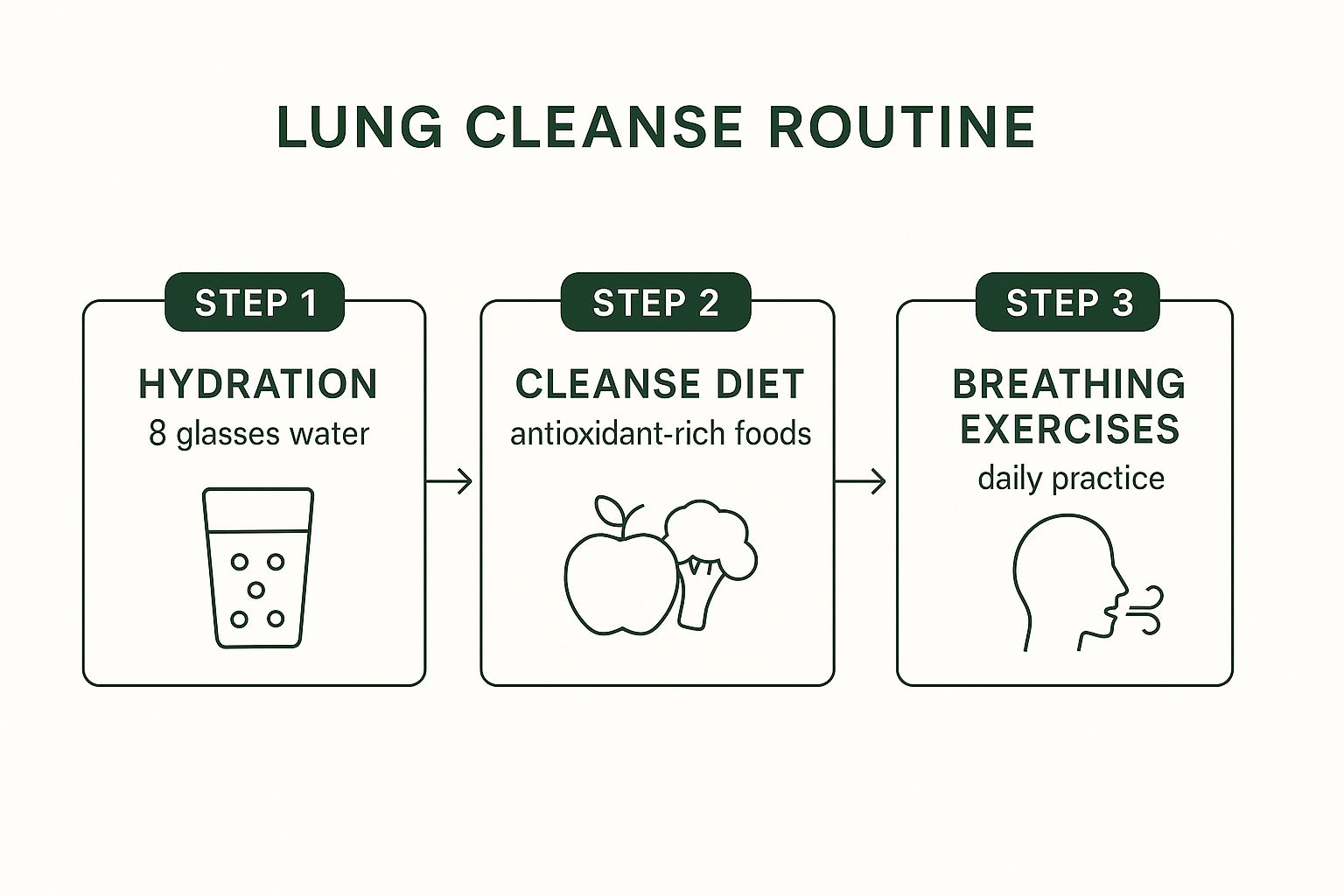
As you can see, combining a daily breathing practice with good hydration and antioxidant-rich foods creates a powerful synergy for your respiratory health.
The Power of Pursed-Lip Breathing
This technique is incredibly useful for slowing your breathing rate right down, which helps keep your airways open longer. It's a simple trick that creates gentle back-pressure, forcing more trapped, stale air out of your lungs.
It’s especially helpful for calming the system when you feel breathless or stressed.
To practice this, simply breathe in through your nose for a count of two, then breathe out for a count of four through tightly pursed lips. The key is to make your exhale twice as long as your inhale.
This simple action can work wonders for managing shortness of breath and improving your overall lung function by promoting a more complete exhale. If you want to go deeper on how this impacts your entire body, we explore the power of deep breathing for health and wellbeing in another guide.
When you pair these breathing exercises with targeted herbal support, you get even more comprehensive results. For instance, our Organic Respiratory Lung Health Drops contain ingredients like Wild Cherry Bark Extract, which has a long history of use for soothing coughs and calming the respiratory tract. It's a perfect complement to a routine focused on better breathing.
Fueling Your Lungs With an Anti-Inflammatory Diet
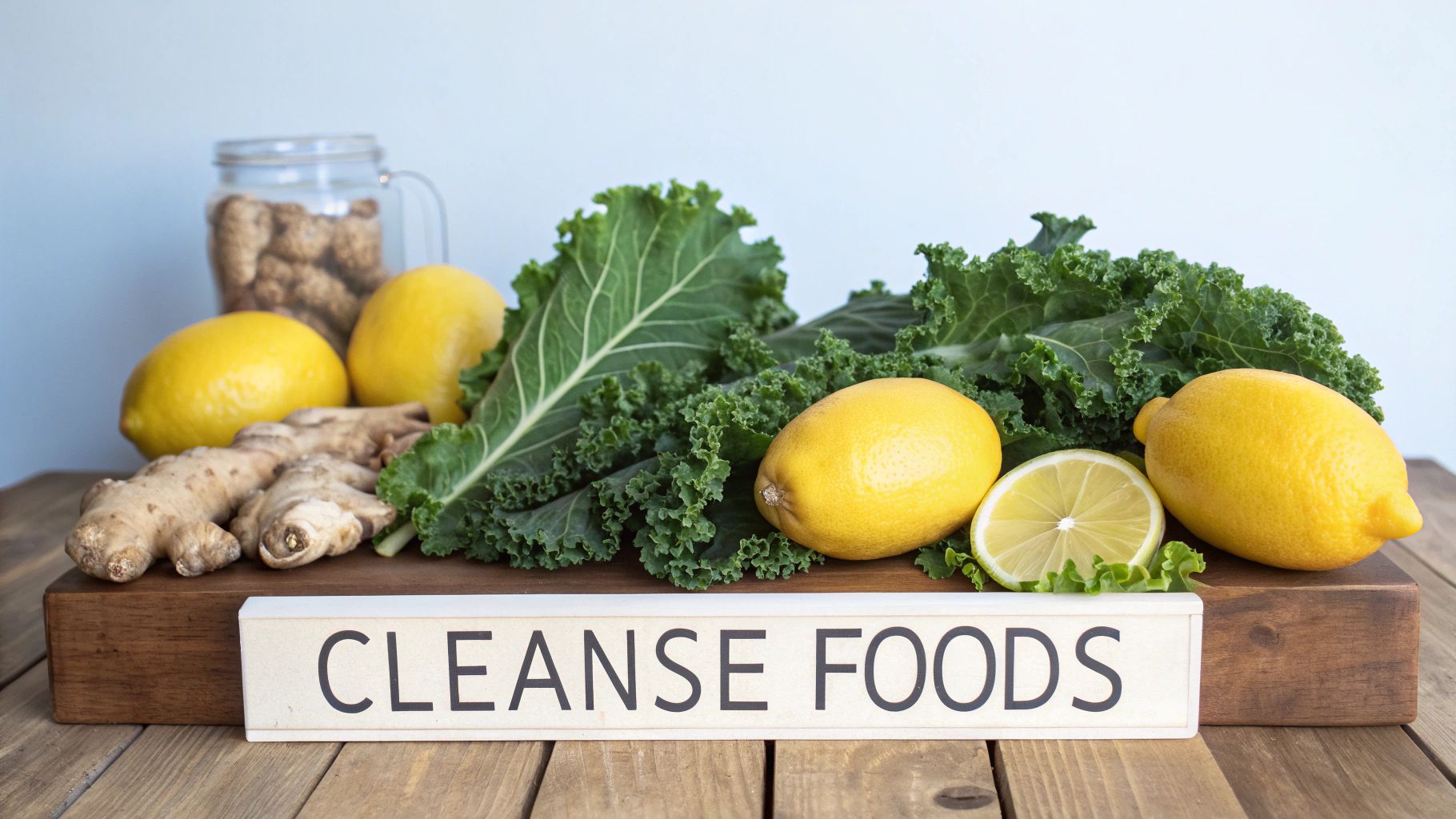
While breathing exercises work directly on the mechanics of your lungs, what you eat provides the essential building blocks for respiratory health from the inside out. I've seen it time and again: chronic inflammation is one of the biggest culprits behind respiratory issues. That makes an anti-inflammatory diet your first and most powerful line of defense.
This isn’t about deprivation or strict rules. It's about consciously adding powerful, protective foods to your plate.
Think of it this way—some foods fuel irritation, while others calm it down. For a truly effective lung cleanse, you want to load up on the foods that actively fight inflammation and shield your delicate lung tissues from oxidative stress.
Key Nutrients for Respiratory Resilience
So, what should you be adding to your grocery list? The goal is to focus on foods packed with antioxidants and specific anti-inflammatory compounds.
Here are a few of the power players I always recommend:
- Berries and Cherries: These are loaded with antioxidants called anthocyanins, which give them their rich red and purple hues and help protect lung cells from damage.
- Dark Leafy Greens: Think spinach, kale, and Swiss chard. They're bursting with vitamins and antioxidants that bolster your immune system, which is critical for defending your lungs.
- Turmeric and Ginger: These potent roots are famous for their anti-inflammatory effects. Curcumin in turmeric and gingerol in ginger are known to help reduce airway inflammation.
- Fatty Fish and Walnuts: As fantastic sources of omega-3 fatty acids, salmon and walnuts are key for taming inflammation throughout the entire body, including in the lungs.
An easy way to get started is with a lung-supporting smoothie. I like to blend a handful of spinach, a cup of mixed berries, a small piece of fresh ginger and turmeric, and a scoop of walnuts. It’s a delicious and surprisingly powerful boost.
Key Takeaway: Your diet is a daily opportunity to reduce the inflammatory load on your body. Every anti-inflammatory food you choose helps create a less reactive, more resilient internal environment for your lungs to thrive in.
Herbal Allies and Hydration
Beyond your grocery list, certain botanicals can offer targeted support. For example, our USDA Organic Respiratory Lung Health Capsules include antioxidant-rich ingredients like Elderberry Fruit Extract, which is well-known for its immune-supporting benefits, and Calendula Flower Extract, traditionally used to soothe irritated tissues. These ingredients are a perfect complement to a healthy diet.
Finally, never, ever underestimate the power of water.
Proper hydration is absolutely crucial for keeping the mucosal linings of your airways healthy. Water helps keep mucus thin and easy for your body to clear out, preventing the kind of buildup that leaves you feeling congested and heavy. Aim for about eight glasses a day to support this vital cleansing function.
If you want to dig deeper into your body's specific responses, it's worth learning how to use nutritional testing to improve diet and inflammation.
Turning to Herbal Allies for Respiratory Health
Breathing exercises and an anti-inflammatory diet are the foundation of any good lung detox, but sometimes you need to bring in the big guns. That’s where targeted herbal support comes into play.
For centuries, traditional medicine has leaned on specific plants to soothe irritated airways, break up congestion, and fortify the body’s defenses. It's not a magic bullet, of course. Think of these herbs as powerful teammates, working alongside your body's own incredible healing processes. They help calm inflammation, make mucus less sticky and easier to get out, and deliver a potent dose of antioxidants to shield your delicate lung tissues from daily environmental junk.
The Soothers and The Movers
When I look at herbs for lung support, I generally put them into two main buckets: the demulcents and the expectorants.
- Demulcents are the soothers. They contain a gel-like substance that coats and calms irritated mucous membranes—think of it as a protective balm for a scratchy throat and airways.
- Expectorants are the movers. They help thin and loosen mucus, which makes your coughs more productive and helps you clear out all that gunk.
A truly effective formula will almost always combine both. You want to soothe the irritation and help the body clear out the problem.
A Quick Word on Quality: When you're choosing supplements, quality is everything. Look for products that are USDA Organic. This is your assurance that you’re getting pure, potent botanicals without any pesticides or other chemicals that would defeat the whole purpose.
It’s why we formulated our Organic Respiratory Lung Health Drops and Capsules with a synergistic blend of certified organic herbs, each one chosen for its time-tested role in supporting the respiratory system.
Key Herbs to Have on Your Radar
Let's dive into some of the most respected herbs for lung health. You'll find many of these are the star players in our respiratory formulas.
-
Mullein Leaf: Often called the "lungs of the earth" in herbalist circles, Mullein Leaf Extract is a classic expectorant. It’s fantastic for helping your body loosen that stubborn phlegm, making your coughs more productive so you can actually clear congestion.
-
Marshmallow Root: And no, I'm not talking about the kind you roast over a campfire! Marshmallow Root Extract is a top-tier demulcent. Its high mucilage content coats the throat and provides almost immediate relief from that dry, hacking irritation.
-
Elderberry: This little berry is an immune-supporting powerhouse, loaded with antioxidants and vitamins. A strong immune system is your first line of defense against anything that might compromise your lungs, and Elderberry Fruit Extract is one of the best ways to keep it strong.
-
Licorice Root: Much like Marshmallow, Licorice Root Extract is another valuable demulcent that helps soothe the entire respiratory tract. It also has properties that can help relax bronchial spasms, which is key for calming a reactive cough.
This need for targeted support isn't just a niche concern; it's a growing global trend. Just look at a country like Japan, where in 2019, over 42,000 deaths were linked to air pollution. It’s no surprise that their market for detox supplements is projected to hit US$131.6 million by 2032. People everywhere are actively seeking ways to protect themselves from environmental threats. You can see the data on the global trend for yourself.
Adding these herbs via a high-quality supplement is one of the most practical and efficient steps you can take in a lung cleanse protocol. It gives you a concentrated dose of nature's best respiratory allies. When you pair this strategy with the breathing techniques and dietary changes we've already covered, you create a powerful, holistic approach to long-term lung health.
Improving Your Home Environment for Better Breathing

A proper lung cleanse isn’t just about what you eat or drink—it's also about what you breathe. It might surprise you to learn that the air inside your home is often packed with more pollutants than the air outside. That makes your living space ground zero for any real detox effort.
But don't worry, this doesn't mean you need a complete home renovation. It’s the small, consistent habits that truly move the needle, reducing the daily strain on your respiratory system and turning your home into a sanctuary for your lungs.
Clear the Air You Breathe Most
One of the best things you can do for your lungs is to filter the air where you spend the most time. I’m talking about investing in a quality air purifier with a High-Efficiency Particulate Air (HEPA) filter. This isn't just a gadget; it’s a game-changer. These filters are designed to trap the microscopic irritants you can’t see—things like dust, pollen, pet dander, and even tiny smoke particles. Pop one in your bedroom, and you’ll significantly lighten your lungs' workload while you sleep.
Don't underestimate the simple, no-cost stuff, either. Get into the habit of cracking open your windows for at least 15-20 minutes every day. Yes, even when it’s cold. This creates cross-ventilation that pushes out stale, polluted air and pulls in fresh air from outside.
The goal is to reduce your daily exposure to common lung irritants. By filtering and circulating the air, you lower the "toxic load" your respiratory system has to manage every day, which is a key principle of any effective lung cleanse.
Smart Cleaning for Better Breathing
Your cleaning routine can either be your lungs' best friend or its worst enemy. Of course, regular dusting and vacuuming are essential, especially if you have carpets or furry friends that leave dander and dust mites everywhere.
What you clean with is just as important, though. Many common household cleaners, plug-in air fresheners, and scented candles release nasty chemicals called volatile organic compounds (VOCs). These can directly irritate your airways and tank your indoor air quality.
Ready for some easy swaps?
- Ditch the Sprays: Toss out those chemical-heavy air fresheners. A simple essential oil diffuser with eucalyptus or lavender works wonders and smells incredible.
- Go Natural with Plants: Bring the outdoors in. Air-purifying houseplants like the Snake Plant or Spider Plant are low-maintenance and actively scrub toxins from the air.
- Clean Green: You don't need harsh chemicals. A simple solution of vinegar and water can handle most of your cleaning needs without the toxic baggage.
If you really want to level up, look into non-toxic carpet cleaning methods to get rid of the hidden chemicals lurking in your floors.
When you pair these environmental upgrades with targeted internal support, you get a powerful synergistic effect. For instance, our USDA Organic Respiratory Lung Health Capsules are formulated with Licorice Root Extract, an herb celebrated for its ability to soothe the respiratory tract. By cleaning your air on the outside and soothing your airways on the inside, you’re hitting lung health from both sides.
Building Your Daily Lung Support Routine
Lasting respiratory health isn’t about a one-time fix. It’s about the small, consistent habits you build day after day. A truly effective lung cleanse is a sustainable routine—a blend of intentional breathing, smart food choices, a clean home environment, and a little help from targeted herbs.
The secret is to start small. Don't overwhelm yourself by trying to change everything at once. Maybe you start by dedicating just five minutes each morning to that deep belly breathing we talked about. Next week, you could try adding one lung-friendly smoothie to your meal plan. The idea is to build momentum and create a practical, long-term plan that puts you in the driver's seat of your own respiratory health.
Weaving in Herbal Power
As you get comfortable with your new routine, you might want to bring in some herbal allies for an extra layer of support. This is where high-quality supplements can be incredibly helpful, offering a potent and convenient way to get the benefits of botanicals that have been trusted for centuries.
For instance, our USDA Organic Respiratory Lung Health Drops and Capsules are specifically formulated with powerhouse ingredients known for their respiratory benefits:
- Wild Cherry Bark Extract: This is a classic herb traditionally used to help calm an irritated throat and soothe coughs.
- Calendula Flower Extract: Known for its gentle, soothing properties that can help comfort irritated tissues in the airways.
- Elderberry Fruit Extract: A potent antioxidant that helps reinforce your immune system, which is your body’s first line of defense against environmental stressors.
This shift towards proactive health isn't just a feeling; it’s a massive market trend. The global detox products market was valued at around USD 66.2 billion in 2024 and is on track to hit USD 94.8 billion by 2030. People are actively looking for solutions to the challenges of our modern environment and diets. You can explore more insights on the global detox market here.
When you combine these small, doable steps, you create a powerful synergy. It’s this daily commitment that supports your lungs from the inside out, leading to better vitality and true, long-term well-being.
Common Questions About Natural Lung Support
When you start thinking about actively supporting your lung health, it’s natural for a few questions to pop up. Let's tackle some of the most common ones I hear, so you can feel confident moving forward.
How Long Does a Lung Cleanse Take?
This is probably the number one question people ask: "How long until I see results?" The truth is, there’s no magic number. A lung cleanse and detox isn't a one-and-done event; it’s a commitment to long-term support through things like breathing exercises, diet, and smart lifestyle adjustments.
Because the benefits are gradual, what you're looking for is progress over time. Some people start to feel a bit clearer within a few weeks of being consistent, while others might take a bit longer. It all depends on your starting point and how dedicated you are to the process.
What If I Have a Pre-Existing Health Condition?
Another really important question is whether these methods are safe for someone with a condition like asthma or COPD. This is where you absolutely have to be careful.
It's absolutely essential to talk to your doctor or another qualified healthcare professional before you start any new health protocol. That includes changing your diet, trying new supplements, or anything else. They know your specific health situation and can give you advice that’s right for you.
A quick but critical note: Always check with your doctor or pharmacist before adding herbal supplements to your routine, especially if you’re taking any prescription medications. This is a non-negotiable step to avoid potentially harmful interactions and keep you safe.
Ready to give your lungs the targeted herbal support they deserve? Explore the USDA Organic ingredients in the Peak Performance Organic Respiratory Lung Health Drops and Capsules today.
Also in Blog


How to Increase Stamina Naturally and Boost Energy


How to Increase Energy Naturally

