


Choosing the Best Organic Vitamin Supplements
When it comes to choosing the best organic vitamin supplements, it’s all about purity and bioavailability. You want to know you're getting nutrients from clean, whole-food sources without all the synthetic junk.
For a no-brainer approach, look for products with the USDA Organic seal. This is your guarantee that they meet incredibly strict standards from start to finish, just like the high-quality Organic Vitamins we offer here at Peak Performance.
Why Choose Organic Vitamins for Your Wellness
Walking down the supplement aisle can be completely overwhelming. You've got countless bottles all making huge claims. But the word "organic" isn't just a trendy label; it’s a promise of quality that starts literally from the ground up.
Choosing the best organic vitamins is a conscious decision to fuel your body with ingredients that are as close to their natural state as possible.
And this isn't just a niche trend. The global vitamin supplements market was valued at USD 55.79 billion and is expected to rocket to USD 113.93 billion by 2034. A huge part of that explosion is driven by people just like you demanding cleaner, organic, and plant-based options. You can learn more about these market trends and their drivers and see just how big this movement has become.
The Foundation of Organic Purity
So, what really separates an organic supplement from a conventional one? It all comes down to where the ingredients come from and how they're handled. While many standard supplements use vitamins synthesized in a lab, organic options get their nutrients from actual whole foods grown without any prohibited junk.
The entire journey, from the farm to the bottle in your hand, has to follow some very strict rules:
- No Synthetic Pesticides: The plants are grown in soil that hasn't been nuked with harmful chemical pesticides, which could otherwise sneak into the final product.
- Non-GMO Ingredients: Organic standards are crystal clear—no genetically modified organisms (GMOs). This ensures the ingredients are kept in their natural, intended state.
- No Artificial Additives: You won’t find any fake colors, flavors, or sweeteners here. The whole point is pure, unadulterated nutrition.
To make it even clearer, here's a simple breakdown of how the two types stack up.
Organic vs. Conventional Supplements at a Glance
| Attribute | Organic Supplements | Conventional Supplements |
|---|---|---|
| Source of Nutrients | Whole foods (fruits, vegetables, herbs) | Often synthetic, lab-created isolates |
| Farming Methods | No synthetic pesticides, herbicides, or GMOs | May use conventional farming with chemicals |
| Additives & Fillers | Free from artificial colors, flavors, sweeteners | May contain artificial additives and fillers |
| Certification | USDA Organic seal guarantees strict standards | No equivalent purity certification required |
| Bioavailability | Nutrients are paired with co-factors from food | Nutrients are isolated, may be harder to absorb |
It's pretty clear that when you go organic, you're choosing a cleaner path from the very beginning.
Benefits Beyond the Label
Going organic is about more than just dodging unwanted chemicals. It's about committing to a higher standard for your health. When you choose a product like our Organic Delicious Greens Superfood Powder, you’re getting ingredients that actually work with your body, not against it.
By selecting supplements sourced from real foods, you provide your body with nutrients in a form it readily recognizes and can efficiently use, leading to better absorption and overall effectiveness.
Think of it this way: your body knows how to process a blueberry. It might not be as familiar with ascorbic acid created in a factory.
This guide will walk you through everything you need to know to make a smart choice, from decoding certification labels to truly understanding the power of whole-food ingredients.
How to Read Organic Certification Labels
Walking into the supplement aisle can feel like trying to decipher a secret code. You're met with a barrage of symbols, seals, and claims on every bottle. So, how do you cut through the noise and figure out what’s actually one of the best organic vitamin supplements?
The key is learning to read the labels—specifically, the official certifications. Think of an organic seal as a product's "quality resume." It offers a transparent look into its history, from the soil to the shelf, and proves its purity. It's not just marketing fluff; it's a legally binding promise that the product has met a long list of strict standards.
What Does the USDA Organic Seal Mean?
The most recognized and trusted certification you'll find in the United States is the USDA Organic seal.
When you spot that green and white circle, it’s a clear guarantee that the product is made with at least 95% organic ingredients. More importantly, it’s a powerful sign that you’re avoiding a whole host of synthetic chemicals you don't want in your body.
To earn that seal, the product and its ingredients have to follow some pretty strict rules:
- No Synthetic Pesticides or Herbicides: The plants were grown in soil free from prohibited chemical pesticides and weed killers.
- No GMOs: Genetically modified organisms are absolutely forbidden.
- No Artificial Additives: You won’t find any artificial colors, flavors, or preservatives in the mix.
This infographic breaks down what to look for when you're on the hunt for high-quality organic vitamins.
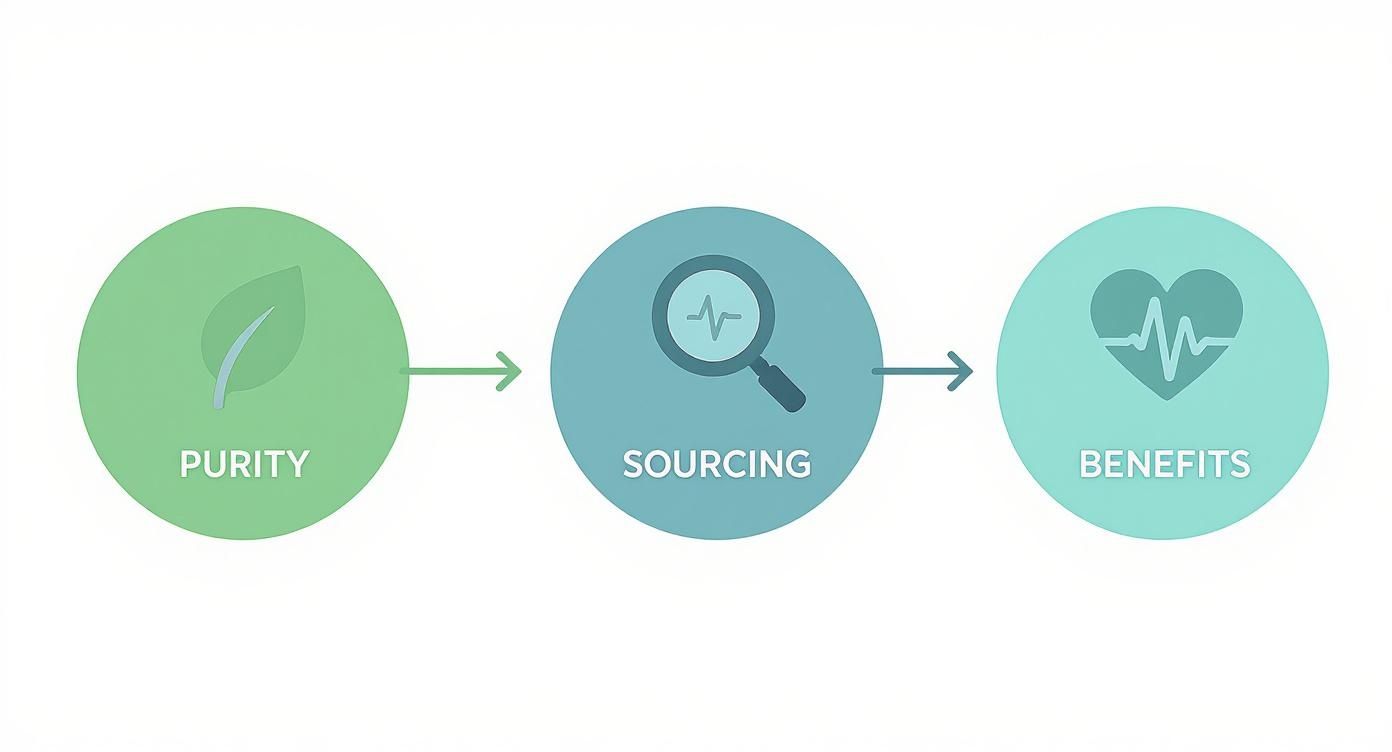
It really just reinforces the idea that true quality comes from verified purity and transparent sourcing.
Understanding the Different Organic Labels
Beyond the main USDA seal, you might notice other phrases on the packaging. It’s a good idea to know what these mean so you don’t get duped by clever marketing. Not all "organic" claims are created equal.
There are really just a few tiers of organic labeling to know:
- 100% Organic: This is the gold standard. Every single ingredient, right down to the processing aids, is certified organic.
- Organic: As we just covered, this means the product contains at least 95% organic ingredients. Any remaining non-organic ingredients have to come from an approved list.
- Made with Organic Ingredients: This label tells you the product has at least 70% certified organic ingredients. These products can't use the USDA seal, but they can list up to three specific organic ingredients on the front of the package.
Knowing these distinctions helps you make a much more informed choice. You can dive deeper into the specific rules behind these labels in our guide on USDA organic certification requirements.
The heightened consumer focus on safety, authenticity, and stringent quality controls drives the premium placed on organic supplements, which are required to comply with rigorous certification standards worldwide.
This global shift is making pure, top-tier supplements more accessible than ever. The demand for transparency is a huge reason why clean supplements are becoming a staple in so many wellness routines. By learning to decode these labels, you’re empowering yourself to shop smarter and choose supplements that truly align with your health goals.
Why Whole Food Ingredients Matter Most

When you’re looking for a top-tier organic vitamin, it's tempting to get laser-focused on the dosage numbers printed on the label. But the real magic isn’t just in the
what or the
how much—it’s in the
where from.
There’s a world of difference between a vitamin cooked up in a lab and one that comes straight from a whole food source.
Think about it this way: you can get Vitamin C from an ascorbic acid tablet, or you can get it from a fresh-picked orange. The orange gives you that Vitamin C, but it's wrapped in a complete nutritional bundle with fiber, flavonoids, and countless other plant compounds. This is the form your body evolved over millennia to recognize and use.
This natural recognition is the entire secret behind a concept called bioavailability. Simply put, bioavailability is just a measure of how much of a nutrient your body can actually absorb and put to work. Vitamins from whole foods arrive with a built-in support team of natural co-factors and enzymes that help your body absorb the main nutrient. Synthetic vitamins? They often show up alone, making them harder for your body to recognize and use efficiently.
The Whole Food Advantage in Action
This isn't just theory—the benefits of using whole food ingredients are tangible and something you can actually feel.
For starters, whole-food supplements are almost always gentler on your stomach. Because the nutrients are delivered in a food-based form, your body treats them like food. This dramatically cuts down on the risk of the stomach upset you sometimes get from high-dose synthetic vitamins.
But it goes deeper than that. Whole foods deliver a much broader spectrum of micronutrients. A supplement that gets its Vitamin C from acerola cherries also brings along a host of antioxidants and phytochemicals from the fruit itself. These extra compounds have their own health perks, creating a more complete and supportive nutritional boost that an isolated, synthetic vitamin just can't match.
Whole food ingredients offer a nutritional synergy that lab-created vitamins lack. The complex interplay of vitamins, minerals, enzymes, and phytonutrients found in plants creates a powerful effect that is greater than the sum of its parts.
This is the exact philosophy behind supplements built for maximum impact. A product like our Organic Delicious Greens Superfood Powder, for example, is loaded with dozens of real, organic plant ingredients. The goal is to ensure you’re not just getting isolated vitamins, but a huge array of nutrients, just as nature intended.
Why Your Body Prefers Nutrients from Food
Your body is an incredible machine, finely tuned to pull nourishment from the food you eat. When you get your nutrients from whole food sources, they arrive in a familiar package that’s easy to process.
- Better Absorption: The nutrients are bound up with natural food components that act like chaperones, helping them get absorbed in your gut.
- Synergistic Benefits: Helpful compounds like flavonoids and carotenoids protect the main vitamin from breaking down and even boost its activity in the body.
- Balanced Nutrition: Whole foods naturally provide a balanced ratio of different nutrients, helping you avoid the imbalances that can happen with high doses of single synthetic vitamins.
This is crucial for everyone, but it becomes even more important in specific areas of health. For example, understanding the crucial link between nutrition and fertility really drives home why the quality and source of every nutrient are so vital.
If you want to dive deeper into this, our guide on the best whole food vitamin supplements offers even more insights to help you make the right choice.
Ultimately, choosing supplements made from real, organic whole foods is about working with your body’s natural intelligence, not against it. It's about giving it nourishment in the most complete, recognizable, and effective form possible. This simple principle is what separates a good supplement from a truly great one.
The Health and Environmental Ripple Effect of Going Organic
Choosing the best organic vitamin supplements creates a powerful ripple effect that stretches far beyond your own wellness. It's a conscious decision that supports your body’s internal ecosystem and the wider environment we all depend on. It’s this holistic approach that’s drawing so many people toward cleaner, more thoughtfully sourced nutrition.
When you opt for organic, you're making a choice to sidestep synthetic chemicals. Conventional farming often leans on a heavy arsenal of pesticides and herbicides, and trace amounts can sometimes hang around in the final products. Over time, lowering this chemical load can give your body’s natural detoxification processes a helping hand and promote better gut health.
A Cleaner Choice for Your Body
The benefits of ditching these synthetic inputs are huge. When your body isn't burdened with processing foreign chemicals, it can focus on what it's supposed to do: absorb and use nutrients. This creates a much cleaner, more direct path to wellness, which is a core principle behind all high-quality Organic Vitamins.
And people are catching on. We're seeing a huge shift toward organic and plant-based supplements, which mirrors the explosive growth in the organic food world. That sector just hit record sales of around USD 70 billion after years of double-digit growth. In response, smart brands are partnering with organic farms and putting sustainability front and center. You can discover more insights about these consumer trends to see just how much this movement is reshaping the industry.
This demand shows a fundamental change in how we think about health. It's not just about filling nutritional gaps anymore; it's about doing it in the purest, most natural way we can.
By choosing organic, you're not just buying a supplement; you're investing in a system that values purity from the soil to the shelf. This commitment supports a cleaner body and a healthier planet.
This two-for-one benefit is what makes going organic so compelling for anyone serious about their health today.
Supporting a Healthier Planet
That positive impact of your choice extends directly to the environment. At its heart, organic farming is about working with nature, not against it. This regenerative way of doing things has some major wins for the planet:
- It Builds Healthy Soil: Organic practices are all about creating rich, fertile soil using things like compost and crop rotation. This boosts the nutrient content of the soil and keeps it from eroding away.
- It Protects Our Water: By saying no to synthetic chemical fertilizers and pesticides, organic farming prevents nasty runoff from polluting our rivers, lakes, and groundwater.
- It Boosts Biodiversity: Organic farms are thriving ecosystems. They support a much wider variety of wildlife, from pollinators like bees to birds and other animals that are crucial for a balanced environment.
Think about it this way: every time you choose an organic product, you're casting a vote for a more sustainable way of farming. It’s a powerful way to align your personal health goals with a commitment to the planet's well-being.
So whether it's your daily multivitamin or a scoop of Organic Delicious Greens Superfood Powder, your purchase is backing farming practices that actually nurture the earth. This link between our health and the planet’s health is what the organic movement is all about.
Your Checklist for Choosing the Right Supplement
Stepping into the world of supplements can feel like a lot to take in. But once you have a solid checklist, you'll be able to confidently pick the best organic vitamins for whatever your body needs.
This isn't about taking a wild guess. It's about having a clear, simple plan to check a product's quality and make sure you're getting what you pay for. Think of this as your personal shopping guide—it’ll turn you into a pro who can spot a top-tier supplement from a mile away.
First things first: what are your goals? Are you trying to get more energy, give your immune system a hand, or just fill a gap in your nutrition? Pinpointing your "why" helps you find the right formulas and ignore the stuff that won't actually help you.
Start with the Label
The supplement label is your single best source of truth. Seriously, learning how to read it is the most important skill you can have here. It’s where companies are required to tell you what’s inside, so it’s your best tool for separating the good from the not-so-good.
Here’s what to look for:
- Spot the Certifications: The USDA Organic seal is the first thing your eyes should scan for. This is your guarantee that the product is made with at least 95% organic ingredients and was grown without synthetic pesticides or GMOs.
- Read the Ingredient List: You want to see whole food sources you can actually recognize, like "organic spinach powder" or "acerola cherry extract." If you see a long list of chemical-sounding names, that's often a red flag that the vitamins are synthetic, not from real food.
- Check the "Other Ingredients": This little section is where companies hide fillers, binders, and other additives. The best supplements keep this list super short. Be on the lookout for artificial colors, sweeteners, and weird fillers like magnesium stearate or titanium dioxide.
A clean, simple label is usually a good sign. Brands that are serious about quality have nothing to hide and make their ingredients easy to understand.
Your Personal Organic Supplement Checklist
To make this even easier, use this quick checklist when you're comparing products. It breaks down exactly what to look for and why it’s so important for your health.
| Evaluation Criterion | What to Look For | Why It Matters |
|---|---|---|
| Organic Certification | USDA Organic seal prominently displayed on the label. | Guarantees the product is at least 95% organic and free from GMOs and synthetic pesticides. |
| Ingredient Sourcing | Recognizable whole food ingredients (e.g., kale, spirulina). | Ensures you're getting nutrients from natural sources, not lab-created synthetics. |
| "Other Ingredients" | A minimal list with no artificial colors, flavors, or fillers. | Avoids unnecessary additives that offer no health benefit and could be harmful. |
| Dietary Alignment | Certifications like "Certified Vegan" or "Gluten-Free." | Confirms the supplement fits your specific dietary needs and lifestyle. |
| Brand Transparency | Publicly available info on third-party testing and ingredient sourcing. | Shows the company is committed to quality control and stands behind its products. |
| Customer Feedback | Honest reviews from real users. | Provides real-world insight into the supplement's effectiveness and the brand's reputation. |
This table is your roadmap. Keep it handy, and you'll never feel lost in the supplement aisle again. It empowers you to make informed choices that truly benefit your well-being.
Match the Supplement to Your Needs
Once you know a product is high-quality, the next step is making sure it’s the right fit for you. This is all about personalization—finding a supplement that works with your unique body and lifestyle.
Think about these things:
- Dietary Restrictions: Are you vegan, vegetarian, or gluten-free? Double-check the label for "Certified Vegan" or "Gluten-Free" seals. This is a big one for capsules, which are sometimes made from animal-based gelatin.
- Specific Health Goals: An athlete might want something for muscle recovery, while someone focused on brain health will look for different nutrients. Pick a supplement that has the specific vitamins and minerals your body is asking for.
As you build out your own criteria, it can be really helpful to see how these principles apply to specific ingredients. For instance, looking at the guidelines for finding the best aloe vera supplements can teach you a lot about evaluating purity and sourcing that you can apply to other products, too.
Evaluate Brand Transparency and Quality
Finally, zoom out from the product and take a look at the brand itself. A company’s values tell you a ton about what’s really inside the bottle. A brand that’s truly dedicated to making the best organic vitamin supplements will be an open book about how they do things.
A truly great supplement brand is built on a foundation of trust and transparency. They should make it easy for you to verify their quality claims and understand exactly what you are putting into your body.
Here’s a quick checklist for vetting a brand:
- Third-Party Testing: Does the company send its products to independent labs to test for purity and potency? Good brands will mention this on their website, giving you an extra layer of confidence.
- Sourcing Information: Are they open about where their ingredients come from? Brands that partner with organic farms and care about sustainable sourcing are usually more committed to quality across the board.
- Customer Reviews: What are other people saying? Real feedback from actual customers gives you valuable clues about how well a product works and what the company's service is like.
At Peak Performance, we live by these standards. Our entire line of Organic Vitamins is designed to check every one of these boxes, from our USDA certification to clean, simple formulas like our Organic Delicious Greens Superfood Powder. When you follow this checklist, you can be sure you're choosing supplements that will genuinely support you on your health journey.
How to Integrate Supplements into Your Daily Routine
Choosing the best organic vitamins is a massive win for your health. But even the highest-quality supplement in the world won’t help you if it just gathers dust in your cabinet. The real magic happens when you weave these supplements into your daily life, turning good intentions into a rock-solid healthy habit.
The key is to make it effortless and automatic. Don't think of it as another chore on your to-do list, but as a simple ritual that supports you. We're not aiming for a quick fix here; we're building a sustainable routine that becomes a natural part of your health journey.
Finding Your Perfect Rhythm
Consistency trumps perfection every single time. The easiest way to make a new habit stick is to piggyback it onto something you already do without thinking. This is called "habit stacking," and it’s a game-changer.
Here are a few simple ways to build your supplement routine:
- Morning Kickstart: Put your supplement bottle right next to your coffee maker or tea kettle. It becomes a visual cue, making it part of your morning brew ritual.
- Mealtime Pairing: Keep your supplements right where you keep your plates or silverware. Taking them with food can also boost the absorption of fat-soluble vitamins like D and E.
- End-of-Day Wind-Down: If you take something like magnesium to help you relax, place it on your nightstand. It’ll become a natural final step before you go to sleep.
Find a time that genuinely works for your life and commit to it. Setting a daily alarm on your phone for the first couple of weeks can also be a huge help in cementing the habit.
Always a good idea to chat with a healthcare professional before starting any new supplement regimen. They can help you build a plan that’s tailored to your specific health needs, ensuring you’re on a safe and effective path.
Creative Ways to Use Supplement Powders
Capsules are easy, but powders open up a whole new world of possibilities. Instead of just mixing them with water, you can sneak them into foods you already enjoy, effortlessly cranking up their nutritional value.
A product like our Organic Delicious Greens Superfood Powder is perfect for this. Try tossing a scoop into your morning smoothie, stirring it into a bowl of yogurt or oatmeal, or even mixing it into pasta sauces or soups for a hidden nutrient bomb. It makes getting your daily superfoods both simple and tasty.
Timing and Storage for Maximum Potency
To really get the most bang for your buck, a little strategy around timing and storage goes a long way. Some vitamins are best taken in the morning to fuel your day, while others work better in the evening. For a full deep-dive, check out our guide on the best time to take vitamins for optimal absorption.
Proper storage is just as important. You want to keep your supplements in a cool, dark, and dry place—think a kitchen cabinet or pantry. Stay away from the bathroom or a sunny windowsill, where heat and humidity can degrade the delicate nutrients. This simple step ensures you get the full benefit from every single dose.
Your Top Questions About Organic Vitamins Answered
Stepping into the world of organic supplements can feel a bit overwhelming, and you probably have a few questions. That's a good thing. It means you're serious about your health. Let’s clear up some of the most common things people ask.
Are Organic Vitamins Really That Much Better?
In our experience, yes—the difference can be huge. Organic vitamins come from actual food sources, which means the nutrients are paired with all the natural co-factors and enzymes your body expects.
Think of it this way: your body instantly recognizes these nutrients, making them easier to absorb and use. This often means they’re gentler on your stomach, too.
Can’t I Just Get Everything from Food?
A healthy, balanced diet is always your number one priority. Nothing beats it. But even the best diets can fall short.
Modern farming has left our soil less nutrient-rich than it used to be, and our busy lives can make perfect eating a daily challenge. A high-quality organic supplement is like a nutritional insurance policy. It fills in the gaps and gives your body the consistent support it needs to thrive.
For instance, getting the phytonutrient equivalent of our Organic Delicious Greens Superfood Powder from whole foods in a single day would be a serious challenge for anyone.
The USDA Seal Is Great, But What Else Matters?
The USDA Organic seal is non-negotiable for us, but it's just the starting point. Here’s what else to look for on the label:
- Third-Party Testing: This is a big one. It means an independent lab has verified that what's on the label is actually in the bottle. No guessing games.
- A "Clean" Other Ingredients List: You want to see as few "other ingredients" as possible. The best supplements don't need artificial junk like fillers, binders, or weird preservatives.
- Real Food Sources: The ingredient list should read like a grocery list—names of actual plants, not just a string of chemical compounds.
When you look for these markers of quality, you’re not just buying a supplement; you’re making a conscious choice for purity and effectiveness. It’s how you ensure the product truly aligns with your wellness goals.
Ready to feel the difference that pure, whole-food nutrition can make? Check out the full line of USDA Certified Peak Performance organic supplements and give your body the quality it deserves.
Also in Blog


Creatine HCl: Skip the Bloat, Get Lean Muscle


Plant Stinging Nettle: The Athlete's Post-Workout Washout

