


Whey vs. Plant Protein vs. Isolate: Which Is Better For You?
The main difference between whey and plant protein boils down to where they come from. Whey is a dairy by-product, an animal-based protein, while plant protein is sourced from things like peas, rice, and seeds. This single difference creates a ripple effect, influencing everything from their amino acid content and how your body uses them to who should be taking them.
Ultimately, the right choice for you will hinge on your own body, goals, and even your ethical standpoint.
Whey vs. Plant Protein vs. Isolate: An Overview of Your Options
When you start looking at protein powders, the number of choices can feel like a tidal wave. The big debate is almost always whey versus plant protein, but it's crucial to understand what you're really looking at, especially when you see terms like "isolate."
Getting to Know the Main Players
Whey protein, a result of the cheesemaking process, has long been the gold standard for athletes. It's famous for being a complete protein, packing all nine essential amino acids your body can't make on its own. Its reputation comes from its super-fast absorption and high concentration of muscle-building compounds. Whey comes in two main forms:
- Whey Concentrate: This is the most common form, containing protein along with some fat, carbs, and lactose.
- Whey Isolate: This form undergoes extra filtering to remove most of the fat and lactose, resulting in a higher protein concentration. This makes it a great choice for those with mild lactose sensitivity.
Then you have plant-based proteins. A high-quality formula like our Organic Grain-Free Complete Plant Protein Powder is typically a blend of different sources—like pea, pumpkin seed, and sunflower seed. Blending is key, as it ensures you get a complete amino acid profile, making it a fantastic option for vegans, anyone with dairy issues, or those simply trying to eat more plants.
Finally, there's a powerful third player: beef protein isolate. This type of protein goes through a similar purification process as whey isolate, removing fats and carbs to deliver a highly concentrated protein. A clean source like our Grass Fed Beef Protein Isolate Protein Powder offers a highly digestible, paleo-friendly option that's naturally dairy-free and loaded with a solid amino acid profile, bridging the gap between traditional animal-based and plant-based proteins.
To make all of this a bit simpler, let's break it down side-by-side.
Quick Look: Whey vs. Plant vs. Beef Isolate Protein
This table gives you a snapshot of the key differences between the three main types of protein powder on the market. It’s a great starting point for figuring out which one aligns best with your dietary needs and goals.
| Attribute | Whey Protein (Concentrate & Isolate) | Plant Protein (Blends) | Beef Isolate Protein |
|---|---|---|---|
| Primary Source | Cow's Milk (Dairy) | Peas, Rice, Seeds, etc. | Beef |
| Complete Protein | Yes | Yes (When Blended) | Yes |
| Common Allergens | Lactose, Dairy | Soy, Gluten (Varies) | None |
| Dietary Suitability | Vegetarian | Vegan, Vegetarian | Paleo, Carnivore |
| Best For | Fast post-workout recovery | Vegans, dairy-sensitive individuals, sustainable choice | High-performance, hypoallergenic, dairy-free alternative |
As you can see, each protein has its own distinct profile. While whey has been the go-to for years, high-quality plant blends and innovative beef isolates offer potent, effective alternatives for a much wider range of dietary preferences and restrictions.
Amino Acids, Digestion, and Bioavailability: What Your Body Actually Uses
To really get to the bottom of the whey versus plant protein debate, we have to go deeper than just the nutrition label. The real difference lies in the science—specifically, the amino acid profile, how fast your body can break it down, and how much of it actually gets absorbed. This last part is a crucial concept called bioavailability.
Before we jump in, getting a handle on the fundamentals is a huge help. A bit of background knowledge from understanding essential macronutrients like protein will give you a solid scientific foundation for what we're about to cover. Because when it comes down to the molecular level, not all proteins are built the same.
The Power of a Complete Amino Acid Profile
Proteins are made of building blocks called amino acids. Your body can’t make nine of these on its own—the essential amino acids (EAAs)—so you have to get them from food. When a protein source has all nine, we call it a complete protein.
Whey is a complete protein right out of the gate. It's famous for being packed with branched-chain amino acids (BCAAs)—leucine, isoleucine, and valine. Leucine is the real MVP here; it’s the primary trigger for muscle protein synthesis (MPS), which is just the fancy term for your body’s muscle repair and growth process.
Most plant proteins on their own, like just rice or just hemp, are incomplete. They're usually low in one or more EAAs. For instance, pea protein is low in methionine, and rice protein is low in lysine. This is exactly why the best vegan proteins, like our Organic Grain-Free Complete Plant Protein Powder, are always a blend.
By strategically combining different plant sources—like pea, pumpkin seed, and sunflower seed—you create a complete amino acid profile that can go toe-to-toe with whey. This ensures your body has every tool it needs to function at its peak.
"Incomplete" doesn't mean "inferior." A smartly formulated plant protein blend delivers a complete and powerful amino acid profile that’s more than capable of supporting serious muscle growth and recovery.
Absorption Speed and Bioavailability
Okay, so amino acid profile is one thing. But how fast your body can actually get to those amino acids is another huge piece of the puzzle. This is where bioavailability really comes into play.
Whey protein is known for being the fast-acting option. It digests and absorbs rapidly, making it the go-to for post-workout recovery when your muscles are screaming for nutrients. Its bioavailability is considered the gold standard in the supplement world.
Plant proteins, on the other hand, usually digest more slowly. This is partly because of their fiber content and certain "anti-nutrients" like phytates that can slightly slow down absorption. But this isn't necessarily a bad thing. A slower release provides a steady, sustained stream of amino acids, making plant protein a fantastic choice for a meal replacement or to keep you fueled between meals.
The Isolate Advantage: A Dairy-Free Powerhouse
This brings us to a game-changing alternative: isolate proteins, especially beef isolate. A product like our Grass Fed Beef Protein Isolate Protein Powder offers the best of both worlds. You get a complete amino acid profile and high bioavailability, just like whey, but without any dairy or lactose.
Beef isolate digests quickly, making it another powerhouse for post-workout nutrition. It also has a unique profile rich in glycine and proline—amino acids vital for the health of your connective tissues, like joints, skin, and cartilage. It’s a potent, hypoallergenic option that bridges the gap between whey's speed and the clean, dairy-free benefits of plant proteins.
Which Protein Best Supports Muscle Growth and Performance
When it comes down to it, the ultimate test for any protein is performance. Forget the nutrition panel for a second—what really matters is how it translates to real-world results. Are you building muscle, recovering faster, and seeing those strength gains you’re working for? The whole conversation boils down to one critical process: muscle protein synthesis (MPS). This is your body’s natural mechanism for repairing and rebuilding muscle fibers after you’ve broken them down in a workout.
For a long time, whey protein was the undisputed king of the post-workout shake, and for good reason. Its power comes from a high concentration of the branched-chain amino acid leucine.
Leucine is essentially the ignition switch for muscle repair. It’s the primary trigger that tells your body to kickstart the MPS process. Because whey is naturally packed with leucine and your body absorbs it quickly, it became the gold standard for athletes.
But the idea that whey is the only option for serious muscle growth is officially outdated. The latest research paints a much more balanced picture, showing that plant-based proteins can deliver the exact same results in muscle and strength when used correctly.
The Leucine Threshold Is Key
A protein’s effectiveness isn’t about its source; it's about hitting the “leucine threshold.” This is the minimum amount of leucine your body needs to flip the switch on MPS and start rebuilding muscle. Whey hits this mark effortlessly, but the game has changed with the arrival of intelligently designed plant protein blends.
A well-formulated plant protein can absolutely go toe-to-toe with whey's muscle-building power. It’s all about a two-part strategy:
- Smart Blending: Combining different plant sources, like pea and pumpkin seed protein, creates a complete amino acid profile that mimics what you’d find in whey.
- Proper Dosage: By simply using a slightly larger serving of a plant protein, you can easily match the leucine content of a standard whey scoop, ensuring you send the same powerful muscle-building signal.
This means you don't have to compromise on your goals. A high-quality blend like Peak Performance’s Organic Grain-Free Complete Plant Protein Powder is engineered to deliver a complete and potent amino acid profile, giving your body all the leucine it needs to support effective muscle repair and growth.
Putting It Into Practice For Real Results
So, what does this actually mean for your daily routine? If you’re an athlete focused on getting the most out of every single workout, both whey and a high-quality plant blend are fantastic tools. The choice really comes down to your own body and preferences, not a clear performance advantage for one over the other.
A study comparing pea protein to whey protein found no significant difference in muscle thickness gains after a 12-week resistance training program. When total protein and leucine intake are matched, the results are remarkably similar.
This really drives home the point that your body responds to the amino acids it gets, not the package they come in. For a much deeper dive on this, check out our expert discussion on which type of protein is best and how much you really need.
At the end of the day, consistency and hitting your total daily protein target are what will make or break your long-term progress. Whether you stick with whey for its rapid absorption or go with a complete plant blend for a clean, dairy-free option, you can absolutely build muscle, recover better, and boost your performance. Just make sure you choose a high-quality product that aligns with your needs and delivers the essential building blocks for success.
Navigating Allergies and Digestive Health
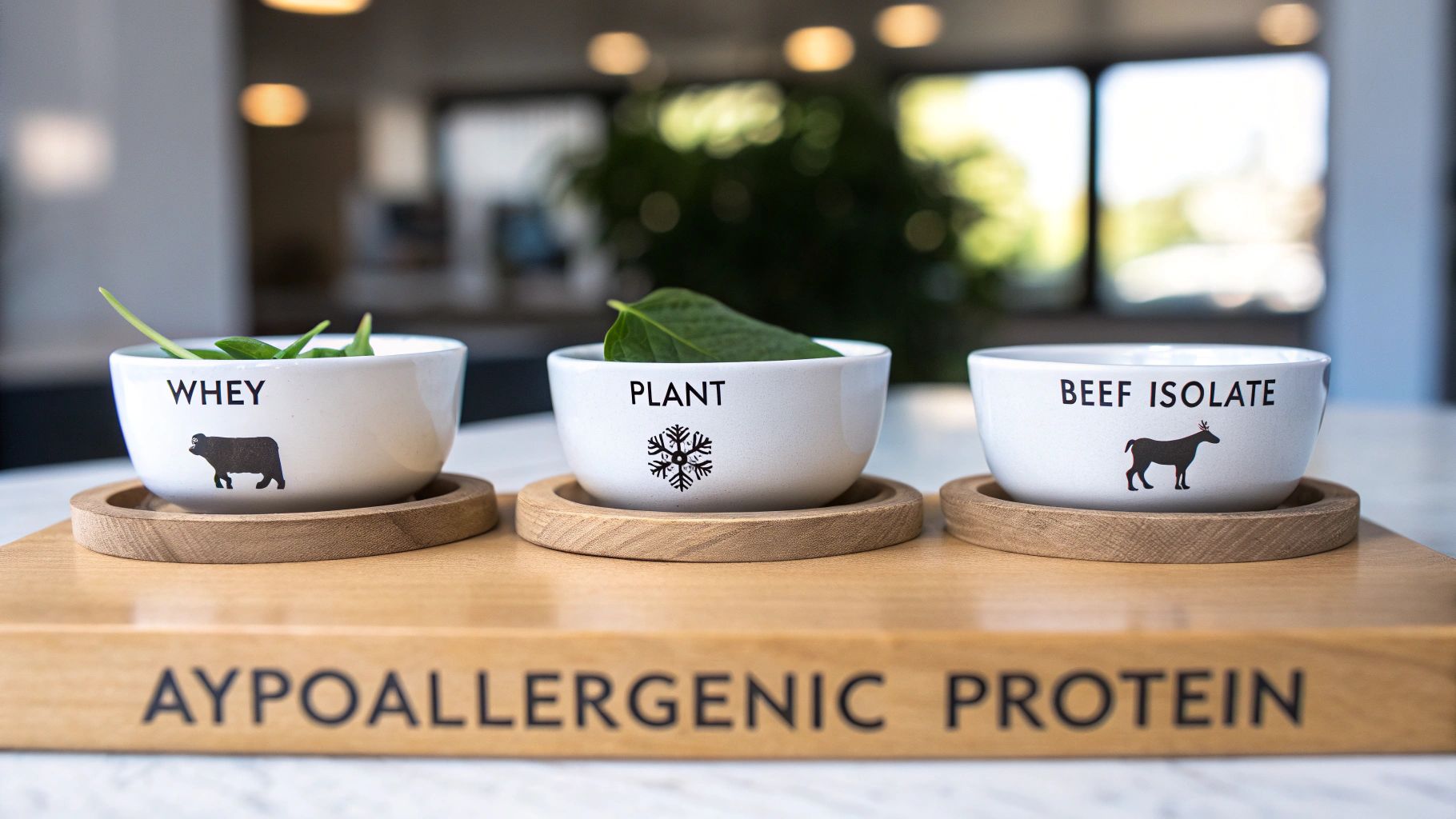
Let's get real for a minute. Beyond all the science about amino acids and muscle growth, there's a much more immediate factor that often decides which protein is right for you: how it actually makes you feel.
If a protein powder leaves you feeling bloated, gassy, or triggers an allergic reaction, it doesn't matter how great its amino acid profile looks on paper. The practical reality of how your body handles a protein is what truly counts.
This is where whey protein, for all its muscle-building prowess, hits a major snag for a huge chunk of the population.
The Dairy Dilemma: Whey and Lactose
The most common complaint with whey protein traces right back to its source—dairy. The most popular form, whey concentrate, contains lactose, the sugar found in milk. If you're lactose intolerant, your body doesn't produce enough of the lactase enzyme to break it down, leading to that all-too-familiar gas, bloating, and cramping.
Whey isolate is a definite step up. It goes through extra filtering to strip out most of the lactose and fat, making it a solid choice for people with only mild sensitivity. But for anyone with a true cow's milk allergy—an immune system freak-out in response to the milk proteins themselves—even ultra-pure whey isolate can still be a problem.
This is exactly why plant-based proteins have exploded in popularity. A well-formulated blend like our Organic Grain-Free Complete Plant Protein Powder offers a clean, dairy-free, and lactose-free alternative, making it the go-to for anyone with these issues.
Digestive Tolerance Beyond Dairy
While plant proteins neatly sidestep the dairy issue, they can bring their own digestive quirks to the table. Some people find that certain plant proteins cause a bit of bloating or gas, especially formulas loaded with added gums, fillers, or a high fiber content. This usually boils down to how your specific gut biome handles certain ingredients.
This whole digestive puzzle really drives home a key point: what’s "healthy" is entirely personal. What works flawlessly for your gym buddy might send your stomach into a tailspin. The goal is to find a protein source that fuels your body and plays nice with your digestive system.
The best protein powder is one you can digest comfortably and consistently. If it causes discomfort, you're not going to stick with it, completely defeating the purpose of adding it to your routine.
The Hypoallergenic Alternative: Beef Protein Isolate
This is where a powerful third option comes into play, particularly for those who can't tolerate dairy and struggle with some plant-based ingredients. If you're looking for a potent, animal-based protein without the common allergens, beef protein isolate is an absolute game-changer.
Our Grass Fed Beef Protein Isolate Protein Powder is a true hypoallergenic powerhouse. It's meticulously processed to be free from the usual suspects that cause food sensitivities:
- Completely Dairy-Free: Zero lactose or milk proteins.
- Gluten-Free and Soy-Free: Eliminates other common gut irritants.
- Paleo and Carnivore-Friendly: Aligns perfectly with dietary protocols that prioritize gut health.
This makes beef isolate an incredible choice for athletes and health-conscious folks who have sensitive systems or follow restrictive diets. You get the rapid absorption and complete amino acid profile you need for peak performance—similar to whey—but without any of the allergenic baggage. It truly bridges the gap, offering a clean, potent, and easily digestible protein when other options just don't cut it.
Sourcing, Environmental Impact, and Taste
There's a lot more to a protein powder than just what's on the nutrition label. The real story starts way before it ever hits your shaker bottle—it begins in the fields and on the farms. Where the ingredients come from, the environmental cost of production, and even the taste and texture are huge factors in finding the right fit for your body and your values.
This is where you'll often find the starkest differences between whey and plant proteins.
For any animal-based protein, quality is everything. Look for terms like "grass-fed," because they matter. For instance, our Grass Fed Beef Protein Isolate Protein Powder is sourced from cattle raised on pasture—a world away from conventional factory farming. That commitment to better sourcing leads directly to a cleaner final product.
The same principle applies to plant-based options, where the "organic" seal is your best friend. Choosing a product like our Organic Grain-Free Complete Plant Protein Powder ensures the ingredients were grown without synthetic pesticides or fertilizers. It’s a cleaner, more nutrient-rich powder, plain and simple.
The Environmental Weigh-In
The conversation about sourcing naturally flows into environmental impact. Let's be real: dairy farming, which is where whey comes from, is a resource-heavy industry. It demands a massive amount of land for grazing and growing feed, uses enormous quantities of water, and contributes significantly to greenhouse gas emissions.
On the flip side, plant-based proteins tend to leave a much lighter footprint. Crops like peas and rice generally require less land, less water, and produce fewer emissions than livestock farming. For many people, this ecological edge is a major reason for making the switch.
This isn't just a niche movement; it's a measurable trend that's reshaping the market. While whey is still a powerhouse, the explosive growth of plant-based alternatives proves that consumers are paying more attention to sustainability and where their food comes from.
A Look at Market Trends
You can see this shift in the numbers. In 2024, North America held a 46% revenue share of the plant-based protein supplements market. The Asia Pacific region is also exploding, projected to grow at a 9.63% CAGR from 2025 to 2034.
And while the whey protein market grew by a respectable 21% in 2024, the plant protein sector wasn't far behind with 12% growth. It's clear that plant-based options are rapidly gaining ground as people vote with their wallets for more sustainable choices. You can dive deeper into this data over at Precedence Research.
The All-Important Taste Test
At the end of the day, if you don't like how your protein powder tastes, you're not going to drink it. Consistency is key, and taste is a huge part of that. This is where whey and plant proteins have traditionally been miles apart.
-
Whey Protein: Since it comes from dairy, whey usually has a smooth, creamy texture and a pretty neutral flavor. It mixes easily and gives you that familiar, milkshake-like consistency that many people prefer.
-
Plant Protein: Plant proteins have a bit more character. Depending on the source, they can taste "earthier." For years, they had a bad reputation for being gritty or chalky.
But things have changed. A lot. Modern processing and smart blending have closed the gap in a big way. By combining sources like pea, pumpkin seed, and sunflower seed, today's best plant proteins are smoother and taste way better than their predecessors. You can get a great-tasting experience without sacrificing clean, plant-based ingredients.
Ultimately, it all boils down to your personal priorities. Do you value the classic creamy texture of a grass-fed whey, or does the clean, sustainable profile of an organic plant blend align better with your goals? Understanding these bigger-picture factors is the key to choosing a protein you can feel good about, from the inside out.
How to Choose the Right Protein for Your Goals
After all the science and side-by-side comparisons, it really comes down to one simple question: which protein is right for you? The best answer isn’t about which one is universally “better,” but which one truly fits your body, your lifestyle, and your goals. Let's walk through a few common scenarios to help you pick with confidence.
Even with the explosion of plant-based options, animal-based proteins still dominate the market. In 2024, they held a massive 73.23% market share, and whey protein remains a top seller for one reason: it works. The global whey market was valued at an incredible $11.79 billion in 2023, underscoring its staying power, especially in North America. For a deeper dive into market trends, you can get the full report on global protein supplement trends.
For the Dedicated Athlete
If you’re all about maximizing muscle growth and slashing recovery time, you need a fast-absorbing protein that’s loaded with leucine. This is where a top-tier whey or beef isolate really pulls ahead.
For anyone who handles dairy just fine, whey isolate is tough to beat. It delivers a rapid flood of BCAAs to kickstart muscle protein synthesis right after a brutal workout. But what if you want that same elite, fast-acting performance without any dairy or potential allergens? That's where a product like our Grass Fed Beef Protein Isolate Protein Powder comes in. It provides a seriously powerful and complete amino acid profile to fuel serious gains.
This little decision tree can help you see which path makes the most sense based on what you prioritize—taste and performance, or the planet.
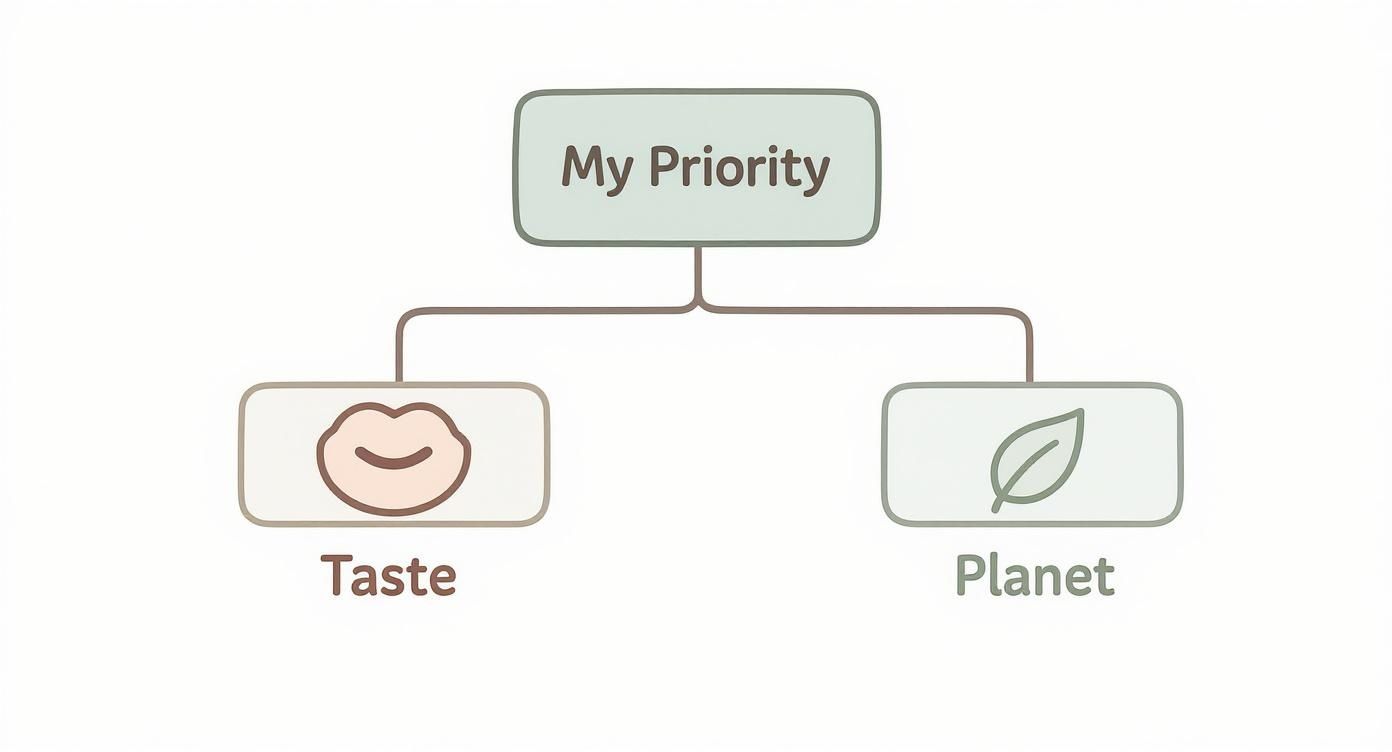
As you can see, your core values are the best place to start. Whether you're driven by the sensory experience or by your environmental impact, let that guide your choice.
For the Plant-Based and Eco-Conscious User
If you’re living a vegan lifestyle, have a sensitivity to dairy, or just want to lighten your environmental footprint, a premium plant-based protein is the obvious choice. The trick is finding a blend that offers a complete amino acid profile, making it every bit as effective as its animal-based competition.
Our Organic Grain-Free Complete Plant Protein Powder was formulated with exactly this in mind. By combining several organic plant sources, it delivers the full spectrum of essential amino acids your body needs to build and repair muscle. It’s the perfect fit for anyone committed to a clean, sustainable, and powerful diet.
If you’re still weighing your options, our guide on what to look for in protein powder offers more detailed tips to help you decide.
Common Questions About Protein Powders
Even after breaking down all the details, you probably still have a few questions floating around. Let's tackle some of the most common ones to help you feel confident in your choice.
Can I Build Muscle Effectively With Only Plant Protein?
You absolutely can. It's a common myth that you can't.
While whey naturally contains more of the muscle-triggering BCAA leucine, you can get the exact same muscle-building results from plant protein. The secret is to choose a complete blend that combines different sources for a full amino acid profile, like our Organic Grain-Free Complete Plant Protein Powder.
You might need a slightly larger scoop to get the same amount of leucine, but studies have shown that once leucine intake is matched, plant proteins are just as powerful for building muscle and strength.
And for what it's worth, if you're tired of clumpy shakes, a good electric protein shaker can make mixing any type of powder a breeze.
Is Isolate Protein Always Better Than Concentrate?
Not always. "Better" really comes down to your individual goals and how your body reacts.
Isolate goes through an extra filtration step to remove nearly all the fat, carbs, and lactose. This leaves you with a higher percentage of pure protein per serving, making it a fantastic choice if you’re lactose intolerant or keeping your carbs super low.
Concentrate, on the other hand, is a bit less processed and often easier on the wallet. It also keeps some of the other beneficial compounds found in the original source. For anyone wanting maximum purity and easy digestion, especially if you have a sensitive gut, an isolate like our Grass Fed Beef Protein Isolate Protein Powder is the way to go.
Key Takeaway: Go with isolate for purity and if you need to avoid lactose. If your stomach handles it well, concentrate is a great, cost-effective option. Your body is the best judge.
Can I Mix Whey and Plant Protein Together?
Yes, and it’s actually a great strategy. Blending the two gives you the best of both worlds.
You get the fast-absorbing, high-leucine hit from whey for immediate post-workout recovery, plus the slower-digesting, fiber-rich benefits of plant protein for a more sustained release of amino acids. This combination is perfect for a satisfying meal replacement shake or just to add more nutritional variety to your diet.
There are zero negative interactions, so go ahead and experiment to create a custom blend that’s perfect for you.
At Peak Performance, we're all about giving you clean, high-quality options to help you hit your goals, whatever your diet looks like. Whether you land on our Organic Grain-Free Complete Plant Protein Powder or our Grass Fed Beef Protein Isolate Protein Powder, you can trust that you’re getting a pure product designed for your health.
Also in Blog


How to Increase Stamina Naturally and Boost Energy


How to Increase Energy Naturally

