


How to Improve Energy Levels Naturally
That bone-deep feeling of being drained isn't just an annoyance. It's a thief, quietly stealing your productivity, dulling your relationships, and dimming your overall joy for life.
If you want to truly boost your energy, you have to look beyond another cup of coffee. It’s time to address the real foundations of vitality: what you eat, how you move, how you sleep, and how you handle stress. This is about making smart, sustainable shifts that create real, lasting energy from within.
Moving Beyond "Tired All The Time"
If you find yourself constantly saying, "I'm so tired," you're in good company. It's one of the most common complaints out there, but many of us just accept it as the price of a busy life.
Here's the truth: persistent fatigue is your body's check-engine light. It's a signal that your core systems are out of balance. Think of your energy like a bank account—every single lifestyle choice you make is either a deposit or a withdrawal.

Quick fixes, like that sugary snack or extra espresso shot, are just high-interest loans. They give you a brief spike followed by a hard crash, leaving you more depleted than before. Real vitality comes from supporting your body's own energy-producing machinery.
The Four Pillars of Natural Energy
To build a solid foundation for energy that actually lasts, we need to focus on four critical areas. Making small, consistent tweaks here can lead to massive gains, putting you back in the driver's seat of how you feel every single day.
- Nourishing Nutrition: Food is quite literally fuel. The quality of what you eat directly impacts your energy at a cellular level. Processed foods and simple sugars are notorious for causing those dreaded afternoon slumps, while whole, nutrient-dense foods provide a steady, reliable burn.
- Purposeful Movement: Getting your body moving is one of the best things you can do for your energy. Regular physical activity gets your blood flowing and actually increases the number of mitochondria—the tiny power plants inside your cells. It’s a strange but true paradox: spending energy through exercise actually creates more energy for later.
- Restorative Sleep: This is non-negotiable. Sleep is when your body does its most important repair and recovery work. Skimping on quality sleep is one of the fastest ways to drain your daily vitality, messing with everything from your mood to your ability to think clearly.
- Effective Stress Management: Chronic stress is an energy killer. It keeps your body flooded with cortisol, a hormone that, over time, leads to profound exhaustion and burnout. Learning to manage your stress is an essential skill for protecting your energy reserves.
To make this even clearer, here's a quick breakdown of how these pillars support your daily vitality.
Your Quick Guide to Natural Energy Pillars
| Energy Pillar | Core Strategy | Why It Works |
|---|---|---|
| Nutrition | Eat whole, nutrient-dense foods. | Provides steady, slow-release fuel for your cells, avoiding the crashes caused by processed sugars and refined carbs. |
| Movement | Incorporate regular physical activity. | Boosts circulation, improves oxygen delivery, and increases the number of energy-producing mitochondria in your cells. |
| Sleep | Prioritize 7-9 hours of quality sleep. | Allows your body and brain to repair, detoxify, and recharge, consolidating memory and regulating hormones. |
| Stress | Practice mindfulness and relaxation. | Lowers cortisol levels, preventing the hormonal drain that leads to chronic fatigue and burnout. |
By focusing on these four areas, you create a powerful system that supports and sustains your energy day in and day out.
The goal isn't a complete life overhaul by tomorrow. It's about making small, deliberate choices each day that compound over time. By consistently tending to these four pillars, you can shift from just surviving to truly thriving.
Fueling Your Body for All-Day Energy
Let's be honest, what you eat has a direct and immediate impact on your energy. It's the raw material your body uses to power everything from intense workouts to simply thinking clearly.
Think of your body like a high-performance engine. If you fill it with cheap, low-grade fuel—I’m talking about sugary drinks, processed snacks, and refined carbs—you can't be surprised when it sputters and stalls. That's exactly what the dreaded afternoon crash is.
The real secret to sustained energy is getting off the blood sugar rollercoaster. When you slam your system with simple carbs like white bread or pastries, they hit your bloodstream as a rush of glucose. You get a quick, cheap thrill of energy, but what follows is the inevitable crash, leaving you sluggish, foggy, and craving more of the very thing that caused the problem. It's a vicious cycle.
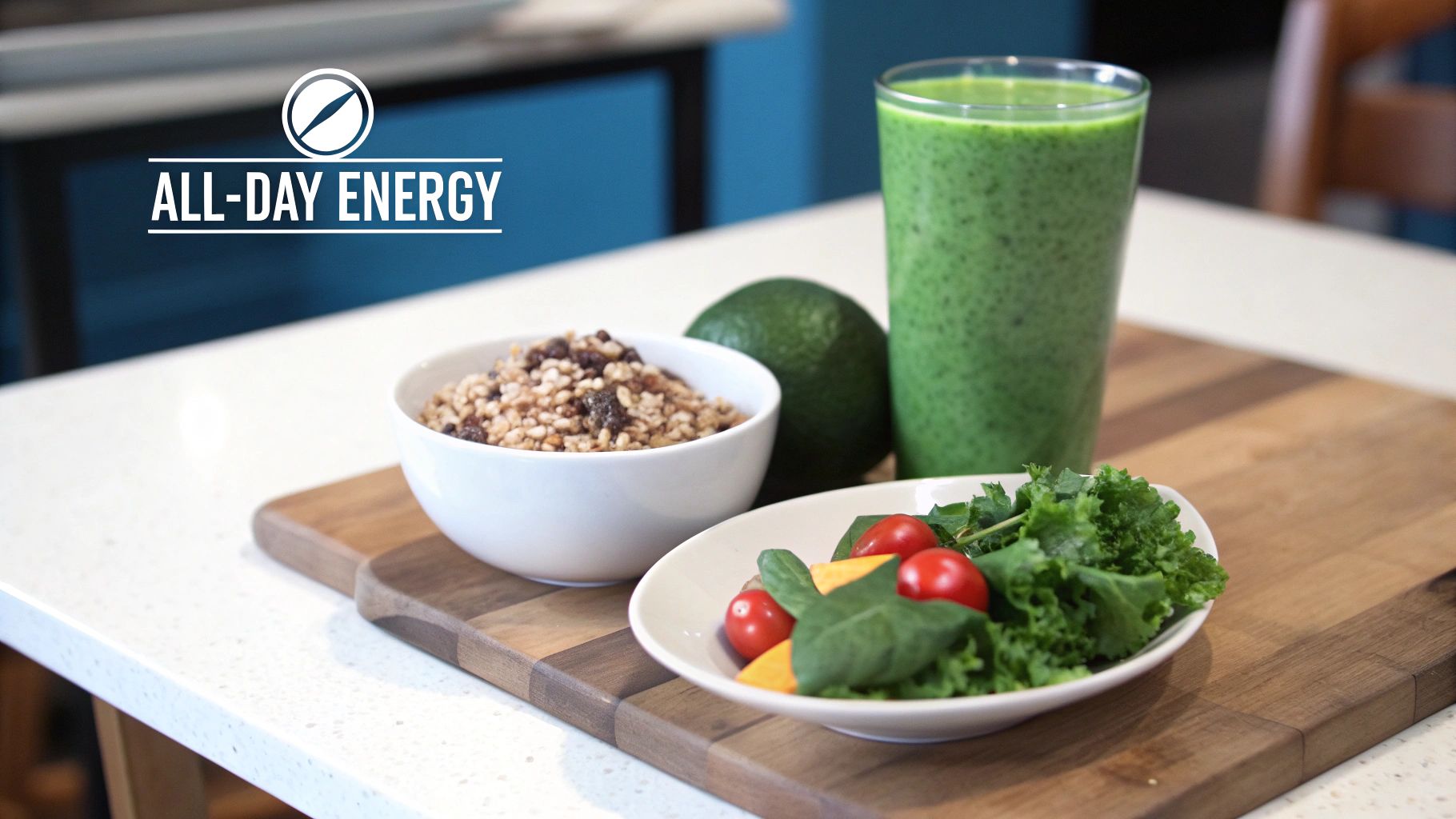
Balancing Your Macronutrients
To break free, every meal should be built around the powerful trio of macronutrients: complex carbs, lean protein, and healthy fats.
- Complex Carbohydrates: These are your slow-burn fuel. Think quinoa, oats, brown rice, and sweet potatoes. They release glucose into your bloodstream gradually, giving you a steady, reliable stream of energy for hours. No more peaks and valleys.
- Lean Protein: Foods like chicken, fish, eggs, and legumes are crucial for slowing down the absorption of those carbs. This keeps your blood sugar stable and helps you feel full and focused long after you’ve finished eating.
- Healthy Fats: Don't fear the fat! Sources like avocado, nuts, seeds, and olive oil are incredibly dense energy sources. They’re also critical for brain function and keeping your hormones balanced—both non-negotiable for all-day vitality.
Putting this into practice consistently is key. Building out some effective healthy meal plans can take the guesswork out of it. And if you want to see what this looks like on a daily basis, check out what a nutritionist and biohacker actually eat in our guide on daily eating habits.
The Power of Micronutrients
If macronutrients are the logs on the fire, micronutrients are the spark that ignites them.
Vitamins and minerals—especially iron, magnesium, and the B-vitamins—are the unsung heroes of energy production at the cellular level. You can be eating all the right macros, but if you're deficient in these, you'll still feel chronically tired. For example, iron is absolutely essential for getting oxygen to your cells. Without enough of it, your cells are literally suffocating and can't produce energy efficiently.
It's a massive global issue. An estimated 30% of the world's population suffers from anemia, often from simple iron deficiency, which puts a serious damper on natural energy production.
This is where a high-quality superfood blend can be a game-changer, especially on those days when your diet isn't perfect. Tossing a scoop of Peak Performance Organic Greens Superfood Powder into your morning smoothie is an incredibly efficient way to flood your system with a huge spectrum of essential vitamins, minerals, and antioxidants to fill any nutritional gaps.
The Overlooked Role of Hydration
Finally, let's talk about the easiest energy hack of all: water.
Hydration is fundamental to practically every process in your body, including energy metabolism. It’s shocking how quickly dehydration can sap your strength. Even a mild fluid loss, just 1-2% of your body weight, can tank your cognitive function and physical performance by up to 20%.
That feeling of brain fog, the inability to concentrate, the general fatigue? It could just be that you need a glass of water. Making a conscious effort to sip water consistently throughout the day is one of the simplest, yet most powerful, things you can do to keep your energy high and your mind sharp.
The Real Link Between Movement and Vitality
It always sounds like a catch-22, right? You need to use energy to make energy. But honestly, getting your body moving is one of the single most effective ways I've seen to pull yourself out of a slump and naturally boost your vitality. It works by giving your body’s entire energy-production system a complete upgrade.
When you start moving, your heart immediately gets to work pumping more oxygen-rich blood to your muscles and, just as importantly, your brain. That’s why you often feel more alert right away. But the real long-term win comes from the changes that happen at a cellular level, building up a much more resilient energy reserve over time.

Building Your Cellular Power Plants
The real magic happens inside your cells with your mitochondria. Think of these as tiny power plants. Every time you challenge your body with physical activity, it sends a signal to build more mitochondria to keep up with the demand.
This is huge. It means your baseline capacity for producing energy literally increases.
It's also why consistency beats intensity, every single time. You don't need to destroy yourself with punishing workouts. The actual goal is to find activities you genuinely look forward to, so movement just becomes part of your day-to-day life.
By making regular movement a habit, you are signaling to your body that it needs to become more efficient at producing energy. This creates a positive upward spiral where having more energy makes it easier to stay active.
Practical Ways to Weave Movement into Your Day
Forget the "all or nothing" approach. It doesn't work. What does work are small, consistent bursts of activity spread throughout your day. They really add up.
Here are a few simple ideas to get you started:
- The Lunch Break Power Walk: Instead of scrolling at your desk, take 15-20 minutes to walk outside. The combination of movement and natural light is an incredible mood and energy lifter.
- The Ten-Minute Bodyweight Routine: Kickstart your morning with a quick circuit of bodyweight squats, push-ups, and planks. It's an amazing way to wake up your body and mind before the day gets away from you. No equipment needed.
- Embrace "Exercise Snacking": Every hour or so, get up and move for a minute. Do a few stretches, walk up and down a flight of stairs, or bust out some jumping jacks. These little "snacks" keep your blood flowing and prevent that afternoon stiffness.
The key is finding something you truly enjoy. It could be dancing in your living room, gardening, or cycling. When you love the activity, it feels like a treat, not a chore. And that consistency is what pays off.
Research backs this up again and again. One major review found that moderate aerobic exercise led to a whopping 65% improvement in self-reported energy levels.
And if you’re looking to build strength—which is another fantastic way to boost your metabolism and energy—we’ve got you covered. Check out our in-depth guide on strength training for beginners and beyond for some easy, actionable ways to get started.
Mastering Your Sleep for a High-Energy Day
If there's one non-negotiable for having a high-energy day, it's getting high-quality sleep. I'm not just talking about the number of hours you're in bed; I'm talking about the quality of that rest. Deep, restorative sleep is where the magic happens—it’s when your body and brain get down to the critical business of repair and recovery, setting you up for mental clarity and physical stamina the next day.
Think of your bedroom as a dedicated recharging station. The best environment is cool, dark, and quiet. Seriously, even a little bit of light can mess with your sleep cycles. I recommend blackout curtains or a good sleep mask to send a clear signal to your brain: it's time to power down.

Crafting a Powerful Wind-Down Routine
Our bodies absolutely thrive on routine. Try starting a wind-down ritual about an hour before you plan to sleep. This is your cue to step away from all screens—that blue light they blast out can seriously disrupt your melatonin production, the key hormone that runs your sleep-wake cycle.
Instead of scrolling through your phone, try one of these:
- Read a physical book: It’s a fantastic way to let your mind disengage from the day’s chaos.
- Do some gentle stretching or yoga: This helps release muscle tension and soothes the nervous system.
- Journal: Get all those racing thoughts and worries out of your head and onto paper so they don’t keep you up.
Don't forget about timing your meals and workouts. I always suggest finishing your last meal at least two to three hours before bed and avoiding any intense exercise late in the evening. For a much deeper dive, check out our guide on how to get better sleep to perform at your best.
I can't overstate how important this is. Experts recommend adults get 7 to 9 hours of sleep a night, but a shocking 35% of U.S. adults admit they get less than that. Even just one week of poor sleep can lead to a massive 32% drop in daytime alertness. It’s a huge performance killer.
Natural Aids for Deeper Relaxation
Even with a perfect routine, sometimes your body just needs a little extra nudge to fully relax. This is where certain minerals can be incredibly helpful. Magnesium, in particular, is often called nature's relaxation mineral for a good reason.
Magnesium is involved in hundreds of reactions in your body, including the ones that help calm your nervous system and get your muscles ready for rest. Think of it like a brake pedal, helping to quiet the whole system so you can drift off to sleep.
Bringing a high-quality magnesium supplement into your nightly routine can be a total game-changer for sleep quality. A clean, easily absorbed form like Peak Performance 3-in-1 Advanced Magnesium can help foster a deep sense of calm, making it the perfect addition to your wind-down ritual. By supporting your body's natural ability to relax, you're setting yourself up to wake up feeling truly recharged. If you're looking for more ways to learn how to improve sleep quality for deeper rest, these expert tips can also make a huge difference.
Managing the Silent Energy Thief Called Stress
You can have the perfect diet, an ironclad workout routine, and eight hours of sleep on the dot, but if you're constantly buried in stress, you'll still feel like you're running on empty.
Stress is the silent energy thief. It keeps your body locked in a state of “fight or flight,” which means your system is constantly flooded with the stress hormone cortisol.
While a quick shot of cortisol is great for dodging a swerving car, a steady, day-in-day-out drip is utterly draining. It forces your body to pull precious resources away from essential functions like digestion and immunity to deal with a threat that never really goes away.
Over time, this chronic activation leads straight to burnout, brain fog, and that deep-seated exhaustion that no amount of coffee can touch.
Learning to manage your response to stress isn't just a "nice-to-have" skill; it's absolutely critical for protecting your energy reserves. The goal isn't to eliminate stress—that's just life—but to stop it from running the show.
Simple Stress-Management Tools for a Busy Life
You don't need to book a week-long silent retreat to get a handle on this. Small, consistent practices can make a massive difference in your cortisol levels and help you reclaim your energy.
Here are a couple of practical techniques you can use absolutely anywhere:
- Practice mindful breathing. The next time you feel that wave of overwhelm, just stop for one minute. Breathe in slowly through your nose for a count of four, hold it for four, and then exhale slowly through your mouth for a count of six. This simple act sends a direct signal to your nervous system to stand down.
- Get outside. Even a quick 15-minute walk in a park or any green space can tangibly lower cortisol and lift your mood. There's something powerful in the combination of light movement and a natural setting that just works.
By actively managing your stress, you're not just calming your mind; you're preserving your physical energy. You're telling your body it's safe to power down the alarm system and redirect that energy back toward thriving.
Using Adaptogens to Build Stress Resilience
Another powerful tool for supporting your body’s stress response is adaptogens. These are unique plants and herbs that help your body adapt to both physical and emotional stressors, building your resilience over time. Think of them as a thermostat for your stress hormones, helping keep things in a healthy range.
One of the most well-researched adaptogens is ashwagandha. It works by helping to moderate your body’s cortisol production, preventing those wild peaks and valleys that leave you feeling both wired and tired.
Bringing a high-quality supplement like Peak Performance Organic Ashwagandha into your routine can be a game-changer. By helping your system find and maintain its balance, it saves your precious energy for what really matters, making it one of the best strategies for improving energy levels when stress is the culprit.
Your Simple Plan for Lasting Energy
Okay, let's put all the pieces together. Knowing about nutrition, movement, sleep, and stress is one thing, but building a simple plan that actually sticks is where the magic happens.
This isn't about a total life overhaul. In fact, trying to change everything at once is the fastest way to burn out and give up. The real secret to boosting your energy for good is to start small and build momentum.
Lasting energy isn’t built in a day; it's the result of small, consistent choices that compound over time. The goal is progress, not perfection. Choose one or two habits that feel manageable and make them non-negotiable.
Building Your Personalized Energy Plan
So, where do you start? Look at this list and find one or two things that feel like an easy win. What's the smallest change you could make this week that would have the biggest impact?
-
Nutrition:
- Action: Try adding a serving of lean protein to every meal. This is a game-changer for keeping your blood sugar stable and avoiding those afternoon crashes.
- Support: To make it even easier, mix a scoop of Peak Performance Organic Greens Superfood Powder into a morning smoothie. It’s a simple way to cover your nutritional bases, especially on busy days.
-
Movement:
- Action: Block out a 15-minute walk on your calendar during your lunch break, just three times this week. That's it. It’s less about a grueling workout and more about just getting your body moving.
-
Sleep:
- Action: Power down all your screens—phone, TV, laptop—one hour before you want to be asleep. The blue light really messes with your body's natural sleep signals.
-
Stress Management:
- Action: The next time you feel that wave of stress rising, just stop. Take five slow, deep breaths before you do or say anything. You'd be surprised at how much this can reset your nervous system.
- Support: For ongoing stress support, you might consider Peak Performance Organic Ashwagandha. It's a fantastic adaptogen that helps your body handle the daily grind a little more gracefully.
Once you’ve got one of these down and it feels like second nature, come back to the list and pick another. By layering these small habits, you're building a powerful foundation for a more vibrant, energetic life. This is your journey—own it.
Got Questions About Boosting Your Energy? We've Got Answers
When you start digging into how to get your energy back the natural way, a few questions always seem to pop up. Let's clear the air on some of the most common ones so you can move forward with confidence.
How Long Before I Actually Feel a Difference?
While you might feel a small lift from a single healthy meal or a solid night's sleep, the real, lasting changes take a bit more patience. Give it a good 2-4 weeks of consistent, daily effort. Think of it as building a foundation—the solid habits you create around your diet, movement, and sleep are what will give you that sustained, all-day energy.
So, Do I Have to Give Up Coffee?
Not necessarily, but let's reframe its role. Coffee can be a great tool, but you don't want it to be a crutch that masks deep-seated fatigue. If you're using it just to get through the day, you're missing the root cause.
Focus on the real energy-builders in this guide first. Try to keep your coffee intake to the mornings so it doesn't mess with your sleep.
The goal is to get to a place where you want a coffee, not where you need one. That mental shift is a huge sign that your body's own energy systems are firing on all cylinders again.
What Are the Best Supplements for Energy?
Food first, always. You can't out-supplement a poor diet. But once your nutrition is on point, a few key supplements can really help fill in the gaps.
- B-Vitamins, Iron, and Magnesium are the building blocks your body uses for energy production right down at the cellular level.
- Adaptogens like Ashwagandha are fantastic for helping your body manage stress, which is a massive energy drain for so many of us.
As always, it's a smart move to chat with a healthcare professional before adding anything new to your routine, just to make sure it's the right fit for you.
At Peak Performance, our mission is to fuel your body with the cleanest, most effective organic ingredients out there, helping you unlock your true potential.
Ready to support your body's natural energy production? Explore the Peak Performance collection today.
Also in Blog


How to Increase Stamina Naturally and Boost Energy


How to Increase Energy Naturally

