


Unlocking Organic Coffee Health Benefits
When you grab your morning coffee, you're probably thinking about the rich taste and that much-needed energy kick. But what if that simple daily ritual could be doing a lot more for your health? The difference between organic and conventional coffee is huge, and it goes way beyond a simple label. It’s about how it's grown, processed, and ultimately, how it affects your body.
Why Organic Coffee Is a Smarter Sip for Your Health
So, what’s the big deal? Conventional coffee farming often uses a ton of synthetic fertilizers, pesticides, and herbicides. While these chemicals help grow a lot of coffee, they can leave behind residues on the beans. Over time, that constant exposure can add to your body's toxic load, which is something none of us want.
Understanding The Organic Advantage
Organic coffee is a different story. It's grown without any of those synthetic chemicals. Instead, farmers use natural methods like composting and crop rotation to keep the soil healthy and pests away. This doesn’t just help the environment; it forces the coffee plant to build up its own natural defenses, resulting in a bean that’s packed with more of the good stuff.
This infographic breaks down the key differences in antioxidant content and pesticide residue pretty clearly.
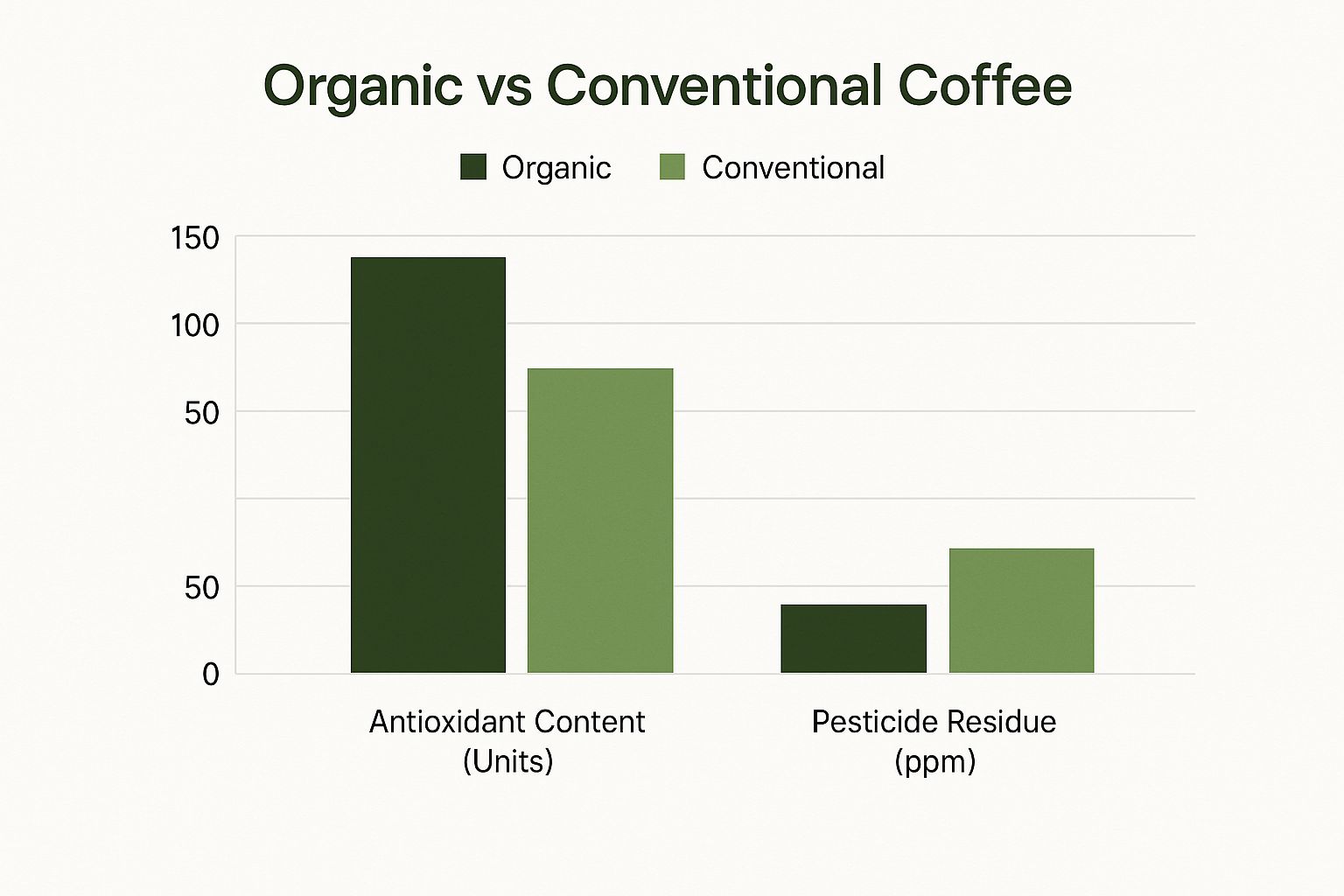
As you can see, organic coffee gives you a serious boost in protective antioxidants while cutting your exposure to pesticide residues to almost nothing. It’s a simple switch that maximizes the good and minimizes the bad in every single cup.
Let's put this into a quick side-by-side comparison to make it even clearer.
Key Health Differences Organic vs Conventional Coffee
| Attribute | Organic Coffee | Conventional Coffee |
|---|---|---|
| Pesticide Residue | Negligible to none. Grown without synthetic pesticides, herbicides, or fungicides. | Potential for residue from chemicals used in cultivation and processing. |
| Antioxidant Content | Generally higher due to the plant's natural defense mechanisms. | Often lower as chemical inputs can interfere with natural compound development. |
| Nutrient Profile | May contain higher levels of certain vitamins and minerals from healthier, nutrient-rich soil. | Nutrient levels can be inconsistent and potentially lower due to soil depletion. |
| Farming Impact | Supports soil health, biodiversity, and cleaner water systems. | Can contribute to soil degradation, water runoff pollution, and loss of biodiversity. |
The takeaway here is that you're not just avoiding chemicals with organic coffee; you're often getting a more nutritionally robust and beneficial beverage.
Making A Health-Conscious Choice
Choosing organic is one of the easiest ways to clean up your daily routine. By going for certified organic beans, you’re not just getting a better-tasting cup; you're actively cutting down on your intake of potentially harmful chemicals. It’s a decision that supports a healthier agricultural system and makes sure your daily coffee habit is actually good for you.
It all boils down to a simple idea: a healthier plant grown in healthier soil produces a healthier coffee bean. This commitment to purity is what unlocks the full spectrum of organic coffee's health benefits, making it the superior choice for your daily wellness.
When you're ready to make the switch, finding a brand you can trust is key. To help you sort through all the noise, we put together a guide on the best organic coffee brands that we stand by for quality and purity. It’s a simple upgrade that pays off big time for your long-term health.
Supercharge Your Body with More Antioxidants
Whenever we talk about the health benefits of a food, antioxidants are usually the main event. Think of them as your body's dedicated security detail, constantly on patrol to protect your cells from getting roughed up.
Every single day, your body is under attack from environmental junk and internal stress. This chaos creates unstable molecules called free radicals. Left to their own devices, these guys cause something called oxidative stress—a key driver behind cellular aging and a long list of chronic diseases.
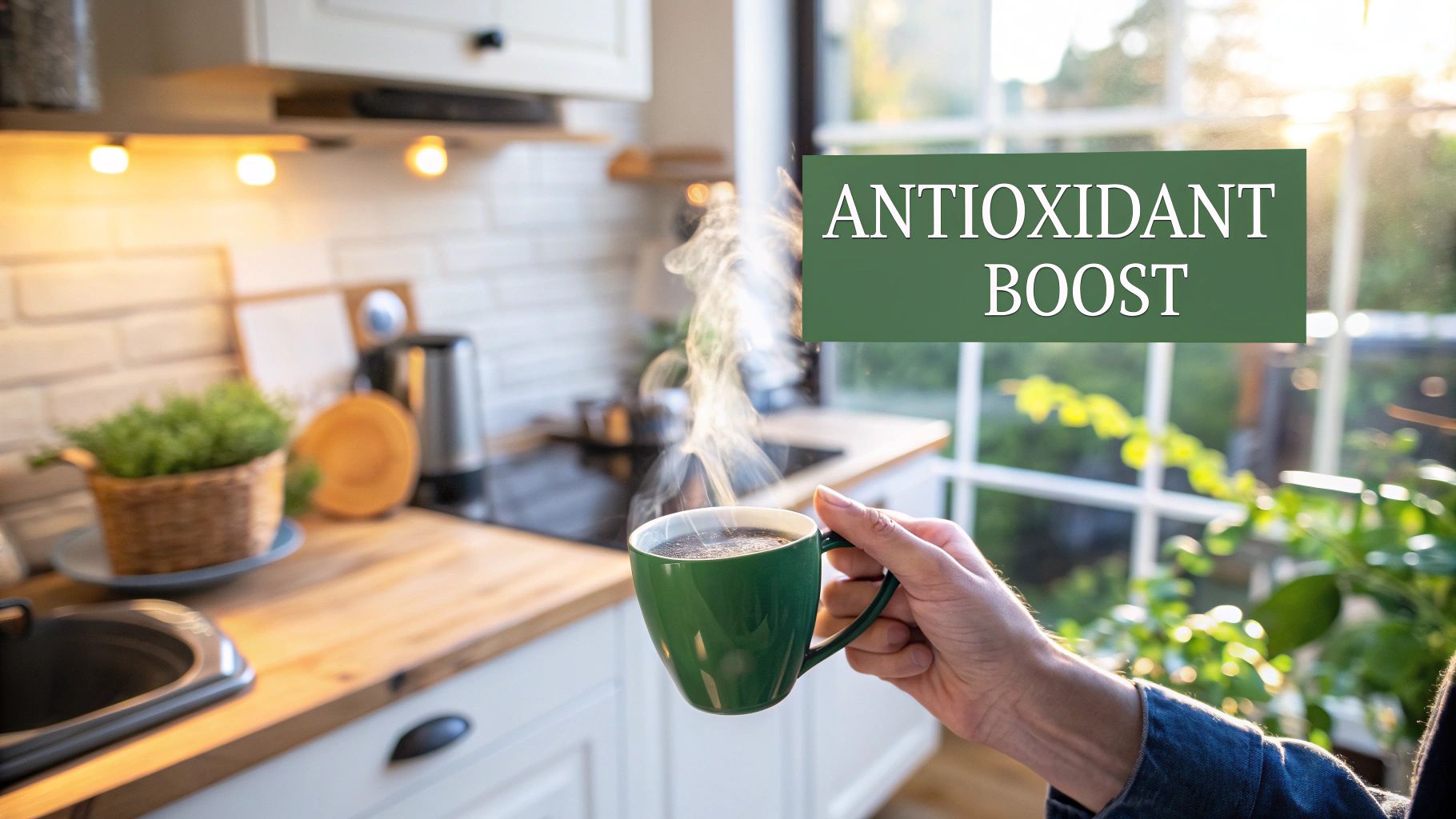
This is where organic coffee really steps up. It’s packed with a specific group of antioxidants called polyphenols, which are powerful compounds found in plants. They aren't just sitting around, either. They actively hunt down and neutralize free radicals, calming inflammation deep within your cells and helping your body stay in balance. The most famous polyphenol in coffee is chlorogenic acid, a real powerhouse known to support everything from blood sugar to heart health.
Why Organic Farming Boosts Antioxidant Levels
So, why does organic coffee seem to have more of this good stuff? It all comes down to how the coffee plants are raised.
On conventional farms, coffee plants are often coddled with chemical pesticides and fertilizers. This definitely makes the farmer's job easier, but it makes the plant's life a little too easy. It gets lazy.
Organic farming, on the other hand, puts the plant in a more natural, challenging environment. Without synthetic chemicals as a crutch, the coffee plant has to toughen up and build its own defense system to fight off pests and disease. A huge part of that defense is ramping up its production of protective compounds—like polyphenols.
The result is a coffee bean that is naturally more resilient. The bonus for us? That resilience translates into a brew significantly richer in the very antioxidants that protect our own bodies. When you choose organic, you're getting the full strength of the plant it came from.
This isn’t just a nice idea; science backs it up. Studies consistently show that organic coffee has higher concentrations of antioxidants like polyphenols and chlorogenic acid compared to its conventional counterparts. Growing in chemical-free soil simply allows the coffee plant to hold onto more of these crucial compounds that help us fight off the free radicals linked to so many chronic health issues.
Tapping into the Antioxidant Power of Coffee
Making the switch to organic coffee is one of the easiest ways to boost your daily antioxidant intake. It’s a simple change that helps fortify your body against the daily grind of oxidative stress.
Here are a few of the biggest wins you get from the antioxidant compounds in organic coffee:
- Reduced Inflammation: Chronic inflammation is at the root of almost every major disease. The polyphenols in coffee help put out those fires.
- Support for Cellular Health: By neutralizing free radicals, these antioxidants protect your very DNA and cell structures from damage, which is a cornerstone of healthy aging.
- Lowered Risk of Chronic Illness: A consistent intake of antioxidants from sources like organic coffee is linked to a lower risk for major problems like heart disease and type 2 diabetes.
While coffee is a fantastic source, you can build an even stronger defense by bringing in other antioxidant-rich foods. If you want to diversify, you can check out other sources of powerful polyphenols and antioxidants like high-quality olive oil.
And for a more comprehensive list, we put together a guide on the absolute top antioxidant-rich foods you should add to your grocery list.
Ditching the Unwanted Chemicals in Your Coffee
When it comes to your health, what's left out of your coffee is just as important as what's in it. Conventional coffee farming often relies on a heavy-handed chemical approach to maximize crop yields. While that might be good for production, it can introduce a whole cocktail of unwanted stuff into the beans you eventually grind, brew, and drink.
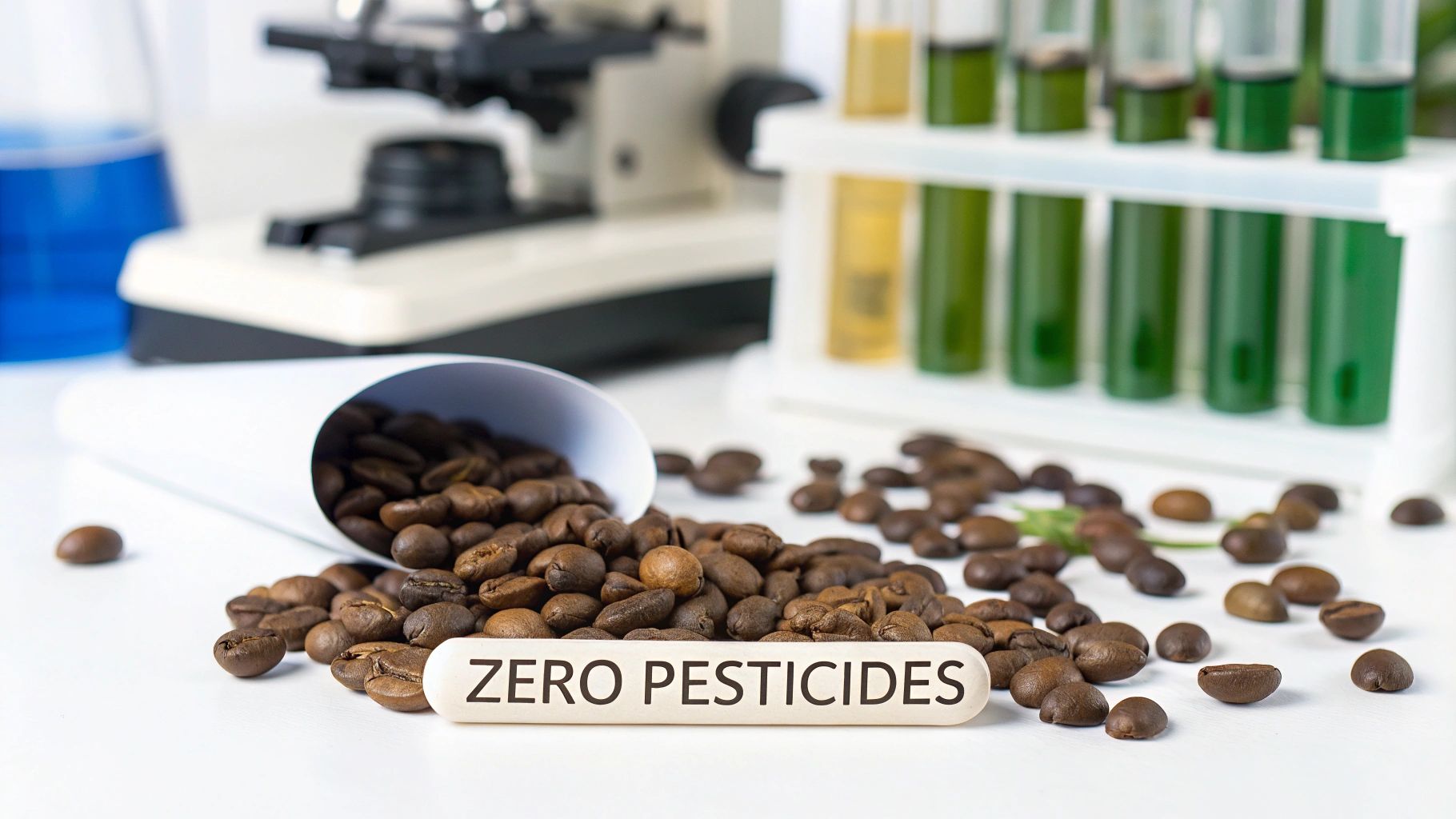
This is where one of the biggest organic coffee health benefits comes into play: purity. By choosing organic, you’re doing more than just getting a great cup of coffee. You’re consciously sidestepping a chemical load that has no place in a healthy daily ritual. It’s about choosing a cleaner, simpler product.
The Hidden Contaminants in Conventional Coffee
Think of your daily cup of conventional coffee as a snapshot of its entire journey from farm to mug. Unfortunately, that journey often includes exposure to a variety of chemicals that can hang around all the way to your kitchen.
And we're not just talking about harmless trace amounts. Some of the most common contaminants found in non-organic coffee have been linked to some pretty serious health concerns with long-term, repeated exposure.
Let’s break down the main culprits you get to avoid by making the switch to organic:
- Synthetic Pesticides and Herbicides: Sprayed to kill insects and weeds, their residues can remain on the beans. Studies have associated them with everything from endocrine disruption to neurological issues.
- Fungicides: These are used to fight mold and fungus, but they can also leave behind unwanted traces that add to your body's overall toxic burden.
- Mycotoxins: These are toxic compounds produced by molds that can grow on coffee beans, especially during processing and storage. Some, like Ochratoxin A, are known to be particularly nasty.
Choosing a trusted organic source means your beans are grown and processed without these synthetic inputs, giving you a much cleaner foundation for your health.
Glyphosate: A Major Concern in Your Cup
One of the most concerning herbicides out there is glyphosate. Its presence in our food supply is a huge topic of conversation for anyone paying attention to their health, and coffee is right in the middle of it. Because it's used so widely in conventional agriculture, its residue can easily find its way into the final product.
Some investigations have tested top-selling coffee products and found that many conventional brands contained glyphosate residues. These studies also uncovered other industrial contaminants, showing just how widespread the contamination issue can be.
The real problem isn't a single exposure; it's the cumulative effect of daily, low-level contact with these toxins. Your body has to work overtime to process and eliminate these foreign substances, which can put serious, long-term stress on your detoxification systems.
Switching to certified organic coffee is the simplest, most direct way to slash your exposure to glyphosate from your daily brew. It’s a proactive step toward minimizing your body’s chemical burden. For a deeper dive into the agricultural side of things, check out our article discussing different points of view on GMOs and glyphosate.
Why Organic is the Simple Solution
The beauty of choosing organic coffee is its simplicity. Instead of stressing about what might be lurking in your mug, you can feel confident it was grown using natural, sustainable methods. That choice translates directly into a cleaner cup and less work for your body.
By ditching the unwanted chemicals, you allow coffee's true health benefits to shine through without being canceled out by potential toxins. This isn't about adding something complicated to your routine; it's about removing what shouldn't be there in the first place. You're left with a pure, beneficial, and delicious part of your day.
Enhancing Coffee's Proven Health Advantages
Going organic isn't just about dodging chemicals or getting more antioxidants. It’s about taking coffee’s well-known health benefits and kicking them up a notch. Think of it as upgrading your daily ritual from good to great.
When you ensure your coffee is clean, you're getting rid of any potential baggage from contaminants. This allows the powerful bioactive compounds that make coffee so good for you to do their job without anything getting in the way. Suddenly, your morning cup shifts from a simple energy boost to a strategic part of a health-first lifestyle.
Tapping into Coffee's Protective Qualities
For years, researchers have been digging into coffee's link to better health, and the findings are consistently impressive. It turns out that regular coffee drinkers often have a lower risk for several serious conditions, making it one of the healthiest beverages you can enjoy. It's not just about the caffeine, either—it's the synergy of hundreds of natural compounds working together to support your body's most critical systems.
And these aren't small benefits. We're talking about major, science-backed connections to a longer life and reduced risk of disease.
By selecting a high-quality organic coffee, you are essentially choosing the purest and most potent version of this health-promoting beverage. This ensures you receive the maximum protective benefits without the chemical baggage that can accompany conventionally grown beans.
For example, one massive review looked at 40 different studies with over half a million people. It found something incredible: folks drinking 3 to 4 cups of coffee daily had a significantly lower risk of death from all causes—about 12% lower for men and 7% for women—compared to non-drinkers.
The research also pointed to a lower risk for certain cancers, especially in the liver and digestive tract, the more coffee people drank. You can dive into the data yourself and read the full research about these coffee findings for a closer look.
How Coffee Supports Your Body's Systems
So, what’s the secret sauce? How does a simple cup of coffee pull all this off? It all comes down to its complex profile of bioactive compounds that get to work throughout your body in a few key ways:
- Cardiovascular Support: Coffee is loaded with antioxidants like chlorogenic acid. These compounds help shield your blood vessels from damage and can even improve how they function, contributing to a lower risk of stroke and heart problems.
- Liver Protection: Time and time again, studies link coffee consumption to a healthier liver. It’s associated with a reduced risk of conditions like cirrhosis and liver cancer, acting as a gentle guardian for one of your body's most important organs.
- Neurological Defense: The compounds in coffee also help calm inflammation in the brain and support the health of your neurons. This is a big reason why so much research connects coffee drinking to a lower risk of neurodegenerative diseases.
Many people think carefully about what they put into their bodies to support their health and fitness goals. Looking into the best post-workout recovery foods is a great example of this, as it shows a commitment to optimizing performance.
Choosing a clean, high-quality organic coffee like Peak Performance's High-Altitude Organic Coffee fits perfectly into this mindset. It delivers all of coffee's proven advantages in their purest form, turning your daily ritual into a powerful tool for long-term wellness.
How to Select and Brew the Best Organic Coffee
Knowing why organic coffee is better is one thing, but actually putting that knowledge into practice is where you unlock the real health benefits. The good news is, making the switch is pretty straightforward once you know what to look for and how to treat your beans.
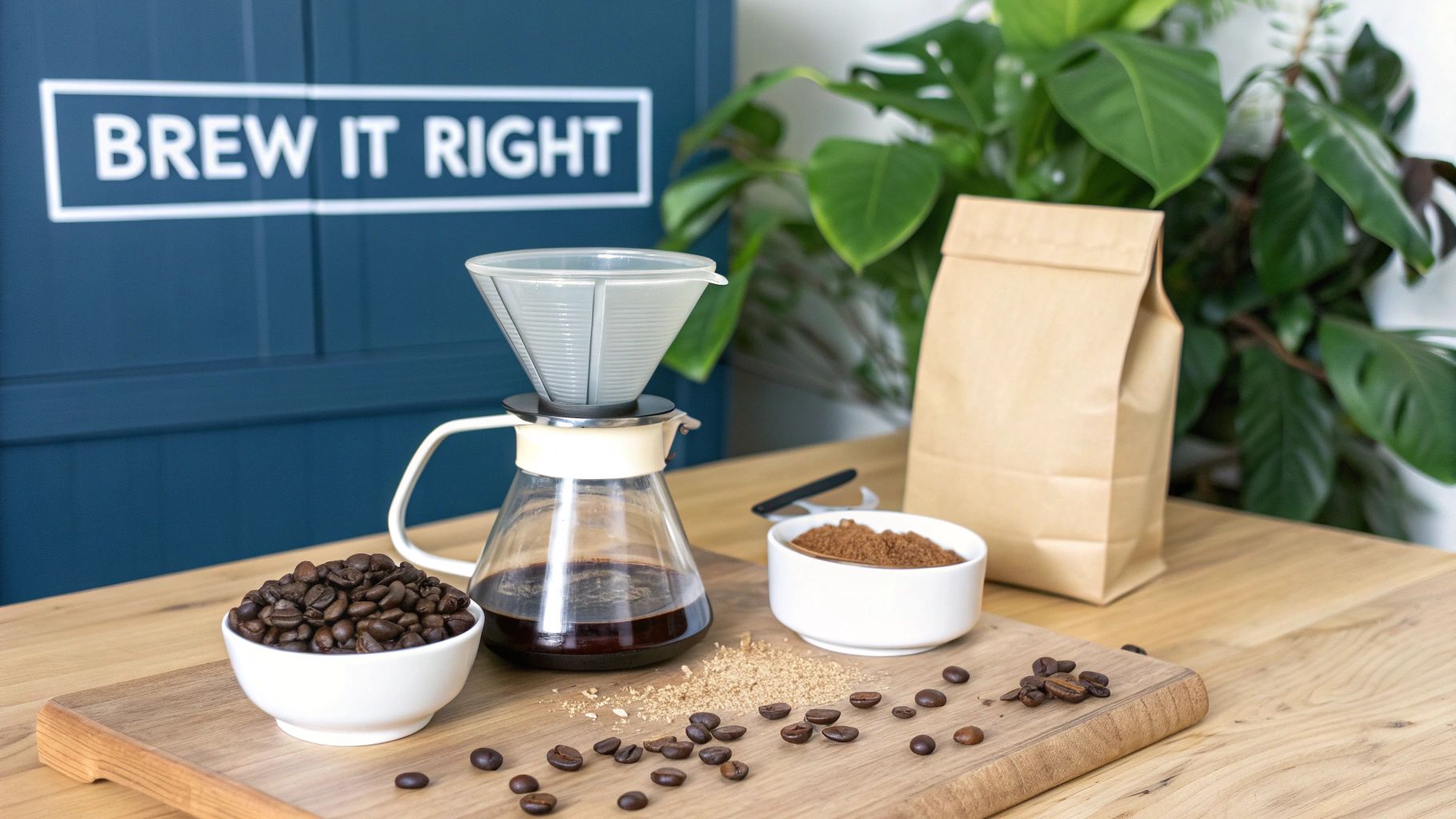
This is your practical guide to choosing and brewing coffee in a way that maximizes its antioxidant power, ensuring every cup you drink is as clean as possible.
It all begins at the store or online. To make sure you’re getting a product that’s actually free from synthetic junk, you need to learn how to read the label. The single most important thing to look for is an official certification seal.
Decode the Label for True Quality
When you're scanning the shelf, your eyes should immediately be looking for the USDA Organic seal. In the United States, this is the gold standard. It’s your guarantee that the coffee met strict federal guidelines every step of the way—from the quality of the soil and pest control methods on the farm to how the beans were processed and bagged.
Think of the USDA Organic seal as a passport. It’s proof that your coffee passed all the checkpoints for purity and sustainable farming. It means what’s inside the bag is just as clean as the label promises. Without that seal, any "organic" claim is just marketing fluff.
Choose Your Roast Wisely
Once you've confirmed it's certified organic, your next move is choosing the roast level. While personal taste is a huge factor, different roasts do have slightly different antioxidant profiles.
Here’s a quick rundown:
- Light Roast: These beans are roasted for the least amount of time, which means they hold onto the highest concentration of chlorogenic acid—a powerhouse antioxidant with anti-inflammatory properties. Flavor-wise, they tend to be brighter and more acidic.
- Medium Roast: This is the perfect middle ground, giving you a balanced flavor and a really solid mix of antioxidants. It’s an awesome all-around choice for both taste and health.
- Dark Roast: The longer roasting time does reduce the chlorogenic acid, but it also creates other beneficial antioxidant compounds. This is where you get that classic, bold, rich coffee flavor.
If you’re purely chasing the maximum antioxidant punch, a light or medium roast is usually your best bet. But honestly, any certified organic roast is a massive improvement over conventional coffee.
Master Your Brewing for a Healthier Cup
How you make your coffee is just as important as the beans you buy. The whole point is to extract all the good stuff (like flavor and antioxidants) while leaving any potential nasties behind. A few simple tweaks can make all the difference.
First off, always start with whole beans. The moment coffee is ground, it starts to oxidize, which breaks down its delicate oils and antioxidant compounds. Grinding your beans right before you brew keeps all that freshness and health-promoting goodness intact.
Second, use filtered water. Your tap water can have chlorine and other contaminants that mess with the taste and introduce stuff you don't want in your super-clean coffee.
Finally, think about your brewing gear. A lot of automatic drip machines have plastic parts that get hit with hot water, and that can lead to chemical leaching. Your best bet is to stick with methods that use glass or stainless steel.
Here are three simple, non-toxic ways to brew:
- French Press: This classic uses a glass carafe and a stainless steel plunger, so no plastic ever touches your coffee. It fully immerses the grounds, which gives you a rich, full-bodied cup.
- Pour-Over: Using a glass or ceramic dripper gives you total control over the brewing. It produces an incredibly clean, nuanced flavor that really lets the bean's unique notes shine.
- Percolator: A good old-fashioned stainless steel percolator on the stovetop is another great plastic-free option that consistently delivers a robust brew.
When you pair certified organic beans with a mindful brewing process, you’re turning your daily coffee ritual into something that genuinely contributes to your well-being. If you're ready to find the perfect beans for your new routine, you can Explore Our Certified Organic Coffee Selection and get started.
Got Questions About Organic Coffee?
Once you start digging into the world of organic coffee, a few common questions always seem to pop up. It makes sense. When you're thinking about changing a daily ritual, you want to be sure you're making the right call.
Let's clear the air and tackle some of the biggest questions people have when they consider upgrading their morning brew. My goal is to give you the confidence that comes from having solid, straight-up answers.
Is Organic Coffee Really Worth the Extra Cost?
It's a fair question. You've probably noticed that a bag of certified organic coffee usually has a higher price tag than the conventional stuff. But that price difference isn't just for a fancy label—it's about a completely different way of farming.
Essentially, you're paying for a process that skips the cheap chemical shortcuts. The higher cost goes toward supporting farmers who prioritize soil health and sustainable practices, all to produce a bean that’s free from synthetic pesticides and fertilizers.
Think of it less as an expense and more as an investment in your own health. You're paying for the peace of mind that comes with avoiding a daily dose of chemical residues, while getting a coffee that's often richer in protective antioxidants. It's a direct investment in a healthier you and a healthier planet.
Does Organic Coffee Taste Different Than Conventional Coffee?
Ask any coffee lover, and many will tell you that organic coffee just tastes cleaner and more vibrant. There’s a good reason for that.
A coffee bean’s flavor is a direct reflection of the soil it grew in. Organic beans are raised in rich, healthy, chemical-free soil, which allows their natural tasting notes—whether that’s chocolate, fruit, or nuts—to come through loud and clear, without being masked by chemical residues.
Of course, things like the coffee's origin, roast level, and how you brew it make a huge difference. But starting with a high-quality, clean organic bean gives you a much better foundation for a truly incredible cup.
How Can I Be Sure the Coffee I Buy Is Truly Organic?
This is a great question, and luckily, the answer is simple. The easiest and most reliable way to know for sure is to look for official certification seals right on the bag.
In the United States, the gold standard is the 'USDA Organic' seal. This isn't just marketing; it's a legal guarantee. It means the coffee has met strict federal guidelines every step of the way—from how it was farmed and harvested to how it was processed and packaged.
That third-party verification is your proof. It confirms the coffee was grown without synthetic pesticides, herbicides, or fertilizers. Without a seal like that, any "organic" claim is just words on a bag with no real teeth.
Does Organic Decaf Coffee Still Offer Health Benefits?
Absolutely. In fact, choosing organic is arguably even more important for decaf drinkers. The powerful antioxidants we've been talking about come from the coffee bean itself, not the caffeine, so you still get all that goodness in a decaf cup.
The real kicker is how the caffeine is removed. Many conventional decaffeination methods rely on chemical solvents to strip the caffeine from the beans.
When you choose an organic decaf, especially one that uses a clean method like the Swiss Water Process, you get the best of both worlds. You get the antioxidants and rich flavor without the caffeine or the unwanted chemical hangover from the decaffeination process. It's the cleanest way to enjoy your coffee, any time of day.
At Peak Performance, we believe your daily coffee should be a powerful contributor to your health, not a source of hidden chemicals. Our commitment to quality starts with sourcing the highest-grade, USDA Certified Organic, single-origin beans. We ensure every batch is third-party tested for purity, so you can enjoy a clean, antioxidant-rich cup with complete confidence. Elevate your morning ritual and experience the difference a truly pure coffee can make by trying our High-Altitude Organic Coffee today.
Also in Blog


How to Increase Stamina Naturally and Boost Energy


How to Increase Energy Naturally

