


Natural Remedies for Adrenal Fatigue
When people talk about natural remedies for adrenal fatigue, they're really talking about a holistic approach: rebuilding your body’s resilience from the ground up through diet, specific lifestyle adjustments, and targeted herbs and nutrients. The goal isn't just to mask the exhaustion but to support your entire stress-response system, get your energy back on an even keel, and restore the resources that chronic stress has drained away.
What Is Adrenal Fatigue and How Does It Feel
Think of your body’s stress response like the battery on your smartphone. Every notification, call, and open app drains it a little. On a normal day, you plug it in at night and wake up to a full charge. But what happens when the notifications never stop? That’s chronic stress. You’re plugging it in, but the battery never seems to get back to 100%.
That feeling is the essence of what people call ‘adrenal fatigue’—a state of profound burnout that sets in after being under relentless stress. While it’s not a formal medical diagnosis, it’s a very real collection of symptoms that show up when your body is simply overwhelmed.
Your Body's Stress Management Team
The command center for your stress response involves two tiny but powerful glands sitting on top of your kidneys: the adrenal glands. They’re a key part of a sophisticated communication network called the Hypothalamic-Pituitary-Adrenal (HPA) axis. You can think of it as your body's built-in stress management team.
When your brain senses a threat—whether it’s an urgent deadline, a family argument, or actual physical danger—the HPA axis jumps into gear. It signals the release of stress hormones, primarily cortisol and adrenaline.
These hormones are designed for survival. They jack up your heart rate, sharpen your focus, and flood your system with energy so you can deal with the threat. In a healthy cycle, the stressor goes away, cortisol levels drop, and your body returns to a state of calm.
When the System Gets Overwhelmed
The real problem starts when the stress never really goes away. Modern life is notorious for this, hitting us with a constant stream of low-grade stressors like financial worries, traffic, an overflowing inbox, and poor sleep. This forces the HPA axis to stay switched on far longer and more often than it was ever meant to.
Over time, this constant demand can throw the whole system out of whack. The communication between your brain and your adrenals starts to get fuzzy, like a radio signal full of static. Eventually, your body’s ability to manage stress effectively starts to break down.
This infographic lays out the straightforward, but critical, link between that constant stress and the symptoms that follow.
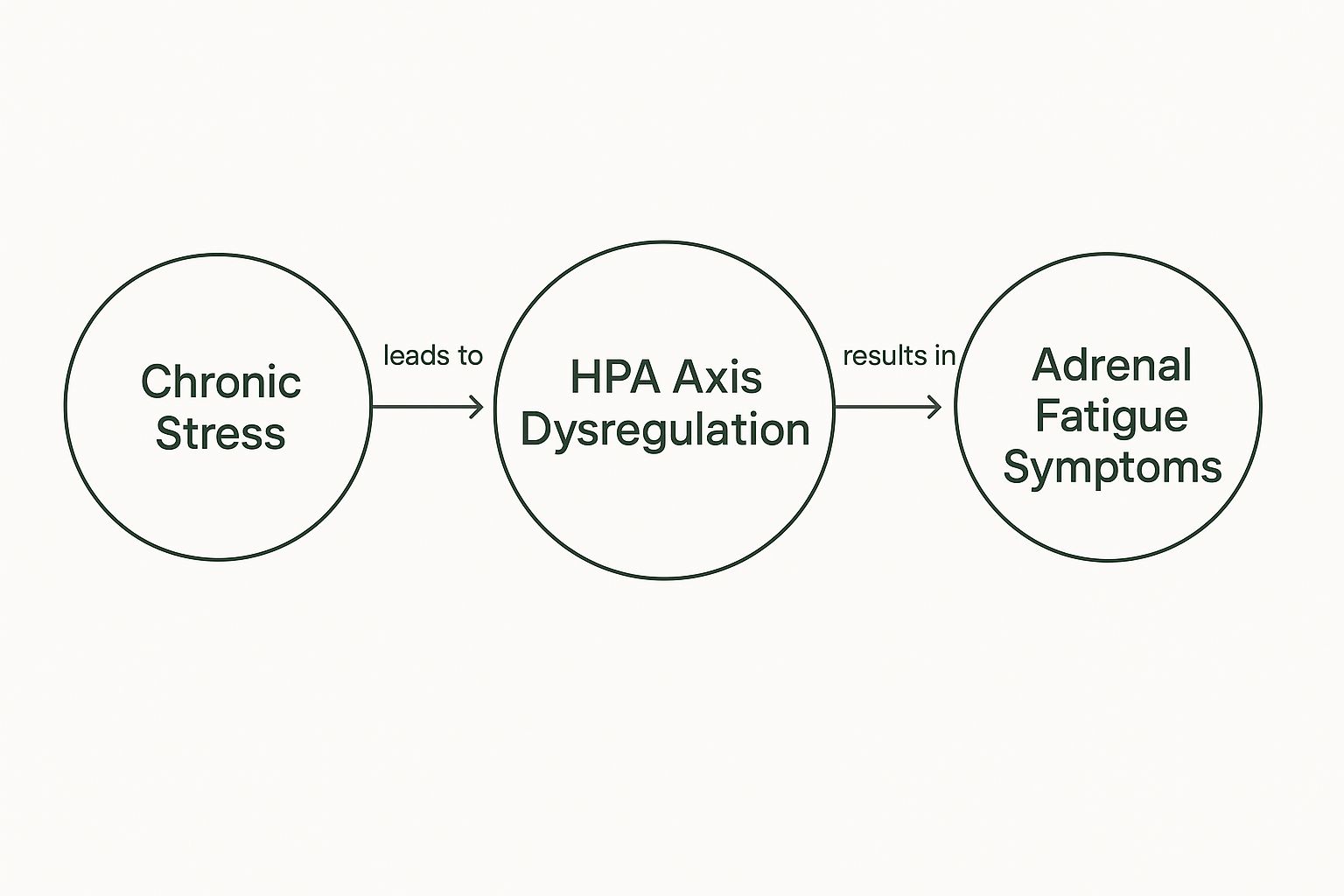
As you can see, chronic stress is the trigger. It disrupts the HPA axis, which in turn leads directly to that cluster of symptoms people associate with adrenal burnout.
Common Signs of Adrenal Overload
Because the HPA axis has its hands in so many of your body’s functions—from metabolism and immune response to mood and sleep—the symptoms of dysregulation can be all over the place. They often feel vague and disconnected, but learning to spot the pattern is the first real step toward getting your energy back.
To make it easier to see the pattern, here's a quick look at the most common signs that your body’s stress system is running on empty.
Key Symptoms of Stress-Related Exhaustion
| Symptom Category | Common Signs and Feelings |
|---|---|
| Energy & Fatigue | A deep, bone-weary exhaustion that sleep doesn't fix. Feeling "wired but tired" at night. |
| Mood & Mind | Brain fog, trouble concentrating, and poor memory. Feeling overwhelmed by small stressors. |
| Physical Cravings | Intense cravings for salty or sugary snacks as your body scrambles for quick energy. |
| Sleep Disruption | Difficulty falling asleep, staying asleep, or waking up feeling unrefreshed. |
Recognizing these symptoms for what they are is incredibly important. They aren't signs of personal weakness; they are biological signals that your body is crying out for support. By getting to the root of the problem—chronic stress—you can start using natural remedies for adrenal fatigue to rebuild your health from the inside out.
Your Adrenal Recovery Diet

You can't out-supplement a bad diet, especially when your adrenals are on the ropes. Think of food as the fuel your body runs on every single day. If you’re constantly pumping it full of sugary drinks and refined carbs, you’re creating a brutal rollercoaster of energy spikes and crashes.
This forces your already exhausted adrenals to work overtime, pumping out stress hormones just to keep things stable. It’s a vicious cycle that digs you deeper into exhaustion.
An adrenal recovery diet isn't about harsh restrictions; it's about creating stability. The number one goal is to balance your blood sugar. This provides a steady, reliable stream of energy that calms your nervous system instead of constantly shocking it. Honestly, this is one of the most powerful natural remedies for adrenal fatigue because it tackles a primary source of daily stress on your body.
Building Your Plate for Stability
So, how do you create that steady energy? Every single meal needs to be a strategic mix of high-quality protein, healthy fats, and fiber-rich carbohydrates. This trio is your secret weapon. It slows down digestion and ensures glucose (sugar) enters your bloodstream gradually, preventing the wild swings that trigger cortisol release.
For example, compare a pastry and coffee to a plate of grilled salmon (protein), a side of quinoa (complex carb), and some avocado (healthy fat). The first gives you a quick rush followed by a hard crash an hour later. The second? Sustained, calm energy for hours.
Foods That Fuel Adrenal Health
Focusing on nutrient-dense, whole foods gives your body the raw materials it needs to repair tissue and build hormones. These are the literal building blocks of your recovery.
- High-Quality Proteins: These are critical for neurotransmitter function and keeping your energy stable. Think grass-fed beef, wild-caught fish, pasture-raised chicken, and legumes.
- Healthy Fats: You can’t make hormones without fat! Healthy fats also help lower inflammation. Load up on avocados, olive oil, nuts, and seeds.
- Complex Carbohydrates: This is where you get your slow-release energy. Go for sweet potatoes, brown rice, quinoa, and a huge variety of colorful vegetables.
As you start building your meals, prioritize whole, unprocessed foods and look for clean snack options without added sugar. Hidden sugars in processed snacks can completely sabotage your efforts to stabilize your blood sugar and support your adrenals.
The Timing of Your Meals Matters
It’s not just what you eat, but when you eat. Letting yourself get too hungry is a major mistake. When you go too long between meals, your blood sugar plummets, and your body sees it as a low-grade emergency. The adrenals get the signal to release cortisol to bring it back up—an unnecessary stressor you really don't need right now.
Aim to eat a balanced meal or snack every 3-4 hours. This one simple habit can dramatically reduce the daily workload on your adrenal glands by keeping your energy levels predictable and stable.
This is how you beat that classic 3 PM energy slump that sends you running for coffee or candy. A small, protein-rich snack mid-afternoon is a proactive move that keeps your body in a state of calm balance.
What to Minimize or Avoid
What you take out of your diet is just as important as what you put in. Some foods are straight-up inflammatory and act like direct stressors on your system, actively working against your recovery.
Here are the main culprits to cut way back on:
- Sugar and Refined Carbs: These are the worst offenders for messing with your blood sugar. We're talking white bread, pasta, pastries, candy, and sugary sodas.
- Processed Foods: These are often packed with industrial seed oils, artificial junk, and hidden sugars that fuel inflammation throughout your body.
- Excessive Caffeine: While a little bit might be fine for some people, too much caffeine overstimulates the adrenals and can wreck your sleep, which is critical for healing.
Making these shifts isn't a quick fix, but it's a sustainable strategy for rebuilding your energy from the inside out. It lays the non-negotiable foundation for every other recovery effort you make.
Lifestyle Habits That Calm Your Stress Response

While the food you eat provides the building blocks for recovery, your daily habits are what truly dictate whether your body is in a state of repair or stuck in a state of stress.
Think of your nervous system like a car engine. When you're dealing with chronic stress, you’re constantly redlining it, burning through fuel at an unsustainable rate. The goal here is to gently ease your foot off the gas.
By calming your stress response, you give your adrenal glands a much-needed break from working in overdrive. This creates the space they need to finally begin to heal. These practices are powerful because they get right to the root of the problem—an overactive, exhausted nervous system.
Prioritize Restorative Sleep
For adrenal recovery, quality sleep isn't just a good idea—it's non-negotiable. It's the single most critical time for your body to repair tissues, regulate hormones like cortisol, and basically reset itself for the next day.
When you're sleep-deprived, your body registers it as a major threat, pumping out even more cortisol and locking you in that vicious cycle of exhaustion. Aiming for seven to nine hours of solid, uninterrupted sleep is the gold standard.
Of course, that can feel impossible when you're "wired but tired." The key is to get serious about your sleep hygiene—the environment and routines you build around bedtime.
Creating a consistent wind-down routine signals to your brain and body that it's time to shift from a state of "doing" to a state of "resting." This transition is essential for calming the nervous system enough to allow for deep, restorative sleep.
Even small adjustments can make a huge impact. For example, using blue light glasses for enhanced sleep quality can be a game-changer, as they block the stimulating light from screens that tells your brain to stay awake.
Embrace Gentle Movement
When you’re feeling completely drained, the thought of a grueling workout is the last thing you want. And for good reason. High-intensity exercise is a form of physical stress that can send your cortisol levels soaring.
For a healthy system, that's no big deal. But for a body already running on empty, it can push you even deeper into adrenal burnout. Instead, the focus should be on restorative movement. The goal isn't to crush a workout but to gently reduce stress, improve circulation, and energize your body without taxing your adrenals.
Here are a few great options to get you started:
- Walking: A simple walk, especially out in nature, is incredible for lowering cortisol and boosting your mood.
- Gentle Yoga: Think slow, flowing styles like Hatha or Restorative yoga that are all about breathing and relaxation.
- Stretching: Gently releasing the physical tension stored in your muscles sends powerful calming signals to your entire nervous system.
This approach is all about honoring where your body is right now. As your energy returns, you can slowly start to add in more vigorous activity. But in these early stages, gentleness is the name of the game.
Practice Simple Stress Reduction Techniques
You can't just remove all stress from your life, but you absolutely can change how your body responds to it. Simple mindfulness and breathing exercises are a powerful way to activate your parasympathetic nervous system—the "rest and digest" system.
This is the direct antidote to the "fight or flight" response that keeps your adrenals working overtime. Best of all, these practices don't take much time and can be done anywhere for immediate relief.
- Deep Belly Breathing: Inhale slowly through your nose for a count of four, letting your belly expand. Hold for a beat. Then, exhale slowly through your mouth for a count of six. Just a few rounds can instantly lower your heart rate and quiet your mind.
- One-Minute Mindfulness: Take 60 seconds to just notice your surroundings without judging them. What do you see? What do you hear? What sensations do you feel? This simple act yanks you out of anxious thought loops and grounds you in the present.
Sprinkling these small habits throughout your day gives your adrenals much-needed breaks. For a deeper dive into more strategies, check out our guide on practical lifestyle tips for managing stress. By consistently choosing these calming activities, you're actively retraining your nervous system to be more resilient for the long haul.
Using Adaptogenic Herbs for Adrenal Resilience

Once you've started cleaning up your diet and lifestyle, the next layer of support comes from some of nature’s most intelligent plants—adaptogens. Think of these amazing herbs as your body's personal stress thermostats. They don't just crudely boost or suppress functions; instead, they help your system adapt to whatever life throws at you.
This intelligent balancing act is what makes them so powerful for adrenal fatigue. They work with your body, not on it, helping to restore a sense of calm to your HPA axis and build genuine, long-term resilience. Instead of just slapping a bandage on your symptoms, adaptogens help retrain your body to handle stress more efficiently.
Ashwagandha: The Stress-Soothing Builder
Ashwagandha is a true cornerstone of Ayurvedic medicine, and for good reason. It's been revered for centuries for its incredible ability to soothe a frayed nervous system while simultaneously building strength. Its name even translates to "strength of the stallion," which gives you a hint about its deeply restorative properties.
If you're feeling "wired but tired," Ashwagandha can be a game-changer. It works by helping to dial down cortisol levels when they're stuck in the "on" position, which is common in the early stages of adrenal burnout. The result is a noticeable calming effect, making you feel less reactive to those little daily frustrations that might normally send you spiraling.
Over time, Ashwagandha helps build your stress threshold. It's like adding a buffer to your nervous system, giving you more capacity to handle life's demands without feeling completely wiped out afterward.
Bringing it into your routine can be a simple but profound step. For a high-quality, convenient source, Peak Performance's Organic Ashwagandha Capsules deliver a pure and potent form of this adaptogen, helping to support your body's natural stress-coping mechanisms and find its way back to balance.
Licorice Root: The Cortisol Preserver
While Ashwagandha is great for calming an overactive stress response, Licorice Root offers a different kind of support. It tends to be best for those who are in a deeper state of exhaustion—where cortisol levels might be struggling to get up to a healthy baseline, especially in the morning.
Licorice Root contains a compound called glycyrrhizin, which works in a pretty fascinating way. It actually slows down the body's breakdown of cortisol. In other words, it helps the cortisol you do produce stick around longer and work more effectively. For anyone feeling completely drained and unmotivated, this can provide a gentle, much-needed lift.
It's a preserver, helping you make the most of the resources you already have. This mechanism is why both Licorice Root (Glycyrrhiza glabra) and Ashwagandha (Withania somnifera) are such standouts in traditional herbal medicine for adrenal support. Studies have shown Ashwagandha can counteract many stress-induced biological changes, while Licorice Root's compounds can prolong cortisol's half-life. You can read more about these adrenal support findings to dig into their traditional use and scientific backing.
How to Use Adaptogens Effectively
Adaptogens aren't a quick fix; they work cumulatively over time to restore your body's equilibrium. Consistency is way more important than taking massive doses. The smartest approach is usually to start with just one adaptogen and see how your body responds.
- Start Low, Go Slow: Begin with a smaller dose to see how your body feels before increasing it.
- Be Patient and Consistent: Give the herb at least a few weeks to a month to really notice a difference in your energy and stress levels.
- Listen to Your Body: Pay close attention to your energy, sleep, and mood. These are your best clues as to whether an herb is the right fit for you.
When you understand the unique personality of each of these herbs, you can choose the right support for your specific symptoms. For a broader look at how these plants operate, you might want to check out our guide on what adaptogenic herbs are and how they help your body. This knowledge empowers you to build a smarter, more targeted plan for recovery.
Key Nutrients to Replenish Your Adrenals
Think of chronic stress like a sneaky thief who raids your bank account every single night. At first, you might not notice, but over time, those small withdrawals add up, leaving your reserves dangerously low. In your body, stress does the same thing, depleting the essential nutrients you need for energy, hormone production, and just keeping the lights on.
To get back on your feet, you have to refill these nutritional accounts. It's one of the most powerful and direct natural remedies for adrenal fatigue because you're giving your body the exact raw materials it needs to repair the damage and rebuild from the ground up.
Vitamin C: The Adrenal Superstar
When most people hear Vitamin C, they think of boosting their immune system for cold season. But here's something you probably don't know: your adrenal glands contain one of the highest concentrations of Vitamin C in your entire body. It's an absolute superstar for your stress response.
Why? Because your body needs it to make cortisol. When you're stressed, your adrenals burn through Vitamin C at a shocking rate. If you don't keep topping it off, you end up with a deficit that makes it even harder for your body to cope, creating a vicious cycle.
This isn't just theory; the science backs it up. Research shows that when stress kicks the adrenal cortex into high gear, it triggers a massive release and consumption of vitamin C. One study even found that people who supplemented with Vitamin C had better cortisol recovery and felt less stressed when facing tough psychological challenges. For a deeper dive, you can learn more about these findings on adrenal support.
To ensure you’re restocking this vital antioxidant, a high-quality supplement can be a game-changer. Peak Performance's Raw Whole Food Vitamin C is specifically designed to give you potent, bioavailable support to fortify your body's natural stress shields.
B Vitamins: The Anti-Stress Team
If Vitamin C is the superstar, the B vitamins are the indispensable road crew working tirelessly behind the scenes. They’re often called the "anti-stress" vitamins for good reason—they're crucial for turning your food into usable energy and keeping your nervous system healthy. When you're exhausted, this process is working overtime.
- Vitamin B5 (Pantothenic Acid): This one is a major player for adrenal function. It’s a core component in creating adrenal hormones and is non-negotiable for keeping the glands healthy.
- Vitamin B6 (Pyridoxine): Ever feel moody or unable to cope when you're stressed? B6 is needed to produce calming neurotransmitters like serotonin and dopamine, which govern your mood.
- Vitamin B12 (Cobalamin): A B12 deficiency is famous for causing profound fatigue and brain fog. If you're feeling completely drained, this is a critical nutrient to get checked.
You’ll find B vitamins in whole foods like grass-fed meat, wild-caught fish, eggs, and leafy greens. But when stress is high, targeted supplementation is often what it takes to get your levels back where they need to be.
Magnesium: The Calming Mineral
Meet the ultimate relaxation mineral. Magnesium has a powerful calming effect on your entire nervous system. It helps dial down anxiety, promote deeper sleep, and relax those tight, wound-up muscles—all classic symptoms of being stuck in adrenal overdrive.
Magnesium is essentially the brake pedal for your nervous system. It helps put a check on cortisol and stops your "fight or flight" response from being permanently switched on, which is a massive drain on your adrenals.
Here’s the catch: stress itself torches your magnesium stores. This creates a nasty feedback loop where low magnesium makes you more sensitive to stress, and that stress burns through even more magnesium. Since many people are already deficient, it's a real problem.
You can get more from foods like dark leafy greens, almonds, and avocados, but a good supplement is often necessary to truly restore your levels. To see how different nutrients fit into the bigger picture of wellness, you can learn more about Vitamin C supplements and their role in overall health.
Your Simple Plan for Lasting Adrenal Health
Real recovery isn’t about some magic bullet or quick fix. It’s about building a solid foundation of habits that create true, lasting resilience. Getting your energy and vitality back is a marathon, not a sprint, so patience and consistency are your best friends on this journey.
Let’s pull together all the strategies we’ve talked about into a simple, actionable plan to help you rebuild from the ground up. Think of it as creating a daily and weekly rhythm that finally respects your body’s need to rest and recharge. The goal here is to make these practices feel less like chores and more like non-negotiable acts of self-care.
Your Daily Adrenal Support Checklist
Giving your body a predictable, consistent routine is one of the most powerful natural remedies for adrenal fatigue. It sends a clear signal of safety to your nervous system, allowing it to finally stand down from high alert.
- Morning: The first thing you should do is eat a protein-heavy breakfast within an hour of waking. This is key for stabilizing your blood sugar for the day ahead. Whatever you do, don't reach for coffee on an empty stomach.
- Mid-day: Eat a balanced lunch and, if you can, take just a few minutes for some deep belly breathing. It's a simple way to hit the reset button on your nervous system, especially if your workday is stressful.
- Afternoon: That 3 PM energy slump is real. Head it off with a small snack packed with protein and healthy fat. If you have a few minutes, a short, gentle walk outside can work wonders.
- Evening: Start winding down by dimming the lights and shutting off all screens at least an hour before you plan to sleep. A good magnesium supplement can also be a game-changer for promoting relaxation and deeper, more restorative sleep.
Your Weekly Resilience-Building Routine
Once you have the daily basics down, adding these habits into your weekly flow will speed up your recovery and build a stronger defense against future stress.
Consistency beats intensity, every single time. A gentle 20-minute walk five times a week does far more for your adrenal health than one brutal, hour-long workout that leaves you feeling wiped out for days.
Try to weave these into your week:
- Prioritize Gentle Movement: Pencil in 3-5 sessions of restorative exercise. Think walking, gentle yoga, or stretching—anything that makes you feel good, not exhausted.
- Meal Prep for Stability: Take just one hour over the weekend to prep some healthy snacks and chop veggies for meals. This cuts down on decision fatigue during the week and stops you from grabbing sugary, processed junk when you're tired.
- Use Targeted Support: Don't forget to take your supportive nutrients and adaptogens consistently. For high-quality options you can trust on your recovery journey, check out Peak Performance's Organic Ashwagandha to build stress resilience and our Raw Whole Food Vitamin C to help replenish your adrenal reserves.
Your Adrenal Fatigue Questions, Answered
As you start navigating the path to recovery, it's natural for new questions to pop up. Let's tackle some of the most common ones to give you the clarity and confidence you need to keep moving forward.
What Is the Difference Between Adrenal Fatigue and Addison’s Disease?
It’s easy to get these two confused, but they are worlds apart. It’s crucial to understand the distinction between the collection of symptoms we call 'adrenal fatigue' and the diagnosed medical condition known as Addison's disease.
Think of it this way: adrenal fatigue is like a car that's completely run out of gas after being driven too hard for too long. The engine still works, but it's exhausted. On the other hand, Addison's disease is a rare autoimmune condition where the engine itself is broken—the adrenal glands are physically damaged and can no longer produce essential hormones like cortisol. This is a serious medical diagnosis that requires lifelong hormone replacement therapy.
How Long Does It Take to Recover?
Healing from adrenal burnout is definitely a marathon, not a sprint. The depletion didn't happen overnight—it likely took months, or even years, of chronic stress to get to this point. Rebuilding your resilience will take time and a whole lot of patience.
The timeline is deeply personal. It really depends on how depleted you are and how consistently you can stick with these natural remedies. Some people start to feel a lift in their energy and mood within a few weeks of cleaning up their diet and prioritizing sleep. For others, it might take three to six months to feel a significant shift, with the deeper healing process continuing for a year or more. The goal here is consistency, not perfection.
The most important thing is to listen to your body and celebrate the small wins along the way. Your recovery won't be a straight line. It’s about gradually building a new foundation of health that creates lasting vitality and resilience.
How Do I Safely Start Taking Adaptogens?
Bringing adaptogenic herbs like Ashwagandha into your routine is a fantastic way to support your system, but the key is to start low and go slow. Don't throw a bunch of new herbs at your body at once.
Pick a single adaptogen and begin with the lowest recommended dose to see how your body responds. Give it at least two to four weeks before you decide if it’s a good fit. Pay close attention to your energy, sleep quality, and overall sense of well-being. This methodical approach helps you build a supportive routine that works in harmony with your body’s unique needs.
At Peak Performance, we’re committed to providing pure, potent, and organic supplements to support you on your wellness journey. Our products are designed to help you build resilience from the inside out and get your vitality back.
Discover how our USDA Organic supplements can become a trusted part of your adrenal health plan.
Also in Blog


How to Increase Stamina Naturally and Boost Energy


How to Increase Energy Naturally

