


Organic Coffee vs Regular Coffee A Complete Guide
The difference between organic and regular coffee really boils down to one thing: organic coffee is grown without any synthetic pesticides, herbicides, or fertilizers, while conventional coffee often is. That single choice in farming practices creates a huge ripple effect, changing everything from your health and the environment to the actual flavor of your morning brew.
Understanding the Core Differences
When you grab a bag of coffee, you're doing more than just picking your caffeine source. The decision between organic and conventional coffee is a choice between two completely different ways of farming, each with its own impact on your body, the planet, and the farmers themselves. Conventional coffee farming often uses chemical inputs to boost yield and fight off pests, but this can leave residues on the beans and strip the soil of its nutrients over time.
Organic farming, on the other hand, is all about working with nature, not against it. This means farmers enrich the soil with natural compost, use shade trees as a natural canopy for the coffee plants, and cultivate a balanced ecosystem that keeps pests in check. This approach not only dodges synthetic chemicals but also builds healthier land, which many argue produces a cleaner, more vibrant coffee bean. If you really want to dive deep, this guide to organic coffee beans is a great resource for understanding the standards.
This image sums up the key distinctions at a glance.
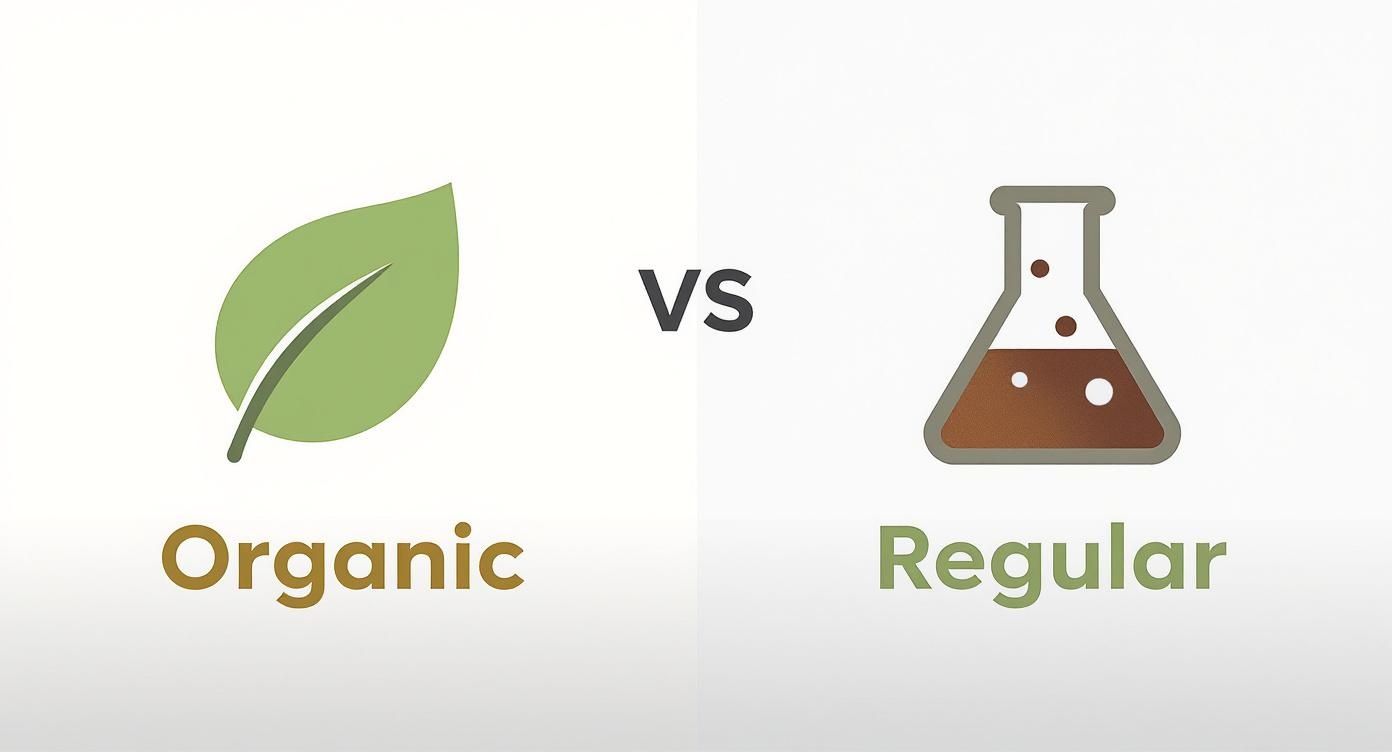
As you can see, it all starts with how the coffee is grown. That initial step directly impacts potential chemical exposure and the coffee's overall environmental footprint.
Comparison At a Glance Organic vs Regular Coffee
To lay it all out clearly, this simple table breaks down the crucial differences. It’s a straightforward, side-by-side look at what you’re really choosing.
| Factor | Organic Coffee | Regular Coffee |
|---|---|---|
| Pesticide Use | Prohibits synthetic pesticides, herbicides, and fertilizers. | Commonly uses synthetic chemicals to control pests and weeds. |
| Soil Health | Focuses on building healthy, nutrient-rich soil with compost. | May deplete soil nutrients over time due to chemical use. |
| Environmental Impact | Promotes biodiversity and reduces chemical runoff into waterways. | Can contribute to water pollution and ecosystem disruption. |
| Certification | Requires USDA Organic certification to verify farming practices. | No specific farming certification is required for production. |
| Flavor Profile | Often described as having cleaner, more complex, and vibrant flavors. | Can have a more uniform or sometimes harsher taste. |
The takeaway here is pretty clear. The choice affects not just your cup, but the entire ecosystem that produces it.
Exploring the Health Impact of Your Daily Brew
Ever stop to think about what’s really in your daily cup of coffee? Beyond that rich aroma and energizing kick, your choice between organic and regular coffee has some serious implications for your health. The conversation usually starts with what organic coffee leaves out—synthetic pesticides and herbicides—but it goes much deeper than that, right down to the nutritional makeup of the beans.
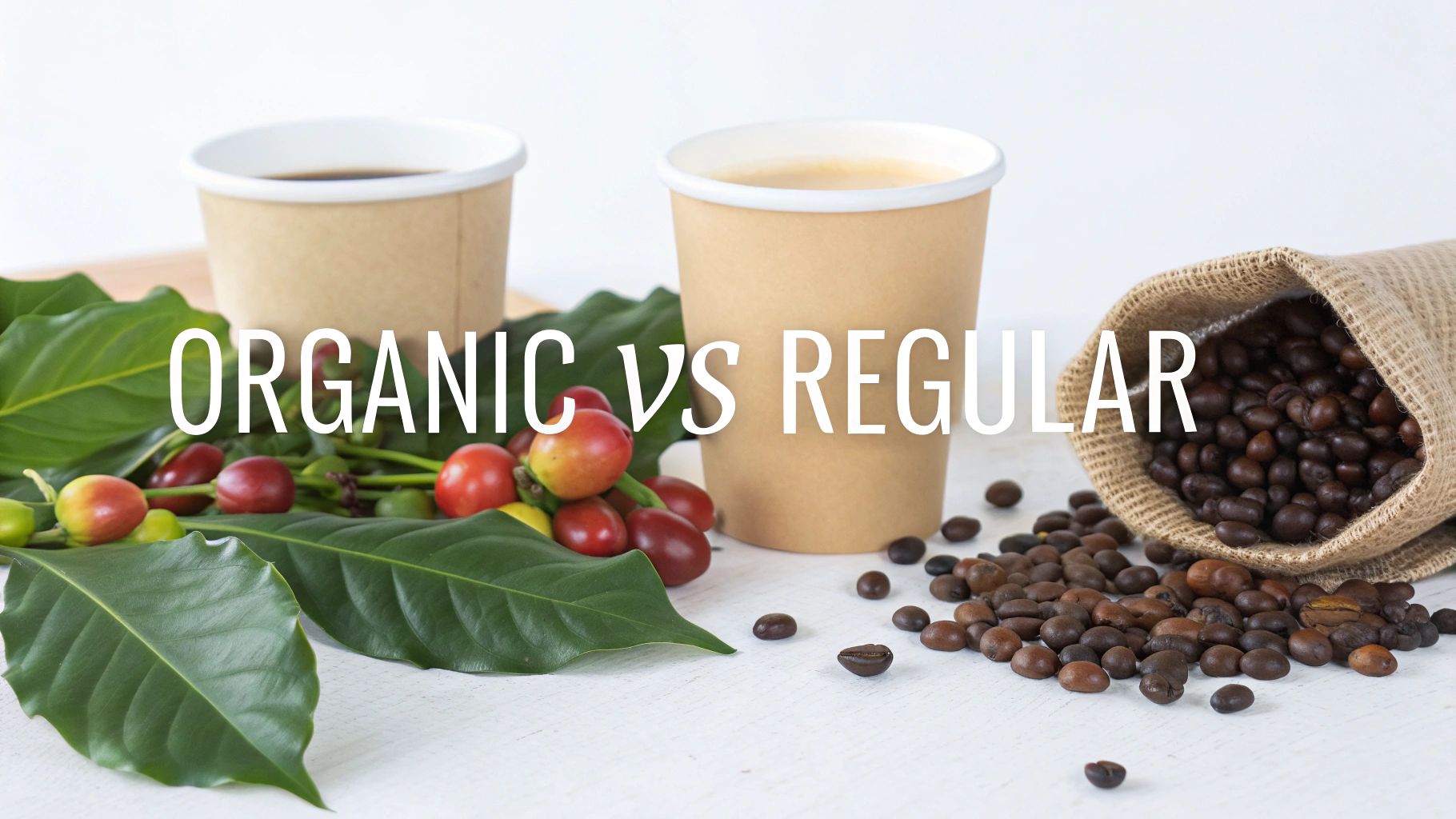
Here's a hard truth: conventional coffee is one of the most heavily sprayed crops on the planet. To maximize yields, conventional farms often rely on a cocktail of synthetic chemicals. While roasting does burn off a portion of these residues, it doesn't get rid of them completely, meaning trace amounts can easily end up in your mug.
This is where choosing certified organic coffee becomes a no-brainer. It’s a guarantee that the beans were grown and processed without these synthetic inputs, giving you a cleaner brew from the start.
The Problem with Pesticides and Mycotoxins
The organic vs. regular coffee debate often comes down to chemical exposure. Regular coffee beans can carry residues from pesticides like organophosphates and carbamates, which have been tied to a number of health issues with long-term exposure. Even though the levels in a single cup are tiny, the cumulative effect from a daily coffee habit is something most health-conscious people want to avoid.
But it's not just pesticides. Another huge factor is the presence of mycotoxins. These are toxic compounds produced by molds that can grow on coffee beans, particularly if they're poorly processed or stored in humid conditions.
By adhering to stricter quality control and processing standards, certified organic coffee naturally reduces the risk of mold growth, thereby minimizing mycotoxin contamination and ensuring a purer, cleaner final product.
Organic farming just creates an environment where mold doesn't thrive, thanks to a focus on healthy plants and meticulous handling after harvest. That's exactly why at Peak Performance, all our Organic Coffee is not just USDA Certified Organic but also third-party tested to be free from harmful mycotoxins. It’s about giving you peace of mind with every single sip.
Antioxidants: A Key Differentiator
The upside of organic coffee isn’t just about dodging harmful stuff; it’s also about what you gain. Organic farming practices, which are all about building rich, healthy soil, can produce coffee beans with a far more robust nutritional profile. In fact, research suggests organic coffee often contains higher concentrations of beneficial compounds.
These powerful antioxidants are your body's defense against oxidative stress. Specifically, organic coffee tends to have more of these heavy hitters:
- Polyphenols: These plant-based compounds are celebrated for their anti-inflammatory properties and support for overall cellular health.
- Chlorogenic Acid: A key antioxidant in coffee that helps regulate blood sugar and metabolism.
- Flavonoids: These compounds are linked to better cardiovascular health and cognitive function.
The growing conditions are a huge piece of this puzzle. High-altitude coffee, which grows in tougher environments with more UV exposure, naturally produces more of these protective compounds as a defense mechanism. This is precisely why our beans, sourced from the world’s best high-altitude farms, deliver a superior antioxidant punch. To get a better sense of how your coffee choice impacts your overall metabolic function, you might find this guide to the Comprehensive Metabolic Panel (CMP) useful.
A Cleaner Choice for Decaf Drinkers
Even if you're a decaf drinker, this choice matters. Many conventional decaf coffees are made using chemical solvents like methylene chloride to strip caffeine from the beans. While the process is regulated, the thought of chemical residues in a drink you choose for your health is pretty unsettling for most people.
Thankfully, there's a much cleaner, more natural way to do it. At Peak Performance, we use the Swiss Water process to decaffeinate our coffee. This incredible method uses only pure water, temperature, and time to gently remove the caffeine. It keeps the coffee's delicate flavor and aroma intact without introducing any harsh chemicals whatsoever. This commitment means that whether you're drinking our regular or decaf blends, you're getting the purest, healthiest coffee possible.
How Farming Practices Shape Flavor and Quality
Sure, the health angle is a big deal, but you can't talk about organic vs. regular coffee without getting into the most important part: how it actually tastes. That incredible flavor and rich aroma in a top-tier organic coffee? That’s no accident. It’s the direct result of intentional, sustainable farming practices that start deep in the soil.
Conventional coffee farming often treats soil like a dead medium, a simple placeholder for plants that get juiced up with synthetic fertilizers. This method can completely drain the soil of its natural vitality, which ultimately leads to bland, one-dimensional beans. Organic farming is the polar opposite—it’s all about creating a living, breathing ecosystem.
By using natural compost and strategic cover crops, organic farmers cultivate soil that’s dense with nutrients and buzzing with microbial life. This rich, healthy soil lets the coffee cherries mature slowly, soaking up a whole spectrum of minerals and organic compounds that conventional beans miss out on.
The High-Altitude Advantage
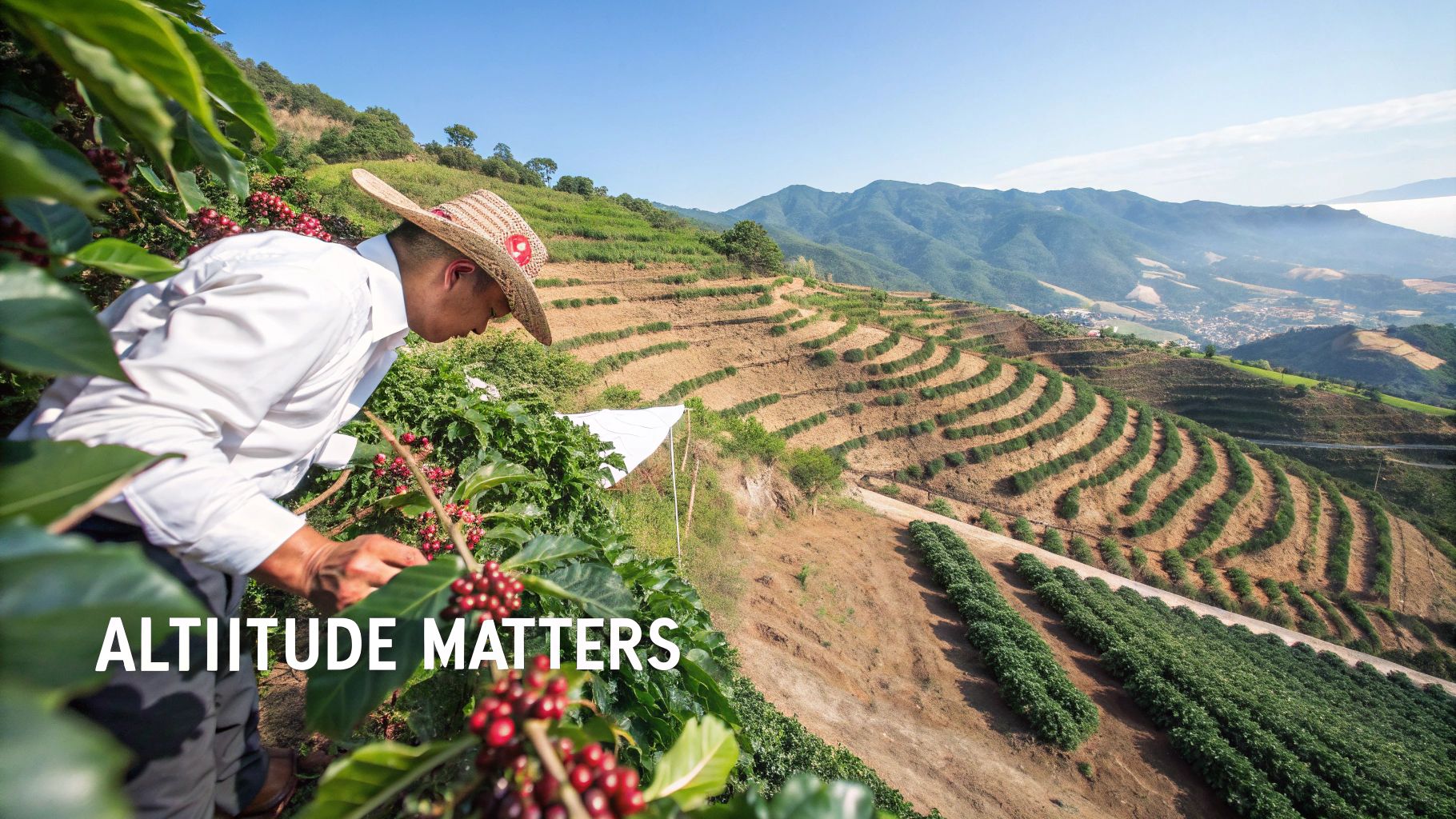
Where coffee grows matters just as much as how it’s grown. The world's most prized coffee beans almost always come from high altitudes, usually somewhere between 3,000 and 6,000 feet. Up there, the cooler temperatures and lower oxygen levels force the coffee cherries to take their sweet time ripening.
This long, slow maturation is the secret to developing incredible flavor. It gives the beans more time to build up the complex sugars and nuanced acids that make a cup of coffee truly special. The result is a brew with brighter acidity, a fuller body, and an intricate flavor profile you just don’t find elsewhere—think distinct floral, fruity, or even spicy notes.
At Peak Performance, we’re obsessed with taste. That’s why we only source single-origin, high-altitude Organic Coffee. We know that these tough growing conditions are exactly what create the most flavorful and aromatic beans.
The slow, deliberate growth cycle of high-altitude organic coffee creates denser beans packed with complex sugars and acids. This translates directly into a richer, more vibrant flavor profile in your cup.
This careful sourcing ensures every bag we produce delivers a taste experience that mass-produced, conventional coffee just can’t replicate. You can genuinely taste the difference in every sip.
Why Healthy Plants Produce Better Beans
When you take synthetic chemicals out of the equation, the coffee plant has to learn to fend for itself. Without the crutch of chemical pesticides and herbicides, the plants naturally become stronger and more resilient. They build up their own defenses against pests and diseases, and this resilience has a direct—and delicious—effect on the coffee cherries.
It’s a simple concept: a healthier, tougher plant produces higher-quality fruit. These coffee cherries are often richer in the very compounds that create incredible flavor and aroma. This is a huge piece of the organic vs. regular debate. The flavor isn’t just "cleaner" because there are no chemical residues; it’s fundamentally more complex because it comes from a healthier plant.
So, choosing organic isn’t just a move for your health or the environment. It's a commitment to a better-tasting cup of coffee. You’re choosing beans that were cultivated for depth, complexity, and quality from the very beginning, ensuring a brew that’s as pure as it is delicious.
The Environmental and Ethical Side of Your Coffee
When you choose between organic and regular coffee, you're making a decision that goes far beyond your own health and the flavor in your cup. That daily ritual is directly connected to a massive agricultural system, and your choice has a real impact on the planet and the people who grow the beans.
Switching to organic is one of the most powerful ways you can vote with your dollar for a more sustainable and ethical coffee industry.
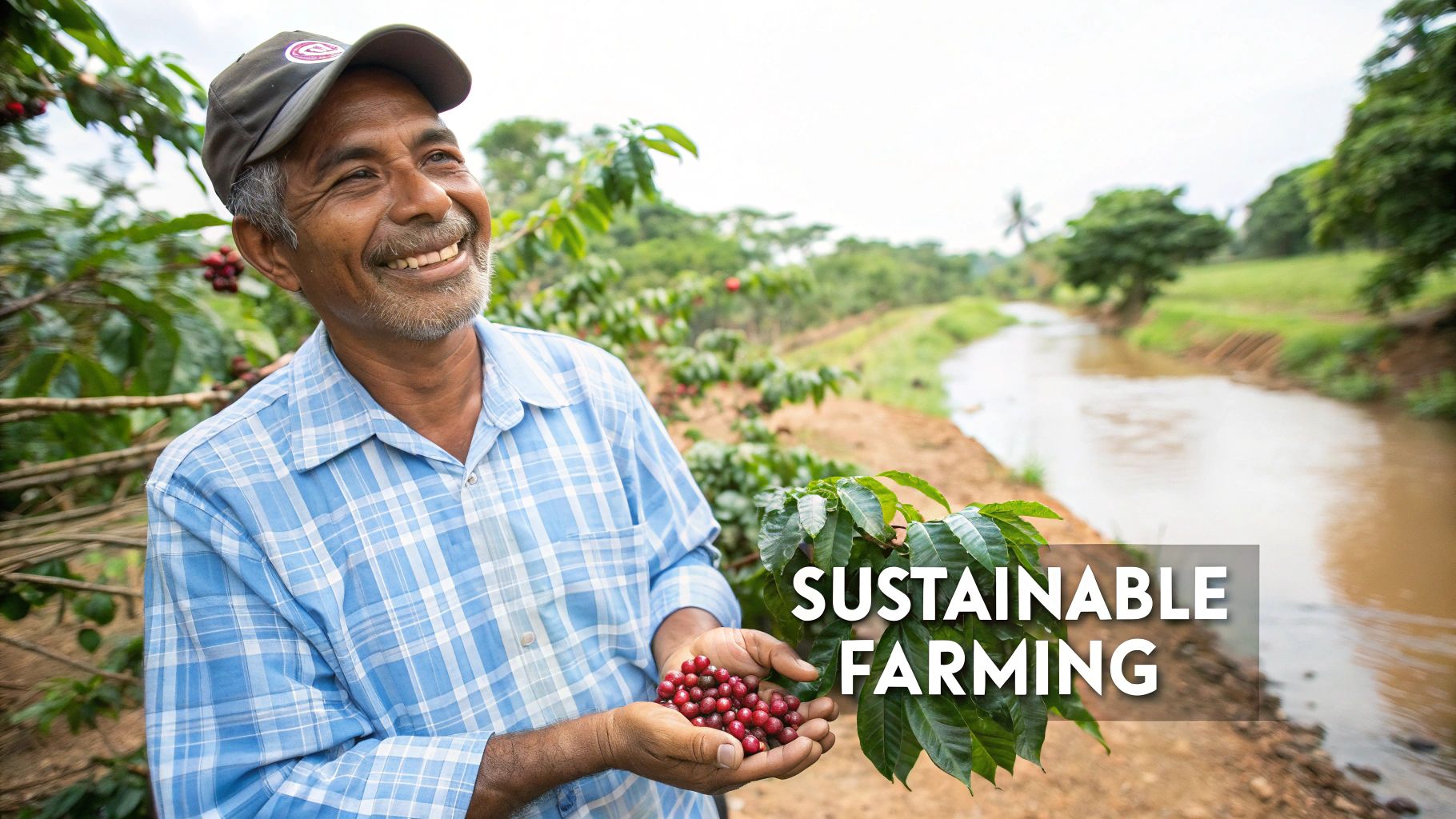
Let's be blunt: conventional coffee farming can be brutal on the environment. It often involves clear-cutting forests to create massive, full-sun monocultures—basically, fields of nothing but coffee plants. This approach destroys natural habitats and wipes out biodiversity.
To keep these unnatural farms going, operators rely on a constant flow of synthetic fertilizers and chemical pesticides. This creates a vicious cycle. Chemical runoff pollutes streams and rivers, poisoning aquatic life and contaminating drinking water for local communities. Over time, the soil gets stripped of nutrients, leading to erosion and an even deeper dependence on chemicals.
Fostering Biodiversity and Healthy Ecosystems
Organic coffee farming is a completely different world. It’s a system designed to work with nature, not against it. A core principle is shade-growing, where coffee plants are cultivated under the canopy of diverse, native trees.
This simple shift transforms a coffee farm from a sterile field into a vibrant, thriving ecosystem. The forest canopy becomes a sanctuary for birds, insects, and other wildlife, many of which act as natural pest control. It’s all about restoring balance.
Shade-grown systems bring a host of other environmental wins:
- Natural Soil Enrichment: Leaves falling from the canopy create a natural mulch, feeding the soil with organic matter. No synthetic fertilizers needed.
- Water Conservation: The tree cover acts like a natural lid, reducing evaporation and keeping the soil moist. This drastically cuts down the need for irrigation.
- Reduced Soil Erosion: The complex root systems of the trees and coffee plants lock the soil in place, preventing erosion, especially on the steep mountain slopes where the best coffee grows.
By choosing Peak Performance Organic Coffee, you’re directly supporting farming practices that protect ancient forests, conserve water, and nurture biodiversity. It’s a real commitment to a healthier planet.
The Ethical Implications of Your Choice
The environmental and ethical sides of the coffee coin are two sides of the same story. Certifications that protect the land often end up protecting the people who work it, too.
The USDA Organic certification holds farms to incredibly strict standards. These rules don't just ban synthetic chemicals; they also demand sustainable resource management, which directly benefits the long-term health of farming communities and their local environment.
In the conventional system, the relentless pressure to maximize yields at the lowest possible cost puts farmers in a tough spot. They're often exposed to dangerous levels of chemicals without proper protection. On top of that, the volatile global coffee market can leave them with an income too low to support their families, let alone reinvest in their land.
Organic farming, on the other hand, fosters a more direct and fair relationship between growers, roasters, and you. The premium price that organic coffee fetches helps provide farmers with a more stable, livable income. This financial security empowers them to invest in their farms, their kids' education, and their communities. A deep dive into the USDA Organic certification requirements shows just how rigorous the standards are for both the planet and its people. When you choose organic, you’re investing in that system.
How to Choose the Right Organic Coffee for You
Walking down the coffee aisle can be a little overwhelming, but picking between organic and regular coffee is actually pretty straightforward once you know the ropes. If you understand what to look for, you can confidently grab a bag that aligns with your goals for health, quality, and sustainability. It’s about making sure every cup is worth it.
The trick is learning how to read the labels. Certifications are your best friend here—they’re a guarantee that the coffee in the bag meets specific, tough standards. They cut right through the marketing fluff and give you real proof of quality.
Decoding Coffee Labels and Certifications
When you’re staring down organic vs. regular coffee, the single most important thing to find is the USDA Organic seal. This isn't just a trendy logo; it’s a legally binding promise. It means the coffee was grown and processed without any synthetic pesticides, herbicides, or fertilizers. It also confirms the farm has been free of those chemicals for at least three years and follows strict rules for soil health and environmental care.
Beyond the USDA seal, a few other clues point to top-shelf organic coffee:
- Single-Origin: This tells you the beans all came from a specific farm or region, which almost always means a more distinct and higher-quality flavor. It also gives you much better traceability.
- High-Altitude Grown: Coffee that grows way up in the mountains matures slowly. This creates denser beans packed with more complex, concentrated flavors. Look for sourcing info that mentions the altitude.
- Roast Date: Freshness is everything for great flavor. Always hunt for a "roasted on" date, not just a "best by" date. The best flavors are unlocked within a few weeks of roasting.
If you prioritize these markers, you're pretty much guaranteed to be choosing genuinely better beans. For a deeper dive into top-tier options, check out our guide on the best organic coffee brands.
Understanding the Cost of Quality
Let’s be real: organic coffee usually costs more. You can expect to pay a premium—often 20-30% higher than its conventional counterpart—which reflects higher production costs and the value of that organic certification. That seal assures you of what’s not in your coffee: synthetic pesticides and fertilizers. You can dig into these market trends in various industry analyses.
Think of the higher cost not as an expense, but as an investment in purity, better farming, and environmental health. It benefits everyone, from the farmer all the way to you.
This price difference boils down to a few key factors:
- Certification Fees: Farmers have to pay for annual inspections and paperwork to keep their organic status.
- More Labor: Organic farming is very hands-on. It means pulling weeds by hand and using natural pest control instead of just spraying chemicals.
- Lower Yields: Organic farms sometimes produce less coffee per acre compared to conventional farms that use synthetic fertilizers to supercharge growth.
At the end of the day, the cost reflects the true value of a product grown with serious care. When you choose a brand like Peak Performance, you're getting a coffee that lives up to that commitment. Our Organic Coffee is not only USDA Certified but also sourced from high-altitude farms, ensuring you get the purest, most flavorful, and ethically produced coffee out there.
Common Questions About Organic Coffee
Let's be honest, navigating the world of coffee can get complicated, especially when you're trying to make the healthiest choice. The whole organic vs. regular coffee debate brings up a lot of questions about what really matters.
This section is here to give you clear, straight-up answers to the most common questions we hear, so you can feel confident about what you’re brewing every morning.
Is Organic Coffee Really Better for Your Health?
Yes, and it’s not just marketing hype. The biggest health win with organic coffee is what it doesn't have: synthetic pesticides, herbicides, and fertilizers. Conventional coffee is one of the most heavily sprayed crops on the planet, and while roasting gets rid of some of those chemical residues, it doesn't eliminate all of them.
Choosing organic drastically cuts your exposure to these potentially nasty chemicals. But it goes deeper than that. Organic farming focuses on building incredibly nutrient-rich soil, which can lead to coffee beans with a higher concentration of beneficial antioxidants and polyphenols. These are the compounds that help your body combat inflammation and oxidative stress.
The real health benefit of organic coffee is simple: you’re not drinking trace amounts of synthetic chemicals. That peace of mind alone makes it a cleaner foundation for your daily ritual.
Plus, to get that USDA organic seal, farms have to follow strict handling and processing standards. This extra level of care often means a lower risk of contamination from mycotoxins (nasty stuff from mold). From the farm to your cup, that commitment to purity makes organic a much smarter choice.
Does Organic Coffee Contain Less Caffeine?
Nope. The caffeine content in your coffee has absolutely nothing to do with whether it's organic. The kick you get from your cup comes down to three things: the type of bean, the roast level, and how you brew it.
Here’s a quick breakdown:
- Bean Type: Robusta beans have almost double the caffeine of the smoother, more complex Arabica beans.
- Roast Level: Lighter roasts actually keep a bit more caffeine than dark roasts, where some of it gets burned off during the longer roasting time.
- Brewing Method: How you make your coffee—drip, French press, espresso—changes how much caffeine gets extracted into your mug.
So, an organic Arabica coffee will give you the exact same jolt as a conventional Arabica, assuming all else is equal. You get all the health and environmental upsides of organic without sacrificing an ounce of that energy you count on.
Why Choose Peak Performance Organic Coffee?
For anyone who refuses to compromise on purity and quality, Peak Performance is the clear choice. Our entire line of Organic Coffee is USDA Certified, which is your guarantee that it was grown without any synthetic junk. But we don't stop there.
We exclusively source our beans from high-altitude farms. The cooler temperatures and lower oxygen levels at these elevations cause the coffee cherries to mature slowly, developing far richer, more complex flavors and a higher concentration of antioxidants. It's just a better bean, period.
Our commitment to your health is non-negotiable. That's why every single batch of our coffee is third-party tested for mycotoxins. This ensures you’re drinking the absolute cleanest coffee possible, giving you a level of confidence that goes far beyond a standard organic label.
Even our decaf is held to a higher standard. We only use the Swiss Water Process—a 100% chemical-free method that uses pure water to gently remove the caffeine while keeping the coffee's amazing flavor intact. This obsession with quality at every step means you're not just buying coffee; you're investing in your health and performance.
Is the Higher Price of Organic Coffee Justified?
Absolutely. That slightly higher price tag on a bag of high-quality organic coffee isn't arbitrary—it reflects the true cost of doing things the right way. It’s a direct result of a more sustainable, labor-intensive, and thoughtful approach to farming.
First off, farmers have to pay for rigorous certifications to earn and keep that USDA Organic seal, which involves yearly inspections and piles of paperwork. Second, organic farming is just harder work. It requires more manual labor, from pulling weeds by hand to using natural pest control methods instead of just spraying everything with chemicals.
Finally, organic farms often produce lower yields than conventional farms that use synthetic fertilizers to push for maximum output. When you choose organic, you’re investing in a cleaner cup for yourself, safer conditions for farmers, and a healthier planet. For anyone who cares about what they put in their body, that peace of mind and superior quality is a worthwhile investment every single time.
At Peak Performance, we believe your daily coffee should be a source of health, not a source of chemicals. Explore our collection of USDA Certified Organic Coffee and taste the difference that purity and quality make.
Also in Blog


How to Increase Stamina Naturally and Boost Energy


How to Increase Energy Naturally

