


How to Choose Protein Powder That's Right for You
Figuring out which protein powder to buy really just comes down to one thing: matching a clean, high-quality product to your specific goals.
Want to build muscle? You'll need a fast-absorbing, complete protein. Trying to manage your weight? Prioritize satiety and low sugar. Just looking for a general wellness boost? A simple, pure option is your best bet.
This guide will walk you through exactly why protein is so critical and how to pick the perfect source for your body and your goals.
Why Protein Is the Building Block of Your Health
Before you even think about the dozens of tubs lining the store shelves, let’s get clear on why protein is so fundamental to your well-being. It’s not just for bodybuilders. Protein is a vital macronutrient for everyone, no matter how active you are.
It’s the primary component of your muscles, bones, skin, and hair—pretty much every part of your body. Without enough protein, your body can't build or repair tissues, make enzymes and hormones, or support a healthy immune system.
Think of protein as the ultimate repair crew for your body. When you finish a workout, it's the key nutrient that swoops in to rebuild and strengthen those muscle fibers. But its job is so much bigger than that.
The Vital Roles of Protein
Protein is a true workhorse, playing a part in tons of bodily functions that go way beyond just muscle repair. Here’s a quick look at what it’s doing behind the scenes:
- Muscle Growth and Repair: Protein provides the amino acids needed to rebuild muscle tissue that's been broken down during exercise, leading to increased strength and size.
- Metabolic Function: Protein is essential for creating the enzymes and hormones that keep your metabolism humming along.
- Immune Support: Those antibodies that fight off infections and keep you healthy? They’re made from protein.
- Satiety and Weight Management: Protein is the most filling macronutrient. It helps you feel fuller for longer, which is a game-changer for managing cravings and keeping your calorie intake in check.
This growing awareness of protein's importance has fueled a massive industry. The global protein powder market was valued at around USD 24.6 billion and is projected to nearly double by 2034. It's clear people are focusing more on their health and nutrition.
To help you get started, here's a quick reference table to match your primary goal with the right kind of protein.
Quick Guide: Match Your Goal to a Protein Type
| Your Primary Goal | Recommended Protein Type | Why It Works |
|---|---|---|
| Muscle Gain & Recovery | Beef Isolate, Fast-Absorbing Proteins | Fast-digesting proteins that deliver amino acids to muscles quickly post-workout. |
| Weight Management & Satiety | Casein, Plant-Based Blends | Slow-digesting proteins that promote fullness and help control appetite for hours. |
| General Wellness & Meal Boost | Beef Protein, Plant Proteins | A balanced and effective way to easily increase your daily protein intake. |
| Sensitive Stomach/Dairy-Free | Plant-Based, Beef, or Egg Protein | Excellent alternatives that avoid lactose and other common dairy-related allergens. |
This table is a great starting point, but always listen to your body and consider your personal dietary needs when making a final choice.
Finding a Protein for Your Diet
The good news is that the incredible variety available today means there’s a high-quality option for almost any dietary need or preference.
Whether you need a dairy-free source like a pure Grass-Fed Beef Protein Isolate or prefer a vegan-friendly option like an Organic Plant Based Grain-Free Protein Powder, you can find a product that aligns perfectly with your lifestyle.
As you start your search, you might also find guides tailored to specific needs, like the best protein powders for women, to be incredibly helpful.
Match Your Goals to the Perfect Protein Source
Forget searching for the "best" protein powder on the market. The real secret is finding the best one for you.
Your specific goals are the only compass you need. Think of it this way: what you’re trying to achieve—whether that’s building muscle, managing your weight, or just feeling better day-to-day—should dictate your choice. Different protein sources work differently in the body, so getting this first step right is everything.
If you're trying to pack on lean muscle, for example, your body is screaming for a quick supply of amino acids right after a workout. That’s the critical window when your muscles are primed for repair and growth.
But if weight management is your focus, the game changes. You’ll want a protein that keeps you feeling full and satisfied, making it way easier to stick to a calorie deficit without feeling like you're starving.
Building Muscle and Enhancing Recovery
For anyone hitting the weights, the type of protein you take—and when you take it—is crucial. You need something that gets to your muscles fast.
A fast-absorbing protein is perfect for kickstarting muscle protein synthesis, which is just the technical term for the repair process that builds stronger muscle fibers. Taking it right after a workout floods your system with the building blocks it needs, which can help cut down on soreness and speed up your recovery time.
Many people find that a clean, dairy-free option like a high-quality Grass-Fed Beef Protein Isolate works wonders here. It delivers a complete amino acid profile for muscle repair without the digestive upset that can sometimes come with lactose. To really dial in your results, it's worth exploring other effective post-workout recovery strategies that go beyond just your protein shake.
This infographic breaks down how your main objective points you to the right type of protein.
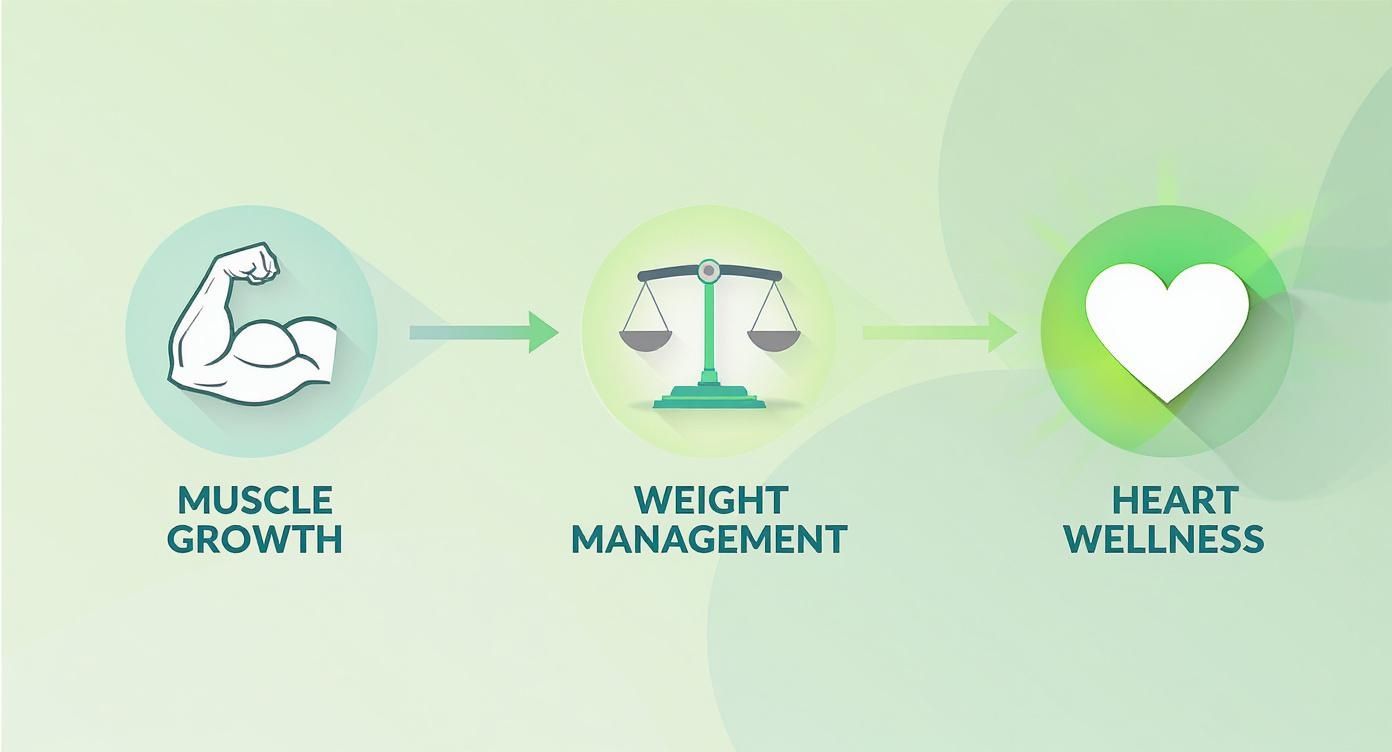
The big takeaway is that there's a protein strategy for every goal, whether it’s rapid absorption for repair or a slow-and-steady release to keep you full.
Supporting Weight Management Goals
When weight loss or management is the priority, protein’s job description changes from rapid-fire repairman to long-term bodyguard against hunger.
Protein is hands-down the most satiating macronutrient. That means it keeps you feeling full longer than carbs or fats. A simple protein shake can be a game-changer for crushing those 3 p.m. cravings or serving as a smart, low-calorie meal replacement when you're on the go.
For this, you’ll want a protein that digests more slowly or a blend that provides sustained energy. This helps keep your blood sugar stable, avoiding the nasty energy crashes that send you running for the nearest sugary snack. A good protein powder is a cornerstone of any solid weight management plan. To learn more, check out our guide to the 12 best protein powders for muscle recovery, which also dives into options that support a lean physique.
Boosting Overall Wellness and Nutrition
Not everyone chugging a protein shake is a bodybuilder or trying to lose weight. For a lot of us, it’s simply about filling in nutritional gaps and supporting overall health.
Protein is absolutely essential for things like immune function, making hormones, and keeping your hair, skin, and nails healthy.
If this sounds like you, your focus should be on consistency and quality. You want a versatile, clean-ingredient powder that you can easily toss into a smoothie, mix into your morning oatmeal, or even add to baked goods. An Organic Plant Based Grain-Free Protein Powder is an incredible choice for daily wellness, giving you an easy protein boost without any sketchy additives.
Decoding Protein Types: Animal vs. Plant-Based
Before you can pick the right protein powder, you have to understand where it comes from. The two worlds you'll be navigating are animal-based and plant-based proteins.
There's no single "best" option here—it all comes down to what's best for you. Your choice will hinge on your diet (vegan, paleo, dairy-free), how well your gut handles certain ingredients, and your overall nutritional goals. Let's break down what each type brings to the table.
The Power of Animal-Based Proteins
Animal-based proteins are known for being complete proteins, which is a huge plus. This means they pack all nine essential amino acids (EAAs) your body can't make on its own. These EAAs are the building blocks for muscle repair, growth, and dozens of other critical functions.
Beef protein is a standout here. It gives you a powerful amino acid profile, much like a good steak, but in a clean, easy-to-mix powder.
For anyone who struggles with lactose or dairy, beef protein is a game-changer. It delivers the full spectrum of amino acids needed for recovery without the digestive issues that other animal proteins can sometimes cause.
A high-quality, clean option like a Grass-Fed Beef Protein Isolate is a perfect fit for a paleo lifestyle or for anyone who simply wants a potent, dairy-free protein source to fuel their recovery.
The Rise of Plant-Based Proteins
The world of plant-based nutrition has come a long way, and today's plant protein powders are seriously impressive. Sourced from ingredients like peas, brown rice, hemp, and pumpkin seeds, they're a fantastic choice for vegans, vegetarians, or anyone just looking to add more plants to their diet.
Years ago, the knock on plant protein was that a single source might be "incomplete," missing one or more essential amino acids. That's just not an issue anymore.
Modern, high-quality plant proteins use smart blends of different sources to cover all the bases. For example, combining pea protein (high in lysine) with rice protein (high in methionine) creates a complete and balanced amino acid profile that can go toe-to-toe with any animal-based protein out there.
To make things easier, here's a quick rundown of some common protein sources you'll find.
Comparing Protein Sources At-a-Glance
| Protein Source | Key Benefit | Best For | Dietary Notes |
|---|---|---|---|
| Beef Isolate | Complete EAA profile, dairy-free | Paleo, lactose intolerant users | Naturally rich in collagen precursors |
| Plant Blends | Vegan, fiber-rich, sustainable | Vegans, sensitive stomachs | Look for blends (pea/rice) for a complete profile |
| Collagen | Joint, skin, and gut health | Overall wellness, not muscle synthesis | Incomplete protein, lacks tryptophan |
| Egg White Protein | Complete protein, dairy-free | General fitness, paleo diets | Excellent alternative to dairy or beef |
| Casein | Slow-release, anti-catabolic | Bedtime, meal replacement | Contains lactose, forms a gel in the stomach |
This table should help you quickly see which options align with your goals and dietary needs.
Key Things to Consider
When you're weighing animal versus plant protein, it really boils down to a few personal factors:
- Digestibility: Some people feel bloated after drinking certain protein powders. For them, a plant-based option rich in fiber might feel much better. On the flip side, some find animal proteins easiest to digest. Listen to your body.
- Dietary Alignment: This one is simple. If you're vegan, plant-based is the only way to go. If you're following a paleo or carnivore-style diet, beef protein fits right in.
- Total Nutrition: Think beyond the protein count. Plant powders often come with extra fiber and micronutrients. Animal proteins like beef are naturally high in specific amino acids like glycine and proline, which are fantastic for joint and skin health.
The market is definitely responding to these preferences. The global natural protein powder market was valued at USD 5.80 billion, and the plant-based category alone is expected to climb past USD 6.48 billion by 2034. This trend shows a clear demand for clean products that work for everyone, including those with lactose intolerance. You can dive deeper into these market trends via GlobeNewswire.
Ultimately, a well-formulated product like an Organic Plant Based Grain-Free Protein Powder proves you can get a complete, effective, and delicious protein source entirely from plants. If you want to get even more granular, check out our article on the difference between whey and plant protein.
Both paths can lead to great results. The best choice is always the one that aligns with your body, your diet, and your values.
How to Read a Protein Powder Label Like an Expert
The front of a protein powder tub is all marketing. Bold claims, flashy graphics, promises of incredible results... you know the drill.
The real story, the truth of what you’re about to put in your body, is on the back. Learning to read the nutrition facts panel and ingredients list is the single most important skill you can have when picking a protein powder. This is how you cut through the hype.
Let's break down exactly what to look for, so you can spot a high-quality product and leave the junk on the shelf.
Start With Serving Size and Protein Content
First, find the serving size. Is it one scoop? Two? Measured in grams? Everything else on that label is based on this single amount, so it’s your starting point.
Next, glance over to the protein per serving. A good rule of thumb is to look for a product that packs in at least 20-30 grams of protein per scoop. This is a solid, effective dose for triggering muscle protein synthesis and helping you feel full.
But don't just stop there. Do a little mental math to find the protein-by-weight percentage. Just divide the grams of protein by the serving size in grams. If a 30g scoop gives you 25g of protein, that's an excellent 83% protein content. Anything over 75% is usually a great sign of a pure, high-quality product.
Scrutinize the Ingredients List
Honestly, the ingredients list might be even more important than the nutrition panel. It tells you where the protein comes from and what else is hiding in the tub. Ingredients are listed by weight, so whatever you see first is what makes up most of the product.
Look for a short, clean list. The very first ingredient should always be the protein source itself, like "Grass-Fed Beef Protein Isolate" or "Organic Pea Protein."
After that, keep an eye out for:
- Hidden Sugars: Words like sucrose, dextrose, fructose, or high-fructose corn syrup are red flags. A quality powder should have minimal to zero added sugar.
- Artificial Sweeteners: Sucralose, aspartame, and acesulfame potassium are common. While they're calorie-free, some people prefer to avoid them over gut health concerns. Natural alternatives like stevia or monk fruit are often a better choice.
- Unnecessary Fillers: Thickeners like xanthan gum or carrageenan are sometimes added for better texture, but they bring zero nutritional value. Be just as wary of artificial colors and flavors. The cleaner the list, the better.
A truly high-quality protein powder will have a short ingredients list you can actually understand. If it reads like a chemistry experiment with a dozen hard-to-pronounce additives, it's probably best to put it back.
Look for Quality Certifications and Testing
Beyond the basic ingredients, certain certifications offer an extra layer of confidence that you're getting a safe, pure product. These aren't just for show; they represent a real commitment to quality.
USDA Organic: This seal ensures the ingredients were grown without synthetic pesticides, herbicides, or GMOs. For plant-based proteins, this is a key marker of quality. For animal sources, it guarantees the animal was raised according to strict organic standards.
Non-GMO Project Verified: This confirms the product has gone through rigorous testing to ensure it's free from genetically modified ingredients.
Third-Party Testing: This is a big one. Since the supplement industry isn't heavily regulated, third-party testing by an independent lab verifies that what’s on the label is actually in the tub. It also confirms the product is free from contaminants like heavy metals, microbes, and pesticides. When a brand invests in this, it shows a serious commitment to transparency and your safety.
The Importance of the Amino Acid Profile
Finally, if you're serious about muscle building and recovery, check to see if the label provides an amino acid profile. This is a detailed breakdown of the specific amino acids in each serving.
You want to see a complete profile that includes all nine essential amino acids (EAAs). Pay special attention to the amount of branched-chain amino acids (BCAAs)—leucine, isoleucine, and valine. Leucine, in particular, is the key that unlocks muscle protein synthesis. A serving with at least 2.5 grams of leucine is considered the gold standard for maximizing muscle growth and repair.
Mastering this skill is a game-changer. You can dive even deeper with our detailed guide on how to read supplement labels. By taking a few extra moments to analyze the label, you empower yourself to choose a protein powder that actually supports your health goals.
Consider Your Lifestyle, Allergies, Budget, and Taste
Okay, we’ve covered goals and the different types of protein. But let's get real for a second. The most scientifically-perfect protein powder is useless if it just sits in your pantry.
The right supplement has to actually fit into your life. It can't wreck your stomach, blow your budget, or taste like chalk. These practical details are what separate a supplement you should take from one you actually will take, day in and day out. This is how you build a sustainable habit.
Navigating Allergies and Intolerances
First things first: digestive comfort is non-negotiable. If a protein powder leaves you feeling bloated, gassy, or just "off," you're not going to stick with it. Many people have sensitivities to common ingredients, so you need to know what to watch out for.
- Dairy and Lactose Issues: This is the big one. Some animal-based proteins contain lactose, which can cause digestive upset for many people. If you know dairy doesn't agree with you, it's best to just steer clear.
- Gluten and Soy Sensitivities: Less common, but still worth watching for. Gluten can sometimes sneak in as a filler, and soy is a known allergen for many. If you're sensitive, look for products that are explicitly certified "gluten-free" or "soy-free" on the label.
If you're dodging dairy, you've got great options. A clean, hypoallergenic Grass-Fed Beef Protein Isolate is a fantastic choice, as is a well-formulated Organic Plant Based Grain-Free Protein Powder. Both deliver high-quality protein without the common allergens that can mess with your gut.
Making It Work With Your Budget
Protein powder is an investment in your health, but it has to be one you can afford long-term. Don't be fooled by the sticker price alone. A huge, cheap tub might look like a steal, but you have to dig deeper. If the serving size is massive or the protein content is diluted, you're not getting the deal you think you are.
The only way to truly compare costs is by calculating the cost-per-serving.
It's simple: just divide the total price of the tub by the number of servings listed on the label. This gives you the real cost of each shake, allowing for an apples-to-apples comparison.
For instance, a $60 tub with 30 servings works out to $2.00 per serving. A tub that seems cheaper at $45 but only has 20 servings is actually more expensive at $2.25 per serving. The first one is the smarter buy. Spending a little more for a high-quality, third-party tested product usually means you're getting a purer, more effective supplement, which is an investment that pays for itself.
Finding a Flavor and Texture You Love
Finally, we get to taste. If you dread drinking your protein shake, it’ll feel like a chore instead of a rewarding part of your routine. This is highly personal, but a few pointers can help you land on something you genuinely enjoy.
Flavor and Sweeteners:
- You can't go wrong starting with classics like chocolate or vanilla. They’re super versatile for mixing into smoothies, oatmeal, or even recipes for protein pancakes.
- Check the sweetener. Natural options like stevia or monk fruit tend to have a cleaner taste than artificial sweeteners like sucralose or aspartame, which some people find have a distinct chemical aftertaste.
- When in doubt, go unflavored. It gives you total control. You can blend it with fruit, cocoa powder, or nut butters to create any flavor profile you want.
Mixability:
A gritty, clumpy shake can ruin the entire experience. A good powder should dissolve easily into a smooth, creamy texture with just a shaker bottle. Powders that are "micronized" or "instantized" have been processed to mix better, so keep an eye out for those terms. When your protein mixes well, your daily shake feels less like a supplement and more like a treat you actually look forward to.
Still Have Questions About Protein Powder?
Even after you've narrowed down your choices, a few common questions tend to pop up. Let's tackle some of the things people often wonder about as they get ready to buy.
When Is the Best Time to Take Protein Powder?
This really comes down to your personal goals. If muscle growth and speedy recovery are your top priorities, having a shake within 30-60 minutes after a workout is a classic move for a reason. Your muscles are primed and ready to soak up those nutrients for repair.
But don't get locked into that thinking. Protein powder is incredibly flexible. You can use it as a quick meal on the go, a snack to crush afternoon cravings, or even right before bed to help your muscles repair while you sleep. The most important thing is simply hitting your total daily protein target, day in and day out.
How Much Protein Do I Actually Need per Day?
There's no single magic number here—it's different for everyone based on age, weight, and how active you are.
A great starting point for most active people is to aim for 1.2 to 2.0 grams of protein per kilogram of body weight.
So, if you weigh 150 pounds (about 68kg) and hit the gym regularly, you’d be looking at a target somewhere between 82 and 136 grams of protein each day. If you need a more precise number, it's always a good idea to chat with a healthcare professional or a registered dietitian.
Can I Use Protein Powder if I'm Not Building Muscle?
Absolutely. Protein isn't just for bodybuilders; it’s a cornerstone nutrient for everyone. It's essential for a healthy immune system, hormone production, and even keeping your skin, hair, and nails strong.
A clean protein supplement is just an easy way to make sure you're getting enough of this vital nutrient. It can help you feel fuller longer if you're managing your weight and contributes to overall wellness, no matter what your fitness routine looks like.
A high-quality Grass-Fed Beef Protein Isolate or a pure Organic Plant Based Grain-Free Protein Powder can be a fantastic addition for a daily health boost.
Ready to fuel your body with clean, high-quality protein? Explore the Peak Performance collection and find the perfect match for your health goals today. Discover our premium protein powders here.
Also in Blog


How to Increase Stamina Naturally and Boost Energy


How to Increase Energy Naturally

