


Your Guide to Organic Vitamin D Supplements
When you hear "organic" in the grocery store aisle, you probably picture an apple grown without nasty pesticides or spinach from a clean, well-tended farm. That same idea applies to an organic vitamin D supplement, but the journey from a living source to the bottle in your cabinet is what makes it so different.
What an Organic Vitamin D Supplement Really Means
Let's break it down. Your body is designed to make its own vitamin D when sunlight hits your skin. But with our modern, mostly indoor lives, very few of us get enough sun to make that happen. That’s where supplements come in to fill the gap.
A standard, conventional vitamin D supplement is typically synthetic—created in a lab through a series of chemical reactions. An organic one, however, starts with something that was actually alive and growing.
This desire for natural, clean sources is a big deal for people who are serious about their health. The global market for vitamin D is expected to explode from USD 1.7 billion in 2025 to a massive USD 3.2 billion by 2035. This surge is almost entirely fueled by more awareness around vitamin D deficiency and a huge demand for plant-based, organic options. You can explore more data about this industry growth and see just how much consumer preferences are shaking things up.
The Clean Difference from Source to Bottle
So, what does this "organic journey" actually look like? Most of the time, vegan organic vitamin D comes from two surprising sources: lichen and mushrooms. These aren't just picked from the wild; they're cultivated in controlled environments that let them produce vitamin D naturally, without any unwanted contaminants.
Here’s what really sets them apart:
- No Synthetic Pesticides: The mushrooms or lichen are grown completely clean, without being sprayed with harsh chemicals. This means the raw ingredient is pure from the start.
- GMO-Free Sourcing: The sources are never genetically engineered. You're getting the plant in its natural, intended state.
- Cleaner Extraction: Getting the vitamin D out of the plant is a gentle process. Instead of using harsh chemical solvents, brands often use simple water or ethanol extraction.
- Absence of Artificial Additives: A truly high-quality organic supplement won't be loaded with junk. That means no artificial fillers, strange colorings, or synthetic preservatives that do nothing for your health.
When you choose an organic vitamin D supplement, you’re not just getting a nutrient. You're getting a product that’s cleaner, purer, and more in line with a natural approach to health.
For a quick side-by-side look, this table breaks down the core differences.
Organic vs. Synthetic Vitamin D At a Glance
| Feature | Organic Vitamin D | Synthetic Vitamin D |
|---|---|---|
| Source | Plant-based (lichen, mushrooms) | Lab-synthesized (lanolin, chemical processes) |
| Farming | No pesticides, herbicides, or GMOs | Not applicable (lab-created) |
| Extraction | Gentle methods (e.g., water, ethanol) | Often involves harsh chemical solvents |
| Additives | Typically free from artificial fillers/colors | May contain synthetic fillers and preservatives |
| Certification | Can be USDA Certified Organic | Cannot be certified organic |
As you can see, the commitment to a natural process runs through every step for organic options.
Why Certification Matters
The word "organic" isn't just a feel-good marketing term—it's backed by serious regulation. For a supplement to earn the USDA Organic seal, it has to pass strict federal inspections. These rules cover everything from the soil quality where the source is grown to the methods used for harvesting and processing.
This certification is your guarantee of trust and transparency. It’s the brand’s promise to you that the product is free from the synthetic stuff you’re trying to avoid. This is a game-changer if you have sensitivities or are just committed to minimizing your exposure to artificial ingredients.
Ultimately, it’s about making sure what you put into your body is as pure and beneficial as nature intended.
The Health Benefits of Choosing Organic Vitamin D
Opting for an organic vitamin D supplement is about more than just dodging pesticides; it’s a direct investment in your total well-being. Think of vitamin D as the master conductor for a massive orchestra inside your body. Its most famous job, of course, is directing calcium into your bones and teeth.
This process is absolutely critical for building and maintaining a strong skeleton. Here’s a startling fact: without enough vitamin D, your body can only absorb about 10% to 15% of the calcium from your diet, leaving your bones at risk over the long haul.
But the story doesn't end with bone health. This powerhouse nutrient influences systems that govern your energy, your body’s defenses, and even your mood. Keeping your levels topped off is a foundational step for long-term health.
Bolstering Your Immune Defenses
Your immune system is your body's personal security detail, and vitamin D is one of its most critical assets. It helps fire up the T-cells and macrophages that hunt down and neutralize invaders like bacteria and viruses. When your vitamin D levels are where they should be, your immune response is faster and far more effective.
An organic supplement gives this system a pure, clean source of fuel. This becomes especially important when the seasons change or during times of high stress, helping your natural defenses operate at peak capacity. To really understand how it all works together, you can dig into the synergistic benefits of vitamin D and K working together.
Supporting a Stable Mood and Healthy Muscles
Beyond immunity, vitamin D is a major player in brain health and mood regulation. Your brain is loaded with vitamin D receptors, especially in areas linked to mood. It’s no surprise, then, that maintaining healthy levels can contribute to a real sense of emotional balance and a more positive outlook.
It’s also essential for muscle function. Vitamin D supports muscle contraction, strength, and balance, which is a big deal for reducing the risk of falls, particularly as we get older. If you've ever dealt with nagging muscle weakness or fatigue you can't explain, low vitamin D might just be the culprit.
Choosing an organic vitamin D supplement means you're not just supporting your bones—you're nurturing your immune system, mood, and muscular health with a product free from unnecessary synthetic additives, fillers, and common allergens.
The Clean Label Advantage for Overall Wellness
The demand for clean, effective supplements isn't just a trend; it's a movement. The global vitamin D supplement market was valued at around USD 5.22 billion in 2025 and is on track to hit nearly USD 7.96 billion by 2030. This surge is almost entirely driven by a growing awareness of widespread deficiency and a consumer shift toward pure, high-quality ingredients.
This is where the "clean label" of an organic supplement really makes a difference. It gives you purity and peace of mind, which is huge for anyone with sensitivities or those who are just committed to a clean lifestyle.
For those serious about dialing in their health, understanding your body’s specific needs through tools like metabolic testing can be a game-changer. When you pair a clean supplement with personalized health data, you create a powerful strategy to crush your wellness goals and ensure every choice you make adds to your vitality.
Understanding Natural Sources of Organic Vitamin D
When you grab a bottle of organic vitamin D supplement, you’re not just holding a vitamin. You're holding something that started its life in nature, carefully grown and harvested to deliver an essential nutrient. This direct line to the natural world is what sets it apart from purely synthetic options made in a lab.
For most of human history, our main source of vitamin D was the sun, which kicks off a natural production process in our skin. While sunshine is fantastic, we all know it's a balancing act to get enough without risking skin damage. If you're dealing with the consequences of past sun exposure, there are helpful strategies for repairing sun-damaged skin.
When it comes to supplements, though, we turn to some pretty amazing (and innovative) natural sources.
This infographic breaks down just how vital organic vitamin D is for everything from strong bones to a resilient immune system.
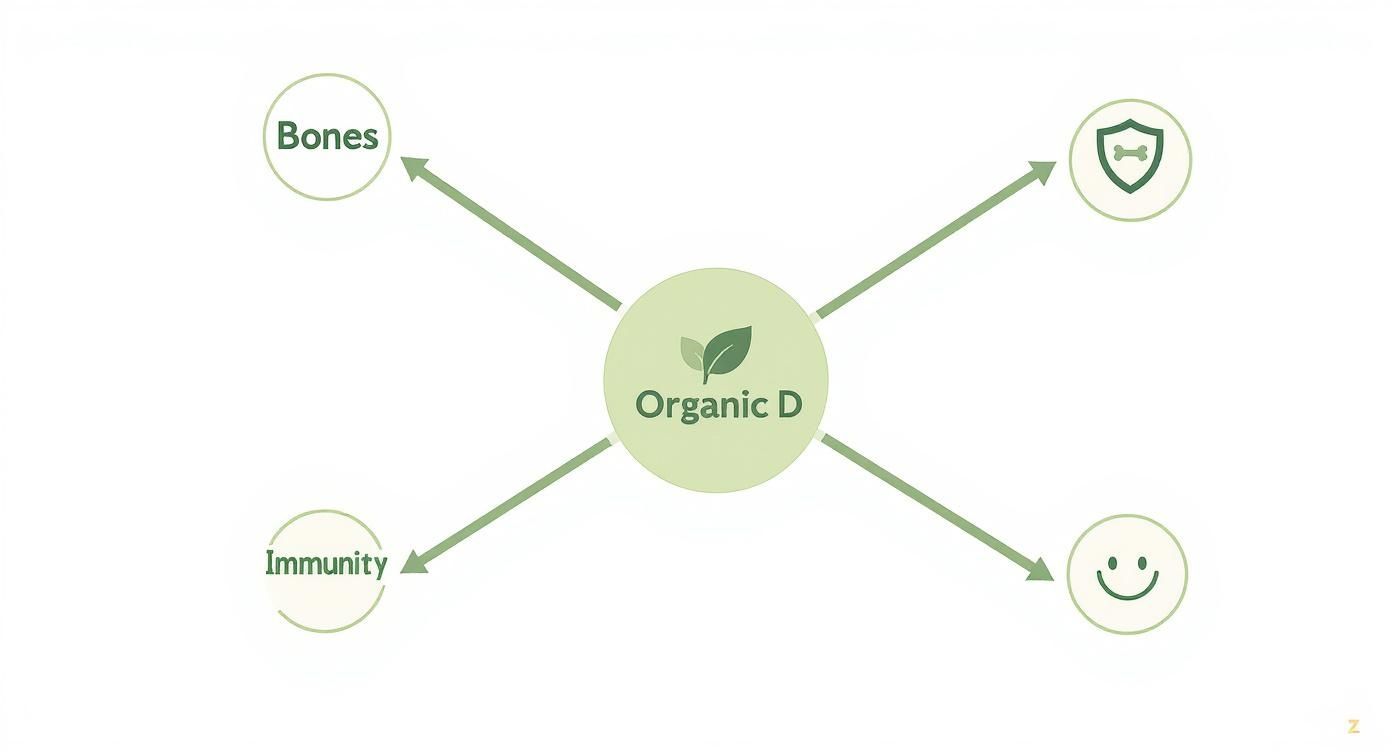
As you can see, keeping your levels topped up is a cornerstone of overall wellness.
Plant-Based Power: The Rise of Lichen and Mushrooms
Finding a truly high-quality, plant-based vitamin D3 used to be a real struggle. Then, researchers discovered an incredible vegan-friendly source that changed everything: lichen.
- Lichen (Vitamin D3): This unique organism—a partnership between algae and fungi—is a total powerhouse. When exposed to sunlight, it naturally produces cholecalciferol, or vitamin D3. This is the exact same form our own bodies make, making it a huge win for vegans who want the body's preferred form of vitamin D without animal products.
- Mushrooms (Vitamin D2): Certain mushrooms, when they soak up UV light, produce ergocalciferol, also known as vitamin D2. It can definitely help raise your vitamin D levels, but studies suggest it isn't quite as potent or long-lasting in the body as D3.
Think of it like this: D2 and D3 are both fuel, but D3 is the premium, high-octane version that your body's engine was built to run on. It just works more efficiently.
Comparing Popular Organic Vitamin D Sources
To make it even clearer, let's break down the two main plant-based players in the organic vitamin D world: lichen and mushrooms. This can help you figure out which one is the right fit for your health goals.
| Source | Type of Vitamin D | Key Advantages | Best For |
|---|---|---|---|
| Lichen | D3 (Cholecalciferol) | Identical to the D3 our bodies make from sun; highly bioavailable and effective. | Vegans, vegetarians, and anyone seeking the most potent plant-based form of vitamin D. |
| Mushrooms | D2 (Ergocalciferol) | Plant-based and widely available; effective at raising vitamin D levels. | Individuals looking for a basic plant-based option, though potentially less potent than D3. |
Ultimately, knowing where your D vitamin comes from empowers you to make a smarter choice.
What About Organic Lanolin?
For non-vegans, you'll often see D3 sourced from lanolin, a waxy substance that comes from sheep's wool. The process involves exposing the lanolin to UV light, which converts a compound inside it into vitamin D3. It’s effective, but it’s crucial to remember that it is an animal byproduct.
Reading your supplement labels closely is key. Understanding whether your D3 comes from lichen, mushrooms, or lanolin helps you choose a product that truly aligns with your diet, your ethics, and your health philosophy. This is exactly why our Peak Performance USDA Organic Vegan Vitamin D3 + K2 Liquid Drops use lichen-derived D3—to give you the most effective, purely plant-based support possible.
How to Select a High-Quality Organic Vitamin D Supplement
Walking down the supplement aisle can feel like a guessing game, but picking a great organic vitamin D supplement gets a whole lot easier once you know what to look for. Think of yourself as a health detective, learning to spot the clues on the label that point to a pure, potent, and effective product.
Getting this right means you’re truly supporting your wellness goals. Getting it wrong? You might just be wasting your money.
The demand for cleaner options is exploding. In fact, the US vitamin D supplement market is on track to hit around USD 3.5 billion by 2025. This growth is driven by people demanding natural ingredients. You can dive deeper into these trends and learn more about the growth of the vitamin D sector.
Decoding the Label for Quality and Purity
The front of the bottle might catch your eye, but the back of the label is where you’ll find the proof. The most critical clues are the official certifications—these are your guarantee of quality. These seals aren’t just fancy decorations; they show that a brand is committed to being transparent and holding itself to a higher standard.
Here are the key quality markers to hunt for:
- USDA Organic Seal: This is the gold standard. It’s your confirmation that the ingredients were grown and processed without any synthetic pesticides, GMOs, or other junk.
- Non-GMO Project Verified: This seal gives you an extra layer of confidence, verifying that the product is free from genetically modified organisms every step of the way.
- Third-Party Testing: Honestly, this is a non-negotiable. It means an independent lab has checked the product for purity and potency, making sure what’s on the label is actually in the bottle.
A supplement that hasn't been third-party verified is a total gamble. This independent analysis is the ultimate proof that a product is clean, safe, and delivers the dose it promises.
Getting a handle on this process is a game-changer for any smart supplement user. To really understand why it matters so much for your peace of mind, check out our guide explaining what is third-party testing.
Choosing the Right Form for Your Lifestyle
Organic vitamin D doesn't come in a one-size-fits-all package. Supplements are available in several forms, and the best one for you really boils down to personal preference, convenience, and how well your body absorbs it.
- Liquid Drops: These are often the best bet for bioavailability. Since the vitamin is suspended in a carrier oil (like organic olive oil), your body can absorb it incredibly easily. Plus, you get total control over your dose—just adjust the number of drops.
- Softgels: If you're all about convenience, soft gels are a simple, pre-measured option you can just swallow and go. They also typically contain vitamin D in an oil base, which helps with absorption.
- Gummies: Gummies can be a tasty option, but you have to read the fine print. Look for brands that use organic fruit for flavor and steer clear of those loaded with added sugar or artificial sweeteners.
The Importance of Companion Nutrients
Finally, the best organic vitamin D supplements almost always include a few key teammates. Think of it like a sports team—each player makes the others perform better.
Two of vitamin D's most important partners are:
- Vitamin K2: This is the traffic cop for calcium. Vitamin K2’s job is to make sure calcium goes to your bones and teeth where it belongs, instead of building up in your arteries. D3 and K2 are the ultimate duo for bone and heart health.
- Healthy Fats: Vitamin D is fat-soluble, which means it needs fat to be absorbed properly. Top-tier supplements will suspend the D3 in a healthy carrier oil, like organic olive oil or MCT oil, to ensure your body can actually put it to use.
By looking for these markers—certifications, the right form for you, and smart ingredient pairings—you can confidently choose an organic vitamin D supplement that will make a real difference. A perfect example of these standards in action is our Peak Performance USDA Organic Vegan Vitamin D3 + K2 Capsules, which combines lichen-derived D3 with K2 in an organic olive oil base for maximum absorption and effect.
Finding Your Ideal Dosage and Best Practices
Once you’ve found a great organic vitamin d supplement, the next move is figuring out how much you actually need to take. This isn’t a one-size-fits-all situation—the right dose is a highly personal number that depends on your body, where you live, and your daily habits. Nailing this down is the key to getting all the benefits without going overboard.
Think of it like watering a plant. Give it too little, and it’s not going to thrive. Too much, and you can actually do more harm than good. The goal is to find that sweet spot to keep your body running like a well-oiled machine.
Understanding Vitamin D Measurements
When you look at a supplement bottle, you'll see vitamin D listed in either International Units (IU) or micrograms (mcg). It's simple to convert: 40 IU equals 1 mcg. Most of the general health recommendations you see are in IU.
For most adults, experts suggest a baseline of around 600 IU (15 mcg) daily. That number often gets bumped up to 800 IU (20 mcg) for adults over 70, mainly because our skin gets less efficient at making vitamin D from the sun as we age. But these are just starting points, not the final word.
The only way to truly know your optimal dose is to get a simple blood test from your doctor. It takes all the guesswork out of the equation and gives you a clear picture of your current vitamin D levels, allowing for a plan that’s built specifically for you.
Why Personalized Dosage Is So Important
A whole host of factors can shift your vitamin D needs, sometimes dramatically. If you're just following generic advice, you could be falling short and not seeing the results you want.
A good healthcare provider will look at the big picture, including variables like:
- Your Geographic Location: If you live in a place with long, dark winters (hello, northern latitudes!), your chances for sun exposure are seriously limited.
- Your Skin Tone: Melanin, the pigment that gives skin its color, is a natural sunblock. This means people with darker skin tones produce less vitamin D from sunlight and often need more from supplements.
- Your Lifestyle: Do you work an office job? Are you diligent about wearing sunscreen? Both of these common habits significantly slash your body's natural vitamin D production.
Talking to a professional means you get a dosage that's safe, effective, and tailored to your real life.
Best Practices for Maximum Absorption and Results
Popping a supplement is easy, but making sure your body can actually absorb and use it is a different game. Luckily, a few simple tweaks to your routine can make a world of difference.
First off, consistency is everything. You have to make it a non-negotiable part of your day, just like brushing your teeth. Taking it at the same time every day helps keep the levels in your bloodstream steady and reliable.
Beyond that, what you take it with matters. Vitamin D is fat-soluble, which means it needs some fat to be absorbed properly. Taking it on an empty stomach is a classic rookie mistake.
Key Tips for Effective Supplementation:
- Take It with a Meal: Always pair your vitamin D with a meal or snack that contains healthy fats. Think avocado, nuts, olive oil, or seeds. This one step can boost absorption in a big way.
- Choose a Consistent Time: A lot of people find taking it with breakfast is the easiest way to remember and start the day off on the right foot. If you want to dive deeper, you can learn about the best time to take vitamins to get the most out of your entire supplement stack.
- Store It Properly: Heat and light are the enemies of potency. Keep your supplement in a cool, dark place to make sure it stays effective.
Following these simple rules ensures that your investment in a high-quality organic vitamin d supplement actually pays off with the powerful health benefits you're after.
Common Questions About Organic Vitamin D
Let's be honest, the world of supplements can be confusing. When it comes to something as important as an organic vitamin d supplement, you want straight answers. We've compiled some of the most common questions we hear to help you feel confident about your health choices.
Can I Get Enough Vitamin D From Sun or Food Alone?
In a perfect world, yes. But for most of us, relying only on sunlight and food for vitamin D is a tough game to win. Think of your skin like a solar panel—its ability to generate vitamin D is at the mercy of a lot of outside factors.
Several things can get in the way of your body making enough:
- Where You Live: If you're far from the equator, the sun's rays are just too weak for a good chunk of the year (hello, fall and winter) to get the job done.
- Sunscreen: It’s essential for protecting your skin, but an SPF of 30 can slash your skin's vitamin D production by a staggering 95%.
- Skin Tone: The melanin that gives your skin its color also acts as a natural sunblock. This means people with darker skin need more sun exposure than those with lighter skin to make the same amount of vitamin D.
And what about food? Very few foods are naturally loaded with vitamin D. Sure, fatty fish, fortified milk, and some mushrooms have it, but you’d have to eat huge amounts daily. That’s why a quality organic supplement is often the most reliable and practical way to keep your levels where they need to be.
Is Organic Vitamin D3 Better Than D2?
This is a great question, and it really gets to the heart of what makes a supplement effective. You'll see two forms on the market: D2 (ergocalciferol) and D3 (cholecalciferol). Both will raise your blood levels, but the research is pretty clear: D3 is the hands-down winner.
Here's the simple way to think about it: D3 is the exact same form of vitamin D your body makes when you're out in the sun. Your system recognizes it immediately and knows just what to do with it. D2, which usually comes from plant sources like mushrooms, just isn't as powerful.
Studies have shown time and again that vitamin D3 is far more effective than D2 at raising and maintaining vitamin D levels. For this reason, D3 is widely considered the gold standard for supplementation.
This is exactly why plant-based D3 from lichen has become such a game-changer in the organic vitamin d supplement world. It delivers the powerful, bioavailable D3 your body wants, but in a completely vegan-friendly package. You get the best of both worlds.
Are There Any Side Effects to Consider?
Your safety is always priority number one. The good news is that organic vitamin D is incredibly safe when you stick to the recommended dosages. It's a natural nutrient your body requires to function, not some foreign chemical.
That said, you can have too much of a good thing. Vitamin D toxicity is a real—though rare—condition that happens from taking mega-doses over a long period. This can cause calcium to build up in your blood, leading to nausea, weakness, and eventually more serious kidney problems.
This is why following the dosage recommended by your healthcare provider is so critical. More isn't always better. The goal of smart supplementation is to find the right amount for your body's needs.
How Long Until I Notice the Benefits of Vitamin D?
Patience and consistency are your best friends here. Fixing a vitamin D deficiency doesn’t happen overnight. You're gradually refilling your body's reserves, and how long that takes is different for everyone.
It might take several weeks or even a few months of daily use to get your blood levels into the sweet spot. The benefits you're looking for—a stronger immune system, a brighter mood, better muscle function—build up slowly as your levels stabilize.
So, don't get discouraged if you don't feel a huge shift in the first week. Just stick with it, take your supplement with a meal that has some healthy fat to boost absorption, and trust that you’re giving your body a foundational tool for long-term health.
At Peak Performance, we believe in clean, effective supplements to support your health journey. Our USDA organic formulas are designed for purity and potency, ensuring you get the best of what nature and science have to offer.
Ready to feel the difference a high-quality organic vitamin D supplement can make? Explore our full range of products and take the next step toward optimal wellness by visiting us at https://buypeakperformance.com.
Also in Blog


How to Increase Stamina Naturally and Boost Energy


How to Increase Energy Naturally

