


Your Guide to Vitamin A D E K Supplement Benefits
A vitamin a d e k supplement is exactly what it sounds like: a smart combination of four essential, fat-soluble nutrients packed into one convenient formula. It's designed to work synergistically, supporting everything from your immune system and bone density to your vision and antioxidant defenses.
Because these specific vitamins need fat to be absorbed properly, bundling them into a single, oil-based supplement like the Peak Performance ADEK Supplement is one of the most effective ways to make sure you're getting what you need.
Why Combine Vitamins A D E and K?
Ever wondered why some vitamins are sold as a team? When it comes to vitamins A, D, E, and K, it all comes down to their shared chemistry and how they work together in your body.
Think of them as a crew of specialists that all ride in the same car—in this case, dietary fat. This is what being fat-soluble is all about. Unlike water-soluble vitamins (like B and C) that are used up quickly and flushed out, this group dissolves in fat. That means they can be stored in your body’s fatty tissues and liver for later use.
A Team That Works Better Together
Taking a combined vitamin a d e k supplement isn't just for convenience; it's about synergy. These vitamins often amplify each other's effects to keep critical systems running smoothly.
For instance, vitamin D is famous for helping your body absorb calcium. But it’s vitamin K that acts as the traffic cop, telling that calcium exactly where to go—into your bones and teeth, and not into your arteries where it can cause problems.
Want to dive deeper into that specific partnership? Check out our guide on their combined benefits: Learn more about the benefits of combining Vitamin D and K in our article.
This teamwork is a common theme:
- Vitamin E, a powerhouse antioxidant, helps shield vitamin A from breaking down, making sure it's available for its jobs in vision and immunity.
- Vitamin A is crucial for cell growth, a process that’s also heavily influenced by vitamin D.
When you take these nutrients together, especially in an oil-based formula like the Peak Performance ADEK Supplement, you create the perfect environment for absorption. This ensures your body can actually put every member of this power-packed team to work.
Below is a quick reference table to help you visualize each vitamin's role and where you can find them in food.
Fat-Soluble Vitamin Team Roles at a Glance
| Vitamin | Primary Role in the Body | Common Food Sources |
|---|---|---|
| Vitamin A | Vision, immune function, cell growth | Carrots, sweet potatoes, spinach, liver |
| Vitamin D | Calcium absorption, bone health, immunity | Fatty fish (salmon, mackerel), fortified milk, sun exposure |
| Vitamin E | Antioxidant, protects cells from damage | Nuts, seeds, spinach, broccoli |
| Vitamin K | Blood clotting, bone metabolism | Leafy greens (kale, spinach), broccoli, Brussels sprouts |
As you can see, while a balanced diet is always the goal, getting optimal amounts of all four can be a challenge.
Meeting a Growing Need for Essential Nutrients
It's no secret that people are taking a more active role in their health. The global vitamin supplements market was valued at around USD 55.79 billion and is expected to nearly double by 2034.
This boom reflects a massive shift toward proactive wellness and filling the nutritional gaps left by modern diets. A combined A-D-E-K supplement directly answers that call, offering a simple, targeted way to maintain healthy levels of these four vital nutrients. You can discover more insights about the expanding vitamin supplements market here.
Exploring the Power of Each Vitamin
So, why are these four vitamins always bundled together? Now that we have the big picture, let's zoom in on the unique job each one performs inside your body.
Think of them as a team of highly specialized experts. Each has a critical role that supports your overall health, and a quality vitamin a d e k supplement ensures every specialist shows up ready for work.
Vitamin A: The Guardian of Sight and Immunity
Vitamin A is famous for its role in vision, and for good reason. It’s a core component of rhodopsin, a protein in your eyes that’s essential for absorbing light. Without enough of it, your ability to see in dim light tanks—a classic sign of deficiency known as night blindness.
But its duties don't stop there. Vitamin A is a major player in the immune system. It helps keep the mucosal barriers in your eyes, lungs, and gut strong, which are your body's first line of defense against unwanted invaders.
It’s also crucial for cell-to-cell communication and growth, making sure tissues all over your body can develop and repair themselves properly. For a deeper dive, check out our guide on the benefits of a vitamin a supplement.
Vitamin D: The Sunshine Hormone
Often called the "sunshine vitamin" because your skin makes it when exposed to sunlight, Vitamin D actually acts more like a hormone than a vitamin. Its most critical responsibility is managing calcium.
Here's a staggering fact: without enough Vitamin D, your body can only absorb about 10% to 15% of the calcium you get from your diet.
This makes Vitamin D non-negotiable for building and maintaining strong bones and preventing issues like osteoporosis. But its influence goes way beyond your skeleton. This nutrient helps modulate your immune response, supports muscle function, and even plays a part in regulating your mood.
Since so many of us have limited sun exposure due to our jobs, where we live, or just plain old sunscreen use, getting enough Vitamin D is a real challenge. That's why the global vitamin D supplements market, valued at around USD 1.69 billion, is expected to skyrocket to USD 3.23 billion by 2032. It’s a clear sign that people are turning to supplements to fill this massive gap.
Vitamin E: The Cellular Bodyguard
Picture Vitamin E as your body’s personal antioxidant bodyguard. Its main job is to protect your cells from oxidative stress—the damage caused by unstable molecules called free radicals. We’re exposed to these every day through normal metabolism and environmental toxins, and they can wreak havoc on cell membranes, proteins, and even your DNA.
Vitamin E steps in to neutralize these free radicals, defending your body on a microscopic level. It's especially good at protecting the fats in your cell membranes, which is vital for keeping your cells structurally sound and functioning correctly.
This protective power supports the health of your skin, heart, and immune system. It also has a great working relationship with other vitamins, helping to shield Vitamin A from breaking down so it can do its job effectively.
In short, Vitamin E stands guard over every one of your cells, keeping them healthy and resilient against daily assaults. This antioxidant firepower is a cornerstone of long-term wellness.
The infographic below really brings home how these vitamins, while unique, are all connected and depend on dietary fat to be absorbed.
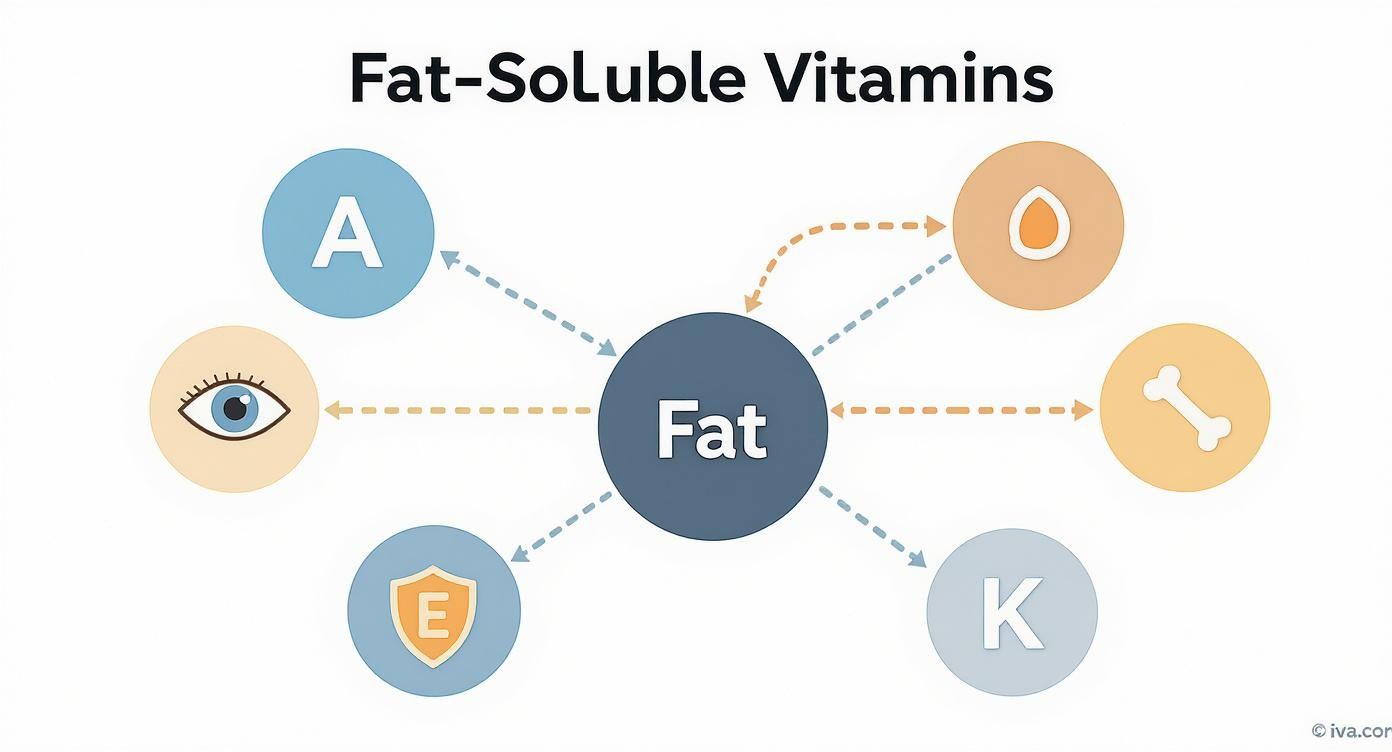
This visual highlights how fat is central to using these four essential nutrients, with each one linked to a key benefit like sight (A), sun exposure (D), cellular protection (E), and bone health (K).
Vitamin K: The Calcium Traffic Director
Last but not least, we have Vitamin K, a nutrient with two incredibly important—and very different—roles.
First, it’s absolutely essential for blood clotting. It activates the proteins that form a clot when you get a cut, which stops you from bleeding excessively.
Its second job is just as critical: it’s the body's calcium traffic director. While Vitamin D helps you absorb calcium, Vitamin K tells that calcium where to go. It activates proteins that bind calcium into your bones and teeth, making your skeleton strong.
At the same time, it helps keep calcium out of places it doesn't belong, like your arteries and kidneys, where it can build up and cause major health problems. This dual function makes Vitamin K a key player in both skeletal and cardiovascular health. It's the nutrient that truly completes the synergy in a vitamin a d e k supplement.
Navigating Deficiency and Toxicity Safely
Getting the right amount of a vitamin a d e k supplement is the key to unlocking its benefits without overdoing it. It's all about balance. Because these vitamins are fat-soluble, your body stores them, which means we’re walking a fine line between preventing a deficiency and creating a toxic overload.
Recognizing the early signs of a shortfall is your first line of defense. These are often subtle whispers from your body that something’s off. For example, if your skin is constantly dry or you seem to catch every cold that goes around, you might be low on vitamin A. If you're dealing with persistent muscle weakness or bone pain, it could be a sign you need more vitamin D.
Listening to Your Body’s Cues
A vitamin deficiency doesn't just pop up overnight. It’s a gradual process, and the first symptoms can be easy to brush off as just part of a busy life. But learning to pay attention to these patterns is how you start taking charge of your health.
Here are a few common, subtle signs that you might have a nutritional gap:
- For Vitamin A: Trouble seeing in dim light (night blindness) is a classic sign, as are unusually dry or rough patches on your skin.
- For Vitamin D: Feeling tired all the time, unexplained muscle aches, or even shifts in your mood, especially during the darker winter months.
- For Vitamin E: Muscle weakness or issues with coordination can signal a problem, since its antioxidant power is crucial for nerve and muscle function.
- For Vitamin K: Noticing that you bruise more easily than you used to or that small cuts seem to take forever to stop bleeding.
Spotting these signs can help you have a much more productive conversation with your doctor about whether a supplement makes sense for you. To give you an idea of how critical these are, vitamin A is so vital for the immune system that it's recommended for children with measles to reduce mortality, regardless of their background nutritional status.
The Fine Line Between Enough and Too Much
While it’s crucial to fill any nutritional gaps, the "more is better" philosophy definitely does not apply to fat-soluble vitamins. Since they hang out in your liver and fatty tissues, taking huge doses over time can cause them to build up to toxic levels—a condition called hypervitaminosis.
This is exactly why responsible supplementation is so important. You’re aiming for that sweet spot—not too little, and not too much.
Toxicity from food sources is almost unheard of. The real risk comes from taking high-dose supplements without professional guidance. Always stick to the product's recommended dose and talk to a pro.
Think of it like watering a houseplant. Give it too little water, and it wilts. Give it too much, and the roots rot. Your body works on the same principle, thriving only when it gets just the right amount of these powerful nutrients.
Understanding Toxicity Risks
Each of the fat-soluble vitamins has a different threshold for toxicity, and the symptoms can look very different. Knowing what to watch for empowers you to supplement with confidence and care. For a trusted, high-quality option, you can check out the Peak Performance ADEK supplement, which is formulated for safe and effective daily use.
Let's break down the potential risks of getting too much of each vitamin:
| Vitamin | Potential Symptoms of Toxicity (Hypervitaminosis) |
|---|---|
| Vitamin A | Nausea, dizziness, headaches, blurred vision, and in severe, long-term cases, liver damage or bone pain. |
| Vitamin D | A buildup of calcium in your blood (hypercalcemia), which can cause nausea, vomiting, weakness, and even kidney problems. |
| Vitamin E | Very high doses can mess with vitamin K's blood-clotting function, increasing the risk of bleeding, especially for anyone on blood thinners. |
| Vitamin K | Toxicity from supplements (specifically K1 and K2) is extremely rare and isn't known to cause any major issues. |
Navigating this balance is pretty straightforward if you have the right strategy: stick to the recommended dose on your supplement, take it with food to help your body absorb it, and always run it by your healthcare provider to make sure it fits your personal health needs. This smart approach lets you safely tap into the full power of a vitamin A D E K supplement.
How to Choose the Best Vitamin A D E K Supplement

Walking down the supplement aisle can feel like a pop quiz you didn't study for. With countless bottles all promising superior results, how do you find a high-quality vitamin a d e k supplement that actually delivers? The secret isn't in the marketing—it's in knowing exactly what to look for on the label.
Choosing the right supplement goes way beyond the brand name. It’s about understanding the specific ingredients, their forms, and the quality assurances that prove a product is both safe and effective. A little know-how here goes a long way toward making a confident choice for your health.
Decode the Label Like an Expert
Think of the supplement facts panel as your roadmap. It’s more than just a list of ingredients; it reveals the specific forms of each vitamin, which directly impacts how well your body can actually use them. For a complete walkthrough, check out our guide on how to read supplement labels.
You'll want to keep an eye out for a few key details:
- Bioactive Vitamin Forms: Look for the forms your body can use immediately, without any extra conversion steps.
- Carrier Oils: Since these are fat-soluble vitamins, they need fat for absorption. A great supplement includes a high-quality oil right in the formula.
- Third-Party Certifications: These seals are your proof that an independent lab has verified the product's purity and potency.
Prioritize the Most Effective Vitamin Forms
The specific form of a vitamin can make a world of difference. When it comes to a vitamin a d e k supplement, you want to see the most bioavailable options on the label to ensure you're getting real value.
Here’s what to look for:
- Vitamin D as D3 (Cholecalciferol): This is the form your body naturally produces from sun exposure. Studies show it's far more effective at raising and maintaining vitamin D levels in your blood compared to D2.
- Vitamin K as MK-7 (Menaquinone-7): Vitamin K comes in several forms, but MK-7 is the superstar. It stays active in your body much longer than other forms like MK-4 or K1, giving it more time to direct calcium to your bones and away from your arteries.
- Vitamin E from Mixed Tocopherols: Instead of just one isolated form (like alpha-tocopherol), a "mixed tocopherols" blend provides a fuller spectrum of vitamin E compounds. This offers more comprehensive antioxidant protection, much closer to how you'd find it in whole foods.
Choosing a supplement with these superior forms is like picking a high-performance fuel for your car. It ensures your body's engine runs more smoothly and efficiently, getting the maximum power out of every drop.
Why Carrier Oils and Third-Party Testing Matter
Because vitamins A, D, E, and K are fat-soluble, they require fat to be absorbed from your gut into your bloodstream. A top-tier supplement will already have this covered by including a healthy carrier oil, such as olive or MCT oil. This built-in feature maximizes absorption, so you don't have to stress about timing your dose perfectly with a fatty meal.
Beyond the ingredients, look for seals from third-party testing organizations like NSF, USP, or UL. These certifications mean an independent lab has verified that the product contains what the label says it does—and nothing it shouldn't, like harmful contaminants. This is your ultimate assurance of quality and safety.
To make an informed decision on your ADEK supplement, you might want to consult a comprehensive overview of various supplement options to see what's out there.
The dietary supplements industry has seen incredible growth, with its global market size estimated at USD 192.65 billion and projected to hit USD 414.52 billion by 2033. With so many products on the shelves, these quality markers are essential for separating the best from the rest.
To help you cut through the noise, here's a simple checklist to guide you.
Your High-Quality Supplement Checklist
Use this table to evaluate any vitamin A D E K supplement you're considering. It covers the key factors that separate a premium product from an average one, ensuring you get something safe and effective.
| Quality Factor | What to Look For | Why It Matters |
|---|---|---|
| Bioactive Forms | D3 (cholecalciferol), K2 as MK-7, and Mixed Tocopherols for Vitamin E. | These are the most effective forms that your body can use immediately, providing maximum benefit without extra metabolic work. |
| Quality Carrier Oil | Olive oil, MCT oil, or another healthy fat listed in the "Other Ingredients." | Fat-soluble vitamins require fat for absorption. Including it in the capsule ensures you get the most out of every dose. |
| Third-Party Testing | Seals from reputable organizations like NSF, USP, or UL on the label. | Provides independent verification of the supplement's purity, potency, and safety, giving you peace of mind. |
| Clean Ingredients | A short list of "Other Ingredients" without unnecessary fillers or artificial colors. | You want a supplement focused on delivering nutrients, not a long list of synthetic additives or potential allergens. |
| Transparent Dosing | Clear amounts listed for each vitamin in International Units (IU) or micrograms (mcg). | Ensures you know exactly what you're taking, allowing you to dose appropriately and avoid potential toxicity. |
By checking these boxes, you can confidently invest in a supplement that truly supports your health goals.
Maximizing Benefits with Proper Dosing and Timing

So, you've picked up a high-quality vitamin a d e k supplement. Great move. But now comes the part that makes all the difference: making sure every dose actually works for you. It's not just what you take, but how and when you take it that unlocks the full potential of these nutrients.
The number one rule for fat-soluble vitamins is simple: always take them with a meal that contains healthy fats. Think of dietary fat as the delivery truck. Without it, vitamins A, D, E, and K can't get from your gut into your bloodstream to do their jobs. Absorption plummets.
This doesn't mean you need a heavy, greasy meal. Far from it. A little avocado, some olive oil drizzled on a salad, a handful of almonds, or even a spoonful of peanut butter is all it takes to get things moving. Pairing your supplement with food this way ensures your body can put these powerful vitamins to good use.
Understanding Dosing and Label Directions
When it comes to how much to take, your bottle's label is your best friend. Manufacturers set their recommended dosages based on established guidelines for safety and effectiveness, giving you a daily amount that works well for most adults without pushing you into unsafe territory.
Always start by following the directions on the package. This dose is designed to keep your nutrient levels in a healthy range and avoid the risk of accumulation that comes with fat-soluble vitamins. That said, everyone is different, and your personal needs might change based on your diet, age, lifestyle, or any existing health conditions.
That’s why it’s always a good idea to chat with your healthcare provider before adding any new supplement to your routine. They can give you personalized advice and help figure out if the standard dose is right for you or if you need to adjust it to hit your specific health goals.
Navigating Potential Medication Interactions
A crucial part of supplementing safely is knowing about potential drug interactions, especially with a potent combo like a vitamin a d e k supplement.
The classic example here is Vitamin K and blood thinners. Vitamin K is a key player in blood clotting, so taking extra can work against the medication. This doesn't automatically mean you can't take it, but it absolutely requires close coordination with your doctor to keep your medication working as it should.
Here are a few key interactions to keep on your radar:
- Blood Thinners: Vitamin K can directly interfere with these meds. This requires close medical supervision, period.
- Certain Cholesterol-Lowering Drugs: Some of these medications can reduce how well your body absorbs fat-soluble vitamins from both food and supplements.
- Weight-Loss Medications: Drugs designed to block fat absorption can also block the absorption of vitamins A, D, E, and K along with it.
This list isn't exhaustive, of course. The smartest move is to keep an open dialogue with your doctor or pharmacist about everything you're taking, including the Peak Performance ADEK vitamins. This ensures you can confidently and safely make this supplement a part of your daily routine for the best possible results.
So, Who Really Needs an ADEK Supplement?
Is a combined vitamin a d e k supplement the right move for you? While just about everyone can benefit from a stronger nutritional foundation, some people are almost guaranteed to see a real difference with this specific blend. These are folks who, for one reason or another, have a harder time getting or absorbing these critical nutrients from their food and lifestyle.
When you start connecting the dots between a resilient immune system, solid bones, and powerful antioxidant defense, it becomes clear why this particular combo is so effective for them. It’s not just about a general wellness boost—it's about giving targeted support right where their bodies are falling short.
People with Malabsorption Issues
One of the clearest cases for an ADEK supplement is for anyone dealing with a condition that messes with fat absorption. Since vitamins A, D, E, and K are all fat-soluble, anything that stops your gut from properly processing fats also stops you from absorbing these vitamins. Simple as that.
This is a common struggle for people with:
- Crohn's Disease: When the digestive tract is chronically inflamed, it seriously shrinks the surface area your body has to pull in nutrients.
- Celiac Disease: The damage gluten causes to the small intestine directly torpedoes your ability to absorb fats and, by extension, fat-soluble vitamins.
- Ulcerative Colitis: Much like Crohn's, the inflammation here, mainly in the large intestine, can throw your whole digestive process out of whack.
For these individuals, a high-quality, oil-based supplement can be a game-changer, offering a more direct and absorbable path for these essential vitamins to get where they need to go, bypassing a compromised gut.
Anyone Not Getting Enough Sun
We all know vitamin D as the "sunshine vitamin" for a reason—our skin literally makes it when exposed to UV light. But let's be realistic. A lot of us just don't get much sun, whether it's due to an office job, living in a place with long, dark winters, or being diligent about sunscreen.
It's estimated that nearly 1 in 4 people have vitamin D levels that are too low. This isn't just a minor issue; it directly impacts how well you absorb calcium, which can weaken bones and compromise your immune function.
If you’re an office worker, live in a northern climate, or are serious about protecting your skin, a vitamin a d e k supplement offers a reliable way to get your D3. It ensures your levels stay optimal all year long, without the risks that come with UV exposure.
Older Adults and People on Restrictive Diets
As we get older, our bodies just aren't as good at making vitamin D from sunlight or absorbing certain nutrients from food. That, coupled with the fact that diets can change with age, puts older adults at a much higher risk for deficiencies in all four fat-soluble vitamins. This can affect everything from their bone density to their immune strength.
It's a similar story for anyone on a very restrictive diet. Whether it's for medical reasons or personal choice, cutting out entire food groups can easily lead to nutritional gaps, since many of the best sources of A, D, E, and K are found in animal products or specific plants.
For both of these groups, a complete ADEK supplement acts as a solid nutritional safety net. If you see yourself in any of these descriptions, it’s worth thinking about. A great next step is to check out a well-formulated product like the Peak Performance ADEK Supplement, which is designed specifically for better absorption and real-world results.
Your Top Questions About ADEK Supplements
Stepping into the world of supplements can feel a little overwhelming, and it's natural to have questions. Let's clear up some of the most common ones about taking a combined vitamin a d e k supplement so you can feel confident in your health choices.
Can I Just Get These From My Food?
In a perfect world, yes. A diet packed with leafy greens, colorful veggies, and fatty fish is always your best foundation. But let's be realistic—getting optimal amounts of all four of these vitamins from food, every single day, is a tall order.
Things like dietary restrictions (vegan, anyone?), soil quality, and even how you cook your food can all impact how many nutrients you’re actually getting. For most of us, a high-quality supplement is a smart insurance policy, filling in the gaps and ensuring you’re consistently covered.
How Long Until I See a Difference?
This is a classic "it depends" situation. The timeline for feeling the benefits really hinges on your starting point. If you're seriously deficient, you might notice a shift in your energy or mood fairly quickly. If you’re just topping off your tanks, the changes will be more subtle.
Remember, these vitamins are stored in your body’s fat tissues. It takes time—anywhere from several weeks to a few months of consistent use—to build up those reserves and see a real impact. Patience is your friend here.
The real power of a vitamin a d e k supplement is in the long game. Think of it as investing in your future health—supporting things like bone density and immune function for years to come—rather than looking for an overnight fix.
Is It Safe to Take Every Day?
Absolutely, as long as you’re using a well-formulated supplement and sticking to the recommended dose. Good products are designed to give you effective, synergistic amounts of each vitamin without ever pushing you past the safe upper limits for daily intake.
That said, because these vitamins can build up in your system, it’s crucial to respect the dosage on the label. Don't go rogue and take more unless a healthcare professional has specifically told you to.
What’s the Best Time of Day to Take It?
This is the one rule you don’t want to break: always take your vitamin a d e k supplement with a meal that contains fat. Healthy fats are the key that unlocks the door to absorption for these vitamins.
Whether that’s avocado toast for breakfast, a salad with an olive-oil dressing for lunch, or salmon for dinner doesn't really matter. The specific time of day is far less important than the presence of fat. Just pick the meal that’s most convenient for you so you can build a consistent habit.
Ready to invest in your long-term wellness with a high-quality, synergistic blend? The Peak Performance ADEK formula is designed with bioactive forms and a quality carrier oil for optimal absorption, making it a simple and effective addition to your health regimen.
Also in Blog


How to Increase Stamina Naturally and Boost Energy


How to Increase Energy Naturally

